Home » Articles posted by Randolph Harris II International Institute (Page 227)
Author Archives: Randolph Harris II International Institute

Neurosis is the Coat of Arms of Culture

God made man out of dust. The analyst reduces him to it. The self-concept has played an important role in theories of deviance since the Garden of Eden. As one of the final steps in the Creation, God planted a garden eastward in Eden and placed in it varieties of animals and plants, along with Adam and Eve. It was an idyllic environment, without enmity among living things and without death. Adam and Eve were given dominion of all things and directed to cultivate and beautify the garden. However, in this pristine condition, Adam an Eve would have had no children. God placed the tree of knowledge of good and evil in the midst of the garden and gave Adam and Eve their agency whether to partake of its fruit. Unless they ate, they would live forever in the garden, in peace and harmony. However, if they ate from the tree of knowledge, it would allow Adam and Eve to bear children and to learn good from evil by experience, including sorrow, pain, and death, and they would be exiled temporarily from the presence of God. The decision of Eve and Adam to transgress a commandment of God and partake of the fruit of the tree brought mortality and death to them and to their posterity; for it made it possible the human family upon the Earth. #RandolphHarris 1 of 8

My unconscious knows more about the consciousness of the psychologist than his or her consciousness knows about my unconscious. The significance of the Garden of Eden and its relevance to labeling theory of deviance is especially evident. In contrast to earlier social pathologists, who sought the causes of deviant behavior within the individual, the contemporary labeling theorist centers attention on society’s reaction to it. The interest of this school is in the effects of society’s application of a pejorative tag to the individual (for example, delinquent, convict, drug addict, alcoholic, mental patient), often by some official certifying agency, such as the school, courts, or hospital officials. The effects of labeling on the self-concept appear straightforward. First, these labels may become elements of social identity; like most such elements, they are socially evaluated (indeed, denigration is built into the very terms); and because they are associated with norm violations, they are deplored and condemned. Second, as with many other social identity elements, deviants tend to be stereotyped and treated accordingly. These stereotypes are, in effect, pre-packaged appraisals of the individual. Thus, a mental patient labeled dangerous may be treated that way by others though one’s last alleged aggressive act was ten years ago. #RandolphHarris 2 of 8

Neurosis is the coat of arms of culture, but there is a catch. We have more creators of coasts of arms than nobles. Here are how other labels stigmatize people. People labeled delinquent is assumed to be dishonest; the convict, dangerous; the homosexual, effeminate; and so on. The point is that society responds to the individual in terms of the stereotype attached to the label, not in terms of the actual person. Third, the labeled individual may come to develop a corresponding self-concept, and following the self-consistency principle, may behave in terms of it. Hence, by labeling the individual, society fosters the very behavior it deplores. And sometimes labeling is used as a brazen deprivation of personal liberty under the guise of psychiatry. Social labeling may affect the structure of the self-concept, when the officially certified label, in stead of being one among many social identity elements, becomes central to it. This idea, expressed in the term role engulfment holds that the deviant identity becomes of overwhelming important to the individual. This was bad enough in the eighteenth century; it is virtually intolerable in the twenty-first. The hero of humanity supports the freedom and dignity of all nations, religions, and professions and opposes only the conduct of evil and discrimination. “A false witness will not go unpunished, and one who breathes out lies will not escape (Proverbs 19.5).” #RandolphHarris 3 of 8

Like academic performance and the self-concept, it is apparent that the association between social deviance and the self-concept is reciprocal; each may affect the other. Meadian theory would lead us to expect people who are labeled as deviants to have lower self-esteem for at least two reasons. The first is that, in taking the role of the other, we tend to see ourselves through the eyes of particular others. If they deplore our deviance, our self-esteem would be expected to suffer. However, even in the absence of face-to-face interaction, Mead’s concept of the generalized other would produce much the same result. Internalizing the attitudes of the community as a whole, the deviant views oneself from the perspective of the broader society, that is, negatively and stereotypical. And that is why we have faith in God, God loves all of his children and is the ultimate authority. He does not want us to feel hurt and rejected nor be attacked relentlessly. “Judge not, that you be not judged. For what judgment you judge, you shall be judged: and with what measure you mete, it shall be measured to you again (Matthew 7.1-2).” The building of hope and faith and even greater love between receiver and giver are inevitable results of charity. Charity is an essential characteristic of those who will live with Heavenly Father in the celestial kingdom. #RandolphHarris 4 of 8

However, if deviance affects the self-concept, it is at least equally true that the self-concept may influence deviant behavior. Such an effect would be expected on grounds of the self-consistency motive. Deviant behavior may be a manifestation of the general principle that people behave in accordance with their conceptions of what they like. This appears to be the essential principle underlying influential theory of the self-concept as an insulator against delinquency. One question that puzzled us was why, in an environment in which delinquency was common, some boys become delinquent whereas others did not. Researchers studied a sample of boys in a high delinquency area who, according to their teachers’ predictions, were or were not likely eventually to get into difficulty with the law. The critical distinction between the two groups was whether the youngsters conceptualized themselves as delinquents or as good boys. Subsequent research revealed that these self-concepts were predictive of delinquent behavior. This conclusion was less trivial than it might at first appear. It demonstrated that delinquent behavior could not be explained exclusively in terms of blocked opportunity structure or individual psychopathology. Self-consistency—the striving to be true to one’s self-definition as a deviant or conformist—also played a role. #RandolphHarris 5 of 8

In addition to self-consistency, the self-esteem motive may also underpin deviant behavior. It has been suggested, for example, that the youngster may engage in delinquent behavior in order to enhance one’s self-esteem. Take a youth who is comparatively unsuccessful as a student, athlete, social leader, and so on. He commands little respect from parents, teachers, and peers, and seeing himself from their perspectives, has low self-esteem. Delinquency may help to enhance his self-respect in several ways. First, it provides him with a peer group—the delinquent gang—who do value and respect him; and the greater the deviance, the greater the respect. Second, he may find that he does have the ability (for example, strength, courage, and cunning) to succeed in various forms of delinquent behavior—fighting, pilfering, vandalism—in contrast to his failure as a student or a social leader. Third, in embracing delinquency, the youngster is likely to abandon the members of the straight society as his significant others. Although he may recognize that parents, teachers, and classmates deplore him more strongly than ever before, their views no longer count for him; his self-esteem now rests on the opinion of other deviants. If he wishes to enhance his self-esteem, then, he must behave in a way that commands their respect and approval, that is, behave in a deviant fashion. The war will perhaps achieve one thing, though it was surely not launched for this purpose: the victims of psychoanalysis will return cured. #RandolphHarris 6 of 8

The most compelling empirical evidence in support of these ideas is found in a study of 7,6181 seventh graders in Sacramento, California USA, ascertaining both their global self-esteem and their commitment of any of a wide range of deviant acts. We initially focused on the conformists, that is, those who had not committed any deviant acts at the time of the first interview. One year later these subjects were again asked whether they had committed deviant acts. It was discovered that those with initially low self-esteem were consistently more likely than those with high self-esteem to have committed one or more deviant acts in the subsequent year. These data are consistent with the interpretation that youngsters may turn to delinquency in order to enhance their self-esteem. Delinquency, of course, is only one type of deviance. Crime, drug addiction, alcoholism, sexual aggression, and unprovoked violation of human rights, and so forth have also been viewed as deviance. Although the data are very uneven, the evidence is clear that the self-concept is implicated in each of these forms of deviance, either as cause of effect. The psychoanalysts pick our dreams as if they were our pockets. #RandolphHarris 7 of 8

We have done nothing more than show that there is a distinction between an urn and a chamber pot and that it is this distinction above all that provides culture with elbow room. The others, those who fail to make this distinction, are divided into those who use the urn as chamber pot and those who use the chamber pot as urn. One of the most significant ways we can develop and demonstrate love for our neighbor is through being generous in our thoughts and words. Some years ago, a cherished friend noted, “The greatest form of charity may be to withhold judgment.” That is still true today. When we see our own imperfections more clearly, we are less inclined to view others through a glass, darkly. Psychoanalysis is like the poor man’s explanation of wealth. Because he lacks it, the others must have gained it by force or fraud. Anyway, they merely possess it; only the psychoanalyst understands it. I understand that psychoanalysis is a big hit in the United Sates. It figures: the Americans love everything they do not have, especially antiques and the soul. We want to use the light of the gospel to see others as the Savior does—with compassion, hope, and charity. The day will come when we will have a complete understanding of others’ hearts and will be grateful to have mercy extended to us—just as we extend charitable thoughts and words to others during this life. #RandolphHarris 8 of 8

CRESLEIGH HAVENWOOD
Lincoln, CA | from the high $600s
Now Selling!

No appointment needed! Cresleigh Havenwood features four distinct floor plans ranging from 2,293 – 3,377 square feet and offering up to five bedrooms. Each plan has been thoughtfully designed and includes great features such as single story homes, guest suites, optional offices, garage workshops, and more! Get the most out of your new home with Cresleigh’s All Ready smart home featuring all the connectivity needed to keep your house running. Best of all, each Cresleigh home comes with owned solar included!

Located off of Virginiatown Road and McCourtney Road, residents of the 83 homesites of Cresleigh Havenwood will benefit from a brand new neighborhood in the charming City of Lincoln. Palo Verde Park, is just down the street and there’s plenty of recreation to take part in all around town. https://cresleigh.com/havenwood/
Samantha Takes the Keyboard
 It is good to realize that is love and peace can prevail on Earth, and if we can teach our children to honor the Earth and each other, our days on this planet shall be long and many. We who have received a knowledge of the great plan of happiness—and its implementing commandments—should feel a desire to share that knowledge since it makes all the difference here and in eternity. The virtue of mildness or good temper is concerned with anger. A mild person ought to be angry about some things (about injustice and other forms of mistreatment) and should be willing to stand up for oneself and those one cares about. Not to do so would indicate the morally deficient character of the inirascrible person. It would also be inappropriate to take offense and get angry if there is nothing worth getting angry about. That response would indicate the morally excessive character of the irascible person. The mild person’s reactions are appropriate to the situation. Sometimes intense anger is appropriate; at other times calm detachment is. It is understandable that when students of the self-concept turn their attention to the educational institution, they tend to focus primarily on academic performance. School, after all, is the main business of a child’s life. #RandolphHarris 1 of 10
 Furthermore, there are very few areas of life in which a person is so constantly and explicitly evaluated. Report cards, or school marks, represent public objective, and authoritative assessment of an important aspect of the child’s worth. It thus is not surprising to find that there tends to be a beneficial association between academic performance and self-esteem (through the association is not always strong). What is less clear is what this statistical association means. If the self-concept does influence academic performance, is it the individual’s overall feeling of worth (one’s global self-esteem) that is responsible or is it the specific component of self-concept of academic ability tends to be more strongly associated with school achievement. In other words, it is not one’s overall feeling of worth as a human being (which may be based on many things) but one’s self-conceived talent in a specific area that is most closely related to performance. For example, the relation ship between ability on IQ tests and global self-esteem generally appears to be about r = .20–.30. This shows that the correlation between school marks and academic self-concept is r = .57. In general, there is a much higher correlation between school marks and academic self-concept than between marks and global self-esteem. #RandolphHarris 2 of 10
 This observation concerning the part and whole may be generalized beyond school marks. If specific types of behavior are under consideration, the specific self-concept component will almost invariably be more relevant than the global attitude. Some educators, concerned about the academic performance of disprivilieged children, have attributed this performance to the lower global self-esteem of the disprivilieged children and have argued that it is necessary to enhance dispriviliged children’s global self-esteem. However, if self-concept change is to affect school performance, it will be less through convincing the child that one is generally a person of worth than in persuading one that one has the specific ability to do well on tests. In viewing the self-concept either as a social product or a social force, it is important to keep the distinction between the part and the whole in the forefront of attention. So, it may be more adventitious to encourage students and tell them that they have potential to do well, rather than not grading them fairly or being overly harsh. If an individual truly wants to learn, their homework assignments and tests are a way of communicating that through their effort. If students are not doing well, it may be that they have some other distractions keeping from their assignments. #RandolphHarris 3 of 10
 Children that come from dysfunctional homes or are bullied sometimes are emotionally distracted and need to talk about what it happening so they can release the tension and adequately focus on their assignments. When people go out of their way to target individuals, it negatively impacts their performance and will prohibit from advancing with the rest of their peers. Therefore, consoling could be an important part of the educational process. However, even when we find an association between academic performance and self-esteem, the question remains: is self-esteem a consequence of academic performance or a cause of it? There is theoretical support for both positions. Self-consistency theory, which holds that we tend to behave in accordance with our self-expectations, would view the self-concept as the cause of behavior. For example, a child with ample ability may unconsciously make a number of spelling errors because one has developed a view of oneself as a poor speller. One’s poor performance represents an effort to remain true to one’s self-concept. Nevertheless, spellings errors do not mean that a child has an intellectual deficiency. #RandolphHarris 4 of 10
 Spelling errors can go back to when a child is learning to read and sound out words. If an instructor rushes through this process, a child may be very good at reading, but not know how to spell as well as others because they do not know how to sound out words. Also, children who speak more than one language could have difficulties spelling. And if adults do not pronounce words correctly, children will pick that up and spell them wrong. For instance, on an episode of Bewtiched: Samantha on the Keyboard (original airdate 10 October 1968), Grandmama Endora makes Tabatha, who is only four years old, play like a musical genius. Her father, Darrin, overhears the music and gets upset because he thinks it is a product of witchcraft and upsets Endora and she takes the piano back and leaves. Then Darrin promises Samantha he will buy a new piano as long as Samantha learns to play it. So, Tabatha overhears her mother playing then piano and later mimics the novice way in which her mother plays. The self-attribution theory holds that we draw conclusions about what we are likely be observing our behavior or its outcomes. The person who fails in school judges oneself, as one would judge anyone else, as academically inept. In this case, these marks are viewed as the cause of the academic self-concept. #RandolphHarris 5 of 10
 That proves that if children are taught to pronounce words right, they will likely be able to spell them properly. Nevertheless, President George Washington was not a great spelling, but very smart and also the first American President. Also, when children are learning, we should never tease them about how they are performing, but encourage them. It is best to use a dictionary to find works one cannot spell or sound them out and try that way. Since the self-concept and the behavior may thus affect one another, the question is: which has the greater effect on the other? By means of a cross-lagged panel correlation, it was concluded that academic performance affected academic self-concept more than the other way around; the effect, however, is stronger for girls than for boys. The evidence indicates that the self-concept also affects academic performance, but that this effect is weaker. When we are doing well in school we feel better about ourselves because it is our job and will have a huge impact on the rest of our lives. In addition, sometimes being confident is a good thing because confident students may feel more comfortable to seek help in academic areas where they are underperforming. #RandolphHarris 6 of 10
 Another critical issue involved in interpreting the relationship between academic self-concept and academic achievement is the question of whether the marks are attributed to qualities of the person or components of the self-concept. Does someone do well on test because one believes one is academically competent or because one actually is academically competent? This issue is widely overlooked. If people who believe they are tall are more likely to be good basketball players, their basketball skill is less attributable to their views of themselves as tall than to their actual height. To be able to conclude that the self-concept per se affect behavior, one must equate people in terms of objective characteristics. This issue was explored in a large-scale study of junior high school pupils. The question raised by these investigators was whether, among pupils of equivalent academic talent, youngsters with optimistic academic self-concepts did better in school than those with negative self-concepts? For both boys and girls, it was found, the zero order correlation between academic self-concept and school marks was .57; controlling on IQ, however, the partial correlation remained .42 and .39 for boys and girls, respectively. #RandolphHarris 7 of 10
 Independent of objective ability, then, those who viewed themselves as more academically able performed substantially better in school. The self-concept apparently can importantly influence and be influenced by school performance independent of objective ability, then, those who viewed themselves as more academically able performed substantially better in school. The self-concept apparently can importantly influence and be influenced by school performance independent of the person’s actual abilities. The confidence with which one approaches a task, the amount of effort one devotes to it, and the freedom from disruptive stress that interferes with performance may all influence academic achievement. These, in turn, may be strongly influenced by the self-concept. However, also keep in mind that if individuality has no play, society does not advance; if individuality breaks out of all bounds, society perishes. Most of us run into such problems every day: my needs versus your needs, or those of the family, club, plant, or nation. Few problems occupy a more central spot in our scale of human values. In many way, it is the job of our personalities to figure out answers to this dilemma—to mediate between society’s push and pull and the insistent demands of self. #RandolphHarris 8 of 10
 The self-concept doubtlessly affects and is affected by the educational institution in many other ways as well. Many people have discussed how the teacher’s expectations for the child may affect the child’s performance. If such effects do, in fact, exist, they are almost certain to be mediated by the child’s self-concept. Children have enormous respect for adults. Teachers should not say things like, “I sense some confusion in this room, in relation to the subject matter, and it is not general,” then look at a certain student. If a child believes that the teacher expects him or her to fail, the child, attributing great wisdom to the teacher, is likely to expect oneself to fail. It is thus possible that the teacher’s expectations for the child are converted into the child’s self-expectations, which, following the principle of self-consistency, are converted into academic performance. On another note, children, and even college students should be respectful of their parents and spend time with them because there may be things that a parent is going through that they do not want to share with you and one day you will look back an understand why. #RandolphHarris 9 of 10
 There was a father who served in war and ended up catching cancer from agent orange, which was a poison used to kill trees that was also sprayed on the soldiers. He got ride of the cancer, but was sick all of his life and worked to support his children. When he son was in college, the father kept him on a tight budget and did not like going places and even asked his son if we wanted him to enroll in college with him. The son, embarrassed, of course did not know why and said no. The father knew he was dying soon and really wanted to spend time with his son. About a year later, he died while his son was preparing for final exams. Family is so important and you really should love and support them because we do not know how long we will have each other. It is just my wish that people who have passed into Heaven know how much we care about them and how much we think about them and how much we miss them. When the seed of love is sown into our hearts, you have to water it with loyalty and cultivate it with sincerity, and then the fruit it bears is sure to be happiness. The clash of souls touches off the flashes over the Winter jasmine, and we walk hand in hand into the World of youth. #RandolphHarris 10 of 10

My Master, the Spy

Sometimes stereotypes are creations of an entire society or nation, and they perform the function of building up the national feeling through putting down another nation or group. Such behavior is not really intentional cruelty, ignorance, or hostility to the other groups or nations, though it certainly may be unenlightened or narrow-minded. What is your test now will become your testimony. Let go of the discouragement, self-pity and get ready for God to do something new. Those advisories, annoying and harassing you are about to meet their ends. However, in the process, they have thrusted you forward into the fullness of your destiny. Experiments have taught us if practical experience has not already done so, that the improbable does occur, and that our picture of the World only tallies with reality when the improbably has a place in it. What guarantee is there that the five senses, taken together, do cover the whole of possible experience? They cover simply our actual experience, our human knowledge of facts or events. There are gaps between the fingers; there are gaps between the sense. In these gaps is the darkness which hides the connection between things. This darkness is the source of our vague fears and anxieties, but also the home of the Gods. #RandolphHarris 1 of 6

The Gods alone see the connections, the total relevance of everything that happens; that which now comes to us in bits and pieces, the accidents which exist only in our heads, in our limited perceptions. In the political realm, a number of investigators, seeking to understand how personality factors might bear upon such behavior as political power-seeking among aspiring leaders, have turned their attention to the self-concept as an explanatory variable. Some of the more prominent explanations of the striving for political power can be traced to ideas on compensation for feelings of inferiority. An individual afflicted with organ inferiority may seek to compensate for his or her deficiencies in order to overcome one’s low feelings of self-worth. Demosthenes was a Greek statesman and orator of ancient Athens. As a boy, Demosthenes stuttered: in order to overcome this stuttering, he placed pebbles in his mouth and sought to shout down the waves. In another example, Napoleon’s drive for power was reported to stem from inferiority feelings about his diminutive stature. Power seekers pursue power as a means of compensation against low estimates of the self. However, low self-esteem may also be at the root of political apathy, since overwhelmingly low self-esteem might cause the individual to withdraw from the political arena entirely. #RandolphHarris 2 of 6

Similarly, political apathy might stem from the fact that the individual is so exhausted by one’s inner conflict that one has no interest or energy left for public affairs. Research findings are consistent in showing that people with low self-esteem are in general more likely to be politically apathetic. One large scale study of high school juniors and seniors showed that youngsters with low self-esteem were less likely to express interest in national or international affairs, to pay attention to political matters in the media, to have much political knowledge, and to be political opinion leaders. Furthermore, even those low self-esteem students who were politically interested were less likely to discuss politics, more likely to feel personally threatened by political discussion, less confident that other people would pay much attention to their political views, and more self-conscious about presenting their political ideas to other people. These low self-esteem youngsters were also more likely to report that they were distracted from public affairs by concern with their personal problems. However, keep in mind that there are no constraints on the human mind, no walls around the human spirit, no barriers to our progress except those we ourselves erect. Whether you believe you can do a thing or not, you are right. Courage is a door that can only be opened from the inside. #RandolphHarris 3 of 6

Personality will affect political attitudes of youngsters only if they are politically involved, the relationship of self-esteem to political attitudes controlling on political interest. In virtually every case, the relationship of self-esteem to political attitudes is stronger if political involvement is higher than if it is low. Furthermore, among those adolescents who were highly interested in political issues, those with high self-esteem are more likely to be knowledgeable about political figures, to have a better understanding of these essentials of democracy, to be less cynical about politics, and to feel more politically efficacious. These findings persisted when grade, gender, socioeconomic status, and intelligence were controlled. Those with low self-esteem, on the other hand, were more likely to support political protest activities. Qualitative research among adults has added to our understanding of how self-concepts—especially self-esteem—may influence political apathy or participation. One study showed that some adults were afraid to express political opinions for fear of making fools of themselves. Lacking confidence in their own knowledge and ability, these people retreated from political. However, low political participation also appeared to be fostered by a more fundamental and deep-rooted feeling of inefficacy and insignificance. #RandolphHarris 4 of 6

Some people feel that they do not matter, that they make little difference in the broader scheme of things. These people expressed the idea that they were politically unimportant—an ordinary person, an average individual, a little person. Nothing they can do will make much political difference because the forces that control the World, including the political forces, were outside their control; political impotence formed the basis of political apathy. Apathy, of course, is not the only possible outcome of such an attitude. One reason many Germans were attracted to Hitler was that (like the American subjects described above) they felt ineffectual, impotent, and insignificant in the broader scheme of things. For this reason they attached themselves to a powerful political leader, who not only promised them national glory and, thereby, personal self-esteem, but also preached a doctrine asserting their inherent superiority to all others peoples. There are many other ways in which the self-concept has been show to be related to political orientations. People with low self-esteem are more likely to be chauvinistic, ethnocentric, and politically cynical, and to be low on democratic commitment. #RandolphHarris 5 of 6
There is also evidence that (among isolationists), those with low self-esteem are more likely to oppose social change, to believe in tradition and social order, to support a position of elitism, and to hold extreme political beliefs. In general, people with low self-esteem tend to hold political solutions of any political persuasion that makes their confused environments intelligible, orderly, and purposive. Other studies have also examined self-esteem among elected officials. However, self-esteem is not the only self-concept motive implicated in political behavior; self-consistency also plays a role. The study of adults found that some people avoided political activity on grounds of role self-concept incongruence. The individual’s view of oneself did not match the individual’s view of the qualities of a political activist. The political activist was seen as energetic, forceful, and dynamic, whereas the individual saw oneself or herself as passive and receptive. This lack of role-person fit was a deterrent to political participation. It is plain that the way one thinks about the self influences the way one thinks about the World, including the World pf politics. The political institution, like any other, is a realm of action, and whenever people act, their self-concepts are implicated. #RandolphHarris 6 of 6

The Winchester Mystery House

Construction lasted for thirty-eight years on the Winchester Mystery House, one of North America’s most unusual and eccentric homes located in San Jose, California. Through the 160-room labyrinth-style mansion built by Sarah Pardee Winchester, there are many beautiful and extraordinary examples of the Queen-Anne Victorian Style architecture. https://winchestermysteryhouse.com/
The No-Harm Charm

Having an optimistic mental attitude and high self-esteem can literally double the chances of career success. We have been primarily concerned with the self-concept as a social product. The fundamental questions addressed has been: how do social conditions or experiences—social interaction, social structure, social contexts—shape the individual’s self-concept? However, the self-concept may also be examined as a social force. The question is: how does the self-concept influence behavior in major institutional areas? Before addressing this question, it is relevant to say a word about the personal consequences of the self-concept. Even if the self-concept had no bearing on society, it would still be important if it influenced people’s ability to lead full, rich, satisfying lives. The importance of a healthy self-concept for mental health can scarcely be exaggerated. It is clear that self-esteem is characteristically deeply implicated in the neurotic (though not necessarily the psychotic) process. Whether the research has been essentially clinical or quantitative, the results demonstrate clear and consistent relationships of low self-esteem to psychological depression, anxiety, somatic symptoms, impulse to aggression, vulnerability, negative affective states, and other neurotic symptoms. #RandolphHarris 1 of 7
The social roots of self-esteem are thus an important topic in the sociology of mental health. However, the sociologist is also properly interested in the influence of personality on society. On theoretical grounds, there is reason to think that the self-concept, at least as a proximal influence is implicated in almost all social behavior. Much of what people do voluntarily depends upon what they conceive themselves to be. Each takes one’s personal identity so much for granted that the individual does not realize the extent to which his or her life is structured by the working conception one forms of oneself. The things that a person does voluntarily, and even involuntarily, depend upon the assumption one makes about the kind of person one is and the way in which one fits into the scheme of things in one’s World. Believing in oneself can strongly influence long-term career advancement and overall health. People who score high on self-evaluations enjoy success earlier in their careers, engage in continued higher education, and advance more quickly than those who score lower on self-evaluations. The advantaged gained by having an optimistic self-image is also strongly correlated with overall career satisfaction, higher pay, and better health. #RandolphHarris 2 of 7

The self-concept plays a major role in occupational decisions. The selection of an occupation depends on a view of the self. How you feel about yourself will either spawn motivation and energy or will several hurt your changes for a great career. The individual making an occupational choice must achieve stereoscopic vision as one is making an occupational incumbent. Although the answer to the question: what should I become? has some important consequences for the occupational system, it always emerges from the ulterior question: what am I like and what do I like to think of myself as? As an obvious example if girls are socialized to believe that they are competent in mathematical ability or assign this talent to a high position in their system of self-values, then they will be more likely to seek occupations such as engineering, physics, and related fields demanding such skills; and, indeed, the facts show them to be strikingly underrepresented in such fields. That is more than likely because people’s self-concepts tend to match the stereotypical characteristics associated with their chosen occupations. For example, students planning to enter the field of sales tend to describe themselves as sociable, talkative, aggressive, and having initiative, whereas those selecting accounting are likely to describe themselves as precise, self-controlled, organized, and thorough. #RandolphHarris 3 of 7

When individuals increase their confidence level, they are able to interview more effectively, negotiate higher salaries and, subsequently they will receiver a wider range of occupational choices. Furthermore, the self-concept is not only consonant with prime occupational choice, but with second occupational choice as well. In selecting an occupation, people seek to achieve self-role congruence. If people have high global self-esteem, then their occupational choices tend to be consonant with their self-concepts, but if their self-esteem is low, the self-concept and the occupational choice are unrelated, and they are going to be paid less, given fewer responsibilities and will end up accepting a position that they are overqualified for. In making an occupational choice, people with high self-esteem sought to be true to their pictures of what they were like; people with low self-esteem, on the other hand, tended to make their occupational choices on the basis of other considerations, for example, certain extrinsic rewards of work, such as money, status, or security. The question of why those with high self-esteem tend to implement their self-concepts whereas those with low self-esteem do not is currently under active debate. Perhaps people with higher self-esteem feel they are a gift and people with lower self-esteem feel lucky to get a job and believe they can prove themselves worthy of that and more. #RandolphHarris 4 of 7

The results can be interpreted within the framework of cognitive consistency theory. Humans are motivated by inconsistences and a desire to change them. Cognitive inconsistences cause imbalance in individuals and the tension from this inequality in individuals and the strain from this disparity motivates people to alter these irregularities. The pressure arises when thoughts conflict with each other and this stress creates a motivation to change and correct the inconsistency. When this hardship is reduced, balance is achieved in the individual. The right mindset significantly boosts one’s overall state of being and performance. People anticipate consistency, inconsistencies create imbalance and dissonance in individuals, and that tension motivated the individuals to create consistency in order to achieve balance. This is meaningfully understood as consequences of the self-esteem motive. Global self-esteem has also been shown to bear a relationship to occupational aspirations, expectations, values. A study of high school juniors and seniors showed that youngsters with low self-esteem were more likely to avoid occupations that required the exercise of leadership, to want jobs in which they were free of supervision, and to avoid jobs involving competition. #RandolphHarris 5 of 7

Other economic attitudes, orientations, or behavior may also be influenced by the self-concept. Psychiatric attendants reconceptualize the nature of their work for the purpose of enhancing self-respect. In studying the self-concepts of executives and supervisors, it can be seen how historical developments have produced change in self-concepts among Greek army officers. Sociological research has also been conducted on the process by which a trainee—say, a medical student or a music student—comes to see himself or herself as a doctor or musician. Individuals navigating along their career path build on feelings of self-confidence, self-worth, and inner strength to transform the journey into career success. Through experience, you are building wisdom that can be applied in different situations and across different industries. Keeping track of the skills, knowledge, and abilities, you possess builds your self-confidence and facilitates a feeling of self-worth. It may be no exaggeration to suggest that the self-concept, in its full rich complexity, pervades virtually every aspect of occupational life. #RandolphHarris 6 of 7

Showing gratitude also helps people keep an optimistic attitude. We all like working with people who are happy, genuine, and have good attitudes. Even on a bad day, look for something to be thankful for and have gratitude for all the blessings that have been bestowed. Your goals are sacred to you. They are the gold that will help you create the life and career success that you want and deserve. Once you have proved to yourself you can be successful, your confidence will soar. It is also important to do the same in your career by showing others how competent you are. You have exactly what you need. If you use what God has given you, he will get you where you are supposed to be. It is not necessarily the amount of talent, education, or money, but what makes the difference is God’s anointing on our life. You can have average talent, but when God breathes in your direction, you will go further than someone with exceptional talent. Be confident that you have exactly what you need. It may not be as much as others have, and that is okay. You are not running their race. Do not envy their talent. Do not covet what they have. Do not wish you had their looks, their personality, or their opportunities. God equipped you with everything you need to fulfill your destiny. You have the talent, confidence, strength, and the creativity to fulfill your purpose. With a view like that, the World changes completely. It brings transcendence and takes people further. #RandolphHarris 7 of 7

The Winchester Mystery House

Winchester Mystery House announced its milestone highlights including a celebration of life for Sarah Winchester, a live supernatural event, a new daily tour. https://winchestermysteryhouse.com/
A Virtuous Person’s Soul Speak with the Same Voice
 It may be true that most of us can recognize that it would be foolish to risk our lives and the lives of others to secure a trivial benefit, and that most of us can see that it is unjust to harm others to secure power and wealth for our own comfort. The potentially damaging effects of contextual dissonance on self-esteem rests on two rather different foundations. One deals with those ways in which we are different from others; because of prejudice or cultural dissimilarity, such a difference may eventuate in reduced self-esteem. The other effects stems from whether we are better or worse than others; our self-esteem may be damaged if we find ourselves immersed in contexts in which others outstrip us. The latter effect is particularly evident when we consider abilities context. How many premier high school students suffer rude blows to their sense of worth when they enter highly select colleges? How many outstanding college football heroes develop feelings of inadequacy upon entering the professional ranks? In other words, it is not only how good the individual is, but how good others around the individual are that affect one’s self-attitudes. Because we tend to be more self-conscious when entering new situations were others are more advanced for we feel overwhelmed and under pressure. #RandolpHarris 1 of 7
 Living well or happiness is our ultimate objective in that a concept of pleasure and serves to organize our various subordinate goal, by indicating the relative importance of our life’s value and by signifying how these concepts should fit together into some rational overall scheme. In The American Soldier studies, the Research Branch considered the following contexts: inexperienced soldiers in untrained outfits, and equally unschooled replacements in divisions otherwise composed of combat veterans. Among numerous questions put to these soldiers was the individual’s confidence in one’s ability to take charge of a group of people in combat. It turned out that the unskilled soldier in a veteran outfit was less confident that one could take charge of a group of people than was the amateur soldier in an inexperienced outfit. Relative to the veterans, the replacements were aware of their inexperience and felt less capable of leadership than did equally unseasoned soldiers in consonant contexts; the competence was the same, but the contexts were different. Therefore, people generally feel more confident when they are being honest because they are authentic and do not have to worry about being judged based on criteria that should be inherent, as we know that they still need some skill advancement. #RandolphHarris 2 of 7
 Happiness is identified with living coherently. Perfect or complete happiness is distinctively human. When we are living well our life is worthy of imitation and admiration. That we are happy says something about us and about what we have achieved, not simply about the fortunate circumstances in which we find ourselves. The bearings of the abilities context on self-esteem within the classroom is aptly illustrated in a study of the relationship of school marks to self-value. The research presents us with 159 academic underachievers in small classes in 17 elementary schools. The data showed that, within classrooms, those with higher standardized scores had higher self-esteem, both on the composite self-worth index and on various subscales. Across classrooms, however, objective ratings of pupils showed little consistent relation to their self-value. Self-esteem apparently depends on comparison with others within the same classroom, not on comparisons with pupils generally. It is noteworthy that academic self-concepts were particularly affected by the contexts. That is due to the fact that people in the same group tend to be exposed to the exact same material, and they have a gauge of measuring the skill level needed to obtain a satisfactory mark or advanced mark. Whereas students in other classrooms are exposed to different material and may have different skill levels. #RandolphHarris 3 of 7
 Parallel results have appeared in studies of children with special needs. Researchers compared the self-concepts of children with special needs with parents who have special needs with the self-concept of children with special needs with parents who are considered not need any particular accommodations; the self-esteem of children with parents who have special needs (a consonant home context) proved to be higher. Consistent with this result, another study showed that the self-esteem of children with special needs in residential schools for children with special needs was higher than that of children with special needs in school for children of the general population. It would appear that the damaging self-concept consequences of so stigmatized a special need appears to be mitigated by immoral in consonant context. And that is probably because when one is in an environment where everyone needs special accommodations, people are more likely to be understanding that the individuals have some kind of sensitivity that requires greater assistance, and are usually more empathic of their necessities. In other words, people will not take advantage, bully, nor exploit these individuals because it is already known this group needs more compassion, accommodations, and understanding than the general population, as they have special needs and it can be a life or death concern that they are treated with adequate care. #RandolphHarris 4 of 7
 Whatever happiness is, it must take account of the fact that a happy life is one lived by rational agents who act and who are not simply victims of their circumstances. A happy life must give prominent place to the exercise of virtue, for virtuous traits of character are stable and enduring and are not products of fortune, but of learning or cultivation. Moreover, virtuous traits of character are excellences of the human being in that they are the best exercise of reason, which is the activity characteristics of human beings. Virtuous activity completes or perfects human life. Nonetheless, one can readily understand why the physical characteristics of those in our environment should affect how we see ourselves. Whether we are tall or short, heavy or light, weak or strong, obviously depends not simply on what we are likely but on what others with whom we compare ourselves are like. Research demonstrates that the salience of physical characteristics in the self-concept is affected by the context. When 292 sixth-grade pupils in 10 classrooms were asked to tell us about themselves. One week later the respondents were requested to provide specific information regarding their physical appearance (height, weight, hair color, eye color), and other objective information (gender, birth date, birth place, and household composition). #RandolphHarris 5 of 7
 The results showed that pupils either younger or older than average within their classrooms were more likely spontaneously to mention their age than those closer to the average; that those born outside the city or outside the country were more likely than natives to identify themselves in terms of place of birth; that redheads and blondes were more likely to mention hair color than the more numerous brunettes or brown-haired subjects; that those with blue or green eyes mentioned eye color more than brown-eyed youngsters; and that those above or below average in weight were more likely to mention their weight. (Unusual height, however, was not more likely to be mentioned.) In other words, self-concept components tend to be salient if they are distinctive—or dissonant—in a given context, independent of whether the quality is ego-enhancing or ego-diminishing. So, we tend to mention attributes we feel or important or that others will notice. It is thus evident that different contexts (social identity contexts, abilities contexts, physical contexts) may influence diverse aspects of the individual’s self-concept: global self-esteem, academic self-concept, self-concept stability, salience of specific components, and so on. #RandolphHarris 6 of 7
 Having a virtuous character is purely a matter of being knowledgeable of what brings us more pleasure rather than less. These data offer vivid testimony to the importance of other people in shaping the individual self-concept. Other people constitute a frame of reference, a backdrop, a perspective from which the self is seen. The self-concept may be as much a product of the quality of the others and the quality of the individual. When people are free to do what they please, they usually imitate each other. It is by imitation, far more then by precepts, that we learn everything, and what we learn thus, we acquire not only more effectually, but more pleasantly. You have the favor factor of God, and it is something about you that cannot be put on paper. You have what it takes to be successful. Be sure to do your part and activate this favor. When the dream looks impossible, do not give up. Be thankful and know that God’s mercy, compassion, and love are with you. Believe that you will become everything that God has created you to be, and you will have everything God intended for you to have. When we have the boldness to ask God for big things, you will see the greatness of God’s power. #RandolphHarris 7 of 7
Claim God’s Blessing Instead of Just Longing for them!
 Every calling is great when greatly pursued. Upon the subject of education, not presuming to dictate any plan or system respecting it, I can only say that I view it as the most important subject which we as a people can be engaged in. Every person should receive at least, a moderate education, and thereby be enabled to read the histories of one’s own and other countries, by which one may duly appreciate the value of our free institutions, appears to be an object of vital importance. There is also great advantages and satisfaction to be derived from all being able to read the scriptures and others works, both of a religious and moral nature. I desire to see the time when education, and by its means, morality, sobriety, enterprise and industry, shall become much more than at present, and shall be gratified to have it in my power to contribute something to the advancement of any measure which might have a tendency to accelerate the happy era. The dependent variable of interest has been global self-esteem. However, specific self-concept components may be still more strongly affected by social identity context. One of these is academic self-concept of the school pupil. #RandolphHarris 1 of 7
 Although the data are not abundant, they suggest that racial dissonance may be somewhat more damaging to academic self-concept than to global self-esteem, despite the fact that several studies show that youngsters in desegregated settings perform better academically than those in segregated settings. Although underrepresented children in predominantly privileged schools obtained somewhat higher scores on standardized tests than those in substandard schools, nevertheless, for each group as the proportion in privileged school increases, the [minority] child’s [academic] self-concept decreases. Five studies showed the effect of contextual dissonance on academic self-esteem to be negative and only one study suggested it was beneficial; in two studies, no clear difference appeared. The chief reason, of course, is that dissonant racial context provides a damaging comparison reference group for minority children. Studies generally show that students who are a minority in a privileged school, tend to have marks that compare unfavorably, on average, with those of the majority group attending the same schools. It is thus understandable that their academic self-concept should suffer more than their global self-esteem under these circumstances. #RandolphHarris 2 of 7
 Another self-concept dimension is stability. Although the data suggest that the effect of dissonance on stability is not a powerful one, some evidence indicates that those in dissonant contexts have more unstable, shifting, and uncertain self-concepts. In a study of an urban school system, disprivileged children in dissonant racial contexts were conspicuously more likely to have unstable self-concepts than disprivileged children in consonant contexts; this proved to be true even when self-esteem was controlled. The New York State study also examined the relationship of religious dissonance and self-concept instability controlling on self-esteem. Although contextual dissonance did not show an association to self-concept stability (independent of self-esteem) among Jewish adolescents, some association between these variables appeared among Protestant, and definite association appeared among Catholics. Why contextual dissonance should foster self-concept instability is not certain, but one possibility is that the dissonant context may fail to provide interpersonal confirmation for the individual’s self-hypothesis. Many self-attitudes require confirmation. Among the various types of evidence confirming or disconfirming a self-hypothesis, probably the most important is interpersonal: others must legitimate the individual’s role identity if one is to maintain a stable self-concept. #RandolphHarris 3 of 7
 Thus, with regard to the racial context, the greater self-image instability of minority children in dissonant context may be attributed to the fact that privileged children and teachers in these settings do not provide sufficient confirmation for the minority child’s self-concept. While one may see oneself as physically attractive, mild in disposition, and honest, at least some proportion of the prejudiced privileged children may not appreciate one’s good looks and may act as if one is threatening, aggressive, or dishonest. Such behavior may be fueled by jealousy and competition, and could well introduce doubts and uncertainty in the child’s mind about who or what an individual is. And that is why it is important to teach your child that the only thing that truly matters is their relationship with God and being a good person. While it is nice to have friends and material objects, being good, and doing good is actually what matter. It is also important to have a support group, and the church is a great place to go to talk to someone who is actually concerned with your salvation and concerned about you as a God loving human being. It is great to keep a record, as God has done many miracles. #RandolphHarris 4 of 7
 However, any kind of prejudice—prejudgment—including the excessively optimistic may cause individual to feel uncertain and doubt their ability, it could rob them of their kilter for determining their own value. Especially when people excessively and continuously try to target them as a problem, out of malice, when they know that child is a good person, and it could even lead to health problems like headaches, upset stomach, fatigue, and loss of pleasure in life. The liberal professor who publicly asserts how smart and cute and otherwise wonderful the minority child is, whether or not the child actually is like this at all, may generate equal uncertainty and insecurity in the child, thereby fostering an unstable self-concept. No country can sustain, in idleness, more tan a small percentage of its numbers. The great majority must labor at something productive. A capacity, and taste, for reading, gives access to whatever has already been discovered by others. It is the key, or one of the keys, to the already solved problems. And not only so. It gives a relish, and facility, for successfully pursuing the [yet] unsolved ones. #RandolphHarris 5 of 7
 Social identity dissonance has also been shown to have a bearing on the salience of social identity elements. For example, at any given point, which of various social identity elements—race, religion, age, gender, occupation, and so forth—is at the forefront of attention? One answer to this question is that salience is likely to be governed by the distinctiveness postulate. The distinctiveness postulate implies that what is salient in a person’s spontaneous self-concept is the person’s peculiarities, the ways in which one differs from other people in one’s customary social environment. For example, a minority of a particular group of women is more likely to be conscious of her race; but if she is among men of her own race, she is more likely to be conscious of her gender. It has also been found that girls in classes in which boys were in the majority, and boys in classes in which girls were the majority, were more likely spontaneously to mention gender when describing themselves. Ethnic salience also tended to be higher in dissonant contexts. Similarly, study of American adolescents visiting Israel found that these youngsters were much more likely to be aware of themselves as American when in Israel than when in America. Because of the distinctiveness postulate, social identity components tend to be more salient in dissonant than in consonant contexts. #RandolphHarris 6 of 7
 These data thus suggest that dissonant social identity contexts may have an effect—though not usually a very powerful one—on global self-esteem, academic self-concept, self-concept stability, and salience of identity components. Dissonant context may also have some advantageous consequences, but these are not generally related directly to the self-concept. Identity experiences are events or involvements that test, define, or challenge one’s sense of identity of self-hood, so that it is no longer taken for granted. The forces of the soul can regenerate the outer World. Where we awaken every morning provides the most immediate opportunity for awakening soul to the outer World. It does not matter if you live in an apartment or condominium rather than a house; the image of the house evokes archetypal, permanent aspects of Earth connected with the desire to feel at home in the World. The house is more than a box within which to live; it is a soul activity to be retrieved from the numbness of the World of modern life. God’s grace is given wonderfully, but not wastefully, we must entrust his care to everything we own. #RandolphHarris 7 of 7
But Why if He is Only a Myth?
 Let us be finished with this humbug which has fooled humankind for so long. People think that psychiatry is a science of the mind, but it may not be. Some people think psychiatry is a genius for evil rather than for good, and that some members of the psychoanalytic society devote meetings into psychoanalyzing people, which is neither sought nor consented in order to transform a polemicist into a patient. For instance, a young Hapsburg princess wanted to divorce her blue-blooded husband and marry a commoner, a decision Dr. Julius Wagner von Jauregg (a Nobel Prize winning Austrian physician) considered to be the symptom of a mental illness serious enough to justify the young woman’s incarceration in a madhouse. It was this brazen deprivation of personal liberty under the guise of psychiatry that makes people fearful of seeking help for their mental health. And, evidently, many doctors see nothing wrong in such use of psychiatry. Many professionals, too, remain silent about these types of situations. Such a position seems to imply that a person believed to be innocent of an offense might be held morally responsible and be blamed or convicted on the general grounds that it would be socially beneficial to do so. And this seems to conflict with deeply held convictions about the requirements of justice in our commerce with other human beings. #RandolphHarris 1 of 11
 Let the person come by one’s own volition or choice how one will, yet, if one is able, and there is nothing on the way to hinder an individual pursuing and executing one’s will, then individual is fully and perfectly free, according to the primary and common notion of freedom. Eisenhower could have ordered his troops to take Berlin before the Russians arrived and Kennedy was able to call off the invasion of Cuba, but he decided not to do so and that is perfectly consistent with determinism. There is an important distinction between an action being caused or determined by antecedent circumstances, and its being constrained or compelled or coerced by antecedent circumstances. Only when an action that is determined is also in some way constrained or compelled is the actor not morally responsible for that act. Some people argue that the claims of justice are satisfied if we justify the rules according to which a person is judged to be morally responsible and blameworthy on the basis of the principle that social utility ought to be maximized, but then apply these rules to particular cases in a way which precludes any further appeal to this principle of utility. In this way, the claims of justice may be satisfied and the problem of freedom bypassed. This view, usually called rule utilitarianism. #RandolphHarris 2 of 11
 The mind does not always think. We have an infinite number of perceptions of which we are not aware. Habituation and wandering attention, as well as the smallness of the perceptions, explain our failure to notice them. Our attention is often drawn to a sound that has just occurred and we would not otherwise have consciously noticed it, although we registered it. These insensible perceptions are also the signs of personal identity and its constituents; the individual is characterized by traces of one’s previous states which these perceptions preserve by connecting them with one’s present state. They are means of recollection. Along with social interaction and social identity elements, social contexts have an important bearing on the self-concept. The special nature of contextual analysis can be highlighted by comparing it with what is doubtlessly the dominant procedure in sociological research, namely, the individual characteristic approach. To further highlight this illustration, when we ask about the relationship between race and self-esteem, we are looking at the connection between one characteristic of the individual (a social identity element) with another characteristic of the individual (a global attitude toward the self). #RandolphHarris 3 of 11
 When we turn to contextual analysis, on the other hand, the aim is to investigate the bearing of some general property of the group on the thoughts, acts, or norms of its constituent members. Instead of asking: what is the impact of the individual’s social class on his or her self-esteem? we might ask: what is the impact of his or her neighbor’s social class on his or her self-esteem? In other words, how does their socioeconomic status (SES) affect his or her self-concept? The qualities of others structure the individual’s experience. For instance, it may be a very different experience for privileged child to be raised in an disprivileged neighborhood than for a disprivileged child to be raised in a disprivileged community; for a Catholic child to be raised in a Protestant neighborhood than for a Protestant child to be raised in the same neighborhood; for a middle-class child to be reared in a working-class neighborhood than for a working-class child to be reared in this social context. By examining contextual effects, we have accumulated, demonstrating diverse effect. The type of context that appears to be most relevant to the self-concept is the dissonant or consonant context. By consonance or dissonance, we refer to the degree to which the individual’s characteristics match the characteristics predominant in one’s environment. #RandolphHarris 4 of 11
 A way of gaining knowledge is through cultural tradition, whereby an accepted body of facts is passed from generation to generation. In a large-scale survey of adolescents in New York State, the results showed that Jewish children raised in predominantly Gentile neighborhoods had lower global self-esteem than those raised in predominantly Jewish neighborhoods. Furthermore, Catholics raised in non-Catholic neighborhoods and Protestants raised in non-Protestant neighborhoods also had somewhat lower self-esteem than those reared among their coreligionists. Thus, even people high in religious status manifested some self-esteem decline in dissonant contexts, although the effect were not very strong. Culture plays an important role in tradition. Farmers and ranchers in the America Midwest, for example, know that burning their pasturelands early each Spring helps remove dead underbrush so that nutritious pasture grasses can get a better start for the Sumer grazing. Farmers in Iran, however, move their herds into the mountains during the Spring and Summer months and then back to the plains in the Fall and Winter, allowing nature to kill off undesirable weeds and underbrush and replenish the desirable grasses. The corpus of research on dissonant racial contexts is far more abundant. #RandolphHarris 5 of 11
 One point frequently overlooked is that, technically, segregation represents a condition of racial consonance whereas desegregation represents a condition of dissonance. Research findings in this area have not been entirely consistent, but a number of studies indicate that the global self-esteem consequences of racial dissonance are somewhat negative. Thorough review of the effects of desegregation found that in nine studies global self-esteem was low in dissonant context, in four studies it was higher, and in seven studies there was no clear difference. Therefore, the weight of evidence suggest that the global self-esteem consequences of racial dissonance tend to be negative, but the effect are neither powerful nor uniform. There is some evidence that ethnic dissonance may bear on global self-esteem. The data from a study based on a sample of French Canadian men in Sherbrooke, Quebec, some of whom had been educated in French-speaking and some in English-speaking schools, showed that the French who had attended English-speaking schools were more likely than those who had attended French schools to be in occupations of higher prestige. However, their global self-esteem was lower. Otherwise expressed, despite the superior achievements resulting from attendance at English-speaking schools, their sense of self-worth appeared to suffer in an ethnically dissonant context. #RandolphHarris 6 of 11
 When we turn to social class dissonance, little information is available. One study showed that, among higher-class children attending lower-class schools had significantly lower self-esteem than higher-class children attending higher-class schools, and lower-class children in higher-class schools had lower self-esteem than lower-class children in lower-class schools. For both upper- and lower-class children, then, dissonant socioeconomic environments appeared hostile to self-esteem. Although the weight of evidence indicates that the dissonant social identity context exerts a depressing effect on global self-esteem, this effect is not usually a very powerful one. When people are immersed in a culture that is more festive than they own, they may find it annoying that individuals tend to lack respect, hygiene, tact, finesse, education, and structure, but they learn to tolerate the behavior knowing that the situation is only temporary and that the people cannot help themselves. The reasons for expecting contextual dissonance to have some depressing effect on global self-esteem are not obscure. For one thing, the data clearly shows that people in dissonant contexts are more likely to be subjected directly to the ravages of prejudice. #RandolphHarris 7 of 11
 A study of New York States adolescents showed that those in dissonant religious contexts were much more likely than those in consonant contexts to report that they had been teased, laughed at, or left out of things because of their religion. And in Quebec, French-Canadians educated in English-speaking schools were more likely than those in French-speaking schools to report they had experienced ethic prejudice. The reflected appraisals received from those in a dissonant environment may well have been damaging global self-esteem consequences. In addition, the individual socialized in one culture who must judge oneself by the standards of another may feel that there is something strange or wrong about oneself. Thus, if a French Canadian attending an English-speaking school speaks with an exotic accent or, because of one’s French background, thinks or acts in ways that are dissimilar with others in his or her English environment, one may, following the self-attribution principle, conclude that there is something wrong with oneself. That is why it is important to have faith in God. Faith is a strong belief in truths that cannot be verified by personal experiences—serves as an important source of knowledge in almost every culture. #RandolphHarris 8 of 11
 Faith also reflect diversity, in that across and within cultures there are a wide variety of beliefs and opinions as to what constitutes truth. The small and more homogeneous a particular society, the more likely there will be agreement as to what constitutes truth; the larger and more heterogeneous the population, the more likely there will be more diversity of faiths and, hence, many different truths, untruths, and heresies. Faith usually goes beyond tradition, however, because it is often supported by intense emotional commitment. The belief in a supernatural being, or in life after death, for example, usually requires faith beyond personal experience. Yet, surveys consistently show that the vast majority of North Americans (80 to 90 percent) believe in God, the power of prayer, and an afterlife. Because of its emotional and moral connotations, faith is a powerful source of knowledge, and those who question it may suffer some of the most serious social consequences a society has to offer. History is replete with religious wars, inquisitions, hangings, and burnings at the stake motivated by religious convictions and conflicts. In order for people to enforce their beliefs formally, they typically must have the support of those in positions of power and authority. #RandolphHarris 9 of 11
 Each race finds its partisan, especially among those persons who believe that they themselves have authoritative knowledge, which is gained by listening to people who are recognized as authorities or expects. Authority is often linked to power; those in leadership positions may be viewed as more knowledgeable than others and can use their power to influence others. The Mediterranean may claim that they were the pioneers in human civilization and progress, the larger part of classic antiquity, and the still more ancient cultures on which that antiquity was founded, being to their credit; the Alpines boast their proficient in the arts of peace and point to the fact that the human of genius tend to approximate to their type, whether or not of their race; the Nordics claim to be the most adventurous, the most individualistic, and sometimes the most dominant. It is the Nordics who have perhaps been loudest in proclaiming their own virtues, above all in Germany, where, however, they do not predominate, but also to some extent in France and in England and in America. It may perhaps be permitted to a largely Nordic person, ancestrally in a mainly Nordic region, to attempt to take a reasonable and impartial view. #RandolphHarris 10 of 11
 There is something to be said for every race, and the more to be said the better we learn to know it. The preference for one race above another is a little but the outcome of prejudice, often due to the fact that one believes, rightly or wrongly, that one possesses oneself a strain of that preferred racial blood. The eugenist is not called upon to prefer one race above the others and to work for the extinction of the others. If we come to that, it is quite likely that, on a referendum being called, the darker races of our Earth, who happen to be in a large majority, might vote the extinction of the lighter race, and, moreover, find excellent reasons for that decision. Ultimately, we are bound to conclude, pigmentation is a question of exposure to the Sun’s rays, whether ingrained in a race by natural selection or acquired by heredity; it is a problem, not for the eugenist but for the biological anthropologist. The euensist, whether the dark-skinned eugenists or the white-skinned is not called upon to make a decision in the matter. One is simply called upon to improve the stock of the race within which one belongs, “People that they have been wrought upon by the Spirit of God; and had been healed; and they did show forth signs also and did do some miracles among the people (3 Nephi 7.22).” #RandolphHarris 11 of 11
Revolution of the Science of the Human Mind
 Help! Save me from seeing, not from dreaming; and keep the thieves, away from my dreams. When I was a younger my grandmother would tell me that “Telling Stories” is a polite way of telling someone they are fibbing. When I was younger, my father used to make me go visit my grandparents, at the time, I did not want to because he would never go with me. However, now I am happy that I did visit my grandparents because it is nice to know where I came from. Recently, the Girl Scouts told the World not to make their children feel they would have to hug relatives if they do not want to. However, I was watching Bewitched ( popular television show from the 1960s and 1970s) and grandma Stephens came to visit her granddaughter Tabatha and Tabatha’s mother, Samantha, made her give grandma Stephens a big hug, and she coached her to do it before she opened the door and let grandma Stephens in. So, grandma Stephens was so impressed at how polite and loving her granddaughter was. And it just reminded me how it is necessary to teach our children to be loving, as it helps to strengthen bonds and makes family members feel loved and respected. Also, if you do not show your parents and grandparents that you cherish them, they will remember that on birthdays, holidays, and when they write their will. #RandolphHarris 1 of 9
 The bearing of social identity elements as race, religion, or gender on the self-concept are varied and complex. Our understanding of these effects, however, has been appreciably advanced by recognizing that the self-concept is more than a random conglomeration of elements; it is, on the contrary, a structure whose elements are arranged in a hierarchy of salience. Some elements are at the center of the individual’s concerns, whereas others are more peripheral. For example, the position of a mother is generally more salient (prominent) to the woman than father is to the man. People are more likely to seek to play central than peripheral roes. If a tennis player ranks high in one person’s value hierarchy and low in another’s, then the former will be more likely to perceive a given situation as an opportunity to perform in terms of that identity. Thus, a scientist may begrudge every moment spent away from his or her laboratory, an athlete may champ at the bit in his or her eagerness to get out on the playing field, and so on. Also, as individual’s grow as people, they will learn how important it is to keep personal information private and to be honest. #RandolphHarris 2 of 9
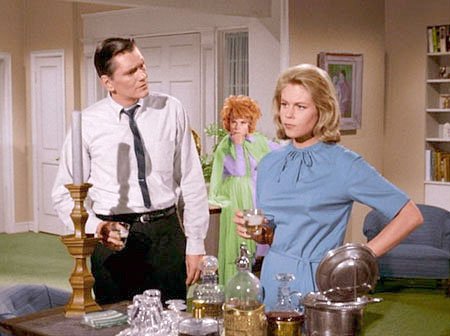 There are a group of people involved in the American news industry and they have questionable ways of sourcing information. Some of them claim to be psychics and believe that they can sense the intent of a situation before it happens. These people often work with government agencies and law enforcement and are able to access personal information and records that are confidential and they often distort the material and lie for fun. Not only that, but they also invade your personal life and spy on you and that is very dangerous because they have been responsible for ruining lives, ripping families apart, getting people hurt and killed all to serve their objectives. To further highlight this illustration, Bewitched is a situational comedy that aired in the 1960 and 1970s. It starred a beautiful young lady called Samantha and she was married to a tall, dark, handsome advertising executive called Darrin who had really nice hair. On the episode called I Confess, which originally aired 4th April 1968, Darrin gets a glimpse of his life if everyone knew that Samantha was a witch. #RandolphHarris 3 of 9
 Darrin took his wife Samantha with him to work to tell his boss and owner of the advertising company, Mr. Larry Tate, that Samantha was a witch. Darrin thought that Mr. Tate would be shocked and afraid, but instead he wanted to use Samantha’s powers of witchcraft to take over the World and make his firm the most successful advertising industry on the planet. After that Darrin told his neighbor’s that Samantha was a witch, and people were selling tickets to see her, watching her house, and it put her life in danger. Eventually, Darrin lost his wife and his daughter Tabatha because the military contacted them and told them it was no longer safe for her to life in public because there were so many threats against her life. Fortunately, however, thankfully it was just a dream (and is a television show), so when Darrin woke up he forgot all about it. The idea of true healing still has some meaning. Nevertheless, this fairy tale shows you the dangers of the news media having too much power and access to people’s lives and secrets. When the news is allowed to break the laws and not be punished they put real lives in danger. We should be concerned with the consequence of spiritual decay. #RandolphHarris 4 of 9
 An industry, like the news media, that is built on exposing people and hurting people is very dangerous. To many of these reporters and journalists, we are nothing more than a news story waiting to happen. They do not care about the harm they may cause by leaking sensitive information, as our lives are meaningless to many of them. And, if an individual complains about them invading one’s life or personal business, they will often have an entertainment lawyer reach out and threaten to sue the individual complaining and have that individual arrested. Also, because the news is so powerful and they work with governors, mayors, and law enforcement, they could charge an individual with a crime for contacting them and asking them to leave one alone. The reporters are relentless in Sacramento, California and probably else were and spend years and decades terrorizing people looking for a story and nothing is done until the federal government sees there is a serious problem going on. Some people have been physically attacked by reporters and extorted and these reporters go unpunished. And when they are reported to their parent company or other regulatory agencies, they refuse to investigate and will say something like, “We have no affiliation with them,” or “We need more information.” #RandolphHarris 5 of 9
 Anyone who can dream must have a passionate desire to protect the World of one’s dreams against intruders. With our roles in society, we are more likely to cultivate the skill or qualified relevant to the role performances of central statuses than of peripheral one. For example, an athlete may give full attention to ensuring that he or she is in peak physical condition but show far less concern with whether he or she is behaving properly as a nephew or brother. The pianist may practice endlessly to improve his or her musical ability, but make no effort to learn to perform home repairs. Role performance of central statuses may transfer or diffuse to other statuses. This process is called role-person merger. The person is consisting of all the roles in an individual’s repertoire. The question raised is whether the attitudes and behavior developed as an expression of one role carry over into other situations. For example, the professional who carries the office bearing and air of authority into family and community dealings have become to a considerable degree the professional role played at work. In these circumstances, a particular status moves to the top of one’s identity hierarchy; the role standard, or qualities expected of a status incumbent, become of primary concern to the individual, and these qualities generalize to other roles. #RandolphHarris 6 of 9
 Under certain circumstances, in fact, a social identity element may become so important that it overwhelms the others. One expression of this idea is the labeling theorist’s concept of role engulfment. This concept suggests that the individual’s identification of the self with some labeled category, for example, homosexual, embezzler, or drug addict, may loom so large in his or her consciousness that all else pales by companions. His or her other statuses or characteristics, however, admirable, come to count for nothing in his or her eyes. Furthermore, global self-esteem is more likely to hinge on performance in central than in peripheral roles. This point has been felicitously by William James, “I am who for the time have stacked my all on being a psychologist, am mortified if others know much more psychology than I. However, I am contented to wallow in the grossest ignorance of Greek. My deficiencies there give me no sense of personal humiliation at all. Had I ‘pretensions’ to be a linguist, it would have been just the reverse.” Our supreme focus should be on the spiritual miracles that are available to all of God’s children. #RandolphHarris 7 of 9
 Our sense of who and what we are tends to hinge more importantly on central than on peripheral identity elements. The woman who loses her identity as wife when her husband passes into Heaven, or a man who loses his identity as a carpenter or engineer upon forced retirement, may experience feelings of uncertainty about who or what he or she really is. The loss of peripheral identity elements, on the other hand, may have little effect. For some reason that is not readily evident, sociologists appear to have been more active in developing and elaborating the idea of social identity salience than in examining it empirically. That strongly valued traits have a particularly powerful impact on global self-esteem has been clearly supported by research. Differential social identity valuation would be expected to show similar effects. The dream is one of our most powerful weapons against the psychoanalysts who insist on interpreting it. The powerful dreamer, free of guilt, stand wholly outside this World. The only guilt one feels and for which one is prepared to atone is the guilt of others. In the healthy World of one’s pure spirit, there is no room for guilt. #RandolphHarris 8 of 9
 The most important thing is to save the dream, this is the noblest attribute of an individual and artist, from destruction. We live in a day in which misinformation about our beliefs abounds. In times such as these, a failure to protect and deepen our spiritual foundation is an invitation to have then gnawed at by those who seek to destroy our faith in God, as they gnarl and buckle as us like a chain saw. Our dreams should not be interpreted by someone else. Instead, we should use our own dreams as an inspiration toward attaining precisely that knowledge of which the dreamer is deprived. Otherwise we may find ourselves bound by the advisory’s chains and being led carefully down forbidden paths. Our spiritual foundation goes deeper as sincere personal and family prayers becomes bastions of our faith as we repent daily, seeking the companionship of the Holy Ghost, and learn God and his attributes and strive to become virtuous. Dreams are a beacon of hope and do not let anyone steal your dream no matter how impossible they say it is. Pray for great things, expect great things, work for great things, but above all pray. We love you and thank you, God. #RandolphHarris 9 of 9

C’est tres en Vogue en ce Moment!
The loneliness trap of withdrawal is self-explanatory: it is a silent admission of total defeat and a reluctant resignation to the status quo, to a life devoid of human love. It is frequently the case that privilege and disprivilege are cumulative and reinforcing, low position along one stratification dimension may produce a corresponding position along another. A prime example is social stratification. As a consequence of prejudice and discrimination, even some who are considered to be privileged are not allowed to enjoy equality in education, prestigious occupational positions, nor do they have access to equal pay or full constitutional rights. As a result, they are not only victims of discrimination and have to work harder for occupational prestige, but they are also socially stigmatized. Hence, a general consequence of prejudice and discrimination is to bring about other conditions of life for people who are victimized that produce unfavorable comparisons with those who are allowed social and legal equality, and the comparisons are obviously damaging to self-esteem. And these days, anyone can be a victim of unfair treatment, injustice, and sexual harassment. People you would not even expect to be victims of discrimination have been. From tall, attractive men you would expect to be accept by everyone to beautiful Academy Award winning actresses. #RandolphHarris 1 of 8

Another principle of self-esteem formation is self-attribution. Internal psychological processes are inherently unobservable. Inner states (such as hunger, anger, excitement, sympathy)—are ordinarily understood to be based on private internal stimuli—and may in reality reflect past training in the application of certain descriptive terms to overt behavior and the conditions under which it occurs. Thus, the man who, after devouring an enormous meal, concludes that “I guess that I was hungrier than I thought,” is drawing conclusions about his level of hunger not by consulting his inner experience but by observing his own behavior or its outcomes. Furthermore, it is not just inner states but any aspect of the self that may be influenced by the individual’s observations of his or her own behavior. People derive much of their knowledge [about themselves] from direct experience of the effects produced by their action. Thus, the child who is dejected and gazes at one’s poor report card, or the unequally treated adult whose social identity includes a low prestige job, lack of material possessions, or other evidence of failure would be expected to develop low self-esteem. #RandolphHarris 2 of 8

Because people who are taken advantage of or not fully appreciated in society are victims of prejudice, and hence negative reflected selves (reflected appraisals); because, on the average they tend to compare unfavorably with those who are accepted and worshipped in such valued areas as school achievement, educational level, and occupational success (social comparison); and because they may interpret their unfortunate life circumstances and experiences as overt reflections of a lack of essential work (self-attribution), many professional have simply taken it for granted that people ranking low in the various prestige hierarchies would tend to have lower self-esteem. The facts, however, speak otherwise. Monumental synthesis of this research, involving a review of several thousand studies, offers little support for the conclusion that people who have been consistently subjected to prejudice and discrimination have appreciably lower self-esteem. Why have these sound psychological principle failed to yield the expected results? The critical error, we believe, had lain in viewing the situation from the perspective of the broader society rather than from the viewpoints of the people who are actually facing discrimination. #RandolphHarris 3 of 8

Investigators have frequently overlooked the reality of the situation, in many cases, when it comes to people who are being discriminated against. If we want insight into an individual’s self-esteem, especially when we know they are being discriminated against frequently, then we need to attempt to understand the individual’s definition of the situation, in order to gain entry into his or her phenomenal field or psychological World. You will find that people who are not accepted, in whatever majority considers themselves to be tres en vogue en ce moment (very fashionable at the moment or in the case accepted), has just as high as, if not higher self-esteem. It has a lot to do with principle of reflected appraisals—we tend to see ourselves through the eyes of others. However, which others? Do we see ourselves through the eyes of the broader society or of those with whom we directly interact? The people in our role-set, that is, our God, parents, classmates, teachers, employers, and neighborhood peers, that is where our interaction goes on primarily. Whatever else these particular others may think of us on other groups, they are unlikely to derogate us. Thus, we are more likely to see ourselves from the perspective of members of our own group who love us, than the dominant majority. #RandolphHarris 4 of 8

The traps inherent in attempting to find human companionship as quickly as possible are less immediately apparent. Two traps are particularly difficult to avoid. The first is the trap of panic. Because of intense feelings of shame, stress, and pain, the person sets out immediately to find a mate with single-mindedness that borders on an obsession. While such a strategy may produce a mate, all too often it also produces greater loneliness. One problem is that the single-minded pursuit of a mate, other humans who could provide companionship and friendship are discarded. Therefore, principle of reflected appraisals is thus entirely sound, but by expecting my self-esteem to be degraded because of your mob mentality, you have misapplied your judgments, as I do not chiefly see myself through the eyes of your majority. And the thing with social comparison is equally sound and equally misapplied. It might be expected for some to have lower self-esteem because they compare unfavorably with the majority in terms of socioeconomic status, school marks, or intact family. #RandolphHarris 5 of 8

However, when people know they are good people and doing the best they can, they also understand that everything runs its course. If you are constantly bullying and harassing others, you will lose your favor with God and your fortune will be turned into misfortune. And those who are working hard and doing what is right will eventually be favored. Also, you cannot just attack a person relentlessly and expect them not to respond. The self-attribution principle is also sound but misapplied. For example, career self-concept and, to a lesser extent, global self-esteem tend to be influenced by the person’s evaluation; in other words, one important basis for assessing one’s own work is to observe one’s achievements. However, this is precisely why it is so important to recognize that some of the individual’s statuses are ascribed, whereas others are achievements. But this is precisely why it is so important to recognize that some of the individual’s statuses are ascribed, whereas others are achieved. There is evidence to suggest that the chief ascribed statuses—race, ethnicity, gender, religion—show virtually no association with global self-esteem whereas achieved statuses do show such an association. Social class is achieved, but no matter your economic standing, you can behave like you come from a good home. #RandolphHarris 6 of 8

It is thus apparent that it is not the individual’s behavior but one’s interpretation of the behavior that has consequences for self-esteem. The issue, in other works, is one of attribution. Thus, we have observed that one factor protecting the self-esteem of many adult groups is the system-blame interpretation. Some behavioral outcomes, people may attribute it either to internal properties of the individual or to factors in the external situation. To further highlight this illustration, if someone does well on a work assignment, one can attribute this outcome either to the fact that one is smart (an internal characteristic) or to the fact that the project was easy (the external situation). If occupational failure is explained by prejudice and discrimination (external factors), then the lower occupational status of the group being discriminated against may do some damage to self-esteem. Therefore, any easy and automatic assumption that low prestige in some stratification hierarchy will produce correspondingly low self-esteem is a gross oversimplication. #RandolphHarris 7 of 8

What research has demonstrated is that, although the principles on which this assumption primarily rest—reflected appraisals, social comparison, and self-attribution—are perfectly sound, researchers have tended to overlook the psychological World—the phenomenal field—of people who are considered to be part of an underrepresented group and, in doing so, have frequently reached erroneous conclusions. God has brought light our of darkness, not our of a lesser light, and he can bring your summer out of Winter, though you have no Spring. Though in the ways of fortune, understanding, or conscience you have been benighted until now, wintered and frozen, clouded and eclipsed, damped and benumbed, smothered and stupefied, now God comes to you, not as the dawning of the day, not as the bud of the spring, but as the Sun at noon. God has shifts in your future that if he showed you now, you would not believe. It is exceedingly, abundantly, above and beyond. Suddenly, a dream comes to pass. Suddenly, a promise is fulfilled. Suddenly, the negative turns around. You need to get ready for the surpassing greatness of God’s favor. #RandolphHarris 8 of 8

The Winchester Mystery House

Hauntings, the ghost psyche, spirit communication, and spirit guides–all these phenomena and more have that have taken place inside The Winchester Mystery House have fascinated mankind for centuries. https://winchestermysteryhouse.com/
Are My Usual Thoughts and Present Actions Worthy of Eternal Life?
 It is a wonderful feeling to conquer wrong practices and to be free and unencumbered from their detrimental effects, both physically and spiritually. We should all take a careful inventory of our habits. Change comes by substituting good habits for less desirable one. We mold our character and future by good thought and acts. Social identity elements refer to the groups, statuses, or social categories to which the members of society are socially recognized as belonging. The human being enters a named, classified World, and is immediately sorted into socially relevant categories. Scarcely has the infant entered the World than he or she is immediately classified according to race, sex, religion, nationality, and so forth. In due course, new socially recognized categories, some of his or her own choosing, are added. These are the fundamental bases upon which society, independent of the special and unique features of each individual, orders and arranges its members. The future we seek is a life motivated by good thoughts, expressed in good works, and sustained by an inner peace and determination of righteous doing. The destiny we desire is an inheritance in the celestial mansion prepared by our Savior for the faithful of God’s children. #RandolphHarris 1 of 8
 We should become so involved in acquiring good quality traits and participating in character-building activities that there is no time to engage in anything worthless or harmful. No universally recognized classification of social identity elements is at hand. As children of God, we are given the privilege and opportunity of choosing which way of life we will follow—which habits we will form. The habits that direct our lives and form our character are fashioned in the commonplace of routine life, and they are acquired by practice. Social identity elements shape the self-concept in a number of ways. To an important extent they define for the individual what he or she is; the individual feels he is a male, lawyer, Protestant, father. Furthermore, if the social identity element is ambiguous (for example, is one an adolescent or a young adult? a music student or a musician?) the self-concept is correspondingly ambiguous. These identity elements, because of their associated role standards, represent criteria for self-judgment. A boy may condemn himself for a lack of courage which a girl may accept without a qualm. Conversely, a boy is unembarrassed at his inability to sew, a girl unembarrassed at her ineptitude at catching forward passes. #RandolphHarris 2 of 8
Am I setting my sights on eternal goals and working to obtain them? Role performances influence social action; this behavior, in turn, comes to constitute an important part of the content of the self-concept. The good habits of a child’s early training form the foundation for his or her future and sustain the individual in one’s life later on. The professor sees himself as a teacher or writer, but the doctor usually does not; the doctor sees himself or herself as a diagnostician or surgeon, but the professor does not. Furthermore, these actions may generalize to broader aspects of the self-concept. For example, it has been discovered that people whose work requires them to exercise autonomy, make their own decisions, and assume responsibility are more likely to emerge with higher global self-esteem. Although we do not always know what lies ahead, there is strength and safety in righteous conduct. Since social identity elements represent important bases of social evaluation, they may influence self-evaluation. We need to organize our lives based of virtue, and chart a right course as we journey toward eternal life. In the conduct of our lives, we learn that good character-building habits mean everything. It is by such behavior that we harvest the real substance and value of life. The way we live outweighs any words we may profess to follow. #RandolphHarris 3 of 8
 In every society, people are characteristically ordered along a number of dimensions of stratification, for example, occupational, social class, racial, religious, gender, age, and ethnic. Occupations are arranged in a well-recognized hierarchy of prestige; ethnic preferences (including racial) are surprisingly uniform across broad segments of the society and persist over long periods of time; and so on. Since such stratified positions command unequal social self-esteem, social scientists have tended to take it for granted that those ranking lower in the various status hierarchies would have lower self-esteem than the more favored member of society. However, human beings destined purpose is to conquer all habits, to overcome the evil in humanity and to restore good to its rightful place. The ways of life acceptable to the people of the World are not always acceptable to God. We should conduct ourselves wisely before God and sin not. We should not yield to the persuasion of people with evil intent. The principle of reflected appraisals holds that if others look up to us and treat us with respect, then we will respect ourselves accordingly, but if they derogate or disdain us, then our self-esteem normally depends on the respect of others. #RandolphHarris 4 of 8
 Social comparison is at the heart of social evaluation. Bad habits are a reflect of our thoughts and personalities, our behavior and conduct. They are degrading to the choice qualities which are our God-given spiritual endowments of faith, honesty, integrity, and uprightness. Human beings learn about themselves by comparing themselves to others. Evil tendencies destroy character and ruin lives. When first yielding to sin, one’s resistance, self-control, and character are weakened and further transgression usually result. With violation of spiritual laws and rejection of spiritual qualities, our powers of resistance are reduced. Eventually we seem to lose complete control of our ability to resist evil. Imagine the great misery suffered by a person who has practiced a vice for so long that he or she curses it, yet at the same time holds on to it. And that deprived expression of reality is seeking to define life with terrible inadequacy that will revenge itself unto the third and forth generations. Our great challenge is to learn how to control ourselves. We must learn for ourselves and act for ourselves, being careful not to follow those who are not divinely led. We have a responsibility to thwart the work of the evil one—not to assist or perpetuate its cause by yielding to the enticements of sin. #RandolphHarris 5 of 8
 With good habits, we prepare ourselves for excellence. Judging the dead is a universal theme, in which evildoers are punished and the good rewarded. Every Ancient Egyptian hoped to be reborn in the afterlife in the image of Osiris, the God of the dead, and to be admitted into his kingdom. However, before this could happen, the deceased had to appear before a divine tribunal, which examined an individual’s conduct on Earth. In the judgment of the dead, the weighing of the heart ritual took place. The deceased was escorted into the tribunal and stood before Osiris, seated on a throne, and a jury of 42 Gods. In the center of the room was the balance, on which the heart would be weighed. First, however, the deceased had to make a negative confession, asserting that he or she had not committed reprehensible acts, was not guilty of evil deeds, or thoughts, and had not acted in defiance of Maat, goddess of truth and justice, or the divine order. The individual then had to repeat this confession before each member of the tribunal. As the heart was about to be weighed, the deceased pleaded with it not to betray nor condemn him or her, a prayer that was often inscribed on the scarab amulet buried with mummified bodies. #RandolphHarris 6 of 8
The heart was then placed on the scales to be weighed against the ostrich feather that symbolized Maat. If the heart brought the scales into balance, the deceased was allowed to access the afterlife. However, if heavy with sin, the heart failed to being the scales into balance, the deceased faced the open jaws of Ammut, the Devourer of the Dead, a netherworld creature that was part crocodile, part lion and part hippopotamus. While we are living, it is important to do good. One cannot truthfully say one is confirmed in his or her bad habits, sins, or weaknesses to the point that they cannot be thrown off and repented of. The human will is naturally inclined toward the right. We are spirit children of God and have born within us the power to overcome all evil practices. We have a gracious, kind, and loving Father in Heaven who stands ready to help us. And the Lord said, “I will bring forth out of darkness unto light all their secret works and their abominations; and except they repent I will destroy them from off the face of the Earth; and I will bring light all their secrets and abominations, unto every nation that shall hereafter possess the land. And now, my child, we see that they did not repent; therefore they have been destroyed, and thus far the word of God has been fulfilled. (Alma 37.26-26).” #RandolphHarris 7 of 8
 An individual’s grief, insecure ego, inability to love, shattered dialogue, or entanglement in loneliness traps is also a collective problem for society. Living as we should, obedient and faithful, then we are on our way to the presence of God. Sometimes in life in feels like something is missing and we all want confirmation that we are doing the right thing and pleasing in these eyes of God. When we allow others just to be what he, she, or it is, without imposing our preferences or offering any resistance, the other is no longer something separate over there, apart from me. We are then free to meet and mingle with the other in the open field of awareness, where separate selfhood and otherness dissolve and fade away. Then we discover what it really means to love—to open to others as they are, without imposing our judgments or agendas on the. When the qualities that are desirable in individuals also become universal in the people of a nation, that nation also will have good character. It is a love and practice of all things that are true, honest, l lovely and of good report. #RandolphHarris 8 of 8