Home » Articles posted by Randolph Harris II International Institute (Page 194)
Author Archives: Randolph Harris II International Institute
Under the Stars and Lights in the Sky—A Baby is as Pure as an Angel and Fresh from Heaven!
 The foundation of emotional life: love, joy, anger, fear, and sadness. Energetic, purposeful work leads to vigorous, healthy, praiseworthy achievement, a clear conscience, and refreshing sleep. Works has always been important to humans. May we all have a wholesome respect for labor whether with brain, heart, or hand. May we ever enjoy the satisfaction to honest toil. “In the sweat of thy face shalt thou eat bread,” reports Genesis 3.19. One will never dream oneself into Heaven. One must pay the price in toil, in sacrifice, and righteous living. Freedom, a willingness to work, and the desire to serve our God through service to our fellow people—these are the sources to true wealth. Cling fast to these truths and one must inevitably increase in favor with our fellow living beings. “For what shall a person profit if one shall gain the whole World and lose one’s soul?” reports Mark 8.36. Growing in favor with God is the veritable foundation upon which all other worthwhile blessings rest. “Seek ye first the kingdom of God, and his righteousness; and all these things shall be added unto you,” reports Matthew 6.33. Sometimes God puts us through the experience and discipline of darkness to teach us to hear and obey him. Pay attention when God puts you into darkness, and keep your mouth closed while you are there. Are you in the dark right now in your circumstances or in your life with God? If so, then remain quiet. #RandolphHarris 1 of 14
 Darkness is the time to listen. Do not talk to other people about it; do not read books to find out the reason for the darkness; just listen to God and obey. “Whatever I tell you in the dark, speak in the light; and what you hear in the ear, preach on the housetops,” reports Matthew 10.27. This kind of perseverance is more than endurance. It is endurance combined with absolute assurance and certainty that what we are looking for is going to happen. If our hopes seem to be experiencing disappointment right now, it simply means that they are being purified. If it is noble and of God, every hope or dream of the human mind will be fulfilled. However, one of the greatest stresses in life is the stress of waiting on God. “Be still, and know that I am God,” reports Psalm 46.10. Once we are totally surrendered to God, he will work through us all the time. “One that hath my commandments, and keepeth them, one it is that loveth me: and one that loveth me shall be loved of my Father, and I will love one, and will manifest myself to that individual.” Spiritual strength promotes optimistic thinking, good ideals, upright habits, righteous attitudes, and uplifting attitudes. These are the qualities that promote wisdom, physical and mental well-being, and enthusiastic acceptance and response from others. #RandolphHarris 2 of 14
 Favor with God gives necessity incentive and perspective to life. It gives a person real purpose of living and achieving. We increase in favor with God as we do the will of God. Let us be faithful in the work he gives us, whatever it may be, and whatever our station in life. Let our desires be in harmony with God’s will as it is revealed to us—keep his work in our hearts—conquering selfish desires that would metastasize our personal progress. With informed thought, we can actually vary the intensity of our feelings, or shift from one feeling to another. For instance, by focusing on the long-term gains that will accrue if one tolerates the frustration of finishing a tough assignment, one can shift from feeling anxious to feeling eager—a subtle but powerful difference that will affect our work and life. Failure to feel, on the other hand, leads either to unproductive circuitous thought (which produces further anxiety) or to denial (and its companion, procrastination). Once we have appraised, felt, and thought about how to respond properly to an emotionally charged event, we can act in a manner best suited to our desires. We lived as spirits before mortal birth and will live again as immortal beings through the eternities to come. Blessed are you if you have a testimony of these things. These great spiritual truths have seen systems come and go, and so it will be in the future. #RandolphHarris 3 of 14
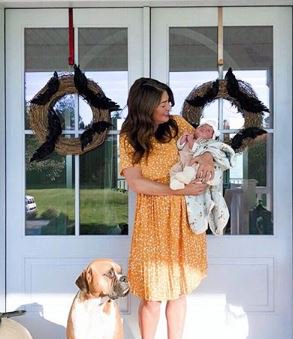 A smiling, happy baby is most probably the cutest thing in the entire World, but they are even cute when they are whining. Wherever the baby goes, there is a cheerfulness, happiness, and joy. With their innocence and delicate nature, babies warm the hearts of every one. The ante-natal life of the child is one of purely natural combination, bodily interaction and flowing from the one to the other. Its life’s horizon, as it comes into beings, seems in a unique way to be, and yet again not to be, traced in that of the life it bears. For it does not rest only in the womb of the more. Yet this connection has such a cosmic quality that the mother body humans know the Universe, in birth they forget it. Feeding an infant enables a new mother to give to her baby. It is giving, the nurturing, the taking care of, that stimulates the deepest feelings of joy in caring for another being. It is the taking care of by giving nourishment to a new baby that enables a lot of parents, grandparents, siblings, family and friends to love a baby at first sight. People welcome these tiny souls into the World, and there is a sudden love and happiness that comes from family attachment bonds. They joy of giving overrides sadness and creates a feeling of joy. It is probably a chemical bond. #RandolphHarris 4 of 14
 Many women like to breast feed (nurse) their babies because they believe that it is healthy and it gives them a chance to bond with their babies. In fact, the American Academy of Pediatrics (AAP) recommends mother’s milk as the best nutrition for infants. They believe that babies should be exclusively nursed from their mother’s milk fed for the first six months. Mother’s milk provides natural antibodies that help the babies resist illnesses, such as ear infections, and it can be easier to digest, which will make babies less gassy and constipated. Nursing is also supposed to lower the risk of sudden infant death syndrome in the first year of the baby’s life, and it could also improve the child’s cognitive function. Later in life, the fact that a baby was nursed could reduce the risk of being overweight and of developing asthma, type 1 and type 2 diabetes, high cholesterol, Hodgkin’s disease, leukemia, and lymphoma. Breastfeeding is good for mothers, too. Women who breast feed have a reduced risk of breast cancer, diabetes, heart disease, osteoporosis, and ovarian cancer. And most women love to breastfeed because they can bond with their baby. Some experts believe that mother’s milk has hundreds of components that cannot be replicated. #RandolphHarris 5 of 14
 Formula feeding is also a healthy choice for babies. If I were a parent, I would actually prefer my baby to be formula fed because sometimes the formula has vitamins and minerals that the mother’s milk may not have, and it is the best possible alternative to mother’s milk. Also, some women may want to start taking medication or drinking wine after they give birth to their baby and by formula feeding the mother is free to do what she wants without worrying about passing the chemicals or hormones onto the baby. Some others also have a hard time producing mother’s milk or cannot, so formula is a healthy option. Also, feeding the baby is a journey that is different and that baby’s nutritional needs evolve over time. Companies like Gerber have age-specific nutrition that is specifically designed to help meet the baby’s need at every stage of development. All Gerber formulas provide expert-recommended nutrition, and are designed to being comfort to the babies. The formulas are inspired by mother’s milk. They have Human Milk Oligosaccharide, which is a prebiotic just like those found at significant levels in breastmilk. In the Gerber formula, there are also Comfort Proteins, small proteins that are easy for gentle stomachs to digest. #RandolphHarris 6 of 14
 The Gerber powder infant formula has a blend of DHA (docosahexaenoic, which is a synthesized version of the essential fatty acids that are naturally found in breast milk), prebiotics and probiotics, which are important components found in breastmilk. The level of DHA supports brain and eye development, and helps to support a healthy digestive tract. In the Gerber baby formula, there is no artificial growth hormone. It is non-GMO, which means it is not made with genetically engineered ingrediencies. However, you nurse your baby, do what it best for your family. Babies, and especially newborns, cannot give overtly to their new family. They just want to be loved and cared for and protected and kept at a safe temperature. Babies seem to love milk, and they enjoy when someone takes the time to change their diaper and dress them, cuddle them to soothe them when they are stressed. And babies taking out acceptance is our help and is what brings them joy. Yet, it seems good emotions are the things babies enjoy most. And for many people, babies are the most precious thing they have ever had. They are one’s treasure, their joy, and their World. Having a little Angel in your life compensated for the sleepless nights and the great responsibility that rests upon your shoulders. Raising kids in one of the most worthwhile things you can do in your life. #RandolphHarris 7 of 14
 I think, therefore I am. I also feel, therefore I am fuller and more complete in my Being. If we were only emotional, we would simply react, as an amoeba does when touched with a microscope. However, by combining emotional reactions with thought, with cognitive skills, we can respond, which is far more than just reacting. Reacting is an almost unconscious, automatic behavior. Human beings are able to do more. They can modify their behavior, can mull things over, can experience more fully, when they bring all the aspects of their selfhood into being. Being true to who we are means we are focused and concentrating, and acting with purpose or with keen awareness. When we are mindful, it means we are being vigilant, looking at what is happening from multiple angles, being open to new information and willing to revise our understanding of the way the World works. Paying attention to the greater reality and to the details of our experience is the essence of mindfulness. Selfhood allows one to become comfortable with making all one’s life choices conscious ones, we acquire a surprising mental sharpness. We are able to run our lives instead of letting them run us, which makes one feel smarter, less forgetful, and more creative. In what might seem a paradox, many say they are more intuitive because they are actively observing what is within them as well as the World around them. #RandolphHarris 8 of 14
 One of the risks of our present technology is that we have overemphasized the thinking ability of one group, our intellectual elite (including scientist and engineers) and underestimated the thinking ability of the larger group of people. The Thinkers have assumed, often correctly, that all that was needed to keep the masses happy was to fill their bellies and meet their emotional needs—and unfortunately, many people in the larger group have settled for so little. However, more and more, ordinary people are discovering the completeness of Being, the ability to both think and feel, are enjoying it and demanding the right to participate more fully in the doings of their society. Like many skills, sometimes our abilities become overdeveloped. What was essential to our ability to become productive in society is now so automatic that we miss out on a lot that life has to offer. Yes, this is the old take time to smell the roses admonition, which means slow down to enjoy life before it is gone. However, it is also a note about what it takes to live one’s life in the best way possible. Now that we know to screen out the unnecessary things in life, we probably need to go back and reevaluate exactly what it is we want to screen out. Yet, much of what is happening in our lives, we forget to notice altogether (not smelling the roses). Instead of carefully choosing what we let into out minds, some times we need to be nonjudgmental. “And may the Lord bless your soul, and receive you at the last day into his kingdom, to sit down in peace,” reports Alma 38.15. #RandolphHarris 9 of 14
 As we have let machines do more of our thinking, we have run the risk of having no further part in the calculations of our World, and our sense of person significance has often been lost. The fault, however, is not that of the machines, nor entirely of the builders and maintainers of the machines. The fault has often been that of the society at large and of individual ordinary citizens in neglecting to develop those other areas of personality that would enable every to participate more fully and effectively. The society in general, because of the value-orientation of the leadership and the taste-makers—advertising and market as if they want the value-orientation that has been sold to them. They become conditioned too easily into being just what the mass media and the spokesmen for advertising tell them they are. The more they recede into the background and become passive consumers, the less significant they will feel in determining their own destinies, and as a consequence, psychic holes are formed. One a psychic hole is formed, some people become psychopaths who identify so closely with the famous that they use celebrities to fill up their (the psychopaths’) psychic hole. These people only care about the role the celebrity is playing and how it satisfies the audience’s needs. “As much as you put your trust in God even so much ye shall be delivered out of your trials, and your troubles, and your afflictions, and ye shall be lifted up at the last day,” Alma 38.5. #RandolphHarris 10 of 14
 When the psychopaths feel that the celebrity in whom they have entrusted themselves for completion has let them down, assassination is often the payment; the psychopathic fans cannot draw a line between themselves and those they identify with. However, it would be wrong to conclude that, as a result of the industrialization of celebrities that is so rampant in our society, all mystery has vanished from the scene. Some sense of mystery is always necessary to the successful creation of celebrities and their appeal to the masses. All art and artist constantly flit on the borderline between heightening mystery and reducing it. A telling point, however, is that in our times what passes for art can only survive and flourish on the basis of the most minimal mystery. We should not expect that more of us will experience an addiction to manufactured personalities and character that celebrities play. These symptoms are not common for most people. However, we should expect that societies that are hooked on massive amounts of unreality in order for them to function will experience greater degrees of addiction. We should expect, therefore, that the kinds of unreality people create are a reflection, among others things, the general culture of a faction of society in which they are situated. “Do not say: O God, I thank thee that we are better than our brethren; but rather say: O Lord, forgive my unworthiness, and remember my brethren in mercy—yea, acknowledge your unworthiness before God at all times,” reports Alma 38.14. #RandolphHarris 11 of 14
 The cognitive structure of the human mind helps us to understand why so many of the mechanisms that were designed and/or evolved for human’s survival (e.g., the ability to notice out of the corner of one’s eye what appears to be a hungry tiger fleeting by) are especially ripe for exploitation by the mechanisms of unreality that we have identified previously. Thus, a fuller, more humanistic approach in education, religion, and certainly in family life can change this. If we can realize and actualize the potentials in ordinary citizens, then we can move a lot closer to the only real goal of human existence: to be the fullest, most effective, most real human beings that we can possibly be. Every aspect of a person’s existence is capable of being turned into an archetypal mythological character for every part of a person’s psyche and social nature. We are not just slaves nor tyrants, not one-sided Brains or Glands, not consumers only or producers only, not always passively submitting or uncaringly dominating Human beings, people who have found their identity and selfhood, know and feel their completeness, their wholeness, their totality of Being. This is the fullest meaning of being together, when the emotions, dream, ideas, hopes, memories, and physical body are functioning as one unit, not pulled apart and alienated one from another. “The LORD himself foes before you and will be with you; he will never leave you nor forsake you. Do not be afraid; do not be discouraged,” Deuteronomy 31.8. #RandolphHarris 12 of 14
 At 7.00 A.M. each day, I pass the local coffee shop, and I see the woman of my dreams. She has long dark hair, soft skin, red lips and brown eyes. She seems so sophisticated, and I do not know what to do to get her attention? The need to affiliate—a desire to associate with other people, is a basic human need. Humans seek the company of others because they want support, friendship, and information. Being around good company can also alleviate fear and anxiety. So many want to know, “How can I get the attention of the person that I am attracted to?” Most people look for friends and lovers who are kind, understanding, who have attractive personalities, and who like us in return. We want to be around people who add to our happiness and make us feel good. No one wants to meet that person, who craves your attention, and once they get it, they treat you like crap, make fun of you and use you to get the approval of others. If you see someone you like, be adult about it. If you see a lady you like in a book store, see what book she is read or what kind of coffee she is drinking and strike up a conversation. If things go well, maybe she will hook up with you next week and have lunch? It is that easy. Furthermore, if you are having trouble coming up with ideas to talk to the person of your dreams about, just think of the things that you liked in your previous relationships and use those methods to develop a new relationship. However, being mean and putting a person down only make you less attractive. #RandolphHarris 13 of 14
 Additionally, people are generally attracted to those who they come into contact with frequently. Some might wonder, “Well, she is pretty, but why is she single and always alone?” Maybe she is from out of town and spends most of her time working and never got to know anyone from the community? I am sure she would like to make friends, but she is always busy and never sees the same people. So the chances of her making a love connection are slim. Office romances are not recommended, and I am sure one can see why. So this young lady’s best chance of meeting someone is to be introduced to a person because she is not going to make a connection through work, and most people are too timid to approach someone they have only seen once to ask them out on a date. However, if you see that ideal person, you might want to talk to them, especially if you have never see he or she before, chances are that could be your last time. Also, we often hear that opposites attract, but often times people are attracted to those who are like them. Many people like to feel validated. So we are drawn to people who have a similar background, age, interest, attitudes, beliefs, and habits. These types of connections reinforce our own beliefs and make us feel normal and attractive. Life is not complicated, there is no need to annoy, bother or disrespect others. Maybe examine your intentions before dating. “Therefore, owe no one anything, except to love each other, for the one who loves another has fulfilled the law,” reports Romans 13:8. #RandolphHarris 14 of 14
The Heart Asks for Pleasure First and His Presence is Enchantment—You Go Beg Him Not to Go!
 Our physical and mental well-being is not only a priceless blessing to yourself, but a heritage that you may pass on to your descendants. With good health, all other activities of life are greatly enhanced. A clean mind in healthy body will enable us to render far more effective service to others. It will help us provide more vigorous leadership. It will give us every experience in life more zest and meaning. Good health is a noble and worthwhile attainment. Western minds, dividing things up into dichotomies like subjective and objective, rational and emotion, have to solve the problems caused by such thinking. In the Eastern mode, since there are no false divisions, there is no need for what the French call rapprochement or bringing together-again. However, Westerners, who set up polarities, have to deal with the gap. When a Thesis, like Reason, calls forth an Antithesis, like Emotion, we neatly dispose of the gap by delivering a Synthesis, a proper balance, a good or appropriate unification. Or in Taoist fashion, we bring the two back into a more natural relationship. This synthesis is precisely what humanistic psychologist are attempting with the concepts of Reason and Emotion. #RandolphHarris 1 of 7
 As Homo Sapiens (Humans, the Wise or Discerning), we have a superior brain that enables us to think logically and rationally, to control the passions and instinct-like drives, and to live in ways that transcend our natural existence. We learn, remember, associate, innovate, create, and transmit our insights in written symbols. We are, clearly, superior beings! Yet too often we find people ruled by their passions and denying any intellectual abilities other than those that serve or justify the passions. And, when emotions overrule and deny the intellect, humans once again become the brute animal from which one supposedly evolved. Newspapers daily carry descriptions of people ruled by greed, lust, hate, love, ambition, and so on. Just as often, however, we find people ruled by their logic or intellect, denying any emotions or feelings, giving attention to science and technology often to the total exclusion of considerations for the rest of humankind. Complaints are voiced daily that the American government is thus oriented, that more government funds are spent on increasing research and technology and assistance to foreign than are spent on solving social problems such as racism, pollution, poverty and overpopulation. #RandolphHarris 2 of 7
 The proper synthesis may not be easy to define and certainly will not be easy to arrive at. However, it appears that there is an optimum life style that includes a balance of both emotional reactivity and the rational approach and this is how we get a full-functioning person in terms that come very close: Psychological adjustment exists when the concept of self is such that all sensory and visceral experiences of the organism are, or may be, assimilated on a symbolic level into a consistent relationship with the concept of self. This means that any experience, emotional, perceptual, or rational, should be consistent and congruent with the person’s own concept of who one is. The Word of Wisdom leads to clean habits, thoughts, and actions. Obedience to it will make one more receptive to the Spirit of God, which cannot dwell in an unclean tabernacle. Follow the gospel plan that provides for solid work, clean entertainment, and activity to promote growth of stature. Possibly the best measure of the stature of a person is in their own home, at their own fireside. As one looks hopefully forward, what conclusions has one reached about marriage, the home, and family? #RandolphHarris 3 of 7
 What valued does one place on the old-fashioned American home with its goodly number of children, its religious atmosphere, its prayer, its blessings and its rather Puritanical idea about duties and obligations, including deference and respect for parents and older folk? The foundation of a happy home must be laid during premarital days. Young people should keep their associations on an uplifting, spiritual, level Moral purity is an eternal principle. Its violation destroys the noblest qualities and aspirations of human beings. Purity is life-giving; unchastity is deadly. Human beings have an essential nature of their own, some skeleton of psychological structure that may be treated and discussed analogously with one’s physical structure, that one has needs, capacities and tendencies that are on their face good or neutral rather than evil. There is also involved the conception that full healthy and normal and desirable development consists in actualizing human nature, in fulfilling these potentialities, and in developing into maturity along these lines that this hidden covert, dimply-seen essential nature dictates, growing from within rather than being shaped from without. #RandolphHarris 4 of 7
 Apparently, we have to come to grips with the ongoing conflict in our institutionalized way of viewing ourselves. Since we currently have some patterns of living that view humans as a Thinker, they need to be enlarged to recognize human’s needs to be a Feeler too. To do so would involve our educational systems, literary and publishing ventures, scientific, technological, and government agencies. Similarly, the agencies that view humans only as emotional, like the entertainment, recreational, theological, ecclesiastical, and art media, need to be retooled to take into account the important place intellect and reason have in out lives. “May the LORD answer you when you are in distress. The Earth is the LORD’s and everything in it, the World, and all who life in it; for he founded it upon the seas and established it upon the waters” reports Psalm 20.1 and Psalm 24.1-2. We must be true to God’s holy laws. Remember, they cannot be broken with impunity. If we would be happy and successful in our Earthly association, courtship, and home building, we must conform our lives to the eternal laws of Heaven. There is no other way. Remember that no great nation has ever fallen without first becoming morally corrupt. #RandolphHarris 5 of 7
 There are many things that set us apart from our animal relatives. Among the chief of these is our cognitive ability. Our rational processes have enabled us to put two and two together in a fantastic number of ways. The tools we build are the physical proof of our cognitive abilities. The artifacts and the edifices we create are monuments to our intellect. We need, however, to cultivate the cognitive ability in everyone, not just among the small elite group who will be set aside as The Thinkers. We dare not let this kind of thing occur or we will become, even more than we are now, a society of narrow, restricted specialists, with the Thinkers at the top of the heap. Each human being is Homo sapiens, not just those with diplomas and degrees after their names. The society must take this into serious account and redesign its programs and policies to allow for the thinking capacities of all its members. In addition, human beings are also blessed with an abundance of emotions with which one can react, which can motivate one, and which certainly can, if fully known and appreciated, enrich and enhance one’s life. The body is the soul presented in its richest and most expressive form. In the body, we see the soul articulated in gesture, dress, movements, shape, physiognomy, temperature—in countless expressive forms. #RandolphHarris 6 of 7
 We can respond to the pleasures and pains of each person around us, not in a pathological sense which brings us too much into the lives of others, but in the fulfilling sense which brings us too much into the lives of others, but in the fulfilling sense of knowing each other and becoming able to empathize more fully with others. Self-understanding comes only with the optimum development of the capacity to identify with and experience the feelings of other people. This is called the capacity social interest or social feeling. The realization of the dual nature of human life, the cognitive and the emotional, should excite our interest, not frighten us away. If, through letting bot aspects of our nature out, we can more completely experience situations, then possibly we will have come a lot closer to the deal of self-fulfillment or self-actualization. Are we sometimes asked to do for others what may seem to be beneath us, or what is tiresome and momentous? Was not the Son of God born in a stable? Did he not make himself a servant, even to washing the feet of his disciples? Love one another. Serve you’re your fellow humans. The example has been given you. Therefore, let us never get tired of being patient and preserving and generous, living in harmony and, if possible, at peace with all people. “My soul standeth fast in that liberty in which God hath made us free,” reports Alma 6.9. #RandolphHarris 7 of 7
Continue to Grow Mentally—Grow in Wisdom—Grow in truth!
 The World has always loved the saint as being the nearest possible approach to the perfection of God. It is unscientific and unscholarly to waste time attempting to prove or disprove things that have already been established beyond question. The true scientist no longer attempts to disprove the pull of gravity, for instance, nor the rotation of the Earth, nor the motion of Heavenly bodies, nor the sequences of the seasons, nor human’s need for food and water, nor the function of the heart. These things are established, and for each individual to bring them into question and insist on going through all the experimentation whereby they have been established would be costly, wasteful, and unfeasible. It is just as unscientific, unscholarly, and even more costly for each individual to insist upon personally conducting the experiments that have proved that sin brings sorrow, that disbelief brings emptiness and unrest, that things forbidden of God are not good for human, that the use of illegal substances are enslaving habits, that unchastity brings unhappiness, and so forth. Religion and science have sometimes appeared in conflict. Yet, the conflict can only be apparent, not real, for science seeks truth, and true religion is truth. There can never be conflict between revealed religion and true science. #RandolphHarris 1 of 10
 Truth is truth, whether labeled science or religion. All truth is consistent. There is no conflict—only in the interpretation of fact. Studies of high-altitude residents have greatly contributed to our understanding of physiological adaptation. As you would expect, altitude studies have focused on inhabited mountainous regions, particularly in the Himalayas, Andes, and Rocky Mountains. Of these three areas, permanent human habitation probably has the longest history in the Himalayas. Today, perhaps as many as 25 million people live at altitudes above 10,000 feet. In Tibet, permanent settlements exist above 15,000 feet, and in the Andes, they can be found as high as 17,000 feet. Because the mechanisms that maintain homeostasis in human evolved at lower altitudes, they are compromised by the conditions at higher elevations. At high altitudes, many factors produce stress on the human body. These include hypoxia (reduced available oxygen), more intense solar radiation, cold, low humidity, wind (which amplifies cold stress), a reduced nutritional base, and rough terrain. Of these, hypoxia exerts the greatest amount of stress on human physiological systems, especially the heart, lungs, and brain. #RandolphHarris 2 of 10
 Hypoxia results from reduced barometric pressure. It is not that there is less oxygen overall in the atmosphere at high altitudes; rather, it is less concentrated. Therefore, to obtain the same amount of oxygen at 9,000 feet as at sea level, people must make certain physiological alterations aimed at increasing the body’s ability to transport and efficiently use the oxygen that is available. At high altitudes, reproduction, in particular, is affected through increased infant mortality rates, miscarriage, low birth weights, and premature birth. An early study reported that in Colorado, infant deaths are almost twice as common above 8,200 feet (2,500 meters) as at lower elevations. One cause of fetal and maternal death is preeclampsia, a severe elevation of blood pressure in pregnant women after the twentieth gestational week. People born at lower altitudes and high-altitude natives differ somewhat in how they adapt to hypoxia. Upon exposure to high altitude people born at low elevation become acclimatized. The responses may be short-term modifications, depending on duration of stay, but they begin within hours of the altitude change. These changes include an increase in respiration rate, heart rate, and production of red blood cells. (Red blood cells contain hemoglobin, the protein responsible for transporting oxygen to organs and tissues.) #RandolphHarris 3 of 10
 A more permanent, developmental acclimatization occur in high-altitude natives during growth and development. This type acclimatization is present only in people who grow up in high-altitude areas, not in those who moved there as adults. Compared with populations at lower elevations, life-long residents of high altitudes display slowed growth and maturation. Other differences include larger chest size, associated, in turn, with greater lunch volume and larger heart. In addition to greater lung capacity, people born at high are more efficient than migrants at diffusing oxygen from blood to body tissues. Developmental acclimatization to high-altitude hypoxia serves as a good example of physiological plasticity by illustrating how, within the limits set by genetic factors, development can be influenced by environment. There is evidence that entire populations have also genetically adapted to high altitudes. Indigenous peoples of Tibet who have inhabited regions higher than 12,000 feet for around 25,000 years may have made genetic (i.e,. evolutionary) accommodations to hypoxia. Altitude does not appear to affect reproduction in these people to the degree it does in other populations. Infants have birth weights as high as those of lowland Tibetan groups and higher than those of recent (20 to 30 years) Chinese immigrants. This fact may be the result of alterations in maternal blood flow to the uterus during pregnancy. #RandolphHarris 4 of 10
 Another line of evidence concerns how the body processes glucose (blood sugar). Glucose is critical because it is the only source of energy used by the brain, and it is also used, although not exclusively, by the heart. Both highland Tibetans and the Quechua (inhabitants of high-altitude regions of the Peruvian Andes) burn glucose in a way that permits more efficient use of oxygen. This implies the presence of genetic mutations in the mitochondrial DNA (mtDNA directs how cells use glucose). It also implies that natural selection has acted to increase the frequency of these advantageous mutations in these groups. As yet, there is no certain evidence that Tibetans and Quechua have made evolutionary changes to accommodate high-altitude hypoxia (since specific genetic mechanisms that underlie these populations’ unique abilities have not been identified). However, current data strongly suggest that selection has operated to produce evolutionary change in these two groups. If further study supports these findings, we have an excellent example of evolution in action producing long-term adaptation at the population level. “Trust in the Lord with all thine heart; and lean not unto thine own understanding. It all thy ways acknowledge God, and he shall direct thy paths,” reports Proverbs 3.5-6. #RandolphHarris 5 of 10
 Speaking of high elevations, Cosmonauts that spend long months aboard the International Space Station lose bone strength faster than previously thought and have a higher risk of breaking their hips later in life. A survey of 13 space station cosmonauts found that their bone strength dipped by at least 14 percent on the average during their half-year stays aboard the orbiting laboratory. Three of the cosmonauts lost up to 30 percent of their bone strength during their long-duration spaceflights, putting them on par with the bone strength of elderly people with osteoporosis on Earth. If preventive measures are not taken, some of our cosmonauts may be at increased risk for age-related fractures decades after their missions. When in space, bone mineral density can decrease by between 0.6 percent and 5 percent each month. Cosmonauts gradually lose muscle strength and bone density over time while on long-duration spaceflights because their bodies float in microgravity, rather than work against the tug of Earth’s gravity each day. To lessen the effects, space station cosmonauts must exercise at least two hours every day and undergo weeks of rehabilitation after their return to Earth. #RandolphHarris 6 of 10
 The hip and spine of long duration cosmonauts typically experience the greatest amount of bones loss. Hip fractures nearly always require hospitalization or major surgery, while vertebra fractures in the spine can lead to loss of height, severe back pain and deformity. When people make new discoveries in their energetic search for truth, it is well to remember these will always be in harmony with all fundamental and eternal truths. Yes, truth is always consistent, whether it is revealed directly from God to humans, through his inspired prophets, or comes from the laboratory through diligent searching of his children and through the influence of the Spirit of the Lord upon them. This quest for wisdom or intelligence, which the Lord defines as light and truth, is a glorious challenge. We have been assured by the Author of Eternal Life that whatever principle of intelligence we attain unto this life, it will rise with us in the resurrection. So there seems to be a motive to learn all we can while on Earth. “And if a person gains more knowledge and intelligence in this life through one’s diligence and obedience than another, one will have so much the advantage in the World to come,” reports Doctrines and Covenants 130.18-19. #RandolphHarris 7 of 10
 We are in a changing World beset with many perplexities. However, while change is all about us, and will continue to be, in the physical World, we must recognize that there are certain Heaven-sent verities, principles, and values that are eternal. These never change. As we travel life’s highway, we will encounter theories, proposals, and programs that have wide appeal. One of many fascinating concepts is marginal benefit. Marginal benefit is an increase in an activity’s overall benefit that is caused by a unit increased in the level of that activity, all other factors remaining constant. Marginal decision making can help explain some otherwise puzzling economic phenomena. For instance, why is water so inexpensive, while gold is so expensive? Humans, animals, and plants need water to survive, while gold is relatively unnecessary; but for some reason, people are willing to pay much more for a bar of gold than for a cup of water. The reason is that a person’s willingness to pay for any good is based on the marginal benefit that an extra unit of the good would yield. The marginal benefit, in turn, depends on how many units a person already has. Although water is essential, the marginal benefit of an extra cup is small because water is plentiful. By contrast, no one needs gold to survive, but because gold is so rare, people consider the marginal benefit of an extra bar of gold to be large. #RandolphHarris 8 of 10
 Be not mislead. A rational decision maker takes an action if and only if the marginal benefit of the action exceeds the marginal cost. This principle can explain why people are more willing to pay more for diamonds than for water, or why some builders are willing to sell a house below average cost. It can take some time to get used to the logic of marginal thinking, but the study of economics will give one ample opportunity to practice. Remember that ideas and theories are either sound or unsound; their soundness does not depend upon which people hold them. Be mindful that there are also many phenomena in God’s Universe that cannot, to our present human understanding, be explained. There will always be those little minds who, out of vanity or intellectual display, will attempt to destroy faith in the very foundations of life. Be assured, however, that no one, worthy of the name, who has been humped and awed before the unexplainable wonders of this marvelous Universe, will ever scoff at sacred things or try to rob you of your faith in the unseen. Our inability to explain things, like spirituality, in terms of our materialism does not disprove its reality. #RandolphHarris 9 of 10
 By yielding obedience to your faith in God and the laws of the Universe, both spiritual and physical, there will come a soul-satisfying security that is priceless. You will need this anchor as you face a doubting World. Advance unafraid! Meet the challenge of a modern World. In doing so, beware of the philosophy which suggests that morality is out of date—that virtue, chastity, marriage, and honorable family life are throwbacks to a Victorian age. These are eternal principles—as eternal as life itself. Remember, it is truth that endures. It is truth that makes people courageous enough to become Christlike. It is the truth that makes people and nations free. Yes, be intelligent. Intelligence is wise and judicious use of knowledge. Continue to grow mentally—to grow in wisdom—to grow in truth. Desire it! Pray for it! Study! Practice it! Do all this and you will find true; it cannot be denied you. Having found it, never forget its source. “The glory of God is intelligence, or, in other words light and truth,” reports Doctrine and Covenants 93.36. Be worthy trustees of Earth. Continue to grow in stature. Be cheerful in all that you do. Live joyfully. Live happily. Live enthusiastically, knowing that God does not dwell in gloom and melancholy, but in light and love. #RandolphHarris 10 of 10
The Thought Beneath so Slight a Film is More Directly Seen by Angels’ Raffling for My Soul
 God sure does answer prayers…sometimes I just have questions and like immediately, the answer comes. I do not look for the answers nor always look for signs, I just let them come to me naturally. Like, I pose a question in my mind sometimes and moments later I get the answer through various mediums. We know our habits, our weaknesses, or strengths, our quirks. If all the fact were in, we would find that the so-called distinction between emotion and reason do not really exist at all. Existentially speaking, there is a real difference because as most of us live our lives, we act, think, believe, and perceive in terms of one or the others. However, we think the difference is only a fiction, created by the minds of humans. In observing things, we not only perceive our perceptions but something which is neither ourselves nor our perceptions. The is wisdom of that in the attempt to communicate an important truth, there is no difference, or rather, no distinction or boundary, between us and our experiences. We are part of all that we experience; all that we can experience is part of us. The threshold created between Emotion (intuition, sensuality, feeling, or soul) and Reason (intellect, knowledge, cognition, logic or mind) was put there because in Western Civilization, there exists a strong tendency to make boxes, pigeonholes, categories, and blueprints. Into these boxes go our ideas, patterns of thought, reasons, relationships, and many other things without which we are quite sure we would be lost. #RandolphHarris 1 of 12
 For instance, it is necessary for us to build a box labeled “Good” and another we called “Evil.” By this categorizing what we thought were mutually exclusive opposites or polarities, we could easily sort out experiences by placing them into either one or the other box. We did the same with Truth and Falsehood, Beauty and Ugliness, Love and Hate, Right and Wrong, and hundreds of others things. All this is done in the name of somebody’s need for conveniently obtained answers! Among the convenient distinctions we have all made (one that Existential and Humanistic Psychologist are trying to overcome) is that between Subject and Object. Behaviorists have tried to make this distinction the strongest of all by de-emphasizing any subjective aspects an experimenter’s work and forcing one to deal as objectively as possible with one’s data. The clinicians, beginning with Dr. Freud, were aware of the importance of the subjective experience but were careful to keep the subjective and the objective clearly apart. For example, most of the analysis that Dr. Freud insisted his psychoanalysts undergo in their own training was for the purpose of bringing the analyst’s unconscious to consciousness so that one could clearly and purely interpret one’s patient’s words without contaminating them with one’s own subjective wishes or fears. The analyst’s mind had to be even more sterile than the surgeon’s hands! #RandolphHarris 2 of 12
 Humanistic psychologist would like to being the subjective and objective back into the sameness that they actually are, to remove the artificial separation that medieval thinkers have built. Emotional, intuitive, subjective experiences are part of the process of knowing or perceiving any objective person or thing. We know from laboratory and field research that perceptions are greatly affected by what we bring to them. We know, for instance, that hunger in a person can cause one to think that he or she actually sees food or food-related words. We know, also, that is one is hunger a person will see more food, food-words, or signs relating to food in one’s external environment than one does when one’s hunger is satisfied. This is called Perceptual Set. The perceiver has certain expectations and focuses attention on particular aspects of the sensory date: This one calls a Selector. Therefore, the World a person sees is heavily influenced (and biased) by one’s own past experiences, expectations, motivations, beliefs, emotions, and even their culture. Perceptual sets create a tendency for us to view things only a certain way and can impact how we interpret and respond to the World around us and can be influenced by a number of different factors. #RandolphHarris 3 of 12
 The perceptual event is more than either the subject doing the perceiving or the object being perceived, separately or added together. In similar terms, there is no difference between knowing something emotionally and knowing something rationally. Our feelings and our ideas are quite realistically and affectively interwoven. Take the following example: When I was on the Squarehead square rigger bound for Buenos Aires, full Moon in the Trades, the old hooker driving 14 knots. I lay down on the bowspirit, facing aster, with the water foaming into spume under me. I became drunk with the beauty and singing rhythm of it and for a moment I lose myself—actually lost my life. I dissolved in the sea, became white sails and flying spray, became beauty and rhythm, became Moonlight and the ship and the high dim-starred sky. I belong, without past or future, within peace and unity and wild joy, within something greater than my own life, or the life of Man, to Life itself! To God, if you want to put it that way. We will have yearnings and desires for certain things, but not until we are at the limit of desperation will we ask. It is the sense of not being spiritually real that causes us to ask. We have to get out past the harbor into the great depths of God, and begin to know things for ourselves—begin to have spiritual discernment. #RandolphHarris 4 of 12
 The experience of delving deeply into subjective awareness is a total self process, not just a mental exercise in book learning or logic. There are three systems of knowing: Sensate Truth: Obtained through responses of the Sense Organs. Rational Truth: Obtained through logic, reason, and the Scientific Method. And, Ideational Truth: Super-rational and super-sensory, it is obtained through direct intuition, revelations, and the sudden enlightenment of Insight. In a real sense, then, we are answering the question of relationship between Emotion and Reason by throwing the question away! Yet, something must be done with the existential fact that, though in nature there may be no distinction, our unnatural minds have created the fiction of such a distinction and we live, most of us, with fiction. Since we live as if emotion and reason were separate and not only exclusively separated but mortal enemies of each other, we get caught in several binds or dilemmas. As a scientist a person is expected to del uncompromisingly with the facts of objective reality and never let one’s own subjective reality intrude into one’s research. The most important part of one’s subjective reality that must be kept out, or at least corrected for, is one’s own feelings. To further highlight this illustration, a scientist with cancer should be capable of being disinterested in the results of one’s research on a cancer cure! #RandolphHarris 5 of 12
 To be effective, a scientist should be able to abstract oneself out of one’s work, so that if the formula fails to cure cancers one will not feel disappointment nor anger, and if it succeeds in curing cancers in one’s laboratory animals, one should not feel anticipation nor hope nor joy that it might spare one’s own life. In actual practice scientists are not capable of such superhuman abstraction. They are human. They experience the full range of emotions and acknowledge that there is tension in their research: they are aware of the strength of their emotional reactions and motivations and at the same time of the need to keep them from interfering with research. Why do our relatives, the animals, not exhibit any such cultural struggle? We do not know. Very probably some of them—the bees, the ants, the termites—strove for thousands of years before they arrived at the State of institutions, the distribution of functions and the restrictions on the individua, for which we admire them today. It is a mark of our present condition that we know from our own feelings that we should not think ourselves happy in these animal States or in any of the roles assigned in them to the individual. #RandolphHarris 6 of 12
 An illustration from outside the field of science presents itself as these words are being written. One of the authors is missing a party he would like to be at and is angry and resentful, but his reason tells him that the editor’s deadline for this essay will be reached only by working at this very time. Conflict! The emotion is strong and real because at the party are people he very much enjoys and would like to be with. However grudgingly he recognizes the validity of his reasoning: he is rushed in meeting his deadline because of his own poor scheduling of time. A renationalization (poor timing calls for sacrifice of pleasure!) is called forth to soothe the strong emotion which otherwise might interfere with his effectiveness at writing. Therefore, it is clear that nothing is free. The opportunity cost of an item is what you give up to get the item. When making any decision, such as whether to sit down and write, decision makers should be aware of the opportunity costs that accompany each possible action. In fat, they usually are. Writers who can earn millions if they miss a party and sit down and finish a chapter are well aware that their opportunity costs of going to a party is very high. It is not surprising that people often decide the benefit of the party is not worth the cost. #RandolphHarris 7 of 12
 Rational people systematically and purposefully do the best they can to achieve their objectives. Therefore, the author had more of an incentive to get his work done, after all, he will make a lot of money by working, and there will be other parties. An incentive is something (such as the prospect of a punishment or a reward) that induces a person to act. Because rational people make decisions by comparing costs and benefits, they respond to incentive. Fate is looked upon in the strictly religious sense of being nothing else than an expression of the Divine Will. The people of Israel had believed themselves to be the favourite child of God, and when the great Father caused misfortune after misfortune to rain down upon this people of his, they were never shaken in their belief in his relationship to them or questioned his power or righteousness. Instead, they produced prophets, who held up their sinfulness before them; and out of their sense of guilt they created the extremely strict commandments of their priestly religion. They had incentive to appease God in order to gain eternal life. It is remarkable how differently a primitive human behaves. If one has met with misfortune, one does not throw the blame on oneself but on one’s fetish, which has obviously not done its duty, and one gives it a thrashing instead of punishing oneself. #RandolphHarris 8 of 12
 Thus, we know the two origins of the sense of guilt: one arising from fear of an authority, and the other, later on arising from the fear of the super-ego. The first insists upon a renunciation of instinctual satisfactions; the second, as well as doing this, presses for punishment, since the continuance of the forbidden wishes cannot be concealed from the super-ego. We have also learned how the severity of the super-ego—the demands of conscience—is to be understood. It is simply a continuation of the severity of the external authority, to which it has succeeded and which it has in part replaced. We now see in what relationship the renunciation of instinct stands to the sense of guilt. Originally, renunciation of instinct was the result of fear of an external authority: one renounced one’s satisfactions in order not to lose its love. If one has carried out this renunciation, one is, as it were, quits with the authority and no sense of guilt should remain. However, with fear of the super-ego the case is different. Ere, instinctual renunciation is not enough, for the wish persists and cannot be concealed from the super-ego. Thus, in spite of the renunciation that has been made, a sense of guilt comes about. This constitutes a great economic disadvantage in the erection of a super-ego, or, as we may put it, in the formation of a conscience. #RandolphHarris 9 of 12
 Instinctual renunciation now no longer ha a completely liberating effect; virtuous continence is no longer rewarded with the assurance of love. A threatened external unhappiness—loss of love and punishment on the part of the external authority—has been exchanged for a permanent internal unhappiness, for the tension of the sense of guilt. Basically, first comes renunciation of instinct owing to fear of aggression by the external authority. (This is, of course, what fear of the loss of love amounts to, for is a protection against this punitive aggression.) After that comes the erection of an internal authority, and renunciation of instinct owning to fear of it—owing to fear of conscience. In this second situation bad intentions are equated with bad actions, and hence comes a sense of guilt and a need for punishment. The aggressiveness of conscience keeps up the aggression of the authority. This tell us that conscience (or more correctly, the anxiety which later becomes conscience) is indeed the cause of instinctual renunciation to begin with, but that later the relationship is reversed. Every renunciation of instinct now become a dynamic source of conscience and every fresh renunciation increases the latter’s severity and intolerance. #RandolphHarris 10 of 12
 However, our charge is to increase in Wisdom and favour with God and with our fellow beings. “And Jesus increased in wisdom and stature, and in favour with God and humans,” reports Luke 2.52. All of us, like the Savior, can, and must, continue to advance all the days of our lives in all that really matters. How shall we do this? How shall we continue to increase in wisdom and statue and favour with God and humans until we reach the perfection that should be our destiny? The road lies before us. It is clearly marked out. Our course is clear. We must follow the strait and narrow road marked out for us by the Son of God in all that we desire, think, and do. We must imitate him in our mental growth as we search for truth. Let us never fear truth, but only its misuse. On the contrary, let us love truth above all else—for God himself is truth. “Wisdom is the principal thing; therefore get wisdom: and with all they getting get understanding,” reports Proverbs 4.7. The genesis of conscience is in point of fact not so very great, and we see a way of further reducing it. “Blessed are they who seek to learn wisdom. Seek not for riches but for wisdom, and behold, the mysteries of God shall be unfolded to you, and then shall you be made rich,” reports Doctrine and Covenants 6.7. #RandolphHarris 11 of 12
 Some read that lamp of their own conceit; who interpret by rules of their own contriving; who have become a law unto themselves. This does not harmonize well because it is intellectual pride that leads one to think one is self-sufficient in matters of mind and spirit. Let us ever realize the difference that exists between a discoverer of the truth and the Lawgiver of all truth. The first is human; the other divine. There is an all-too-prevalent spirit of experimenting with things that have already been proved beyond doubt. It finds expression in such phrases as, “You only live once,” “I will try anything,” “You are only young once,” “Be a good sport,” “Times are different,” and so forth. Times are different, but fundamental remain unchanged. Honesty is still honesty. Virtue is still virtue. Truth is still trust. Honest effort is still rewarded. Gravity still pulls all things to Earth. Disregard for law still brings punishment. Two and two still makes four. The Ten commandments are still in force, as are all the other laws of life, nature, and the Universe. People and nations cannot break the Ten Commandments; they can only break themselves upon them. “And we, ourselves, also, through the infinite goodness of God, and the manifestations of his Spirit, have great views of that which is to come; and were it expedient, we could prophesy all things,” reports Mosiah 5.3. #RandolphHarris 12 of 12
The Brain within its Groove Runs Evenly and True
 Curiosity is one of the components of optimal function and links challenge and novelty with the opportunity to grow. For example, searching for meaning of things could guide a sense of direction and purpose in life. We are part of many social groupings. We know that many of the emotions we have can motivate us in many directions and with varying amounts of intensity. Writings from earliest times, including the Ten Commandments from the Old Testament and the Code of Hamurabi, indicate that human beings have always perceived the need to order and restrain certain human emotions and motivations for the greater good of society. Anger, sexual passion, and covetousness are among those emotions whose expressions are universally structured. The emotions themselves are no more important or powerful than any others, but the fullest expression of them have consequences for more than one individual. Anger, for instance, when carried to an extreme, can lead to such violent expressions are murder, assault, destructiveness. Sexual passions can in their extremes lead to sex by physical force or threat, adultery, and similar offenses against others. Covetousness carried to extremes leads to aggression against the property of another person. #RandolphHarris 1 of 9
 When human’s social life began, leaders found it necessary to form an unwritten social contract, whereby in return for the benefits of group-living, the individual had to agree to abide by certain laws and restrictions. Some people are instinctively aggressive, and there is the necessity for inhibiting aggressiveness through ritualized actions. The phrase “nature red in tooth and claw” was originally intended to refer to the brutal prey-killing activities of the carnivores, but it has been applied incorrectly in general terms to the whole subject of animal fighting. Nothing could be further from the truth. If a species is to survive, it simply cannot afford to go around slaughtering its own kind. Intra-specific aggression has to be inhibited and controlled, and the more powerful and savage the prey-killing weapons of a particular species are, the stronger must be the inhibitions about using them to settle dispute with rivals. This is the “law of the jungle” where territorial and hierarchy disagreements are concerned. Those species that failed to obey this law have long since become extinct. Some people believe that in nature there is a pitiless fight for survival, an eternal conflict. The strong always overcome the weak, and this makes development possible. The forces keeping population under control are disasters, such as war, famine, and disease. Basically, in order for some people to live, it is necessary for others to die, which makes existence a permanent war. #RandolphHarris 2 of 9
 The struggle for existence goes on everywhere from long continuous observations of animals and plants, and under these circumstances favorable variations will tend to be preserved and unfavorable ones will be destroyed. The result of this will be the formation of a new species. People consider humans animals because of their continuity with nature, because they share with all other organism similarities in ways of existing: eating, utilizing oxygen, drinking, reproducing, etc. Man, and Woman’s humanness consists of ways in which one has transcended one’s physical nature and its one-to-one dependence on the physical environment. Humans can profit from experience. And, having experienced the benefits to be derived from their social living, one can move in ways that enhance the group so blithely give up one’s own existence. However, human beings do not quite so blithely give up their instinctive selfishness and follow the rules of other people. We have evidence that from the beginning of human’s intellectual life there was as much survival-value for one in cooperation and social living as there may have been in individualistic action and self-seeking behavior. Some people believe that humans are primarily beasts, innately aggressive and instinctively territorial animals, others have been struggling to show us the evidence for the opposite view. #RandolphHarris 3 of 9
 Physical anthropologists have been arguing for several years that both human nature and nurture are much more inclined toward cooperative behavior than toward either competitive or hostile actions: The evidence as we are able to judge it, on the basis of field observations among living primates, indicates the deep-seated nature of the cooperative drives which bind the members of primate societies together and preserve them. Among early humans these cooperative drives were undoubtedly intensified for the very reason that every member of early human society was in an even more interdependent relation to one’s fellows than the member of any other primate group had ever been. The critical state of immaturity in which the human infant is born, and the long period of dependency which is characteristic of a person, have from the first intensified and reinforced the cooperative organization of the responses from others upon which the human child is dependent for one’s survival and one’s development as a human being. However, people do seem to have territorial or property attitudes, and they seem to justify attack and self-defense and even armed aggression in the name of those attitude. How do we explain this? #RandolphHarris 4 of 9
 Our earliest ancestors were wanderers, but not entirely nomadic. They wandered about in search of food and, of course, to escape from the dangers of their physical environment. When they found an area that contained sufficient foods and access to water, they, like many primates observed today, settled for a while. One of the main reasons for the settling was the need of women for a stable situation in which to give birth and rear their children. If there was sufficient food and water and the place was safe (or could be made safe) from animals that might attack them, the women probably preferred to settle. The settling usually involved some kind of laying out or defining of the boundaries (President Trump’s boarder all is not so unheard of). And, if attack came, where from other humans or wilder animals, the defense usually took the form of rituals, rather than warfare. The rituals, observed in many wild animals and to some degree in modern primates, including ourselves, involved shows of strength, bluffing, dancing, loud cries and shouting. Armed fighting was a last resort. Within the small family or band other kinds of rituals would evolve, elaborate patterns of social regulations which were agreed upon by all, for each person could understand one’s own desire to possess and keep that which is his or hers. Those pre-human and human ancestors who selected cooperative and nonaggressive patterns of social interaction were the ones who survived. #RandolphHarris 5 of 9
 There is more than just guesswork involved here. If the relations within families and tribes had been aggressive and hostile, or even begrudgingly tolerant, mating and the development of family life could hardly have taken place. Moreover, we have fossil and other physical evidence that cooperation and group living were the dominant social patterns for early humans just as several universal patterns of cooperation and group living have been found in every society that has ever been studied: a family form, kinship relations, incest taboos, naming, birth and death rituals, and many others. In the opening half of the nineteenth century, throughout Europe, members of the ruling class gathered to discuss the newly discovered “Population problem” and to devise ways to increase the mortality rate of the poor: Instead of recommending cleanliness to the poor, they encouraged contrary habits. In towns, they made the streets narrower, crowded more people into the houses, and courted the return of plagues. In the country, they built their villages near stagnant pools, and encouraged settlements in all marshy and unwholesome situations and so forth. #RandolphHarris 6 of 9
 As a result of the cruel policy, the strong would defeat the weak in the struggle for survival, and this is probably why not much is being done about the violence in Chicago, it is a form of population control. Much like in the 19th century, the idea is to crush the poor. People ask why cannot people enjoy how beautiful our World is and why is there so much violence and crime and the answer is because the cost of living is so high and there are so many people in competition for money, sex, food, land, and other resources. It is a result of the struggle for survival. With the struggle in nature also being accepted as being in human nature, conflicts in the name of racism, Fascism, Communism, and imperialism, and the efforts of strong peoples to crush peoples they perceived as weaker are by now clothed in a scientific façade. It is now impossible to reproach or obstruct those who carried out barbarous massacres, treated human beings like animals, turned peoples against each other, who despised others on account of their race, who closed down small businesses in the name of competition, and who refused to extend the hand of help to the poor. Because they are doing this in accordance with scientific natural law. This is known as Social Darwinism. Subsequent arguments for slavery, colonialism, racial differences, class struggles, and gender roles go forth primarily under the banner of science. #RandolphHarris 7 of 9
 One point requires careful attention here. All periods of human history have seen wars, atrocities, ruthlessness, racism, and conflict. However, there is at all times a Divine religion teaching people that what they are doing is wrong and calling them to peace, justice, and clam. Because human beings knew this Divine religion, they at least had a measure of understanding tat what they are doing is wrong when they engaged in violence. However, Darwinism has become an excuse for the struggle for profit and injustice, it has become an element of scientific justification to the people, and they believe this is all part of human nature, that people carry savage and aggressive tendencies left over from their ancestors, and in that same way as the strongest and most aggressive animal survived, the same laws apply to human beings. Under the influence of this thinking, wars, sufferings, and massacres began to affect a very large part of the World. Darwinism supported and encouraged all those movements which brought pain, blood, and oppression to the World, showed them to be reasonable and justified, and backed all their practical applications. As a result of this so-called scientific backing all these dangerous ideologies continue to grow increasingly stronger, and have stamped the name of the age of suffering on the 21st century. #RandolphHarris 8 of 9
 And the questions a child asks, the observations a child shares, and the discussions that occur provide crucial spiritual early warning signals. Importantly, parents can help to discern what their children are learning, thinking, and feeling about the truths contained in the sacred scripture, as well as the difficulties they may be facing. “The Comforter, which is the Holy Ghost, whole the Father will send in my name, he shall teach you all things, and bring all things to your remembrance, whatsoever I had said unto you. Peace I leave you with, my peace I give unto you: not as the World gives, give I unto you. Let not your heart be troubled, neither let it be afraid,” reports John 14.26-27. The knowledge and spiritual conviction we receive from the Holy Ghost are the result of revelation. Seeking for and obtaining these blessings require a sincere heart, real intent, and faith in Christ. “If you shall ask with a sincere heart, with real intent, having faith in Christ, he will manifest the truth unto you, by the power of the Holy Ghost,” reports Moroni 10.4. A personal testimony also brings responsibility and accountability. “Neither take what you shall say; but treasure up in your mind continually the words of life, and it shall be given you in that hour that portion that shall be meted unto every person,” reports Doctrine and Covenants 84.85. #RandolphHarris 9 of 9
Except the Heaven Had Come so Near and Seemed to Choose My Door
 We passed through a classic butler’s pantry of high glass cabinets crammed full of vivid china, and then on through a modern kitchen, out French doors and down painted wooden steps onto a sprawling flagstone patio. There ahead lay the huge octagonal swimming pool, shimmering with a wealth of submerged light and beyond that, a tall dignified cabana. Long limestone balustrades enclosed the garden patches, which were bursting with tropical plants, and very suddenly the air was filled with the strong scent of the night jasmine. Great arching branches of the rain tree poured over us from the left. And the cicadas sang loudly from the many crowding trees. There was no traffic sounds from the World beyond. The very air itself was blessed. We all followed into a different World, beyond the measurements of Italian balustrade and perfectly square flagstone. By focusing on a single value, we close ourselves off to many other possibilities that may seem contrary to the chosen one. A person who has been raised to believe that one’s emotions are bad or that any emotional expression is excessive or immature has probably had this kind of attitude reinforced through pleasurable stimulus where rewards are used to strengthen a given response or through the use of related behaviors to avoid some kind of punishment. #RandolphHarris 1 of 9
 The Savior loves each of his Father’s children. He fully comprehends the pain and struggling that many experiences as they live with a broad range of challenges. Some people grow up in families where a lot of sharing goes on. Possibly the learned attitude was more firmly entrenched in him because he learned it from his parents, or his friends, or another person equally as important to him. Most young people hesitate to go against the teachings and beliefs of those whom they love and respect, tending to feel disloyal if they do. Those who want to acquire a fuller, deeper, wider range of emotional responses must evaluate the learning that took place before. Do you hold to emotional shallowness because you really believe in it, or because people you love, respect, or fear believe in it? The person who answers yes to the former may have an easier time changing his or her behavior than the one who subscribes to the latter reason, but both might well benefit from an experimental emotional spending spree! If the other-directed experimenter feels tremendously guilty that he or she let someone down, or is ashamed and fearful that others might find out and think less of him or her, one can try letting those feelings have their free run. It may be that just having whatever feelings are stimulated is the best practice. #RandolphHarris 2 of 9
 A case history serves as an excellent example of this type of role playing: A young man would like to experience an esthetic reaction, but his parents, especially his father, are cold toward art (expect the great masters) and have negative attitudes towards artists and arty people. His mother is somewhat social-minded, want him to become a doctor or an attorney. His father prefers that he follow in the family business. The boy has the aptitude for either business or some form of professional service career, and actually, is interested in both. He also wants to please his parents. He finds his friends telling him he is cold, colorless, unexciting, and he feels that they are right. He seldom experiences stronger anger, fear, sexual passion, or excitement. He says he have never had an esthetic experience, one where he felt overwhelmed by the beauty or rhythm or symmetry of anything. In talking this over with his psychology professor, he is advised to go into his room, lock the door, turn on the radio (preferably at a time when he is alone in the house), lie on the bed, and let his imagination go when the music play. He is told to try instrumental music so he does not have any word-associations interfering. #RandolpHarris 3 of 9
 While listening to the music, the young man worries continually about his parents coming home and discovering him wasting his study time. However, his teacher has told him to experience whatever feelings he can, to know that they are his feelings and should be allowed to come out. He discovers that his fear of being discovered turns easily into resentment and anger that other people are telling him what he can and cannot feel. He sees his parents’ faces as he is meditating on his feelings, and even the face of his teacher, who also is influencing his emotions. He experiences the anger and talks it out, telling his parents off and his teacher too! Concerned that he might be overheard, he looks up and listens for footsteps outside. He then feels foolish and does not like it, but he continues to feel the foolishness. Then he experiences guilt. He berates himself for feeling angry at these people: think of all the parents have sacrificed and done for him! And, he is full of guilt at the anger he felt toward the teacher: after all the teacher was the one who had listened to him, encouraged him to try his feelings out. In fact, the teacher would want him to work this guilt out as well. So, he lets himself go. The guilt cases him to think of ways in which he exhibited other ingratitude and pettiness. However, he cannot fix any kind of punishment for himself. He is puzzled. Why not? #RandolphHarris 4 of 9
 He decided that he is not really as guilt-ridden as this mental wandering had led him to think he was. He realizes that he had been very grateful for all the help he had gotten. He had shown his appreciation in many ways. He did not need to feel a deep, all-influencing debt of obligation. Again, he feels anger and resentment, but this time it feels better. Suddenly, he finds his foot is beating time to the music. He has been caught up in the rhythm of the sound being played, even while he was working through several emotional reactions. He decides to encourage this response and starts conducting the music with his hands, but his awkwardness and lack of knowledge about music embarrass him. He stops and lets the feeling of embarrassment flood over him. It burns. However, he hears the music more deeply, feeling it, and with every new emotion he experiences, the music seems to mean more to him. He feels caught up in the music. Suddenly, he feels a chill as a particular poignant chord sounds. This is strange to him, a sensation he cannot identify. After reporting this set of novel sensations, thoughts, and experiences to his psychology teacher, he asked if there were something wrong with him. The psychologist suggested that the only wrong might be the fact that the young man had never before experiences those feelings. #RandolphHarris 5 of 9
 For the young man, the feelings were new, different, strange, unusual. The psychologist enterpreted the entire session as an esthetic event, even the guilt, shame, resentment, fear, and confusion. These strong emotions, strange to the boy, had cleared away the tangled three-dimensional emotional cobwebs that had kept the music from entering into his consciousness. The young man was partly pleased, partly skeptical, and partly confused. Nonetheless, he continued to practice experiencing his emotions and became better able to accept them and use them. If one can share those emotions with other, one is sharing oneself. And the rewards—in feeling understood and accepted—are powerful. Another reward is in freedom; covering up emotions literally drains physical energy and causes tension. Communication is more than sharing words. It is the wise sharing of emotions, feelings, and concerns. It is the sharing of oneself totally. “Let no corrupt communication proceed out of your mouth, but that which is good to the use of edifying, that it may minister grace unto the hearers. And grieve not the holy Spirit of God, where ye are sealed unto the day of redemption. Let all bitterness, and wrath, and anger, and clamour, and evil speaking, be put away from you, with all malice: And be ye kind one to another, tenderhearted, forgiving one another, even as God for Christ sake hath forgiven you,” reports 3 Nephi 4.29-32. #RandolphHarris 6 of 9
 We know that the adversary tempts all of us to be unkind, and there are many examples of this. Persistent unkindness is known by many names, such as bullying, ganging up on someone, or joining together to reject others. These examples deliberately inflict pain on people. However, if we are cruel or mean to others, it is not pleasing to the Lord. Stand out; be different from the World. You and I know that you are to be a light to the World. Therefore, the Lord needs you to look like, sound like, act like, and dress like you are a child of God. Reach out and be loving and considerate of other, even to not response negatively to a disharmonious situation when we feel someone has wronged us. It is important that we are generous towards one another, and seek to strengthen one another. Our World needs your goodness and love. Be kind to one another. Jesus taught us to love one another and to treat others as we want to be treated. As we strive to be kind, we draw closer to God and Jesus and their loving influence. However, if we participate in any meanness or pettiness—individually or with a group—resolve now to change and encourage others to change. Lessons taught through the traditions we establish in our homes, though small and simple, are increasingly important in today’s World. #RandolphHarris 7 of 9
 A major goal of all psychotherapies is to enable the client to experience more of one’s emotional life than before and to feel safe and accepted while doing it. Too many clients come to psychotherapists for help in blocking certain kinds of feelings. They have been conditioned or trained to believe that restraint and denial of some feelings is of the utmost importance to their social well-being. Confidentiality is a basic requirement of psychotherapy. Research shows that most people who receive psychotherapy experience symptom relief and are better able to function in their lives. About 75 percent of people who enter psychotherapy show some benefit from it. Psychotherapy has been shown to improve emotions and behaviors and to be linked with beneficial changes in the brain and body. The benefits also include fewer sick days, less disability, fewer medical problems, and increased work satisfaction. With the use of brain imagining techniques researchers have been able to see changes in the brain after a person has undergone psychotherapy. Numerous studies have identified brain changes in people with mental infirmaries (including depression, panic disorder, PTSD, and other condition) as a result of undergoing psychotherapy. In most causes the brain changes resulting from psychotherapy were similar to changes resulting from medication. #RandolphHarris 8 of 9
 While raising our children, we establish traditions within our home and we build patterns of communication and behavior within our family relationships. In doing so, the traditions we establish should ingrain strong, unwavering characteristics of goodness in our children that will infuse the with strength to confront the challenges of life. By these efforts, our beloved prophet urges us to make our homes sanctuaries of faith. Love releases us into the realm of divine imagination, where the soul is expanded and reminded of its Heavenly cravings and needs. Love allows a person to see the true angelic nature of another person, the halo, the aureole of divinity. Love brings consciousness closer to the dream state. The soul is reaching toward its proper yearnings. This is the type of love that guides us to eternal life. “My soul delighteth in plainness unto my people, that they may learn,” reports 2 Nephi 25.4. Love is the means of entry and our guide to eternal life. If we can honor love as it present itself, taking shapes and directions we would never have predicted or desired, then we are on the way toward discovering the deepest levels of the soul, where meaning and value reveal themselves slowly and paradoxically. We sail trustingly toward fate, while plucking the strings of our own resources. #RandolphHarris 9 of 9
So Gradual is the Grace and We Knelt in Prayer—The Soul Unto itself Must Seek the Neighboring Life!
 The knot in my heart grew tighter. Those accursed deeds, those accursed confessions. Oh God, forgive me. Emotions are in themselves good or bad, normal or abnormal, right or wrong. It is the way we interpret them, legislate about them, control or abuse them that puts them into various categories. Perhaps there are not actually any quantitative differences among the various emotions. There are a number of typical features of emotional states which most thinkers agree are connected with emotion in one way or another. Consider the following case of marked fear. A man sees a funnel-shaped dark cloud approaching and realizes that is it a potentially destructive tornado. He feels frightened. Various bodily changes ensue, including increased strength and rate of heartbeat, paling, goose flesh, and dryness of the throat. These changes are reflected in his bodily sensations, which also include such things as a sinking sensation in the stomach and sporadic local chills. He has strong tendencies to run away and to protect his goods and loved one, tendencies which may or may not find expression, depending on circumstances. He finds it difficult to think about anything else or to concentrate on the work at hand. Physiological studies have revealed certain disturbances in normal bodily functions as regular features of emotional states. #RandolphHarris 1 of 10
 Some of the changes may include increased adrenalin secretion, increased heartbeat, alteration of the distribution of blood to various parts of the body, changes in pattern of respiration, suspension of digestive activities, and increases in red corpuscles in the blood. It is these changes which are manifested in the involuntary overt expressions of emotions which have long been noted—paling, blushing, panting, trembling, and so on. And it is the sensation of these changes or some of their result which constitutes the felt disturbance or perturbation characteristic of emotion. Moreover, there is a more behavioral sense in which these states constitute disturbances; when sufficiently intense, they interfere with activities which require a high degree of coordination or control. Anger may become a strong emotion simply because it is so often suppressed or repressed, in much the same way that caging an animal often makes it more aggressive. Also, hidden feelings frequently loom larger, stronger, more powerful than easily expressed feelings simply because they are made special by being hidden. Human life is lived either minimally or maximally, depending upon what can be experienced. Merely responding to the inborn physiological drives, getting those needs satisfied, turning over and going to sleep, would be living minimally—just surviving. #RandolphHarris 2 of 10
 However, we can approach a maximal experiencing of life by noting and knowing of what living consist. It consists, for one thing, of learning. We can experience the World inside us and outside, remember these experiences and anticipate them the next time around. Emotion is activity and reactivity of the tissues and organs innervated by the autonomic nervous system. Learning is simply the acquisition of behavior as a result of experience. This includes formal classroom-type learning as well as the learning from everyday involvement as a result of difficult or unpleasant experiences. One can be afraid or angry or annoyed or overjoyed without anyone else realizing it. Thus is seems that the emotion itself is something inner which may or may not issue an overt behavior. It seems to be an inner mental rather than an inner bodily state, since it is the sort of thing of which one can have the same kind of immediate infallible knowledge one has of one’s sensations and thoughts, a kind of knowledge open to no one else. If I am angry at someone, then, I but no one else, know that I am angry just by virtue of my being angry; nothing further is required. #RandolphHarris 3 of 10
 Thus an emotion has to be identified with something of which such knowledge is possible, and this is restricted to states of consciousness. That state of consciousness in question is a feeling is suggested by the fact that there is no important difference between feeling angry and being angry, between feeling annoyed and being annoyed. One can inhibit all overt manifestations of an emotional state—if one is sufficiently motivated to make the necessary effort and has a high degree of self-control and if the emotion is not too strong—there will still be the tendencies to those manifestations. There are other ways of informal learning, which can be pleasant. One can learn what beauty is, for instance, by observing a Sunset or the Earth viewed from a Moon module, by hearing the music of Aaliyah or some other artist they cherish or other pleasant sounds. In addition to learning, we can experience life fully though the development of our mind by reasoning and imagining, either associative thinking or free-play thinking like brainstorming or random ideation. Fantasy, curiosity, exploration, manipulation or of the environment, trial-and-error problem-solving, getting lost or deeply involved in a story, film, play, conversation, or intimate relationship are all within the range of opportunities presented to us by everyday life for utilizing our physical selves and enriching the experience of being alive. #RandolphHarris 4 of 10
 We are advocating here the cultivation of a full, rich, free, yet responsible, emotional life. “And you shall find wisdom and great treasures of knowledge, even hidden treasures: and shall run and not be weary, and shall walk and not faint. And I, the Lord give unto them a promise, that the destroying Angel shall pass them by,” reports Doctrine and Covenants 89.19-21. A person can be rich in economic terms and yet be improvised emotionally. In addition to a monetary bank account, we also have an emotional bank account, storehouse for feelings, or affective responses, that is available to us over the long haul of our lifetime. We are born only with the bank, the nervous system and brain: we have to make deposits into it in order to have emotional responses to spend or invest. Think about from what, or whom, or where do these deposits in our bank, which is the nervous system and the brain come? Our earliest emotions, excitement and quiescence, gradually develop or change into other emotions, like distress, delight, anger, joy, fear, anxiety, affection, as we encounter aspects of the World about us. Do you feel balanced? Check the time and energy you put toward family, self, service, and work. When one area robs time and energy from the others, we start to lose sleep, energy, and focus. This means it is time to hit the reset button and reclaim balance before stress leads to anxiety and we will find ourselves unable to be productive. #RandolphHarris 5 of 10
 We cannot always observe emotions in a newborn infant (which does not mean they are not there!). When the baby experiences the pain of hunger or the discomfort of a wet diaper, he or she lets out a signal in the form of a little cry. The crying is probably just an innate response to internal physiological discomfort or to external pain and does not represent a true emotion. The one response we call emotion with any degree of surety is a general excitement, which is the only apparent change from the infant’s ordinary, general quiescence. However, sometime during the first four to six weeks after birth, this diffuse excitement, even though it continues, takes on a different form, which we have come to call distress and to observe as tensed breathing and muscular tension that may or may not be accompanied by the crying response that was present at birth. Another change occurs when something is done to remedy the conditions that produce the distress. When food satisfies the hunger or when the diaper is changed, for instance, we notice the emotional response we have come to call delight, characterized by muscular relaxation, smiling, gurgling, or cooing. Thus, two emotional experiences have been deposited into the child’s emotional bank account. #RandolphHarris 6 of 10
 In the normal, healthy and happy person, these early emotions (excitement, distress, delight) continue to be present, even though others have been added along the way. As we grow we discover new ways of feeling, all made possible by the development of the inborn nervous system and by other emotions previously learned. Fear, for instance, is experienced quite early. Some researcher indicate proof that some fears are inborn, particularly of falling and sudden or startling sounds. However, we do know and can demonstrate that fears are experiences by six months in the average child. Fear has a definite survival value: it provides a response that motivates us, because of the endocrine gland hormone called epinephrine (adrenalin), to move away from a situation we perceive to be threatening or dangerous. Anger, another very human emotion, serves to energize or motivate us to attack or act against some limiting situation. This conceptualization is based on Dollard and Miller’s Frustration-Aggression Hypothesis, a theory which, briefly, assumes that one of the commonest responses to frustration is a desire or inclination to attack or somehow move against the frustrating situation. Often we do not act upon the desire, of course. We find a bully—inches and pounds bigger!—blocking the sidewalk as we walk to school. Our desire may be to push past him, but our fear of being rude or our reasoning that we could not do it is usually strong enough to hold in that aggressive action and attempt other ways of so living the problem. #RandolphHarris 7 of 10
 There are, however, times when we do move directly against the source of frustration, like when we move a shopping cart out of our path and return it to the receptacle in the parking lot of the store, gentle move a branch out of the way on the sidewalk, or assume it to be sage enough to suggest the bully blocking the sidewalk move out of your way. If we can experience anger and accept it as a feeling we have as much right to have as any other, then we can find ourselves enjoying the aliveness of emotionality. Anger can be enjoyable, especially when it is not expressed in a way that might produce guilt as an aftermath. There is a genuinely life-affirming experience to be had when you are in the midst of strong emotions. For all too many people, unexplored emotions block the way to vulnerability, empathy, and relational closeness, existing as a barrier or layer that must be illuminated and passed through before such capacities can be significantly accessed. As such, some emotions cause fear, but this does not mean that we ought to stay away from them. It may be massive, it may make us cringe, it may redden our face with its far-from-friendly gaze, it may seem to dwarf us, but that is just it front, as the warrior in us knows. Taking charge of your emotions deepens your integrity, making you more trustworthy, more capable of being more in tune with who we are. #RandolphHarris 8 of 10
 One man, experiencing his emotions openly and accepting for the first time in many years, expressed in this way: “Before, when I was holding back, I often had the feeling I was a zombie, you know, a walking corpse. However, now, when I am good and mad, my brain’s alive, my heart is pumpin’ away, I can feel the blood zippin’ through my body, and you know, I am really alive!! I can feel it!” This is not an unusual reaction in those who discover what experiencing with their own emotional range is really like. As the television commercial says, they “Come alive!” In terms of the bank account analogy, it is like discovering you forgot to record deposit and have more money than your balance shows. The person who is aware of the wealth of emotions one has at one’s disposal is one who feels capable of entering into a variety of experiences in life. One is also an infinitely more interesting person to be with, because one’s reactions spring from a wide repertory of emotional responses at their disposal! They are the ones we call cold, because you tell them you got an “A” on a midterm you expected to just pass and they can only say: “Okay.” You tell them your mother passed away in an accident coming to meet you in Aspen, Colorado USA to take you home, and it is the anniversary, and they possibly can muster a “Gee, that’s rough,” or even a lump in the throat. #RandolphHarris 9 of 10
 You tell people who are considered cold you love them and they are the greatest people in the World, and they simple or maybe blush. They are unable to experience or express emotions on any but the most superficial levels. There are all kinds of reasons for the inability to express deep or strong feelings, or to have a wide repertory of feelings. Emotional poverty is generally a product of learning, not inborn shyness or shallowness. It can be unlearned and a more effective emotional life learned. It is never too late to add to that emotional account and experience a richer, fuller, ore interesting, more rewarding emotional life. You would think you were Lazarus resizing from the bed. Our Heavenly Father is near us and watches over us day and night. Think of it! God loves us, he is near to us, and he watches over us. God delights to bless us as we strive to do what is right. What comfort in the midst of our stresses and difficulties! So take the time to check your mental health. Understand your emotions. Pray for guidance as you do so. We are here to learn and grow, and sometimes that is difficult. However, if we spiritually prepare ourselves for the journey, we can also be at peace with the process. “When the righteous thrive, the people rejoice,” reports Proverbs 29.2. The spirit of God adores you, and will come in pilgrimage to you. Bind the Spirit of God to yourself and you will be filled with grace, it will be perfected in you. #RandolphHarris 10 of 10
All Your Dreams Where True—He Lived Where Dreams Were Sown and the Knowledge to Unfold Came to Life
 Hello, Matthew, you have the most amazing house. I simply love your paintings, furniture, appliance, all of the light the windows let in, which are a haven for gazing at the views from multiple vantage points. I love the soft colors you decorated with. I love the emerald green lawns and all the agreeable people in the community, people in nice suits and lovely long dresses. And there is a sweetness to the air. I suspect this community soothes people’s nerves. You have a look of resolute superiority. Glittering gaze. Handsome, clever brown eyes. Seems many of your mortal descendants believe you are blessed in all your Earthly visitations; did you know that? It is a special blessing visited upon you, apparently, or so I am told. This certainly is an eye-catching property, and the gardens of coventry smell Heavenly. Perhaps it was inspired by a glorious chateau. It reminds me of a luxury retreat, as reflects the magical merging of inspiration and architecture and landscape of Le Castel in the rural West of Normandy. This Cresleigh house, spanning over 2,400 square feet, is a masterpiece of design and craftsmanship, graced by soaring ceilings, drawing me into a voluminous layout made for entertaining. The deck is the dramatic focal point on the main level, accompanied by an elegant dining room, tremendous chef’s kitchen, and a great room with a beautiful fireplace and glass doors to the patio, and home office with a closet and full ensuite bathroom with a soaking tub, and separate glass shower on the first floor. #RandolphHarris 1 of 12
 As for you, I have been hearing about you, Steve. Rather ominous things, it seems. You are not fooling me, not for a moment. You are cut to the quick by the Erin’s words, you are cut to the quick by Matthew also, because no matter how much you try you cannot have Matthew. You are paying for your sins. You are paying now as we speak. You are terrified you will never see either of them again. And maybe you will not. And maybe if you do, they will show you a defiance that will demoralize you even more truly than you are demoralized now. Come, Erin. Let us leave this mountebank to his nightmares. I tire of his company. Balance. It can be hard to maintain in this life. We are often knocked off kilter by events that are out of our control—loss of job, infirmary, relationship challenges. And when we are out of balance emotionally, it is more difficult to feel the Spirit in our lives and to right ourselves. It seems unfair that during times when we most need the Spirit, we are sometimes unable to find it. However, it we look at life as a classroom, where God is providing opportunities for us to learn and grow rather than making the test easier by providing all the answers, then we develop a healthier perspective. We understand that much depends on us and not everything depends on the Lord. Like a good parent, God expects us to do our part to figure things out. And that includes learning to be emotionally self-reliant. Ask yourself, “Does my happiness depend on others’ actions?” #RandolphHarris 2 of 12
 Emotions are compounds of feelings, where feelings are taken to be mental elements somewhat like sensations, but differing from them in not being localizable, in not being directly dependent on sensory receptors and in having certain special properties like pleasantness and unpleasantness. What is common to all these views is the conviction that what makes a condition an emotion, and what makes it the particular emotion it is, is the presence in consciousness of a certain felt quality which, like sensory qualities (redness, smell of burning wood), is completely accessible to introspection and accessible in no other way. The one and only way to know what fear, anger, joy, or remorse is, is to actually experience the feeling that is fear, anger, etc. Thus the emotion is only contingently connected with the other factors, including the cognitions which give rise to it and its expressions, whether voluntary or involuntary. It is conceivable that human nature might have been such that the emotion called “fear” would have been associated with cognitions of objects as friendly rather than dangerous and with tendencies to approach rather than tendencies to flee. It is an inexplicable fact that the emotion of pride should regularly be induced by the awareness of things which belong to us rather than by consideration of object which have no connection with us. #RandolphHarris 3 of 12
 Many people experience emotional states they cannot understand and identify. They often wonder at the intensity, origin, explanation, and duration of emotions. They also worry about what they might do as a result of these emotions. They may even question whether the emotions are normal or not. Of course, this happens to all of us at times. It is one of the risks of being thinking, sensitive people. We begin questioning, analyzing our own experiences. We also categorize them, because that is what our rationalistic, scientific society expects. And when we cannot find a neat explanation or small compartment where feelings and emotions may be left for a particular experience we either bend it to fit another category, deny it, repress it, or project it onto somebody else (“How am I doing; what’s wrong with you?!”). If we cannot do any of these things because we are too honest with ourselves, we may conclude that the feeling is a bad one or a sick one. Furthermore, if we are happy only when other people are meeting our emotional needs, then we have not learned what our emotions are telling us; we are simply dependent on other people. We need to learn to own our feelings—the whole range of them. And we need to learn from them: what are they telling us? Then when situations of people challenge us, we know better how to cope and progress. #RandolphHarris 4 of 12
 Consider the case of the girl raised to believe that nice people do not get angry, never feel anything like anger. However, in the course of her life, things happened that irritated her. Frustrations would lead to aggression and at times she not only felt anger but strong dislike as well. She often felt these things so strongly that she feared what she might do. She had dreams that often involved somebody getting detention, suspended from school, or being grounded by her parents. What brought her for professional help, however, were headaches. A medical doctor, after extensive testing, found no brain tumors, pinched or collapsed nerves or blood vessels, lesions, or anything else that might explain the severe headaches. In observing her, he found her to be an extremely cautious and fastidious person. She was very careful how she sat, walked, and carried herself. She was even more cautious in conversation, selecting each word, unable to relax and let the words come out easily or casually. The doctor suggested that she might be uncomfortable with some of the thoughts and feelings which she had. When she finally admitted as much, he sent her to a psychological clinic where such things can be handled with patience and tolerance for the person’s inability to deal with them right away. #RandolphHarris 5 of 12
 In the course of therapy, she came to see that it was not anger that was causing the psychological tensions, but the attitudes she had been taught about anger. Having been told that anger was not a nice person’s emotion, she felt that she must be bad. So she felt guilt. Guilt caused her to be extremely cautious about her words or actions, to avoid doing or saying anything that might reveal the anger that would expose her as the wicked creature she felt she was! The physiological tension resulted partly from the strain she was undergoing by her cautiousness. This, incidentally, is a perfect description of a tense and sometimes confusing, overly controlled individual. Anger itself is not the problem. If there is a problem, it is what we are going with our anger. Are we turning it into aggression, hostility, ill will, hatred, violence? Are we swallowing it? Are we using it to control or manipulate? Are we channeling it into sarcasm or passive-aggressiveness? Pushing anger away does not work. Nor does indulging in it. Nor does rising above it or treating it like some primitive relic from preliterate times. The key is to wake up to our anger as soon as possible after it starts arising, stepping back just far enough from it—from its energy prevailing viewpoint—so as to be able to relate to it rather than from it. This means not allowing it to flame or further flame into reactivity. #RandolphHarris 6 of 12
 Therefore, it is crucial to understand anger and to know it well, to have enough familiarity with our history with it and our usual ways of expressing it to be able to employ it in ways that serve our best interests. A person who is intimate with his or her anger and who can express it skillfully is a person in whom forcefulness coexists with vulnerability and compassion, a person worthy of our trust, a person capable of deep intimacy. Another thing that was causing the tensions in the young lady was her unconscious need to punish herself for having anger in the first place. The headaches were her punishment, her penance. Yet the body does not work that simply. The headaches made her angrier, at herself for both anger and guilt, and at others who made her angry or who reminded her of anger and thus her perceived badness. So she was caught in a vicious circle. Therapy exposed the circle, both intellectually and through psychodrama, where she felt and experienced the whole thing herself in from of accepting fellow-clients. The story ending was only partly happy. She began to realize the tension-release of the experiencing her angers, safely, nondestructively, and more importantly, with the full approval of therapist and other members of her therapy group. She learned to accept and like herself as a human being, a full, feeling person. #RandolphHarris 7 of 12
 However, her family, with a long history of emotional suppression behind it, believing that anger was a weapon of the adversary, could not accept her open, honest, expression of irritation or anger as her therapy group could. Since she had discovered that certain so-called profanities were the only words that worked to express certain feelings, she horrified her family, who not only told her she should be ashamed for using “such language!”, but also stopped her from continuing psychotherapy. Hopefully, the release she has attained can be practiced in her own way, her own time, and she can continue to appreciate that her humanness includes such emotions as anger and guilt. Was the young lady abnormal? Was her anger abnormal? Objectively, we can say that the anger was not pathological, but since she felt it was, it had a pathogenic (illness-producing) effect. Furthermore, according to the norms of a society stresses control of emotions, her emotional expressions could be considered statistically abnormal. This is rather interesting, because all human beings experience anger, and not of them express it openly. Some express it indirectly, or through some physical symptom, to the point where tension headaches, ulcers, lower back pains, and other physical complaints that are often converted rage-reactions can almost be considered normal behavior! An interesting commentary on our way of life. #RandolphHarris 8 of 12
 Some of the ways in which natural behavior is controlled are the really sick or abnormal behaviors. We become disturbed, ill, out-of-sorts, not ourselves, neurotic even, because we are pushed to be what we are not, to act unnaturally, in the name of social order, etiquette, propriety. Most of these disturbances are the result of some kind of suppression or repression—suppression is conscious blocking out, repression is unconscious—of natural, human emotion, especially the stronger ones like anger, fear, sexual passion, or creed. If people were allowed full expression of strong emotions, what would happen to our social order? We do not know, but imagination might paint a picture of wild, lawlessness, various assaults, endangering lives, plundering, rioting, singly or in combination. On the other hand, let us assume a society where children are raised to have a healthy acceptance of their full nature, to appreciate their emotions, to enjoy the tension-reduction and experience of emotions. Guilt would be the emotion that any person in that society might feel when he or she violated one of the rules of his or her society, but one would not assume that one was bad or outcast person. The guilt might simply be experienced as a total realization of having let down those expectations one had of oneself, and could provide the motive force for one to re-group oneself and try new behavior. #RandolphHarris 9 of 12
 The socialization process of this ideal society would probably include showing the individual one’s kinship with every other member of society rather than instructing one in terms of obligations and duties. Thus, the child could grow up as a person who utilized one’s reason and emotions in living a fuller life, knowing that one was among many who were also doing the same things. In the process, one could develop the kinds of emotional expressions that would be satisfying, redeeming, and creative for one but not offensive or injurious to others. If this utopian picture were broadened, the resulting social order might well be one of personal joy and self-expression, satisfaction of both individual and group needs, easy interaction, full experiencing of emotional states, and a creative style of life. In our present society, however, to suddenly let everybody do as one felt might produce confusion and fear instead of creativity and peace. In other words, because many emotions are labeled strong or dangerous, we react to them as such. We build up attitude about them that are not removed by suddenly telling people: “Okay, go ahead; do it!” We would not expect, for example, should the rule priestly chastity be lifted, that all priests, monks, and nuns would immediately rush out and find sexual partners, nor that those who did would feel completely free and easy about their sexual involvement even if they were married. Many would feel guilt about breaking a long-held rule. #RandolphHarris 10 of 12
 Radical changes in long-standing social attitudes disrupt the smooth functioning of a societal organization. The fact tat it may be perceived as a destructive organization is beside the point; it will still not condone a sudden breaking with the traditions that have built and sustained it. Nevertheless, we are convinced that the future development of human life demands a fuller, freer experiencing of all human emotions. A few people can change over right now and make the adjustment with little harm done. Others will bungle, perhaps causing harm, alienation or misunderstanding. The Love Generations and the Hippies, Hipsters, and Gen X are three examples of people attempting to free themselves from long-standing repressive attitudes toward emotions. Neither of the groups offers a way of life acceptable for all Americans. Rather, in our view, they and other movements that will come along may be change agents, catalysts, in the process of showing the rest of us what we are capable of experiencing. Are you mindful? Part of being mindful is to be in tune with your emotions, asking why you feel a certain way, and fully processing them. Keeping a journal is a good way to process feelings. “All who walk in obedience to the commandments, shall receive health in their navel and marrow to their bones,” reports Doctrine and Covenants 89.18. #RandolphHarris 11 of 12
 Do you have healthy emotional outlets? Talking honestly about your feelings with a trusted friend is a great way to keep your emotional health in balance. Good listeners make valuable friends. Share your emotions without expecting your friends to solve the problems for you. There may be people in your life who are always trying to fix your problems. Remember, you have the responsibility to make changes in your own life with Heavenly Father’s help. When you pray, you may consider changing phrases from desires like, “Please, Heavenly Father, balance my emotions, to others like “Please, Heavenly Father, show me what I need to learn and do myself to balance my emotions.” With this simple change in perspective you can notice an amazing difference and become more emotionally self-reliant. Prayer, pondering the scriptures, physical exercise, and taking mental breaks to do something you enjoy can help relieve stress. “And see that all these things are done in wisdom and order; for it is not requisite that a person should run father than one has strength. And again, it is experiment that one should be diligent, that thereby one might win the prize; therefore, all things must be done in order,” reports Mosiah 4.27. #RandolphHarris 12 of 12
Nothing is better than going home to a family and eating good food and relaxing.

Daily Bliss Enlarged Beyond My Utmost Scope–Faith is a Fine Invention for People Who See It
 With new born babies, it appears communication and values are being sorted out deep in the soul, and it is important for adults to try and identify with them. Infants move their arms and legs to rhythms of human speech. Random noise, rhythmic tapping, or disconnected vowel sounds will not produce this language dance. Only natural speech has this effect. Why do day-old infants dance to speech but not other sounds? One possibility is that language recognition is innate. Humans have a biological predisposition (hereditary readiness) to develop language. Language patterns are inborn, much like a child’s ability to coordinate walking. If such inborn language recognition does exist, it may explain why children around the World use a limited number of patterns in their fist sentences. Typical patterns include: Identification: See puppy. Non-existence: Allgone milk. Possession: My car. Agent-action: Mam give. Negation: Not ball. Question: Where doggie? Psycholinguists (specialists in the psychology of language) have shown that language is not magically switched on by adult speech. Imitations of adults and rewards for correctly using words (as when a child asks for a cookie) are an important part of language learning. Also, when a child makes a language error, parents typically repeat the child’s sentence, with needed corrections. #RandolphHarris 1 of 11
 More important, still, is the fact that parents and children begin to communicate long before the child can speak. Months of shared effort precede a child’s first word. From this point of view, the filmed infants’ behavior reflects a readiness to interact socially with parents, not innate language recognition. How do parents communicate with infants before they can talk? Parents go to a great deal of work to get babies to smile and vocalize. In doing so, they quickly learn to change their actions to keep the infant’s attention, arousal, and activity at optimal levels. A familiar example is the “I’m-Going-to-Get-You Game.” In it, the adult says, “I’m gonna getcha…I’m gonna getcha…Gotcha!” Through such games, adults and babies come to share similar rhythms and expectations. Soon a system of shared signals is created, such as touching, vocalizing, gazing, and smiling. These help lay a foundation for later language use. Specifically, signals establish a pattern of conversational turn-taking (alternate sending and receiving of messages). Mother says to baby, “Oh what a nice little smile! Yes, isn’t that nice? There. There’s a nice little smile.” Baby Annie smiles. Baby Annie burps. Mother says, “Well, pardon you! Yes, that’s better, isn’t it?” Baby Annie vocalizes and smiles. Mother says, “What’s so funny?” #RandolphHarris 2 of 11
 These exchanges between a parent and baby are more important than they seem. They represent real communication. A baby’s vocalizations and attention provide a way of interacting emotionally with parents. Even infants as young as 3 months make more speech-like sounds when an adult engages them in turn-taking. Overall, the more time parents spend interacting with children, the faster they learn to talk. The more often adults label objects, the faster a child’s vocabulary grows. Babies who most readily imitate new words learn language the fastest. Clearly, social relationships contribute greatly to language learning. When talking to infants, parents use an exaggerated pattern of speaking called motherese or parentese. Typically, they raise their tone of voice, use short, simple sentences, and repeat themselves more. They also slow their rate of speaking, and use exaggerated voice inflections: “Did Annie eat it A-L-L UP?” What is the purpose of such changes? Parents are apparently trying to help their children learn language. When a baby is still babbling, parents tend to use long, adult-style sentences. However, as soon as the baby says his or her first word the parent switches back to parentese over normal speech. #RandolphHarris 3 of 11
 In addition to being simpler, parentese has a distinct musical quality. No matter what language the mothers speak, the melodies, pauses, and inflection they use to comfort, praise, or give warning are universal. Mothers of all nations talk to their babes with a rising, then falling pitch (“BRA-vo!” “GOOD girl!”). Warnings are delivered in a short, sharp rhythm (“Nein! Nein!” “Basta! Basta!” “Not Dude!”). To give comfort, parents use low, smooth, drawn-out tones (“Oooh poor baa-by.” “Oooh pobrecito.”) A high-pitched, rising melody is used to call attention to objects (“See the pretty BIRDIE?”). Note that parentese is not literally baby talk. Many parents cannot seem to resist imitating a baby’s cute mispronunciations of words. This is harmless enough for a short time. However, if parents continue to use baby talk they may slow a child’s language learning. Unless parents help their children pronounce words correctly, a child can easily reach school age still using baby talk. However, in the meantime, motherese helps parents get babies’ attention, communicate with them, and teach them language. Later, as a child’s speaking improves, parents tend to adjust their speech to the child’s language ability. Especially from 18 months to 4 years of age, parents seek to clarify what a child says and prompt the child to say more. #RandolphHarris 4 of 11
 Here are two typical strategies for getting a child to say more. Expansion: Child: Cereal. Parent: Does Leo wants milk and cereal? Child: Leo coffee and cereal. Parent: Let’s get Leo some milk and cereal. As one can see, some elements of language are innate: All normal children learn language, unless they grow up in an extremely abnormal environment. Nevertheless, our inherited tendency to learn language does not determine if we will speak African, English, German, Spanish, Mandarin or Cantonese, Japanese, Arabic, or Russian. Environmental forces also influence whether a person develops simple or sophisticated language skills. Clearly, a full flowering of speech requires careful cultivation. “If you had lived in Victorian Europe and heard Dr. Freud say, “It is a sexual experience for a mother to nurse her infant,” you would probably have put the heat on under a vat of tar and begin plucking chicken feathers, ready to give the speaker a new wardrobe! Similar Victorian reactions are still around, even in this enlightened day and age. However, the term sexual, newly and more broadly defined, should now be more acceptable. Breast-feeding is far from being the exciting or lustful experience that it is commonly associated with the word sexual. #RandolphHarris 5 of 11
 Breast feeding is a complex and interdependent relationship. It is more of a sensual experience, which means just what it hints at: responsive to sensory stimulation. However, the term has been abused to much that it has take on the same kinds of connotations that sexual has, and that is wildly distorted and inappropriate. Several things are happening to both mother and infant: the sensory neurons in the nipple are being stimulated and the response is one of pleasure; the sensory neurons in the child’s mouth are being stimulated and this response, too, is pleasurable; the body of the mother, coming into contact with the body of the child, is experiencing pleasurable warmth and stimulation; the same experience of warmth and stimulation is being felt by the child; the mother’s entire memory and ideational system is being stimulated by things she heard as a little girl about the importance of breast-feeding for the child’s health and security, about the importance of togetherness for mother and child, about the importance of skin contact for a feeling of comfort and security; the mother is reminded of the vital role she played in carrying and delivering this lively bundle of life. #RandolphHarris 6 of 11
 A baby stirs the souls of the parents so deeply that parents experience a major transformation of character. The child may be a reminder to the mother of the love and intimacy she has with her husband; the child is gaining attitudes and experiences about closeness (in addition to their immediate pleasantness) and a sense of physical belonging. Many, many other things might be going on in both members of the mother-child unit, such as the pleasure of warm, nourishing milk going down and satisfying hunger, the pleasure of relieving the tension of breasts too full of milk, and so forth. Right after birth of a child, many women’s breast produces yellowish liquid called colostrum. Colostrum contains antibodies and protein. This is probably to disinfect the nipple, which removes bacteria and makes it more sanitary for the baby to feed from. Lactation, or milk production, begins about one to three days, after you give birth to your baby. Pituitary hormones stimulate milk production, in the breast, in response to the stimulation of the infant sucking on the nipples. If a new mother does not begin to nurse or stops nursing, milk production subsides within a matter of days. #RandolphHarris 7 of 11
 Breastfeeding also has emotional and healthy advantages. Breast milk provides infants with free digestible food filled with antibodies and other immunity-producing substances. Breast feeding or nursing also induces uterine contractions that help speed the return of the uterus to it pre-pregnancy size. Breast feeding is also beneficial for the mother, as it is emotional and sensual experience for the mother, and it will help her bond with her baby. It is said that children, who are held close, by their mother grow up stronger and more confident. Breast feeding is also a form of birth control, you are less likely to get pregnant because breastfeeding will temporarily inhibit ovulation, for women who feed their babies breast milk only. Birth control, during the period that you are breast feeding, is not recommended because the hormones can reduce the amount of milk produced and affect mother’s milk quality. However, progesterone-only pills can be used because progesterone-only pills will not affect milk supply or quantity. Nevertheless, stay from estrogen-containing birth control pills, do not use them. Some couple prefer to use a condom, after the baby is born to avoid an extra hormones from being passed on to the child. #RandolphHarris 8 of 11
 When it comes to child development, in the first 2 years of life, a child’s intellectual development is largely non-verbal. The child is mainly concerned with learning to coordinate purposeful movements with information from the sense. Also, object permanence (an understanding that objects continue to exist when they are out of sight) emerges about this time. By about 18 months of age, the child begins to actively pursue disappearing objects. By age 2, the child can anticipate the movement of an object behind a screen. For example, when watching an electric train, Leo looks ahead of the end of a tunnel, rather than staring at the spot where the train disappeared. In general, developments in this stage indicate that the child’s conceptions are becoming more stable. Objects cease to appear and disappear magically, and a more orderly and predictable World replaces the confusing and disconnected sensations of infancy. The child during this person reveals a young human being learning to control the actions of one’s young body, learning to walk, to talk, to move muscles in a coordinated way, and deriving real pleasure from such control. None of the baby’s physical functioning have been prevented or inhibited before this. The baby has been able to eat, drink, sleep, breathe, eliminate, stretch, scratch, sneeze, and do anything the body needs to do. #RandolphHarris 9 of 11
 However, in this period the baby is suddenly told that some of his or her physical function must submit to the controls demanded by the culture’s leaders: the baby must wait for meals to come at something called meal time; the child must excuse oneself before belching; the youth must cover one’s mouth when one sneezes; one must never make certain noises in public; one must watch one’s step, both figuratively and literally. However, among the most enforced restrictions one finds are toilet rules. Prior to this one’s sphincter builds up a certain amount of tension and then the baby simply lets go in the diaper. Suddenly one must learn when, where, and how to eliminate. Strange as this set of rules must appear to the child at this age, one notices that the parents put a lot of importance on toilet behaviors. The child observes and makes note very early. One can please one’s parents by going to the bathroom in the right way and displease them when one makes a dishonorable discharge or mistake or accident. Suddenly, the youth has a means by which one can control those big, powerful adults. In the Anal-Retentive phase, the child can derive some further pleasurable control by holding back. There is, apparently, some pleasurable sensation attached to temporary bowel constriction, but one again the greater pleasure may come from controlling the parents. #RandolphHarris 10 of 11
 Children are our most precious gift from God—our eternal increase. Parents for the most part see their greatest fulfillment, their greatest happiness in a home and family. God planted within humans something divine that expresses itself in quiet strength, in refinement, in peace, in goodness, in virtue, in truth, in love. And all of these remarkable qualities find their truest and most satisfying expression in parenthood. The greatest job that any parent will ever do will be in nurturing and teaching and living and encouraging and rearing their children in righteousness and truth. There is no other thing that will compare with that, regardless of what a mother or father will do. The kingdom of God is not and cannot be complete without women and men who make sacred covenants and keep them, women and men who can speak with the power and authority of God! Today, we need women and men who know how to make important things happen by their faith and who are courageous defenders of morality and families in a World that is still developing. We need parents to know how to call upon the powers of Heaven to protect and strengthen children and families; and people who teach fearlessly. “Those who look upon the Son with faith will have life eternal,” reports Helaman 8.15. #RandolphHarris 11 of 11
The Time to Listen is When Someone Needs to be Heard
 I had seen one of your kind one time, walking, in the Folsom Historical District. It was a male with black hair, very handsome, and set apart from everything around him. He appeared to be searching for someone. I had felt a paralytic conflict, an attraction to him, and a fear of him also. You know my powers. They are not as developed as they ought to be. I wanted to know about him. I wanted to follow him. It was a long time ago. I never forgot about it—knowing he was not human, and that he was not a ghost. I do not think I told anyone about him. Any human being who has had a life that enabled him or her to acquire beneficial, accepting, enjoying, sharing attitudes toward self and relatedness, in the fullest extensions of those terms, can enter into relations and bring to and gain from the experience a reaffirmation at every level of that selfhood. Many modern human beings feel alienated and lost, or feel they are living only a partial existence until they find a satisfying love-relationship with at least one other human being. We can best understand ourselves when we can get outside ourselves and into life of another person. However, when a person awakens deeply enough to embody one’s full-blooded humanity without any dissociation from what is tender, soft, and vulnerable in one, one is one’s own hero. #RandolphHarris 1 of 10
 Many people claim that people are nowhere near as noble, heroic, saintly, perfect, rational, pure, altruistic, or loving as they claim to be in the thousands of books, news reports, articles, art works, and speeches that people make about themselves. Humanists are supposed to extol human’s virtues, put human beings on a pedestal, see people as the be-all, end-all of existence, and to worship human beings. However, humanistic psychology is not interested in making gods of our men and women. It simply takes human beings as its basic unit of study and observes them, bases its findings on human-made rules and human-made goals, and puts human into their proper place in the nature of things. Humanistic psychology tries to correct the view that humans are worms, nothing, a zero with the ring knocked off. So in the attempt to see and describe human beings as they actually are, we have to pay attention to those who have been willing to tell it like it is, not like how we would like it to be. Victorian students were told that human beings were not the totally rational, reasoning, conscious, willing master of their fate (nor even much of their day-to-day behavior) that the Enlightenment thinkers portrayed. In addition to the individual’s mental abilities, the greatest number of people are dominated far more by emotions and underlying conflicts than they are by reason and will. #RandolphHarris 2 of 10
 A great deal of emphasis should be placed on people really listening to each other, to what the other person has to say, because people very seldom (yes, there are other words to use beside rare) encounter a person who is capable of taking either you or oneself seriously. Of course, some people are not really like these; the foundation is there, but there is too much confusion and madness mixed in. Many people have a profound desire for communicating with and getting to know other people, but they are incapable of doing so. They do not know how. Getting to know someone, entering that new World, is an ultimate, irretrievable leap into the unknown. The prospect is terrifying. The stakes are high. The emotions are overwhelming. The two people are reluctant really to open up in front of each other, because in doing so they make themselves vulnerable and give enormous power over themselves to the other. How often they inflict pain and torment upon each other. Better to maintain shallow, superficial affairs; that way the scars are not too deep. No blood is hacked from the soul. #RandolphHarris 3 of 10
 Emotions. Feelings. Experiences that are incredibly difficult to communicate in words. Yet something happens. A person experiences something, a feeling, a change, something going on inside of one’s head, stomach, muscles. The individual tries to tell about it. One selects words, pulls from one’s verbal quiver the straightest, truest, arrows one can find, hopes one’s aim and strength are adequate, and shoots the shaft out toward a target—another human being, who might be listening, reading, hearing. What happens? Sometimes the arrows fall short: not enough strength—will, desire, intent—behind the pulling of the bowstrings. Sometimes the string is flimsy or breaks—the motivation is lacking or feeble. Sometimes the arrows overshoot or miss the target—the bow man or woman is too forceful, tries too hard, or is careless. Or maybe he or she just did not want to hit it. Often when we miss in trying to communicate an idea, it is really because we are afraid of making contact, of actually being heard or understood. Although interruptions in human dialogue may be very painful, at least they are clear-cut. Individuals may suffer acutely when they lose a loved one, but they usually realize they are suffering, and they know why. The vital force missing in their lives is recognized and acknowledged. #RandolphHarris 4 of 10
 In a communications-conscious society, where we have speech therapy, reading clinics, speed reading, sensitivity training, group encounter, etc., the person who cannot communicate is often considered odd, or is rejected. Yet not everyone wants to communicate, especially emotions. So we often find people going through the motions, saying “oops!” when a communication effort fails, but secretly meaning: “Thank God! I did not get through to him! Now, I do not have to give up anything myself. Deep feeling hurts too much.” There is, however, another dimension to human dialogue that is far more subtle and often quite difficult to recognize. For if dialogue can grow, it can also deteriorate, slowly and subtly, to the point where an individual can be trapped in a totally improvised relationship without even being able to recognize what happened or why. The process is very similar to the way the body grows and ages, on a day-to-day basis, without any visible change. The very fact a person can tolerate deteriorated dialogue and sometimes even encourage it is something that we would often prefer to deny, for reflecting on the implications is not pleasant. Since dialogue involves reciprocal sharing with other human beings, its deterioration must also be reciprocal, and each person must share part of the responsibility. #RandolphHarris 5 of 10
 An individual can only receive to the extent that he or she gives, and, in that sense, dialogue is a mirror of his or her personality. Think how many times you have heard or even used the expression: “He is too emotional.” What did this mean? For many it probably meant that the person was exhibiting emotions or feeling-states that were excessive or exaggerated. Others would interpret that description to mean: “He is using expressions or gestures or something that embarrasses others.” Some people simply mean, “He is showing feelings that I have never seen before, much less experienced in myself.” However, others mean, “He is showing feelings that I have felt all too often. I am uncomfortable because I am being reminded of those feelings. I identify with this and it hurts!” Underlying most of these statements is an assumption a lot of people make: emotions are strange, frightening, weird, odd. However, what are the facts? The facts, if we can rely on the work of those who specialize in the study of emotion, are confusing. Out of the various theories they propose, we can find only a few things that they all agree upon. However, we can begin with the place at which many of them end: Human’s nature includes a full range of emotional responses. #RandolphHarris 6 of 10
 Each of us is equipped wit the glands and hormones and brain centers to experience al the emotions that there are. “Put off all these; anger, wrath, malice, blasphemy, filthy communication out of your mouth,” Colossians 3.8. This is an important point, for it does not leave emoting to a few people whom we call emotional, nor does it relegate emotions only to ladies. Each one of us, young or old, male or female, is capable of experiencing any human emotion. The truth is we probably all do experience far more emotion than we admit or even realize. Some of us have fantastic defenses set up, enabling us to hide some of our feelings from even ourselves. This idea is neither particularly new nor radical. Psychoanalysts spend years in personal analysis trying to understand their own personalities, because they recognize that if they are not aware of their own anxieties, then their own insecurities will block them from listening to their patients. In the dialogue of psychotherapy the patient can only communicate those thoughts and feelings that the therapist is willing to share, and this reciprocity can be burdensome, anxiety provoking, depressing, or exhilarating. The psychoanalyst tries not to indulge in the delusion that all the difficulties in psychotherapy arise from the fact that patient has problems. #RandolphHarris 7 of 10
 If the patient flees from the therapy or terminates the therapeutic dialogue prematurely, psychotherapists reflexively begin to search for their own unconscious contributions to this disruption. A similar situation exists in all human relationships. Take, for example, the erosion and dissolution that occurs in so many marries. Problems seldom emerge unilaterally from the behavior of only one of the partners; usually both contribute to the deterioration. This is not a particularly easy idea to accept, especially for those who have gone through the trauma of divorce, for it is always easier psychologically to blame the other person for problems than to search for one’s own contributions. The word emotion seems to come from roots in Latin that mean “to move out.” Here we get the idea that emotion is expressing or making manifest some inner experiences, which is definitely one aspect of emotion. Another important thing about “to move out” is that it points to the motive force of emotions. When you are feeling a particular way, you are going to do certain things because of that feeling, in spite of that feeling, or to avoid or change that feeling: emotions are highly powerful as motivating factors. Why do people who have comfortable material existences and physically stable environments suddenly abandon it all? #RandolphHarris 8 of 10
 It seems that what they sense is that they are being slowly strangled to death in their current environment, that their very existence is being threatened. Dialogue has deteriorated below a critical threshold, until one of the partners can no longer tolerate the isolation. One way of looking at emotions or affective states is to view them as changes from normal to balanced physiological state of the body. This definition is very respectable and if found in a number of expert opinions. However, it creates problems: who can decide what is normal or balanced so that we can figure out by how much or how far the behavior is different? Are the differences quantitative or qualitative? Yet we have to deal with the fact that each emotional state is experienced as a physiological change. Tensions are produced, directions sought, movements inhibited or energized. So we cannot completely avoid the physiological factors, especially in the light of the importance of a human’s biosocial nature. Still, no one wants another human being to be totally predictable, totally programmed, any more than we would buy a dog or a cat that was totally programmed. #RandolphHarris 9 of 10
 The joy, beauty, and power of human relationships reside precisely in the fact that the process of being human is unique. And dialogue is the process that differentiates us from robots and programmed machines. So we can look at emotional experiences this way: the body is capable of experiencing any number of changes. Some of these changes come about because of things we perceived in the World about us. Some of them are based on memories, ideas, or other people. Whatever it is that is triggered by these experiences is felt, often strongly. Because some of these emotional states enable the person to survive, we can assume that emotions, in general, persist in human experience because they have some survival value, whether we understand them or not. However, once we get there, no mater where God may place us or what inner emptiness we experience, we can praise God that all is well. That is what is meant by faith being exercised in the realities of life. God will turn what might have been into a wonderful lesson of growth for the future. Fill your mind with the thought that God is there. God is my Father, he loves me, and I will never think of anything that he will forget, so why should I worry? “And never could be a people more blessed than were they, and more prospered by the hand of the Lord,” reports Ether 10.28. #RandolphHarris 10 of 10