

People believe that failure in life is like the bankruptcy of a business in which the losses are greater than the gains. This concept is nonsensical. We may be happy of unhappy, achieve some aims, and not achieve others; yet there is no sensible balance which could show whether life is worth while living. Maybe from the standpoint of a balance life is ever worth while living. It ends necessarily with death; many of our hops are disappointed; it involves suffering and effort; from a standpoint of the balance, it would seem to make more sense not to have been born at all, or to die in infancy. Many people who have this view point often turn to drugs and prostitution as a way out. Crack houses sometimes allow on-site drug use while others do not. Some tolerate sex acts, others do not. Some facilities produce and/or sell drugs and others do not. Many crack houses are well-fortified and profit-oriented “castles.” “Base houses” are described as the all-purpose 7-11 of the crack house World. The term “resort” to describe multiroom apartments that have been converted into efficient crack houses. “Brothels” are places where sex is the order of the day and house girls or house boys, pimps, and crack users do business. A “residence house” is a private residence where the owner welcomes in partiers for extended drug and sexfests. “Graveyards” are described as free-for-all environments such as abandoned buildings and such. Finally, “organized crack houses” represent the most rule-oriented variation in which a highly present owners and staff members oversee drug sales and drug use in an orderly fashion. #RandolphHarris 1 of 23

When we consider life of the “crack whore,” we explore the intense sexual and drug use habits of this brand of prostitute and consider the accompanying health concerns. Important differences exist between crack whores and traditional street prostitutes. There is a valuable nexus between drug use and prostitution. Crack cocaine has brought these two Worlds dangerously close together, thus altering the behavioral and cultural aspects of the offending. “Crack was my pimp,” reports a 28-year-old Sacramento Chicken Head. When most people think of vice related crime, the two that come to mind are drugs and prostitution. Indeed, the two are intrinsically linked in both fictional and journalistic media accounts; prostitutes tend to be drug users and many female drug users tend to be prostitutes. What is less investigated are the ways in which particular patterns of drug usage affect patterns of prostitution. The crack house is a carnival of vice. It is one hell of a nasty place where kingrats and pay masters rule, where the guy buckets give slow necks for a penny, and where the freaks, rock monsters, and the blood suckers will do anything for a hit on the stem. By 2022, the Drug Enforcement Administration estimated that there were no fewer than seven hundred crack houses in the Sacramento area. The very term “crack house” and the physical characteristics that it represents can mean many different things—a place to use, a place to sell or do both, a place to manufacture and package crack—and the location may be a house, an apartment, a small shack at the back of an empty lot, an abandoned building, or even the rusting hulk of a discarded automobile. #RandolphHarris 2 of 23

Close scrutiny reveals no fewer than seven distinct types of crack houses exist in Sacramento. However, we many not be able to cover all seven today in this report. Reportedly few in number, castles are fortified structures where large quantities of crack are manufactured from powder cocaine, packaged in plastic bags or glass vials, and sold both wholesale and retail. Crack users (aka “rock monsters” or “base heads”) are not permitted inside the walls of castles. Typical fortification include barred window, reinforced door and window frames, steel doors with heavy slide bolts, and walls reinforced from the inside with steel mesh and/or a layer of concrete blocks. Such heavy fortifications are not for the purpose of making police raids difficult. An 18-year-old former lookout for a crack house reported in 2020: “The whole idea [of the fortification] is to keep the cops off yer backs long enough to dump the stuff [crack] before they get in. This one rock castle I was in had all the doors and walls braced with steel bars drilled into the floor and ceiling. It has TV cameras lookin’ up and down the street Nothin’ could go down without them knowin’ about it. The only time the DEA [Drug Enforcement Administration] got in was when they came with a tow truck to pull down the door and a battering ram to get past a concrete barrier. It took them fifteen minutes to get in, and by then we had the place clean [free of drugs]. In addition to fortifications, most castles are well armed, with workers typically carrying semiautomatic weapons at all times. Crack sales are accomplished with little or no interaction. #RandolphHarris 3 of 23

In some houses of this type, exchanges are made through a slot or hole in the fortified door, with the money passed in and the crack passed out. In others, the transaction is accomplished by means of a basket or a pail lowered from a second floor or attic window. Due to the fortifications and nature of drug transactions in castles, sex-for-crack trading is generally not practiced in these houses. The base house seems to be an “all-purpose drug joint,” as one informant put it. Base houses are used by many kinds of drug users, especially intravenous users. A variety of drugs are available, including crack. However, smoking crack is not the primary activity. Intravenous drug use (typically cocaine) I more commonly seen and accepted here than in other types of crack houses, but sex-for-drugs exchanges rarely occur. In this regard, a 35-year-old crack-using prostitute commented: “You can go there and shoot drugs and she (the owner) shoot, but she didn’t smoke crack. She’ll let you smoke there as long as you…give her two dollars. If you was a smoker, a rock smoker, you can give her two dollars to smoke. If you was a cocaine shooter you give her cocaine to shoot or buy her some wine or something. The only thing she didn’t let us do there is bring customers.” Another crack users offered a somewhat different description: “OK, you go in there, and some people they have a syringe in their arm and a pipe in their mouth at the same time. You go in there and you buy crack and they rent a room or they go in the bathroom. You gotta pay fifteen dollars for this ‘cause that’s two different types of drugs that you get into your system. You can buy a syringe there too, but most of the times people bring their own syringes. And they go in there, and thy shoots up first and they leave the needle in their arm and then they put the crack on top of the pipe and they tell somebody to hit them, you know, to keep the fire on the stem while they inhale it.” #RandolphHarris 4 of 23

The resort is one of the more customary types of crack house in Sacramento. The physical layout is that of a small apartment adapted for crack use. The kitchen is used for cooking rock, at least one bedroom is set aside for sex, and the living space is used for selling and smoking. As one crack user described the resort: “It was just an apartment house where a lot of people that smoke crack come inside and just do drugs and smoke. One of them was his main room and the other two he would rent out, one for sexual and one for just smoking. And sometimes there wouldn’t be nobody smoking and they just come to have sex in both of them. Inside, candles burning, pillows on the floor; it wouldn’t be very good for a person in his right mind.” The owners of these crack houses (aka “kingrats,” “rock masters,” or “house men”) seem to be concerned about two things: money and crack. Many of them are addicted to crack and operate the houses to support their drug habits. Almost anything can happen in these crack houses. They were observed to be filthy, chaotic, and crowded. The crack smokers got into fights, attempted to steal each other’s drugs, and exhibited extreme paranoia. A characteristic of the resort is easy to access to crack, although each house has slightly different sales procedures. Some charge an entrance fee, and customers are free to smoke and have sex. Crack is usually on a table and purchases are informal. In other houses, the crack may not be on display, and customers pay a worker to bring them a rock. For example: “They just have it there on the table, whatever you want, give them the money for it and go in the back and then if you want another you go right to the front and buy a nickel [five-dollar rock] and then you smoke that. You have to but your stuff from them. There was one where you could bring your stuff, but you would have to pay, pay them to use their equipment.” #RandolphHarris 5 of 23

In resorts, the bartering of sex and crack occurs between the prostitute (aka “head hunter,” “gut bucket,” “freak,” “base whore,” “crackie,” “rock star,” “skeeter head” or “skeezer”) and her or his customer (aka “john” or “pay master”). The owner of the crack house receives a fee (crack or money) from the john for the use of the freak room. As such, the customer pays both the owner of the house and the prostitute. And finally, the crack houses known locally as resorts are termed as such because of the variety of activities that occur there. A cocaine dealer reported in this regard: “That they call it a ‘rock resort’ has nothin’ to do with music. Ha, ha. It’s because you can really get into it there—drugs, sex, rock ‘n roll, all three at once, whatever. You can smoke your brains out, f*ck your brains out, get sexed any way you want, watch sex, get paranoid, fight, watch fights, cut somebody, get high, get killed, whatever the f*ck you want.” Although prostitution and trading sex for crack are among the primary activities of many crack houses, in the brothel the owner is a dealer/pimp and the sex-for-drugs exchange system is somewhat unique. The prostitute is a house girl or house boy and is not involved in the payment process. For the sexual services she or he provides, one receives payment for the houseman or housewoman in the from of crack, room, and board. Several respondents reported having actually lived in a crack house brothel, with many more having visited such establishments. A 26-year-old-crack addict with a ten-year-career in drugs described her experience this way: “Bein’ that I been workin’ the streets since I was eleven and don’t really mind sexin’ a lot of different guys, I thought it would be a real easy deal for getting’ all the cracks [more than one rock] that I needed. #RandolphHarris 6 of 23

“So this bondman [drug dealer] that I’d know’d real well takes me in. He says all it is givin’ a lot of brains [oral sex]. Well man, I know’d a lot of brains. I probably done more fellatio [her emphasis] than any lady on the street. I really got my self into somethin’ bad. It wasn’t just brains like he said. It was everything. There was guys pushin’ their natures [genitals] everywhere—in my mouth, in my guts, up my a**; guys gettin’ off [climaxing] in my face; one guy goin’ down on me with five others watchin’ and jerkin’ off. Most of the time I just didn’t care, ‘cause I was gettin’ all the rock I wanted. But times I just wanted to be left alone, but I couldn’t. One time they raped me man; they raped me, cause I wouldn’t f*ck ‘em just that minute. They held me down and beat me and did all kind of terrible things. And I tried to leave but I was a prisoner there. After the rape I tried to leave, but the man at the door he’s got his orders and I can’t go. So when I try to get out he slapped me around and they rape me again. They raped me again real bad this time, f*cking me in the c*nt and the a** at the same time, slapping my face and pinching my tits, and one f*ck pissed on me after he was done. An’ then to teach me another lesson they hold back on the pipe. After a while I got sick, and I was all bruised and looked so bad, that they threw me out. They just threw me out like I was just some piece of sh*t.” #RandolphHarris 7 of 23

In addition to the sexual services available in the brothels, some street prostitutes use them solely as places to have sex with their customers. To further highlight the illustration, a 25-year-old woman who had been exchanging sex for money and drugs for eight years reported: “One of the rooms is for base [crack], the other three rooms are for tricking and one of the first rooms inside the door, that’s where the dude sit, that’s where the G-man [security man, bouncer] sit. When you come in the house he pat you down. They pat you down, and when you come in you say “date.” That means pat you down and let you go and have a date. See anyone was allowed to bring a date, anyone was allowed to bring a trick. When you go in you can bring a date in from the outside and use the room and get money from him and you got to do what you gotta do—five dollars to use the room, five dollars one hour, they say an hour but they only give you forty-five minutes with that mother-f*cker.” Residence houses are quite numerous in the Sacramento area and are likely the most common form of crack house. They are houses or apartments where small groups of people gather regularly to smoke crack. The operators are reluctant to call these places “crack houses,” because they are used as such only by their friends. However, the activities are the same as those in other crack houses, including sex-for-crack exchanges. The major differences revolve around the payment system. Crack is not sold in residence houses; it is only smoked there. In the more traditional crack house, such as a brothel or resort, payment for using the house can be made with money or crack, although money is preferred. #RandolphHarris 8 of 23

In residence house, payment is made only with crack. Visitors give crack or more often share crack with the owner of the house or apartment in return for having a place to smoke or turn a trick. There are usually fewer people in these crack houses than in others—five or six compared to fifteen or twenty. They are also the same five or six individuals, whereas in other types there is a greater turnover of people. Finally, whereas the visitors to other types of crack houses are “customers,” only “friends” are invited to residence houses. We have two more types of houses of debauchery that we will discuss in the next few days. Life is a unique gift and a challenge, not to be measured in terms of anything else, and no sensible answer can be given to the question whether it is “worth while,” living, because the question does not make any sense. As a conception of self-effacement and loss of self-consciousness is contrary to the self-actualized person’s full use of the faculties which the ultimate concern requires for the cooperation with it, psychopathological offenders gain ground on the basis of this deception about “death.” The misconception of what death means in practice was really part of their “teachings,” subtly suggested, and received by the man who was ignorant of the possibility of deception over what looked like devoted, whole-hearted surrender to God. The teachings of offenders can, therefore, be based on truth. The effect of the deception on the self-actualized person is, in due time, an insensitivity produced by psychopathic offenders which is hard to break. #RandolphHarris 9 of 23

In his state of insensitiveness he had no ability to discern, recognize, feel or know things around him, or in himself. He is unaware of his actions, ways and manners, together with a hyper-self-consciousness which he is not conscious of, and which makes him easily hurt but unaware of his own hurting of others. He had practically become stoical, and unable to see the effect of his actions in putting others into suffering. He acts without volitional thinking, reasoning, imagining, or deciding what he says and does. His actions are mechanical and automatic. He is unconscious of sometimes being a channel for the transmission of words, thoughts, or feelings which pass through him apart from the action of his will and his knowledge of the source. An illustration of theonomy is the interpenetration of morality, culture, and religion. Morality, the constitution of the person as person in the encounter with other persons, looks to culture to provide it with concrete contents such as the ideal of personality and community. Morality receives from religion the unconditional character of reunion of the separated. Morality can even be called theonomous ethics, for it is a matter of law, but not alien law (heteronomy) or superficial law (autonomy): the law given by God is man’s essential nature, put against him as law. Therefore man’s nature is not evil. If a man were not estranged from himself, if his essential nature were not distorted in his actual existence, no law would stand against him. The law is not strange to man. It is natural law. It represents his true nature from which he is estranged. #RandolphHarris 10 of 23

Culture creatures a universe of meaning, but the forms it produces re valid only if morality imparts to them the force of the moral imperative. Culture accepts from religion the substance or ground which alone affords the element of ultimacy. Religion is the self-transcendence of life under the dimension of spirit, but this cannot occur without morality, id est, without the constitution of the moral self by the unconditional imperative. Furthermore, religion depends upon culture to provide the meaningful forms in which self-transcendence is expressed. Under the conditions of existence, religion, culture, and morality are ambiguously disrupted and tend to act independent of one another. However, their essential unity and interplay in the human spirt exemplify theonomy in yet another way. The depth-dimensions enters into the very definition of theonomy, for theonomy is autonomous reasons united with it own depth. In spite of the theonomous union between religion and culture, these two do not lie on the same level. Religion is the depth-dimension of culture. The abstract formulation is this: Religion is the substance of culture, and culture is the form of religion. More concretely, however, religion is ultimate concern. As such it gives meaning, seriousness, and depth to all culture. It is always effective, giving inexhaustible depth to life and inexhaustible meaning to every cultural creation. What does the metaphor depth mean? It means that the religious aspect points to that which is ultimate, infinite, unconditioned in man’s spiritual life. #RandolphHarris 11 of 23

The American religious revival of the 1950s was a search for the lost dimension, the religious dimension of depth. For man has lost the answer to the question of whence he comes, whither he goes, what he is doing, and what he should make of himself in the short span between birth and death. This loss of depth-dimension is reflected in the loss of symbols which traditionally convey it. The symbols of creation, original sin, the savior, salvation, and God have been interpreted on a horizontal level as reports about past events, as descriptions of things next to other things. Consequently, they have become meaningless. Rather, they must be interpreted vertically as expressions of the ground of being and meaning. The most religious currents—religious in the wide sense of ultimate concern—are found today in the modern novelists, poets, dramatists, painters, architects, and analytic and existential philosophers who penetrate to the lost dimension, who raise the ultimate question. However, what lies at the bottom of this murky dimension of depth? The name of this infinite and inexhaustible depth and ground of all being is God. He deplores the aimless surface activity of our lives where we speed about hither and tither, cruelly smashing ourselves and others. To avoid complete despair, we must abandon this surface-life. #RandolphHarris 12 of 23

Let us rather plunge more deeply into the ground of our historical life, into the ultimate depth of history. The name of this infinite and inexhaustible ground of history is God. That is what the word means, and it is that to which the words Kingdom of God and Divine Providence point. And if these words do not have much meaning for you, translate them, and speak of the depth of history, of the ground and aim of our social life, and of what you take seriously without reservation in your moral and political activities. In fathoming the depths, one achieves theonomy. Judgement is to creativity as criticism is to creation. The ability to evaluate a situation, to define the problem which it presents, is antecedent to the projection of a positive response or resolution. However, after the creative response has been made, its adequacy must in turn be evaluated; in this respect criticism is also subsequent to creation. A major problem in the definition of creativity is to determine the degree to which the adequacy or quality of a novel product needs to be taken into account in assessing the creativity of an actor. The solution of this question has to be left to future research; for present purposes, judgment is conceived as the ability to evaluate the available alternative responses in problematic interpersonal situations. Whether these alternatives are novel or traditional, they must be plural for judgment to operate. Creativity can supply additional alternatives; and in this hypothetical respect, creativity itself becomes a condition conducive to judgment, while clearly distinguishable from judgement. #RandolphHarris 13 of 23

If sufficient time is allowed for the completion of each sequence of decision-making, each experience can be assimilated with previous experience, and learning can occur in the sense of greater integration and efficiency in the process of judgment. Conversely, pressure of time which forbids completion of the process is disruptive of particular instances of decision-making and inhibitory of the progressive improvement of judgement. (Generous allotments of time for making up one’s mind may seem easier to obtain than the patience to utilize the time in careful weighing of alternative, where in the past patience has been punished by parental figures.) The greater one’s experience as a decision-maker, the better judgment becomes. Experience varies in both range and intensity. It may include both performance as a judge of outcomes as well as a mediator among potential alternatives, in the role of actor as well as that of critic. Age does not automatically lead to experience in decision-making. Experience in decision-making is not only to run the risk of mistakes with costly consequences, but to make the mistakes and bear the consequences. If the exercise of judgment is practiced in a playful and symbolic manner, competence in the judgment of real-life situations increases. Judgment can be practiced in such forms of play as team debating, rhetoric, mock trials, window and catalogue shopping, and academic discussions. Symbolic practice in judgement can be obtained through vicarious participation in the solution of real or prototype problems by leaders or other representatives. #RandolphHarris 14 of 23

Explicit training furnishes concentrated practice. Practice is increased by systematically taking the roles of others, exempli gratia, changing sides in debate. Judgment improves if responsibilities widen with the growth of judgement. Withdrawal of—or from—responsibility inhibits the growth of judgment. There appears to be a need here for the enlargement of responsibilities in a graded series at an optimal rate of increase, so the person is continually challenged and stimulated, but not overloaded and made anxious. Others must dare to trust one’s judgment if it is to grow, and must be willing to share the necessary costs of mistakes, keeping them at a reasonably low maximum but not excluding their real possibility. One’s judgment improves as one acquires a vocabulary for articulating the criteria of judgment. Self-conscious scrutiny of the judgment process, utilizing explicit criteria for identifying the points at which mistakes occur, is as important as the verbalization of the standards applied in making particular choices. Being called upon to voice opinions or defend decisions accentuates self-conscious attention to both the process of judgment and the elaboration of criteria. Freedom to criticize and to dissent is most conducive to the competent exercise of judgment when fully institutionalized in the custom and structure of the groups concerned. Counsel by others is a form of criticism easy to assimilate and conducive to judgment if freely rejectable. Explicit and systematic means for checking mistakes and errors, for comparing expected with actual outcomes, are an objective form of criticism which removes it from anxiety-provoking surveillance by others. #RandolphHarris 15 of 23

As it becomes possible to note improvement in judgment, to measure its fluctuations under varying conditions and compare it with changes in others, judgment tends to improve further. Not only do success and failure predispose to more of the same, but confirmation by others tends to stabilize important changes. Ratification of process in some dramatic or ritual way by a sympathetic audience is an especially effective means of retaining and stimulating gains. As provocations to diffuse anxiety are lessened, judgment improves. The disruptive effects of anxiety upon the exercise of judgment and its growth can be considered as negative conditions to be removed, whilst self-confidence and trust in the ability to judge can be cultivated positively. Common negative conditions are extreme sanctions against failure or error in judgment, fear of punishment or stripping of responsibility for mistakes, hostile criticism or outright aggression by opponents, excessive partisanship which forbids compromise, and the treatment of values as sacred or absolute. Positive tactics include the stead widening of the values open for discussion, limited pilot commitments for trial decisions, redefinition of ultimate values as instrumental, inducements to rest and refreshment, recesses in deliberation, breakdown into smaller units of discussion, postponement of decision, and the injection of ultimate values as instrumental, inducements to rest and refreshment, recesses in deliberation, breakdown into smaller units of discussion, postponement of decision, and the injection of humor and play. #RandolphHarris 16 of 23

Assurance of face-saving for defeated parties is a less honored but indispensable means, along with the rhetoric of compromise, which-like sportsmanship-promises losers another chance. As the right to exercise judgment is recognized and excellence in its practice is honored among members of a group, its possession by members is enhanced. Recognition of the possibility of sound, impartial judgment is a necessary condition of its exercise. In part, this is to say that autonomy is a condition of judgment. More particularly, it means a climate hospitable to “third parties,” to the via media, to the secure and independent status of judge and mediator. The historical identification of legal justice with equality and reciprocity finds warrant in interpersonal relations. In this atmosphere, the victor does not gloat and the vanquished is a “good loser.” Triadic concepts dissolve the irreconcilable antinomies of a more hierarchical order. Exposure to highly competent decision-makers facilitates identification with them, and thereby the acquisition of their skills, and confidence in the exercise of judgment. While exposure to just judges and inspiring critics does not guarantee identification with their example, isolation from challenging models may quite effectively thwart the growth of judgment. Furthermore, exposures to persons as models, even when only vicariously witnessed, helps to furnish persons with solutions of problems in judgment which may be valuable in future situations. To further highlight this illustration, famous legal decisions are unlikely to be literally transferable to new cases, yet they may stimulate efforts to achieve equal wisdom. Good managers of household income, or domestic crises, set standards of judgment for their children to emulate. #RandolphHarris 17 of 23

The greater the quantity and reliability of relevant knowledge available to participants in problematic interpersonal situations, the more likely is improvement in their judgement. Intelligent awareness of the consequences of alternatives affects the making of decisions in numerous ways, but knowledge is not a substitute for judgment in situations presenting genuine problems; neither can general rules be devised to apply strictly and mechanically to all cases. The bearing of knowledge upon action has been an ancient philosophical problem, but it is possible that research can illuminate the relationship in new ways. Knowledge tends to accumulate with experience, and is thus one of the features of age which contributes to wisdom; again, however, it is only one necessary element in the process of judgment, and a limited influence in the growth of judgment. Judgment develops optimally among group members who hold some values or standards in common while admitting a moderate margin for interpretation and change. Without some results, situations become wholly arbitrary, fluid, and chaotic. Yet if rules are applied to situations mechanically without deviation or change, there is no room for judgment, which cannot develop without exercise. The optimal function of rules is thus analogous to that of grammar in language—they limit and facilitate, without dictating what statements will be composed by users. This margin of freedom from responsible decisions also accounts for a sense of uncertainty, for which there is an optional degree at various developmental levels. #RandolphHarris 18 of 23

Problems of judgment which may terrify a child may challenge an adolescent whilst boring an adult. A group whose ultimate standards are too diverse may be unable to reach decisions; if too homogeneous, actions may become monotonous; there is an optimal ratio of variety and consensus, of innovation and assimilation. Without some rules held in common, it is unlikely that judgment could be measured, since there would be no standpoint from which decisions could be evaluated as correct or mistaken, either by actors or observers. The diagnosis of the illness of present-day Western culture is by no means new; its only claim toward furthering the understanding of the problem is the attempt to apply the concept of alienation more empirically to various observable phenomena, and to establish the connection between the illnesses of alienation and the humanistic concept of human nature and mental health. In fact, it is most remarkable that a critical view of twenty-first century society was already held by a number of thinkers living in the nineteenth century, long before the symptomatology which seems so apparent today had become fully manifest. It is also remarkable that their critical diagnosis and prognosis should have so much in common among themselves and with the critics of the twenty-first century. The prognosis of the decay and barbarism into which the twenty-first century will skin was made by people of the most varied philosophical and political views. #RandolphHarris 19 of 23

Military might is one thing nation-states have had that other contenders for power typically lacked. However, if state or inter-governmental forces cannot impose order, the day may dawn when perfectly ordinary transnational corporations decide it is necessary to put their own brigades into the field. Fantastic as this may sound, it is not without historical precedent. Sir Francis Drake waged war not merely on Spanish ships laden with silver, but on towns all along the Pacific coast of South America, Central America, and Mexico. He was financed by private investors. Is it entirely fanciful to imagine 21st-century corporate versions of the Italian condottieri? In The Apocalypse Brigade the novelist Alfred Coppel has pictured precisely this situation—one in which a mega-oil company organizes its own army to protect oil fields from an anticipated terrorist strike. The company acts on its own because it cannot get its home government to protect its interests. Extreme as this fictional scenario may seem, there is a certain logic to it. The inability of states to stop terrorism, despite all the armies at their command, has already forced some major corporations to take matters into their own hands, hiring trained drivers, armed bodyguards, high-tech security specialists, and the like. And when Iran took some of his employees hostage, billionaire Ross Perot hired ex-Green Berets to penetrate Iran and rescue them. From here it is only a short step to mercenary troops. #RandolphHarris 20 of 23
Clearly we are heading for chaos if new international laws are not written and new agencies created to enforce them—or if key Global Gladiators, like the transnational corporations, religions, and similar forces, are denied representation in them. Proposals are coming hot and fast for all sorts of new global institutions to deal with ecology, arms control, monetary matters, tourism, telecommunications, as well as regional economic concerns. However, who should control these agencies? Nation-states alone? The less responsive to their needs governments and inter-government organizations become, the more likely it is that transnational firms will end-run governments and demand direct participation in global institutions. It is not too hard to imagine a Global Council of Global Corporations arising to speak for these new-style firms and to provide a collective counterbalance to nation-state power. Alternatively, major corporations may demand representation in their own names, as part of a new class of membership within organizations like the United Nations, the World Bank, or GATT. Given the growing diversity and power of Global Gladiators, the United Nations, which until now has been little more than a trade association of nation-states, may eventually be compelled to provide representation for nonstates, too (beyond the token consultative role now granted to certain nongovernmental groups, or NGOs). Instead of one-nation—one-vote, it may well have to create additional categories of voting membership for transnational companies, religions, and other entities, which would vastly broaden its base of support in the World. #RandolphHarris 21 of 23

On the other hand, if the nation-states who own and operate the U.N. refuse to widen representation, counterorganizations may arise as global corporations multiply and gather strength. However, whether or not such speculations prove correct in the future, the new Global Gladiators—corporate, criminal, religious, and other—already share increasing de facto power with nation-states. China, with a GDP of $17.73 trillion, is the World’s second largest economy, and has the largest number of state-owned enterprises (SOEs) in the World—over 150,000. Low labor costs and cutting-edge technology have made China the World’s manufacturing hub. According to UN data, China was home to 28.7 percent of the global manufacturing output in 2019—the largest share by any country. Since 2020, more companies from China have made the annual Fortune Global 500 ranking than any other country, further reinforcing its status as an economic superpower. In fact, 71 percent of China’s Fortune 500 companies are state-owed. State ownership is most common in China’s strategic sectors, such as energy, telecommunications and banking. Manufacturing is the largest revenue generator for China, followed by other sectors such as construction, real estate, e-commerce, and software development. The shares of limited-liability enterprises and foreign-funded companies are rising (the former, however, include entirely or partially state-funded companies). As far as the ownership structure is concerned, China’s economic system is not state capitalism as an antipode of the Western-style liberal market economy. It is a constantly evolving mixture of state-owned companies, private firms of various types, and the third sector. #RandolphHarris 22 of 23

As such evolution gains strength, the share of the private sector is steadily rising, and so is its influence on the economy and society. In an important step, manifesting this change, at the beginning of this decade, private business-people were allowed to join the Communist Party. Although America is a capitalistic country, I do not understand how the government can survive and thrive by only collecting taxes and through consumer spending. It seems that the American government may need to revises its method of capitalism, which will allow the government to invest in businesses and make a profit to reduce the burden on taxpayers. One of China’s biggest state-owned companies is China Minmetals Corporation. Annual revenue 2021: $102.0 billion. China Minmetals Corporation is a SASAC-owned company that mines and processes metal products. Copper, tungsten, lead and zinc, rare Earth, tin, antimony, nickel, aluminum, and other products are processed and distributed by the company. It is also involved in the financial and real estate development sectors. China Minmetals Corporation acquires significant international mineral assets that China does not locally. It also controls 90 percent of the contract value in domestic metallurgical engineering and construction. The first step for the U.S.A. to compete with China is to rebuild its own financial health: bring down the debt-to-GDP ratio and stop depending on the Chinese for money and goods. People who are against the American government ought to take a look at our successful industries: aerospace, avionics, telecommunication, satellites, computer software, operating systems, applications, pharmaceutical, and agriculture. All of those industries got some substantial help in terms of R&D or protectionism from the U.S.A. government. We need to start turning around mature industries here rather than chasing growth that might appear to be there in China. #RandolphHarris 23 of 23
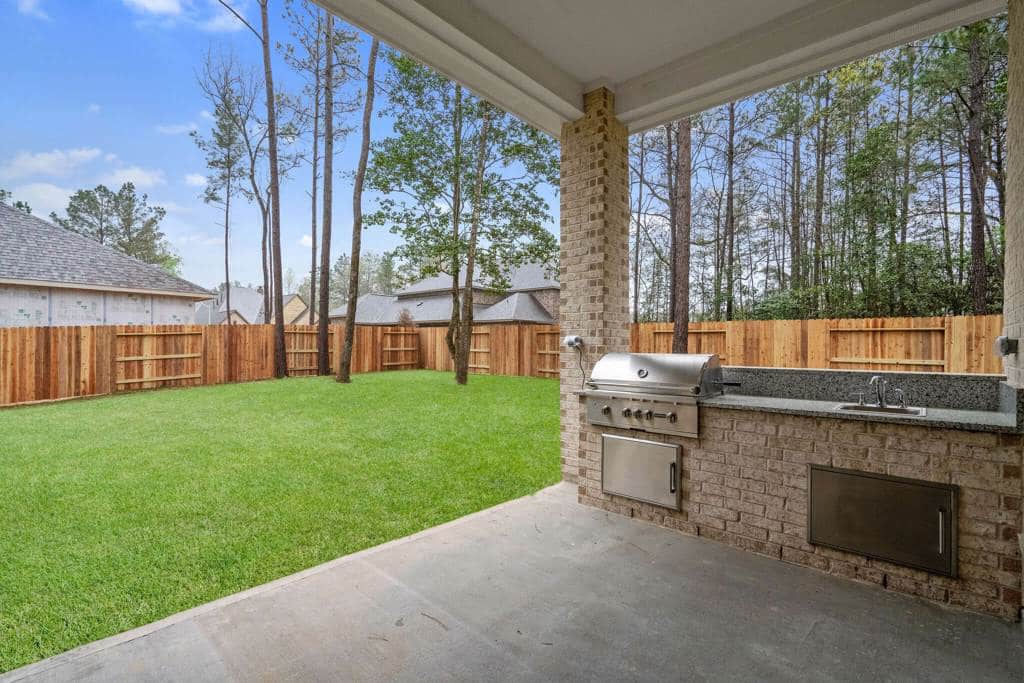

Cresleigh Meadows combines luxury with charm in a desirable open-concept floor plan. A magnificent great room off the extended foyer offers desirable views to the spacious backyard.

Residence 2 offers three bedrooms, three bathrooms, AND a three-car garage. No kidding! Customize your day AND your life when you enjoy this community. 😍

Discover the best of both worlds, a community you love with endless activities and a home you adore, designed with a modern lifestyle in mind. https://cresleigh.com/cresleigh-meadows-at-plumas-ranch/quick-move-homesite-78/

This home showcases an open concept great room creating an ideal flow of living, a convenient dedicated home office space, expansive covered outdoor living and a host of options that’ll get everyone excited.

Enjoy your sanctuary in the primary suite. The walk-in shower and soaker tub will give you all the luxury of a spa day. #CresleighHomes





 Randolph Harris II International Institute