

Sometimes it is not easy to tell the difference between a mistake and a sin. The boundary can be uncertain. Take the matter of the beautiful China Doll Tree in our backyard. One spring when it finally started growing again, after being cut down, the gardener thought the tree was getting too tall, he pruned it, quite severely. My brother evaluated his pruning and said it was a sin. I thought the extent of his pruning was a mistake at worst. However, I did not think this was needful of chastening and repentance. My experience with the overpruning the China Doll leads to the large category of undesirable conduct that is surely an error or mistake, and, at an extreme level, can cross over the border into transgression. When we willfully pass up an opportunity to progress toward eternal life, this is surely a mistake that should be corrected. In one way of looking at things, it is also a sin. This would apply to such things as failing to get schooling to prepare us for life, wasting our time, or failing to maintain the good grooming or to acquire the social or communication skills that would help us obtain employment or favorable consideration. Mistakes can also lead to sins. There are so many unenlightened people in the World for ignorance to take root in. The violation of social limits like curfews or missionary rules can make one vulnerable to sin. Or a mistake committed by one person can lead another person into sin in attempting to correct it. We should not conclude that a sin is always more serious than a mistake. #RandolphHarris 1 of 21
Almost all sins, large and small, can be repented of, but some serious mistakes, like driving under the influence of drugs or alcohol can lead to manslaughter and 25 years to life in prison, which is irreversible. This shows that a big mistake may have more serious permanent effects than a small transgression. Another thing about the relationship of sins and mistakes is that they can often go together. This is a serious truth. Recent victimization data suggest that crimes against property account for more than three fourths of all criminal victimizations that occur annually in the United States of America. Roughly one in every sic property crimes takes the shape as a household burglary. It takes very little to conjure up an image of a burglar crawling through and unlocked second-story window or jiminy the lock of a hotel room. This abstract imagery is reinforced by television series such as S.W.A.T, Criminal Minds, Blue Bloods, FBI, Cold Case, and Law and Order, wherein nearly every episode includes at least one call-for-service to the scene of a burglary. Americans clearly view burglary as a serious crime that carries with it a potential to disrupt the lives of the citizenry as well as overburden the criminal justice system. Laypersons have a tendency to interchange the terms robbery, burglary, and larceny. This is poor practice as there are distinct differences between these three types of crime. Robbery is an act of force or threatened force occurring during the course of a theft. The clear emphasis on physical force leads to robbery being classified as a crime of violence. Larceny is defined as a simple act of taking without force and irrespective of where the theft occurs. #RandolphHarris 2 of 21
This makes larceny a classic example of a property crime as the act is directed specifically toward depriving someone of his or her property. Burglary, on the other hand, is not so cut and dried. According to the Model Penal Code, a burglary occurs when a person enters a building or occupied structure with the purpose of committing a crime therein. There are three important components of this definition: the entry (usually referred to as breaking and entering or remaining), the dwelling, and the intent to offend while inside. Most scholarly sources (including the National Crime Victimization Survey and the Uniform Crime Reports) tacitly assume that the contents of a dwelling are the target of the crime and thus classify burglary as a property offense. However, since damage or deprivation of property need not occur, we maintain that burglary is more aptly described as a crime of intrusion or a crime against habitation. There were 2.5 million burglaries in the United States of America in 2022, which is down from 3.1 million in 2001. Our homes are our castles and burglars are aware of that. In fact, $737,294,919,165 worth of property was reported stolen in residential burglaries in 2021. The average stolen value is $3,100. On average, each break-in last eight to ten minutes, and 25 percent of these burglaries took place during the day. Americans spend over $20 billion annually on security devices and systems to protect themselves and their property. #RandolphHarris 3 of 21
Burglary represents 13 percent of total number of criminal victimizations that were reported and translates into a victimization rate of 28.7 burglaries per 1,000 household. Residential burglary—are those offenses that target homes. There are also nonresidential burglaries—those that occur in offices, stores, warehouses. Pooling of NCVS data on residential burglary and the UCR data on nonresidential burglary suggests that roughly 3.5 million burglaries (residential and nonresidential) occurred in this country during 2022. Victims of burglary routinely complain about the sense of violation and perceived invasion of privacy that goes along with having their homes burglarized. However, there are usually monetary losses that accompany the emotional trauma. A fully 87 percent of the household burglaries occurring in 2022 were said to result in a monetary loss due to theft of property damage. Where a theft is committed in conjunction with a break-in, burglars appear willing to direct their thievery toward a wide array of valuables—jewelry, household furnishings, tools, firearms and cash were among the most frequently stolen items. However, there is encouraging news about the incidence of residential burglary. Our nation’s victimization rates steadily declined, as stated above. Victimization data suggest that residential burglary rates are relatively stable across the U.S.A. South (29.7), Midwest (33.6), and West (30.2). The notable exception to this trend is seen in the Northeast, where the 2022 victimization rate was significantly lower at 18.7 per 1,000 households. #RandolphHarris 4 of 21
The states with the highest burglary rate are: Texas, Arizona, Missouri, Tennessee, and Washington. At the other end of the continuum, New Hampshire, North Dakota, Montana, South Dakota, and Pennsylvania were shown to have the lowest burglary rates. Urban areas experience the highest residential burglary rates (37.3 per 1,000 households). What is somewhat unexpected is the fact that the aggregate burglary rate for rural areas (26.7) is higher than the corresponding rate for suburban areas (24.3). Studies show that burglary patterns often vary considerably across and within suburban locales. Factors such as an effective police presence, active neighborhood watch programs, and prevention-friendly residential design (strategic landscaping and street layout) are found to have a significant impact on the level of burglary activity in a suburb. Burglary is one of the few crimes for which the United States of America fares well in comparison to other developed nations. Official reports made availably by police agencies in the United States of America establish nationwide offense rate for burglary at 862.0 per 100,000 inhabitants. By comparison, Australia (2,338.4), England and Wales (1,832.7), Germany (1,507.1), and Canada (1,155.7) experienced higher burglary rates. Lower rates were observed in countries such as France (676.9), Spain (570.2), and Japan (187.9). #RandolphHarris 5 of 21

Entry into an occupied dwelling is one of the critical components of the legal definition of burglary. Contrary to popular belief, burglars tend to be an unsophisticated lot who rely on soft targets and brute force to accomplish their crimes. Offender based research shows that a surprising number of these unlawful entries are accomplished by the burglar simply passing through an open door or window. Habitual offenders learn that they cannot always count on this type of open invitation and thus come prepared with a variety of tools and/or strategies to assist them in defeating locks, windows, and doors. This is perhaps best evidenced by the fact that roughly two thirds of known burglaries involve some form of forced entry. Forced entry is often accomplished through the use of crowbars, screwdrivers, or hammers. A burglar may also become adept at popping sliding glass doors off their tracks, identifying alarms, or efficiently defeating deadbolt locks. For the most part, however, these skills and tools are best described as rudimentary in nature. Burglary activities are shaped by a number of factors. The time of day and occupancy status of the dwelling stand as two clear examples. Law enforcement reports indicate that 60 percent of all residential burglaries occur during the day while roughly 60 percent of nonresidential burglaries take place at night. Occupancy appears to be the driving factor behind these statistics—residential dwellings are most susceptible to burglary at night when they are closed to business. #RandolphHarris 6 of 21
Burglars clearly prefer unoccupied homes or businesses, as this situation allows them more freedom to enter and exist without being detected. Residential burglars disproportionately come calling on multiunit rental properties. Multiunit dwellings are significantly more likely to be burglarized than single-family structures. In the same vein, rental properties generally experience higher victimization rates than do properties that are owned. The transience and anonymity of these types of dwellings allow the burglar to move about without being noticed. The significance of this “transience effect” is further highlighted by recent victimization reports showing that a newly occupied residence (less than 6 months) faces more than three times the risk of burglary than a home that has been occupied for 5 or more years. Residence that are occupied by young, less affluent, people not of the dominant race face the greatest risk of being burglarized. First, recent victimization data reveal a direct relationship between the age of the person who serves as the head of the household and the likelihood that the home will be burglarized. The burglary rate for homes in which the head of household is under 20 years of age (66.9) was more than 4 times that of homes in which the head of household is over the age of 65 (16.6). Victimization rates for African American-headed households (42.8) were significantly higher than for Hispanic or European American-headed households (33.0 and 26.6, respectively). #RandolphHarris 7 of 21

There also exists a clear negative relationship between burglary victimization rates and family income—homes with an annual family income of less than $7,500 experienced a burglary rate than was more than doubled that of homes with a family income in excess $75,000 (58.0 versus 22.7). A residence that has been burglarized once faces a higher risk of future victimization than a home that has never been targeted. Repeat victimization is due, in part, to repeat offending—either the offender views the dwelling as a soft target or he or she returns to obtain goods that could not be removed during the first offense. There also seems to be a “neighborhood effect” underlying repeat victimization, wherein habitual offenders prefer to travel short distances from where they live and frequent those areas with appealing physical layouts (exempli gratia, ready access to escape routes, poor lighting, minimal foot traffic). The offender-victim relationship also appears to play a role in initial and repeat burglary victimizations. Interviews with active offenders reveal that burglars sometimes target the homes of acquaintances. Existing relationships afford the offender knowledge about the layout and contents of the home as well as the daily routines of the occupants. While few offenders report ripping off their close friends or relatives, they cannot pass up a casual acquaintance’s home if it is not a soft target. Given the covert nature of the crime, we cannot rely on victimization reports to inform us about the characteristics of burglary offenders. #RandolphHarris 8 of 21

Nearly 90 percent of all arrestees for burglary were men. Almost one 33 percent of the persons arrested were under the age of 18 and roughly 60 percent were under 25. The data of offenders based on race is inconclusive. There is a group of offenders that are over represented, but they only make up 30 percent of the arrested suspect. Most burglaries take on a hit-and-run quality. Offenders claim that they try to spend as little time as possible getting in and getting out of the dwellings that they burglarize. This haste often means that broken windows, clues to their identity, and/or overlooked valuables are left behind. Once a threat-related burglary is completed, the offender is left with the task of converting the stolen goods into cash. One option has the offender serving an entrepreneurial role and selling or trading the goods (for drugs or other desired commodities). In most urban communities, there exists an underground economy. This is the informal market economy that allows thieves to sell their booty to residents (from the seediest drug dealer to the most law-abiding blue collar and professionals) who are more than happy to buy “warm” or even clearly “hot” goods is the price is right. These transactions run the gamut from a quick sale by the burglar out of the trunk of his or her car to a seasoned fence who stocks an entire warehouse or pawn shop with stolen goods. This entrepreneurial course of action requires time and effort on stolen goods. This entrepreneurial course of action requires time and effort on the part of the burglar. #RandolphHarris 9 of 21

Many offenders choose to avoid these hassles by passing the stolen goods along to a fence. A fence is an individual who specializes in the buying and selling of stolen goods. Several case studies have been published about the “life and crimes” of persons who make a living from buying and selling of stolen goods. The fence plays a role in the stolen property system. This concept refers to the various players (id est, burglary, fence, buyer) and roles (extraction, repackaging, marketing, and sale) that come together to sustain a market for stolen property. Crimes involve a deception. Deception has to do with the mind, and by definition is the result of a thought being admitted to the mind under the erroneous assumption that it is truth. Since deception is based on ignorance, and not on one’s moral character, a Christian who is “true and faithful” up to the knowledge one has is yet open to deception in the spheres where one is ignorant. We are liable to be deceived by the unenlightened because of ignorance. The thought that God will protect a believer from being deceived if one is true and faithful is in itself a deception, because it throws a man off guard, and ignores the fact that there are conditions on the part of the believer which have to be fulfilled for God’s working. God does not do anything instead of a man, but by the man’s cooperation with Him; neither does He undertake to make up for a man’s ignorance, when He has already provided knowledge for him which will prevent him from being deceived. #RandolphHarris 10 of 21

If there had been no danger of deception, or if God had undertaken to keep them from deception apart from their “taking heed” and their knowledge of such danger, Christ would not have warned His disciples, “Take heed…be not deceived.” We must not lower our spiritual guard. The knowledge that it is possible to be deceived keeps the mind open to truth and light from God, and is one of the primary conditions for the keeping power of God; whereas a mind closed to light and truth is certain guarantee of deception by the unenlightened at their earliest opportunity. As we glance back over the history of the Church, and study the rise of various “heresies” or “aberrant belief systems”—as they have sometimes been called—we can at times detect that the period of deception began with some great crisis, a crisis in which a particular individual was motivated to give oneself up in full abandonment to the Holy Spirit, and in so doing he opened himself to the supernatural powers of the invisible World. The reason for the peril of such a crisis is that, up to this time, that believer used one’s reasoning faculties in judging right and wrong, and obeyed what one believed to be the will of God from principle; but now, in one’s abandonment to the Holy Spirit, one begins to obey an unseen Person, and to submit one’s faculties and one’s reasoning powers in blind obedience to that which one believes is of God. The will is surrendered to carry out the will of God at all costs, and the whole being is made subject to the powers of the unseen World. #RandolphHarris 11 of 21

The believer, of course, purposes that it shall only be to the power of God, not taking into account that there are other powers in the metaphysical realm, and that all that is “supernatural” is not entirely of God. Not realizing that, this absolute surrender of one’s whole being to invisible forces without knowing how to discern between the contrary powers of God and malevolent forces are the gravest risk to the inexperienced believer. The question whether this surrender to “obey the Spirit” is one that is in accord with Scriptures should be examined in view of the way in which so many wholehearted believers have been misled, for it is strange that an attitude which is scriptural should be so grievously the cause of danger, and often of complete wreckage. Sometimes people experience loneliness and isolation due to their own personal struggle and anguish, as they are confronting the unknow in solitude and self-renewal. This may lead to some cutting themselves off from others—family and friends and all those persons with whom one has shared one’s life. There are pains and horrors as well as an eventual breakthrough to new energy and life, that convey in depth something of the feelings and ideas involved and the shocking awareness and discovery of what it means to trust the unknown in guiding the way. It is a good idea to recreate those currents of feeling and thought to awaken one’s own awareness and being and to know that one is alive in this moment and that loneliness has helped to sustain that life. #RandolphHarris 12 of 21

This message is not simply in words but in the pauses between and in the sweep of feeling and mystery through which the words have been created, of which the words are only a fragment. If one is interested merely in providing knowledge that grew out of one’s study of loneliness, one would summarize in brief terms. However, there is a crucial difference between a living process and knowledge about life. The reality itself is established on the hope that it will create within one a realization of one’s own sense of mystery, one’s own response to the unknown, and the opening of one’s inner life to the truth of this journey and all the journeys to follow. The objective side of faith is considered the content of faith; doubt, risk, and anxiety; faith and courage; and the truth of faith and the Protestant principle. The name or symbol for that which concerns man ultimately is “God.” God does not first exist and then demand that man be ultimately concerned about him. Rather, whatever concerns man ultimately is god for him. Symbols are the language of faith, for ultimate concern must be expressed concretely and yet transcendently. The basic symbol of faith is God, but there can be others—for example, the divine attributes of power, justice, and love. And if the word “God” no longer has meaning, people are exhorted to translate it, and speak of the depths of one’s life, of the source of one’s being, of one’s ultimate concern, of what one takes seriously without any reservation…of the depth of history, of the ground and aim of our social life.” #RandolphHarris 13 of 21

Perhaps one has to forget the word “God” altogether in order to comprehend what God is. The issue at stake is not the existence of God, but rather which symbol is most adequate to express the content of faith. One can have a “Personal God,” but we also understand this is the ground and abyss of being and meaning. One should be deeply moved with the wonder of life and the feeling of living within natural elemental things. At the same time, many of us feel sadness due to the awareness of how often people today are cut off from or indifferent to water and Earth and trees. The World today is sick to its thin blood for lack of elemental things, for fire before the hands, for water welling from the Earth, for air, for the dear Earth itself underfoot. In the World of beach and dune these elemental presences lived and had their being, and under their arch there moves an incomparable pageant of nature and the years. The flux and reflux of ocean, the incoming of waves, the gathering of birds, the pilgrimages of the sea, winter and storm, the splendour of autumn and the holiness of spring. One must learn to recognize the striking beauty, with all the amazing adventures, the awesome discoveries in nature and the freedom from time pressures and schedules, but something may be missing. We should share out deepest thoughts and feelings, issues and conflicts that emerge in our living with God, and relate with an openness, freedom and trust that encourages each of us to purse individual preferences without a sense of loss. #RandolphHarris 14 of 21
Dealing with globalization, in this market for the wealthy, including the high-end products segment, competition with domestic companies is going to be really tough. The assumption that Chinese firms are mostly commanding the low-end product segment while Western manufacturers comfortably occupy the high-end one, may still stand for the global market, but already does not apply to the market of China itself. Chinese firms are actively upgrading their products, improving their quality, and establishing brands. At this point, their activities of this kind are targeting mostly domestic customers. In the domestic market they have important advantages over Western competitors: proximity to the marketplace, absence of cultural and language barriers, and better knowledge of local customers’ preferences—not to say that, while upgrading their products and building brands, they still enjoy a substantial cost advantage. Unlike overseas, inside the country their names are known not less if not more than those of their Western counterparts. All this puts them in a good position to expand. Let us take the furniture market as a representative example. One the one hand, Western firms are noticeably increasing their presence. Top brands like G. Versace, ColomboMobili, Fendi, or Rubelli have made their entries. The largest U.S.A. furniture maker Haworth has stated production in Shanghai, and the three largest sofa markers of Italy have also set up their Chinese factories. The U.S.A. brand Fine Furniture Design opened a flagship store in Beijing, followed by the Italian brand Savio Firmino. #RandolphHarris 15 of 21

On the other hand, however, domestic makers are moving remarkably fast to establish themselves as leading and immediately recognizable players in the high-end market niche. Shanghai-based Yun Dian Furniture offers furniture of the traditional Chinese style, often adding a little bit of Western flavor. In addition, it has found one more way to differentiate: All its pieces are made in mahogany. Foshan Jihao Furniture located at Lojiang town 40 kilometer from Guangzhou, has established a reputation as a high-end sofa manufacturer possessing such brand names as Menoir, Kouma, Kamina, and Sofia. Well known in China, it has also independently developed brands in South Korea, Spain, Australia, and Poland. Dongguan-based maker Fu Yi Furniture opened a 1,500-square-meter specialty store in Beijing selling Chinese brands of the classic, casual, and modern styles: a total of 16 series of latest stylish products. In the capital goods sector, competition is no less fierce. For instance, China’s consumer electronics market is worth USD $179 billion as of 2022. China is likewise the World’s largest consumer electronics exporter, with estimated earnings of USD $557 billion and accounting for 24 percent of the USD $2 trillion worth of exports Worldwide. In the World’s most extensive electronics manufacturing ecosystem and supply chain, with more than fives times the electronics suppliers based in Japan and a labor force of manufacturing workers close to 150 million. New powerful domestic competitors are emerging like Chint, a maker of low-voltage electronics, and Shanghai Electric, a manufacturer of power-generation equipment. #RandolphHarris 16 of 21

China is already pursuing a high-end niche and becoming more and more dominant. How should Western firms react? Jack Perkowski, an American entrepreneur who recently started JFP Holdings, a merchant bank for China, gives a very interesting example. One of his American clients makes electrical testers in the United States of America that can test for up to eight to nine items and sells them in China. Its competitors are GE and other World-famous electrical brands. About 15 Chinese manufacturers produce similar lower-end products, which can test only two to three items. The Chinese market for the latter is bigger than for eight-to nine-item testers. In a few years Chinese companies are expected to be making eight-to nine-item testers at a lower cost. The question is: What can the U.S.A. producer do? J. Perkowski suggests that it can and should start making two to three-item testers in China, bringing in Chinese managers and workers—in other words, to become a full-fledged Chinese player. This is the option two were discussed earlier. Definitely, at the company level such business strategy has its rationale. For instance, DMG of Germany, the World’s largest maker of machine tools, is doing exactly what J. Perkowski recommends: It has started to develop low-cost models for Chinese customers and to produce them locally. Yet developments of this kind, while strengthening the production base of China, are weakening the bases of America, Europe, and Japan, accelerating production power shift. #RandolphHarris 17 of 21

Tomorrow Chinese firms will be able to produce many high-end products of today, and will make them less expensively than their Western counterparts. However, there is still a concern with some products about their durability and function. If the West wants to preserve its production base, it will still have to enable domestic, not Chinese-based, factories of its firms to differentiate the products, further upgrade technologies, and raise the degree of sophistication. The governments have to aggressively promote the exports of those products to China and other emerging market countries. Also, much more attention has to be paid to development of products tailored to the needs of Chinese customers. Thus, the problem posed by J. Perkowski, perhaps, may have one more solution: run ahead, develop even more high-end testers, produce them at home, and work to create the market for them in China, or, if this is not feasible, use your technological skills to develop, produce, and export similar high-end items. The competition in the Chinese market is going to be very tough, but the fight for it is worthwhile. The West has to increase the number of domestic factories that can be strong fighters. However, another blow awaits countries that base their development plans on the export of bulk raw materials such as copper or bauxite. Here, too, power-shifting changes are just around the corner. Mass production required vast amounts of a small number of resources. By contrast, as de-massified manufacturing methods spread, they will need many more different resources—in much smaller quantities. #RandolphHarris 18 of 21

Furthermore, the faster metabolism of the new global production system also means that resources regarded as crucial today may be worthless tomorrow—along with all the extractive industries, railroad sidings, mines, harbor facilities, and other installations built to move them. Conversely, today’s useless junk could suddenly acquire great value. Oil itself was regarded as useless until new technologies, and especially the internal combustion engine, made it vital. Titanium was largely useless white powder until it became valuable in aircraft and submarine production. However, the rate at which new technologies arrived was slow. That, of course, is no longer true. Superconductivity, to choose a single example, will eventually reduce the need for energy by cutting transmission losses and, at the same time, will require new raw materials for its use. New antipollution devices for automobiles may no longer depend on platinum. New pharmaceutical may call for organic substances that today are either unknown or unvalued. In turn, this could change poverty-stricken countries into important suppliers—while undercutting today’s big bulk exporters. What is more, in the words of Umberto Colombo, Chairman of the EC’s Committee on Science and Technology, “In today’s advanced and affluent societies, each successive increment in per capita income is linked to an ever-smaller rise in quantities of raw materials and energy used.” Colombo cites figures from the International Monetary Fund showing that “Japan…in 1984 consumed only 60 percent of the raw materials required for the same volume of industrial output in 1973.” Advancing knowledge permits us to do more with less. As it does so, it shifts power away from the bulk producers. #RandolphHarris 19 of 21

Beyond this, fast-expanding scientific knowledge increases the ability to create substitutes for imported resources. Indeed, the advanced economies may soon be able to create whole arrays of new customized materials such as “nanocomposities” virtually from scratch. The smarter the high-tech nations become about micro-manipulating matter, the less dependent they become on imports of bulk raw materials from abroad. The new wealth system is too protean, too fast-moving to be shackled to a few “vital” materials. Power will therefore flow from bulk raw material producers to those who control “eyedropper” quantities of temporarily crucial substances, and from them to those who control the knowledge necessary to create new resources de novo. Several of us today are concerned about gasoline prices. Many gasoline stations used to advertise only the price of their leaded gasoline. What made this peculiar is that very few of their customers actually bought leaded gasoline; only cars manufactured before 1976 are able to use leaded gas. It is clear how this practice began. Originally, there was only one type of gasoline. It was not until 1911, when Lewis and Jacob Blaustein invented a way to boost gasoline octane without using lead additives, that unleaded gas even became available. Another sixty years passed before it became the standard. Now stations continue to advertise the price of a product bought by few customers. The stations display only one number to catch the eye of the passing motorist and continue to use the one they used before. Most motorists must infer the unleaded price they need to know from the lead price. Why does this practice persist? #RandolphHarris 20 of 21
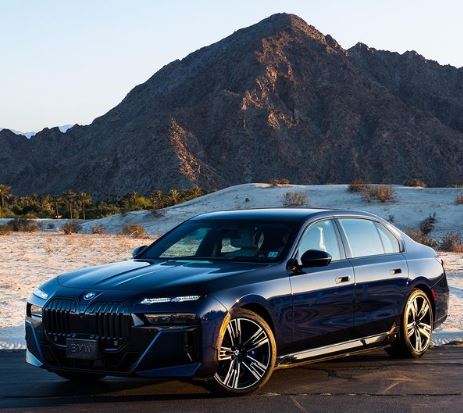
If one gasoline station decided to advertise its unleaded gas prices in big numbers, what would happen? Motorists find it too difficult to read anything but numbers. As a result, they assume it is the leaded gas price being advertised. Typically, unleaded gas is about five cents a gallon more expensive at the pumps, and drivers therefore would mistakenly add about a nickel to make their guess of the unleaded price. This maverick gasoline station puts itself at a disadvantage, as motorists overestimate it price. Interestingly enough, unleaded gas is less expensive wholesale. This suggests tht leaded has plays the role of a loss leader. Economists can offer a second reason why leaded gasoline sells for less: it is bought by a different set of customers. You might not be surprised to see smaller markups on products brought by people who drive old cars than on products bought by people who drive new cars. A new over of a $155,000 BMW is less likely to balk at a ten-cent markup than someone driving an older car that is beat-up. If society wants to improve matters for consumers, one way would be to legislate a change in the convention; require that if only one price is posted, this price must be that of unleaded. A second solution is to require that gasoline stations advertise in big numbers all of their basic grades, leaded, unleaded, and super unleaded. Soon enough this will all be moot; the sale of leaded gas is being phased out, so stations will have to advertise the price of their unleaded gas—it’s the only type they will be selling. #RandolphHarris 21 of 21

Millhaven Homes

With accents of elegance, spacious living areas, and convenient workspaces, Millhaven Homes offers beautiful features that will surely capture your interest and imagination.

If you are considering building a custom home with us, please fill out the information below and we will reach out to you to schedule an introductory meeting. https://millhavenhomes.com/get-started/





 Randolph Harris II International Institute