

Interestingly, a sizable proportion of our respondents purposely targeted people who themselves were involved in crime. Such individuals make excellent targets. Their participation in street culture encourages the acquisition of vehicles most prized by carjackers (those with valuable, if often gaudy, after-market items). And, because they are involved in a number of illegal activities (such as drug selling), they cannot go to the police. As Mr. Dee put it; Mr. Dee: “You can’t go to no police when you selling drugs to buy that car with drug money. So, I wasn’t really worried about that. If he would have went to the police he would have went to jail automatically ‘cuz they would have been like, ‘Where’d you get this thousand dollar car from?’ He put about $4,000 into the car. So, he ain’t got no job, he ain’t doin it like that bro. He’d be goin’ to the police station lookin’ like a fool tellin’ his story. I [could] see if he’s workin’ or something…and slinging. It’d be different ‘cause he could show them his check stub from work.” However, there is a considerable danger associated with targeting such individuals because, unable to report the robbery of illegal goods to the police, they have a strong incentive to engage in retaliation—those who fail to do so risk being perceived as soft or easy. This introduced the possibility that incidents of carjacking likely are substantially higher than officially reported. When asked about the possibility of retaliation many of the carjackers, displaying typical street offender bravado, indicated that they had no fear. The need to see oneself as capable and tough was essential to respondents. #RandolphHarris 1 of 20

Such self-beliefs served to create a sense of individuality that allowed carjackers to continue to engage in a crime considered by many to be hazardous. As playboy put it, “It [can’t be] a fear thing. If you’re gonna be scared then you shouldn’t even go through with stuff like that [carjacking people].” Likewise, Big-Mix expressed an almost complete disregard for the consequence of his actions. His comments confirm the short-term thinking characteristic of many street offenders, “I don’t give a damn. I don’t care what happens really. I don’t care. That’s how it always is. Whether they kill us or whether we kill them, same damn sh*t. Whatever. I don’t f*cking care.” Pacman, a young carjacker who worked exclusively with this brother-in-law, indicated that thinking about the possible negative consequences was detrimental to one’s ability to execute an offense. When asked if he was worried about retaliation, he was dismissive. Pacman: Yeah, you be pretty pissed. But like I say, I’m not looking over my back, you know what I’m saying? Because, I wouldn’t be here for sure. I couldn’t [keep carjacking]. I definitely wouldn’t last man. I wouldn’t have lasted as long as I lasted. Because it would be too many mother*ckers [that I’ve victimized], you know what I’m saying, [for me to look] over my shoulder all the time. When I look what the f*ck could I do anyhow? I could get a few of them, but it would take a lot of mother*cking looking over my shoulder. I try to avoid that altogether. I’m going to avoid all that.” #RandolphHarris 2 of 20

Other carjackers relied on hypervigilance (obsessive attention to one’s surroundings and to the behavior of others), or anonymity maintenance (exempli gratia, targeting strangers, not talking about the crime, using of disguises, carjacking in areas away from one’s home ground) to minimize the possibility of pay-back. Sexy-Diva, a female carjacker who worked with Sleezee-E, often spent hours with potential victims at night clubs before taking their cars, “I just disguises myself. I change my hair…my clothes. I change whatever location I was at. And then I don’t even go to that area no more. They can’t find me. No way, no how.” Nukie sacrificed a great deal of his day-to-day freedom by engaging in behaviors designed to anticipate and neutralize the threat of retaliation. Nukie: “That’s why I don’t go out. If I go somewhere to get me a beer, if I’m gonna get me some bud [marijuana] or something, I stay in the hood. I don’t go to the clubs. There’s too many people going there at night, you know what I’m saying? I don’t need to be spotted like that. That’s why I keep on the DL [down-low, out of sight]. You see, I stay in the hood. [If] I be riding [in a car], while I’m riding I might have my cats [friends] with me. You know, no mother*cker’s gonna try to f*ck with us like that. Yeah, I be with some mother*cker most of the time. If we’re [going] to do something, go get blowed [high]—see, we get blowed everyday—I be with people, sh*t.” #RandolphHarris 3 of 20

Pookie choose to employ similar preemptive tactics, but also emphasized the need to be proactive when dealing with the threat of retaliation, predicated on the philosophy that, “the best defense is a good offense.” Pookie: “Well, you know the best thing [to deal] with retaliation like this here, you know, in order for you to get some action you got to bring some action. If I see you coming at me and you don’t look right, then this is another story here. If you doing it like you’re reaching for something, I’m gonna tear the top of your head off real quick, you know. I’m gonna be near you, where you’re at because they ain’t nothing but some punk-a** tires and rims that I took from you, that’s all it is. What you gotta understand is that you worked hard for it, and I just came along and just took them, you know. You go back and get yourself another set son, ‘cause if I like them then I’m gonna take them again.” In the end, there were no guarantees. No matter how many steps a carjacker took to prevent retaliation, the possibility of payback remained. As self-confidence bred the perception of security, so too did it breed over-confidence. This was true in the case of Goldie, whose motivation to carjack a known drug dealer named Mucho was described above. His attempt did not go as planned. Goldie: “He was going to put up a fight trying to spin off with [the car], I jumped in and threw it in park so now I’m tussling with him, ‘Give me this mother*cker!’ He’s trying to speed off. He got like in the middle of the intersection. I dropped my gun on the seat and he grabbed me like around [the neck], trying to hold me down in the car, and throw it back in Drive with me in the car, you dig? #RandolphHarris 4 of 20

“You know, I’m like no, I ain’t going for that sh*t. I had my feet up on the gear [shift], you know what I’m saying? He ain’t tripping off the gun. He trying to hold me, ‘[Racial explicative], you ain’t going to get this car! Punk-a** [racial explicative]! What the f*ck wrong with you? What the f*ck do you want my car for?’ [I said], ‘Look boy, I don’t want that punk a** sh*t dude! I’m getting this car. This is mine. F*uk you!” The gun flew on the passenger’s seat. So I grabbed the gun and put it to his throat, ‘So what you gonna to do? Is you gonna die or give up this car?’ [He replied], ‘Motherf*cker, you’re going to have to do what you are going to have to do.’ He don’t want to give up his car, right? So I cocked it one time, you know, just to let him know I wasn’t playing, you dig? But I ain’t shoot him on his head, put it on his thigh. Boom! Shot him on his leg. He got to screaming and sh*t hollering, you know what I’m saying, ‘You shot me! You shot me! Your hot me!’ like a mother*cker gonna hear him or something. Cars just steady drive past and sh*t, you know what I’m saying. By this time I opened up the door, ‘F*ck you!’ Forced his a** on up out of there. He laying on the ground talking about, ‘This mother*cker shot me! Help, help!’ Hollering for help and sh*t. But before I drove off I backed up, ran over him I think on the ankles like. While he was laying on the street, after I shot him. Ran over his bottom of his feet or whatever, you know what I’m saying. #RandolphHarris 5 of 20

“Oh yeah. I felt that. Yeah. Boom, boom. ‘Aaah!’ scream. I hear bones break, like all this down here was just crushed. I didn’t give a f*ck though. Sped off. Went and flossed for a minute.” INT: “I don’t know—two streets over and he sounds like he’s pretty scandalous. You’re not worried about him coming up on you for this?” Goldie: “No. I pretty much left him not walking. And he don’t know who I am. [Later on] I heard about that. [People were saying], ‘Motherf*cker Mucho, he got knocked [attacked], mother*cker tried to knock him, took his car, you know what I’m saying, on the block.’ I’m like, ‘Yeah, I heard about that. You know what I’m saying. I wonder who did this sh*t.’ You know what I’m saying?” Three months later, we spoke to Goldie from his hospital bed. Mucho had tracked him down and shot him in the back and stomach as he crossed the street to buy some marijuana. Goldie: “I call them a bad day…I got shot. I saw him [Mucho] drive by but I didn’t think he seen me. He caught up to me later. [I got shot] in the abdomen (pointing at his stomach)…here’s where they sewed me up. I had twenty staples.” INT: “How did it go down?” Goldie: “I wanted [to] stop on the North[side] and get me a bag of grass, grab me a bag of weed or something. So, [we were] going around to the set [the dealer’s home turf] and I’m getting out, I see [Mucho’s] car parked this time. He wasn’t in it. I’m thinking in my mind like you know, ‘That’s that puss a**.’ So I’m like, ‘Damn I’m having bad vibes already.’ So I instantly just turned around like, ‘F*ck it. I’ll go somewhere else to get some grass.’ #RandolphHarris 6 of 20

“I’m walking [back] to [my] car and hear a gunshot. Jump in the car. You know…you [don’t] feel it for a minute. [Then,] my side just start hurting, hurting bad you know what I’m saying? I’m like damn. Looked down, I’m in a puddle of blood, you know. She freaking out and screaming, ‘You shot! You shot!’ and sh*t. [She] jumped out the car like she almost should be done with me, you know what I’m saying? So I had to immediately take myself to the hospital. [They] stuffed this tube all the way down my [male private part] all the way to my stomach…f*cking with my side, pushing all of it aside. [I was there] about a good week. I done lost about 15 or 20 pounds. That probably wouldn’t have happened if I wouldn’t have to go to do that. Wanted some more grass. At the wrong spot at the wrong time.” Goldie make it clear during the interview that he felt the need to counter-retaliate to protect himself from future attack by maintaining a tough reputation, a valuable mechanism of deterrence. INT: “You don’t feel like you all are even now? You shot him—he shot you. Why go after him?” Goldie: “It’s [about] retaliation. When I feel good is when he taken care of…and I don’t have to worry about him no more. I mean my little BG’s [Baby Gangsters, younger criminal protegees] look up to me. Me getting shot and not going to do [something about, it thy would say], ‘Ah [Goldie’s] a b*tch. Aw, he’s a [expletive].” Now down there [in the neighborhood], when they hit you, you hit them back. You know, if someone shoot you, you gotta shoot them back. That’s how it is down there or you’ll be a b*tch. Everybody will shoot you up, whoop you’re a**. Know what I’m saying? Treat you like a punk. It’s just I got to do what I have to do, you know what I’m saying.” #RandolphHarris 7 of 20

Many carjackers echoed such sentiments, indicating a common belief in the importance of following unwritten rules of conduct and behavior related to street offending, especially when they refer to matters of honor or reputation. The decision to commit a carjacking is usually governed by two things: perceived situational inducements and perceived opportunity. Situational inducements involve immediate pressures on the would-be offender to act. They can be internal (exempli gratia, the need for money or desire for revenge) or external (exempli gratia, the peer pressure of co-offenders). Opportunities refer to risks and rewards ties to a particular crime target in its particular environmental setting. Carjackings occur when perceived situational inducements and a perceived opportunity, alone or in combination, reach a critical level, thereby triggering that criminogenic moment when an individual commits to the offense. It is important to reiterate that either a perceived opportunity or perceived situational inducement on its own may be sufficient to entice an individual to commit a carjacking. It is also important to know that background and foreground factors (such as membership in a criminogenic street culture) can increase the chance a carjacker will go after a vehicle by lowering his/her capacity to resist the temptation to offend. More often, carjackings were motivated though the combined influence of opportunity and inducement. The carjackers’ responses indicate that offenses triggered by pure opportunity or pure need are relatively rare. Most carjackings occur between the extremes, where opportunities and situational inducements overlap. #RandolphHarris 8 of 20

Owning to their precarious day-to-day existence—conditioned by risk factors such as persistent poverty, and exacerbated by “boom and bust” cycles of free-spending when money is available—carjackers are always under some degree of pressure and thus are encouraged to maintain a general openness to offending. During the pandemic, carjackings increased by 59 percent. An estimated $7.4 billion was lost because of vehicle theft in the United States of America in 2020. During a “boom” period, carjackers anticipate future needs, but are not desperate to offend. This encourages the notion of alter opportunism—a general willingness to offend if a particularly good opportunity presents itself. However, as time passes and no acceptable opportunities emerge, situational pressures to offend begin to mount in the face of diminishing resources. Approaching “bust” periods increasingly promote an active willingness to offend, driven by heightened situational inducements. Dormant or anticipated needs become pressing ones, moving carjackers from a start of alert opportunism to a state of motivated opportunism. As they continue to become more situationally desperate, their openness to offending expands to include opportunities perceived to have greater risk or lower reward. Targets that previously seemed unsuitable become increasingly attractive and permissible. The logical outcome is a carjacking triggered almost exclusively by pressing needs. It is also possible for carjackers to move from a state of motivated opportunism to the lower state of alert opportunism, especially where the decision to commit such an offense is a drive desire for revenge. #RandolphHarris 9 of 20

Retaliatory urges tend to be higher initially, and then to dissipate over time. This is not to say however, that an offended party has necessarily forgiven the offending party. They may simply be getting on with their lives, even as they keep their eyes open for the object of their wrath. Although infrequent when compared to strong-arm robber or drug robbery, carjacking’s proportional impact on the spread of violence is probably more significant than has been suspected. When offenders themselves are targeted carjacking, like other forms of violent crime, can produce retaliatory behavior patterns that serve to perpetuate and proliferate cycles of violence on the streets. In addition, their sensationalist nature increases the public’s general fear of crime when law-abiding citizens are victimized. In either case, the preceding evidence and discussion indicate that carjacking is a unique and dynamic form of crime that probably deserves its own categorization (separate from robbery or auto theft) or, at the very least, further study and attention by those interested in criminal decision-making. One prevailing idea which such believers have deeply embedded in their minds is that “honest seekers after God” will not be allowed to be deceived. This is one of Satan’s lies to lure such seekers into a false position of safety. It is proved by this history of the Church during the past two thousand years, for every “wile of error” which has borne sad fruit throughout this period laid hold first of devoted believers who were “honest souls.” The errors among groups of such believers, some well known to present generation, all began among “honest” people—and all so sure that, knowing the sidetracking of others before them, they would never be caught by the wiles of Satan. Yet they, too, have been deceived by lying spirits counterfeiting the workings of God. #RandolphHarris 10 of 20

We need to know that to be true in motive, and faithful up to light, is not sufficient safeguard against deception; and that it is not safe to rely upon “honesty of purpose” as guaranteeing protection from the enemy’s wiles, instead of taking heed to the warnings of God’s Word and watching unto prayer. When a man become a child of God by the regenerating power of the Spirit—giving one new life as one trusts in the atoning work of Christ—one does not at the same time receive fullness of knowledge, either about God, oneself, or the devil. The mind, which by nature is darkened (Eph. 4.18) and under veil created by Satan (2 Cor. 4.4), is only renewed, and the veil destroyed, up to the extent that the light of truth penetrates it, and according to the measure in which the man is able to apprehend it. Lying spirits have sometimes worked on their determination literally to obey the Scriptures, and by misuse of the letter of the letter of the written Word have pushed them into awkward corners of unbalanced truth, with resulting erroneous practices. Many who have suffered for their strict adherence to these “Biblical commands” firmly believe that they are martyrs suffering for Christ. The aftermath of the Revival in Wales, which was a true work of God, revealed many swept off their feet by evil supernatural effects, which they were not able to distinguish from the true working of God. And since that time there have been “movements” in other places, with large numbers of followers, swept into deception through the wiles of deceiving spirits counterfeiting the workings of God. #RandolphHarris 11 of 20

All are “honest souls,” deceived by the subtle foe, and certain to be led on into still deeper deception, notwithstanding their honesty and earnestness, unless they are awakened to “return to soberness” and recovery out of the snare of the devil into which they have fallen (2 Tim. 2.26). God is the fundamental symbol for what concerns us ultimately, and it seems the universality of faith is to undercut the very possibility of atheism. For when a so-called atheist denies God, one does so in the name of another ultimate concern. God can be denied only in the name of God, since “ultimate” and “God” are interchangeable. Therefore, the only logical type of atheism would be complete lack of ultimate concern, that is, total indifference to the meaning of one’s existence, and the possibility of such an attitude is very problematic. Some people try to maintain a cynical unconcern. However, the cynic is concerned, passionately concerned, about one thing, namely one’s unconcern. There is a distinction between what could be called essential atheism and intentional atheism. Essentially, Form cannot exist without Gehalt (content); the holy and the secular are essentially united. Consequently, essential atheism simply cannot exist, as explained above. However, the mind can consciously exclude any reference to the unconditional and remain at the level of conditioned forms. Such a decision would be intentional atheism, as exemplified in an attitude of cultural autonomy. #RandolphHarris 12 of 20

Humanists are trying to respond to the question of existence from hidden religious sources, and their answers are matters of ultimate concern or faith, although garbed in a secular gown. Faith as ultimate concern is so broad and so deep that genuine atheism is not humanly possible, for even the atheists stand in God—namely, that power out of which they live, the truth for which they grope, and the ultimate meaning of life in which they believe. The traditional view of the World history as the battlefield between faith and un-faith must yield to a new view which sees faith versus faith, or, more precisely, faith versus idolatrous faith. One can speak seriously of “secular faith,” the implication for the relation of religion and culture are enormous. The presence of another being, a caring being can give an individual love, unqualified acceptance. It makes one feel special to be recognized in a distinctive way. Above all else, one feels like they matter to you when time, place, or person does not interfere with one’s genuine concern. When people feel deeply cared about, they may walk on the ground and the air one breathes. Always having someone with you, even in spirit, makes an individual feel like the Earth and sky are always there. This beautiful melody never has to end. A person who supports you in this manner may also feel like you are being fully there for them. These types of relationships are a special gift of life itself, and one knows it with their eyes, their ears, their senses, and will always cherish the unique presence that is you. #RandolphHarris 13 of 20

In the capital goods sector, the leading exporters to China are not American or European firms, but their East Asian, especially Japanese, South Korean, and Taiwanese competitors. In 2022, China’s trade in intermediate products from East Asia (Japan, South Korean, Taiwan, and the ASEAN) and China has almost tripled since 2010, from USD $235.5 billion to UDS $635.5 billion in 2022. ASEAN state members are (Thailand, Malaysia, Singapore, Indonesia, Philippines, Cambodia, Myanmar and Sir Lanka). Not surprisingly, while enjoying enormous surpluses in its trade with America and Europe, China runs deficits in trade with almost all major countries and territories of East Asia, supporting their growth as the region’s major market creator. China is rapidly establishing itself as the World’s largest market for an increasing number of consumer products, from cars to cosmetics. In 2022 China exported USD $3.34 trillion and imported USD $2.72 trillion, resulting in a positive trade balance of $620 billion. In 2021, USA exports to China were $151.1 billion, a 21.4 percent increase ($26.6 billion) increase from 2020; the USA imports from China were $506.4 billion, a 16.5 percent ($71.6 billion) increase; and the trade deficit with China was $355.3 billion, a 14.5 percent ($45.0 billion) increase. China is importing more and more food products, automobiles, computers, interior goods, kitchenware, sporting goods, and many other items. New export opportunities for Western firms are opened by rising incomes of Chinese households and the expansion of the middle class, eager to improve its living standards and keen to imitate Western-style consumption patterns. These people are willing to buy Western-made goods to taste the real thing. #RandolphHarris 14 of 20

China is already the number one importer of many Western World-famous brand products. A key to invigorating Western manufacturing industry is, however, the ability of a wider range of consumer goods makers—not just a narrow circle of World-famous brands—to establish a position in the Chinese market. Especially, it refers to small and medium companies. They are not as famous as Armani, Versace, or Gucci, but for them the country name as such (made in Italy, or in France, or in Spain) may, at least so some extent, work as a brand substitute, while their selling prices can be lower than those for famous brand items. However, beware of a China trap. On an average, prices in China are still much lower than in the West. Usually two markets exist for one and the same kind of product, effectively separated from one another. The major market, with Chinese prices, is dominated by domestic companies. The other market, on a smaller scale, is for Western products (including products made by Chinese subsidiaries of Western firms) with Western selling prices. The vast majority of the Chinese families, belonging to the middle class by Chinese standards, do not have middle-class incomes by Western standards. Thus, their purchasing power is insufficient to buy Western goods for Western prices on a regular basis. The bottom line for an annual income of a Chinese family belong to the middle class varies depending on the source. It is often set at UDS $4,534 per month. China’s middle class has been among the fastest growing in the World, swelling from 39.1 million people (3.1 percent of the population) in 2000 to roughly 707 million (50.8 percent of the population) in 2018. #RandolphHarris 15 of 20

The number of affluent families in China and their combined wealth has continued to grow despite the COVID-19 pandemic and economic and political uncertainties. About 5.2 million Chinese families had a total wealth of USD $900,000 or more as of January 2022, up 2.1 percent over a year. Consequently, for Western exporters even this group is largely out of reach as a regular buyer of their products. It would be different if the yuan exchange rate were higher. A weak yuan is a tool that is used by the Chinese state not only to encourage exports, but also—perhaps even more important—to shut out imports. This is the main reason why the West should continue pressing Beijing to speed up the appreciation process. Chinese families belonging to the middle class and even to the mass affluent group have raised their living standards to the present level mostly by purchasing goods at Chinese prices produced by domestic makers. Domestic, not foreign, manufacturers are the major beneficiaries of China’s middle-class expansion. Only wealthy Chinese families with an annual income of over USD $54,408, which is slightly lower than the USA middle-class of $70,784, enjoy the purchasing power, sufficient to buy West-made goods as a habit. Its growth rate is about 16 percent a year. Obviously, its expansion is widening opportunities for Western producers/exporters, but scale constraints are significant. The likelihood that many of the World’s poorest countries will be isolated from the dynamic global economy and left to stagnate is enhanced by three other powerful factors that stem, directly or indirectly, from the arrival of a new system of wealth creation on the Earth. #RandolphHarris 16 of 20

One way to think about the economic power of powerlessness of the LDCs (Less Developed Countries) is to ask what they have to sell to the rest of the World. We ca begin with a scarce resource that only a few countries at any given moment can offer the rest of the World: strategic real estate a salable resource that only a few countries at any given moment can offer the rest of the World: strategic location. Economists do not normally consider military strategic real estate a salable resource, but for many LDCs that is precisely what it has been. Countries seeking military and political power are frequently prepare to pay for it. Like Cuba, many LDCs now have sold, leased, or lent their location or facilities to the Soviet Union, the United States of America, or others for military, political, and intelligence purposes. For Cuba, giving the Soviets a foothold ninety miles off the U.S.A. coast, and heightened political influence throughout Central America, has brought in a $5 billion annual subsidy from Moscow. For almost half a century the Cold War has meant that even the poorest country (assuming it was strategically located) had something to sell to the highest bidder. Some, like Egypt, managed to sell their favors first to one superpower, then to the other. However, while the relaxation of U.S.A.-Soviet tensions may be good news for the World, it is decidedly bad news for places like the Philippines, Vietnam, Cuba, and Nicaragua under the Sandinistas, each of which has successfully peddled access to its strategic geography. From now on it is unlikely that the two biggest customers for strategic location will be bidding against each other, as they once did. #RandolphHarris 17 of 20

Moreover, as logistic capabilities rise, as aircraft and missile range increases, as submarines proliferate, and as military airlift operations quicken, the need for overseas bases, repair facilities, and prepositioned supplies declines. LDCs must, therefore, anticipate the end of the seller’s market for such strategic locations. Unless replaced by other forms of international support, this will chock off billions of dollars of “foreign aid” and “military assistance” funds that have until now flowed into certain LDCs. The U.S.A.-Soviet thaw is a Soviet response to the new system of wealth creation in the high-tech nations. The collapse of the market for strategic location is an indirect consequence. Even if the great powers of the future (whoever they may be) do continue to locate bases, set up satellite listening posts, or build airfields and submarine facilities on foreign soil, the “leases” will be for shorter times. Today’s accelerating changes make all alliances more tenuous and temporary, discouraging the great powers from making long-term investments in fixed locations. Wars, threats, insurrections will arise at unexpected places. Thus, the military of the great powers will increasingly stress mobile, rapid-deployment forces, the projection of naval power and space operations rather than fixed installations. All this will further drive down the bargaining power of countries with locations to let or lease. #RandolphHarris 18 of 20
Finally, the rise of Japanese military power in the Pacific may well lead the Philippines and other Southeast Asian countries to welcome U.S.A. or other forces as a counterbalance to a perceived Japanese threat. Carried far enough, this implies even a willingness to pay for protection, instead of charging for it. New outbreaks of regional war or internal violence on many continents will keep the arms business booming. However, whatever happens, it will be harder to extract benefits from the United States of America and the Soviets. This will upset the delicate power balance among the LDCs—as between India and Pakistan, for instance—and will trigger potentially violent power shifts within the LDCs as well, especially among the elites closely (and sometimes corruptly) linked to aid programs, military procurement, and intelligence operations. The heyday of the Cold War is over. Far more complex power shifts lie ahead. And the market for strategic locations in the LDCs will never be the same. An important feature of OPEC is that its members are of unequal size. Saudi Arabia is potentially a much larger producer than any of the others. Do large and small members of a cartel have different incentives to cheat? We keep matter simple by looking at just one small country, say Kuwait. Suppose that in a cooperative condition, Kuwait would produce 1 million barrels per day, and Saudi Arabia would produce 4. For each, cheating means producing 1 million extra barrels a day. So Kuwait’s choices are 1 and 2; Saudi Arabia’s, 4 and 5. Depending on the decisions, total output on the market can be 5, 6, or 7. #RandolphHarris 19 of 20
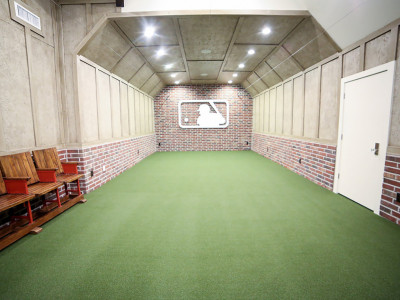
Supposed the corresponding profit margins (prince minus production cost per barrel) would be $16, $12, and $8 respectively. This leads to the following profit able. In each box, the bottom left number is the Saudi profit, and the top right number is the Kuwaiti profit, each measured in millions of dollars per day. Kuwait has a dominant strategy: cheat by producing 2. Saudi Arabia also has a dominant strategy, but this is the cooperative output level of 4. The Saudis cooperate even though Kuwait cheats. The prisoners’ dilemma has vanished. Why? Saudi Arabia has an incentive to cooperate for purely selfish reasons. If they produce a lot output, the market price rises and the profit margins go up for all members of OPEC. If they had only a small share in OPEC’s total output, they would not find it profitable to provide this “public service” to the whole cartel. However, if their share is large, then a large part of the benefit of the high profit margin comes to them, and it may be worth the cost of suffering some reduction in volume. This is what happens for the illustrative numbers we choose above. Here is another way out of the prisoners’ dilemma: find a large benefactor who acts cooperatively and tolerates others’ cheating. The same thing happens in many alliances. In many countries, a large political party and one or more small parties must form a governing coalition. The large party commonly takes the responsible position and makes the compromises that hold the alliances together, while the small parties insist on their special concerns and get their often extreme way. The influence of small religious parties in Israel’s coalition government is a prime example. Another example arises in the NATO alliances; the United States of America provides a disproportionate amount of defense expenditure whose benefits go to Western Europe and Japan. Mancur Olson has aptly labeled this phenomenon “the exploitation of the great by the small.” #RandolphHarris 20 of 20


With accents of elegance, spacious living areas, and convenient workspaces, Millhaven Homes offers beautiful features that will surely capture your interest and imagination.

If you are considering building a custom home with us, please fill out the information below and we will reach out to you to schedule an introductory meeting. https://millhavenhomes.com/get-started/




 Randolph Harris II International Institute