

There is no middle ground in the stark appraisal of suffering. We hope only for recovery and for a return to self-sufficiency. Anything less invokes bitterness. Everyone eats but few kill. Technicians fell the lamb. Eating becomes a ceremony of innocence, tinkle of crystal, rustle of taffeta. Teeth are for beauty: straighten them, make them whiter, the smile more loving. Visit every restaurant in town, never pass the house of nourishment. The tendency of civilization is not to eliminate destructiveness, nor even to diminish it, but to remove it. Our fate falls now from the touch of a finger in an underground bunker half a World away. As we have already discussed, there are four states of consciousness possible for man: sleep, waking consciousness, self-consciousness, and objective consciousness; but he lives only in two: partly in sleep and partly in what is called waking consciousness. It is as though he had a four-storied house, but lived only in the two lower stories. The first, or the lowest state of consciousness, is sleep. This is a purely subjective and passive state. Man is surrounded by dreams. All his psychic functions work without any direction. There is no logic, no sequence, no cause, and no result in dreams. Purely subjective pictures—either reflections of former experiences or reflections of vague perceptions of the moment, such as sounds reaching the sleeping man, sensations coming from body, slight pains, sensations of muscular tension—fly though the mind, leaving only a very slight trace on the memory and more often leaving no trace at all. #RandolphHarris 1 of 20

The second degree of consciousness comes when man awakes. This second state, the state in which we are now, that is, in which we work, talk, imagine ourselves conscious beings, and so forth, we often call waking consciousness or clear consciousness, but really it should be called “waking sleep” or “relative consciousness.” This last term will be explained later. It is necessary to understand here that the first state of consciousness, that is, sleep, does not disappear when the second state arrives, that is when man awakes. Sleep remains there, with all its dreams and impressions, only a more critical attitude towards one’s own impressions, only a more critical attitude towards one’s own impressions, more connected thoughts, more disciplined actions become added to it, and because of the vividness of sense impressions, desires, and feelings—particularly the feeling of contradiction or impossibility, which is entirely absent in sleep—dreams become invisible exactly as the stars and moon become invisible in the glare of the sun. However, they are all there, and they often influence all our thoughts, feelings, and actions—sometimes even more than the actual perceptions of the moment. In connection with this I must say at once that I do not mean what is called in modern psychology “the subconscious” or “the subconscious mind.” These are simply wrong expressions, wrong terms, which mean nothing and do not refer to any real facts. There is nothing permanently subconscious in us because there is nothing permanently conscious; and there is no “subconscious mind” for the very simple reason that there is no “conscious mind.” #RandolphHarris 2 of 20

Later you will see how this mistake occurred, and how this wrong terminology came into being, and became almost generally accepted. However, let us return to the states of consciousness which really exist. The first is sleep. The second is “waking sleep” or “relative consciousness.” The first, as I have said, is purely subjective state. The second is less subjective; man already distinguishes “I” and “not I” in the sense of his body and objects different from his body, and he can, to a certain extent, orientate among them and know their position and qualities. However, it cannot be said tht man is awake in this state, because he is very strongly influenced by dreams, and really lives more in dreams than in fact. All the absurdities and all the contradictions of people, and of human life in general, become explained when we realize that people live in sleep, do everything in sleep, and do not know that they are asleep. It is useful to remember that this is the inner meaning of many ancient doctrines. The best known to us is Christianity, of the Gospel teaching, in which the idea that men live in sleep and must first of all awake is the basis of all the explanations of human life, although it is very rarely understood as it should be understood, in this case literally. However, the question is: how can a man awake? The Gospel teaching demands awakening, but does not say how to awaken. #RandolphHarris 3 of 20

However, the psychological study of consciousness shows that only when a man realizes that he is asleep, is it possible to say that he is on the way to awakening. He can never awaken without first realizing his sleep. These two states, sleep and waling sleep, are the only two states of consciousness in which man lives. Besides them there are two states of consciousness possible for man, but they become accessible to a man only after a hard and prolonged struggle. These two higher states of consciousness are called “self-consciousness” and “objective consciousness.” We generally think that we possess self-consciousness, that is, that we are conscious of ourselves, at any moment we wish, but in truth “self-consciousness” is a state which we ascribe to ourselves without any right. “Objective consciousness” is a state about which we know nothing. Self-consciousness is a state in which man becomes objective towards himself, and objective consciousness is a state in which he comes into contact with the real, or objective, World from which he is now shut off by the senses, dreams, and subjective states of consciousness. Another definition of the four states of consciousness can be made from the point of view of the possible cognition of truth. In the first state of consciousness, that is, in sleep, we cannot know anything of the truth. Even if some real perceptions or feelings come to us, they become mixed with dreams, and in the state of sleep we cannot distinguish between dreams and reality. #RandolphHarris 4 of 20

In the second state of consciousness, that is, in waking sleep, we can only know relative truth, and from this comes the term “relative consciousness.” In the third state of consciousness, that is, the state of self-consciousness, we can know the full truth about ourselves. In the fourth state of consciousness, that is, in the state of objective consciousness, we are supposed to be able to know the full truth about everything; we can study “things in themselves,” “the World as it is.” This is so far from us that we cannot even think about it in the right way, and we must try to understand that even glimpses of objective consciousness can only come in the fully developed state of self-consciousness. In the state of sleep we can have glimpses of relative consciousness. However, if we want to have more prolonged periods of self-consciousness and not merely glimpses, we must understand that they cannot come by themselves, they need will action. This means that frequency and duration of moments of self-consciousness depend on the command one has over oneself. So it means that consciousness and will are almost one and the same thing. At this point, it must be understood that the first obstacle in the way of the development of self-consciousness in man, is his conviction that he already possesses self-consciousness, or at any rate, that he can have it at any time he likes. It is very difficult to persuade a man that he is not conscious and cannot be conscious at will It is particularly difficult because here nature plays a very funny trick. #RandolphHarris 5 of 20

If you ask a man if he is conscious or if you say to him that he is not conscious, he will answer that he is not, because he hears and understands you. And he will be quite right, although at the same time quite wrong. This is nature’s trick. He will be right because your question or your remark has made him vaguely conscious for a moment. Next moment consciousness will disappear. However, he will remember what you said and what he answered, and he will certainly consider himself conscious. In reality, acquiring self-consciousness means long and hard work. How can a man agree to this work if he thinks he already possesses the very thing which is promised him as the result of long and hard work? Naturally a man will not begin this work and will not consider it necessary until he becomes convinced that he possesses neither self-consciousness nor all that is connected with it, that is, unity or individuality, permanent “I,” and will. This brings us to the question of schools, because methods for the development of self-consciousness, unity, permanent “I,” and will, can be given only by special schools. That must be clearly understood. Men on the level of relative consciousness cannot find these methods by themselves; and these methods cannot be described in books or taught in ordinary schools for the very simple reason that they re different for different people, and there is no universal method equally applicable to all. #RandolphHarris 6 of 20

In other words, this means that men who want to change their state of consciousness need a school. However, first they must realize their need. As long as they think they can do something by themselves they will not be able to make any use of a school, even if they find it. Schools exist only for those who need them, and who know that they need them. The idea of schools—the study of the kinds of schools that may exist, the study of school principles and school methods—occupies a very important place in the study of that psychology which is connected with the idea of evolution; because without a school there can be no evolution. One cannot even start because one does not know how to start; still less can one continue or attain anything. This means that, having got rid of the first illusion—that one already has everything one can have—one must get rid of the second illusion—tht one can get anything by oneself; because by oneself one can get nothing. These lectures are not a school—not even the beginning of a school. A school requires a much higher pressure of work. However, in these lectures I can give to those who wish to listen, some ideas as to how schools work and how they can be found. I gave before two definitions of psychology. First, I said that psychology is the study of the possible evolution of man; and second, that psychology is the study of oneself. Psychology which investigates the evolution of man is worth studying, and a psychology which is occupied with only one phase of man, without knowing anything about his other phases, is obviously not complete, and cannot have any value, even in a purely scientific sense, that is, from the point of view of experiment and observation. #RandolphHarris 7 of 20

For the present phase, as studied by ordinary psychology, in reality does not exist as something separate and consists of many subdivisions which lead from lower phases to higher phases. Moreover, the same experiment and observation show tht one cannot study psychology as one can study any other science not directly connected with oneself. One has to begin the study of psychology with oneself. Putting together, first, what we may know about the next phase in the evolution of man—that is, that it will mean acquiring consciousness, inner unity, permanent ego, and will—and second, certain material that we can get by self-observation—that is, realization of the absence in us of many powers and faculties which we ascribe to ourselves—we come to a new difficulty in understanding the meaning of psychology, and to the necessity for a new definition. The two definitions given in the previous lectures are not sufficient because man by himself does not know what evolution is possible for him, does not see where he stands at present, and ascribes to himself features belonging to higher phases of evolution. In fact, he cannot study himself, being unable to distinguish between the imaginary and the real in himself. There are countless pitfalls on the way out of misery. Focusing restlessly on what has been lost, comparing oneself to others, aspiring for things that are out of reach, and placing blame on others are only some of the most common snares. Each personal variation is uniquely painful. #RandolphHarris 8 of 20

It is all too common for people to get themselves into situations that are difficult to get out of. Once you have a job in a particular city, it is expensive to resettle. Once you buy a computer and learn its operating system, it becomes costly to learn another one and rewrite all your programs. Travelers who join the frequent-flyer program of one airline thereby raise their cost of using another. And, of course, marriage is expensive to escape. The problem is that once you make such a commitment, your bargaining position is weakened. Companies may take advantage of their workers’ anticipated moving costs and give them fewer salary raises. Computer companies can charge higher prices for new, compatible peripheral equipment knowing that their customers cannot easily switch to a new, incompatible technology. Airlines, having established a large base of frequent flyers, will be less inclined to engage in fare wars. A couple’s agreement that they will split the housework 50:50 may become subject to renegotiation once a child is born. Strategists who foresee such consequences will use their bargaining power while it exists, namely, before they get into the commitment. Typically, this will take the form of a payment up front. Competition among the would-be exploiters can lead to the same result. Companies will have to offer more attractive initial salaries, computer manufacturers will have to charge sufficiently low prices for their central processing units (CPUs), and airline frequent-flyer programs will have to offer larger signing-on mileage bonuses. As for married couples, exploitation may be a game that two can play. #RandolphHarris 9 of 20

The same foresight is what prevents many curious but rational people from trying addictive drugs such as heroin. A Tom Lehrer song describes the drug dealer’s ploy: “He gives the kids free samples because he knows full well that today’s young innocent faces will be tomorrow’s clientele.” Smart kids know it too, and turn down the free samples. Complexity research has received considerable attention recently. In some measure, this is because advances in computation have enabled progress on a number of problems tht had long been too difficult for conventional mathematical tools. However, it is important to recall that the fundamental orientation of complexity research is actually rooted in long traditions. Adam Smith’s hidden hand, the “blind watchmaking” of Darwinian evolution, the cell-assembly neuropsychology of Donald Hebb, and the self-reproducing automata of John von Neumann were earlier intellectual developments that blazed the same trail by uncovering system-level properties produced by the structured interaction of simple components. Perhaps there are powerful results just over the horizon, but as we see it, complexity research does not make detailed predictions. Rather, it is a framework that suggests new kinds of questions and possible actions. We should compare the results taking shape to the artificial selection principles of animal husbandry (a field that must interested the youthful Darwin). Analyzing complex systems within the framework does not assure the ability to produce specific outcomes but can foster an increase in the value of populations overtime—whether the populations are of livestock, of technical innovations, or of new strategies for business competition. #RandolphHarris 10 of 20
In the language of our framework, a designer introduces new artifacts or strategies into the World. A new machine on a factory floor or a new approach to conducting a budget review may be interventions in complex systems whose full consequences cannot be contemplated in advance. An orbiting telescope and a legal appeal on constitutional grounds almost certainly will have consequences that are hard to predict. A designer may even introduce new agents into the World. For example, an executive might create a new division in an organization, or a legislature might set up a new governmental bureau. Policy makers deliberately alter the consequences of available strategies when they increase rewards for some outcomes or make some patterns of action illegal. We use the phrase “design and policy making” to indicate the full spectrum of actions that we may find ourselves considering. We may take the perspective of some within a system—for example, as one of many people at a committee table. Alternatively, we may contemplate the system from the outside, as an architect or a legislator might do. In either case, we all find ourselves designing or making policy in complex settings. When we do, it can be very valuable to extend the questions we conventionally ask about likely consequences and scenarios. We can go on to ask what populations of agents and strategies are involved, and what interventions might create new combinations or destroy old ones? These kinds of questions help us harness complexity. #RandolphHarris 11 of 20

The widening gulf between Western Europe and the United States of America also reflects two contrasting attitudes toward the deep fundamental of time. Europe and America operate at different speeds. Europe is well behind the United States of America in work-at-home arrangements that typically allow employees to adjust their work hours. Even in the shop or office, Europe lags in flexible scheduling, 24/7 operations and other departures from traditional industrial routines. Workforce flexibility is needed for firms to compete successfully in today’s global markets. However, European workers and employers alike remain trapped in inflexible temporal arrangements. This situation is not merely reflected in the longer vacations, generally shorter workweek and overall slower pace of life on which Europeans, and especially the French, pride themselves. It is even seen in attitudes toward meals. In response to the American-born fast-food industry spreading across the globe, Europe has originated the “slow food” movement aimed at fighting it. Started almost as a joke in Italy in 1986, this movement now claims as many as eighty thousand members in one hundred countries, including 145 chapters in the United States of America. Its organizers stage events, publish books about food and celebrate good (and slow) eating. #RandolphHarris 12 of 20
The slow-food movement has (slowly) spawned a counterpart called cittaslow devoted to maintaining slow life in small cities. It promotes local products and sustainability and is so committed to slowness, that of thirty Italian towns that helped found the movement, none had qualified for membership. “They’re not supposed to qualify quickly,” explained one of the movement’s organizers. “It could take years.” Whether a new organization ever spring up for those who enjoy both a fast and a slow pace of life at different times, both a burger on the run and a languorous lobster, remains to be seen. Meanwhile, Britons are flocking to villages like Agincourt in northern France in search of greater tranquility and a still-slower-paced lifestyle. The surge is helped, no doubt, by lower house prices and just possibly by the Channel Tunnel and additional airline flights that-forefended the thought—speed up travel. All of which led one Againcourt real estate agent, Maggie Kelly, to exclaim, “There days I hardly have five minutes to turn around!” Apparently, no irony intended. However, amusement should not deceive us. Whatever the virtues of slow versus fast, how a society deals with time has important implications for how it creates wealth—for both de-synchronization at home and integration into the World economy. European headlines are dotted, in fact, with the word slow, as in CORE EUROPEAN COUNTRIES SLOW TO IMPLEMENT…, EU “TOO SLOW” ON ECONOMIC REFORMS and GENDER EQUALITY: SLOW PROGRESS. But it is not just the European must confront layer after impenetrable layer of regulations. #RandolphHarris 13 of 20

In Europe things move slower and take more time and energy. So it is no surprise to learn from the European Commission itself that “in the United States of America, it takes just six hours to establish a business, and while differences remain between member states…in Europe, it takes much longer in all of them.” Try, for example, obtaining a patent in Europe. According to Trevor Cook of the European law firm Bird & Bird, “It takes much longer to secure patents in Europe thana it does in the U.S., typically at least four, sometimes as many as ten years, and this is a real problem for fast-moving high-tech businesses.” Or talk to Rita Villa, an American certified public accountant who operates on both sides of the Atlantic. “Things just take longer in Europe. Transactions have many more steps. For example, if the U.S. company wants to move its headquarters from, say, Chicago to Dallas, no problem. But if a German firm wants to move from Berlin to Frankfurt, it requires a whole time-consuming multi-step process of ‘registration.’” Or, she says, try changing the legal form of a company, something smaller firms often need to do. If I have limited liability corporation, or LLC, in the U.S. and want to convert it to an ordinary corporation with “Inc.” at the end of its name, I can do that rapidly. But in Germany when we wanted to change a GMBH to an AG—a comparable change—it took over a year. Say the company wants to issue a dividend to its shareholders. In the U.S., the board of directors meets and, if it thinks it’s a god idea, it votes and that’s it. Not in Germany. There the auditors first have to approve it. Then it goes to the management board. After that it has to go to the supervisory board. Then it has to go to the notary who can demand last-minute alterations even after all the parties have reached an agreement. Then it has to be registered. #RandolphHarris 14 of 20

The transatlantic differences intime and pace even affect Europe’s defense industries and military. American military technology and capabilities are aimed at enabling faster and faster responses to crisis. European forces in NATO cannot keep up, making integrated joint action more difficult. The European Union, meanwhile, is moving—slowly—to create its own “rapid reaction” military force. At all these levels, therefore, from lifestyle and culture to military matters and, above all, business and the economy, the speed gap between European and the United States of America is, if anything, widening. Each is responding to the accelerative economy and the deep fundamental of time at its own, very different pace. Now, when it comes to flex-firms, another format likely to find a place in many flex-firms is a completely two-faced unit capable of operating in two modes, depending upon the circumstance. The pulsating unit differs in size and organization from time to time. The pulsating unit differs in size and organization from time to time. The Janus-like organization may remain the same in size, but shift from hierarchical to nonhierarchical command as needs demand. A prime example is the famed British military unit, the Special Air, or SAS. Used for surgical antiterrorist strikes, hostage rescue, and other missions demanding surprise and deception, the SAS operates in two diametrically opposed modes. On the parade ground it is all spit, polish, and blind obedience. Regimental protocol is enforced by screaming sergeants. The privileges of rank and hierarchy are brutally upheld. #RandolphHarris 15 of 20

In action, however, a totally different kind of behavior is expected from the same people. SAS troops fight in tiny units, often cut off from their base, and without any officer present. There is a unit commander, but he may not hold a formal rank and is likely to be referred to simply as the “boss.” The men, derisively called “sir” on the parade ground, now become “mister” or are addressed simply by the first name. The same sergeant who cursed a trooper for some trivial infraction of the dress code may now tolerate jokes about those “parade ground idiots.” Rank, hierarchy, and privilege are replaced under fire by a different set of ground rules. In fact, Colonel David Stirling, who initially proposed formation of the SAS, pointed out that the smallest unit in paratroop or commando organizations consisted of eight or ten men led by a noncommissioned officer who did the thinking for the unit. Stirling insisted on something unique in military history—a four-man fighting module. In the SAS, Stirling has written, “Each of the four men was trained to a high general level of proficiency in the whole range of the SAS capability and, additionally, each man was trained to have at least one special expertise according to his aptitude. In carrying out an operation—often in pitch-dark—each SAS man in each module was exercising his own individual perception and judgment at full stretch.” In fact, Stirling insisted on the number four to prevent orthodox leadership from arising. The danger of each person acting as a loose cannon is minimized through the selection of extremely motivated team players. #RandolphHarris 16 of 20

The result is an organization that has been described as “a unique military democracy…in which, if he succeeds, a man exchanges his former class and even identity for membership [in] a caste as binding as any family.” It is this intense training and commitment that make it possible for the same unit to operate in both an authoritarian and a democratic mode, as the occasion demands. Businesses, too, needs different behavior during normal operations and in the midst of crisis. In fact, many firms today are creating crisis centers, contingency plans, and fallback arrangements. However, few actually train all their employees to operate in two contrasting modes. The present conception of crisis management is to create a “shadow management,” which waits in reserve, prepared to assume power during the emergency. Its ability to do so depends heavily on access to information and control of communications. Southern California Edison, for example, which operates the San Onofre Nuclear Generating Station, has set up a complex emergency information system that uses remote sensing, voice and video links, to tie its crisis command center to field units. As we move further into a period of economic and political turbulence, punctuated erratically by technological breakthroughs and disasters, we can expect crises to crowd in on one another—everything from terrorist attacks and product failures to sudden international crises. #RandolphHarris 17 of 20

The Exxon oil spill, the collapse of the Continental Illinois bank, the wave of saving-and-loan failures, the bankruptcy of the A.H. Robins Company after the discovery of health problems related to its Dalkon Shield intrauterine contraceptive device only begin to suggest the diversity of crises that can face businesses. Each one brings enormous power shifts with its scapegoats are blamed, new leaders arise, and others are discredited and replaced. However, the increased likelihood of crisis teams and two-faced organizations spread through the business World and become a regular part of the flex-firm of tomorrow. Now, when it comes to labor, once a plant is operating, it should require little human labor (what people do with their time will change, unless factories are kept running as bizarre hobbies). Desert Rose Industries was run by two people, yet was described as producing large quantities of varied gods. The basic molecular-scale operations of manufacturing have to be automated, since they are too small for people to work on. The other operations are fairly simple and can be assisted by equipment for handling materials and information. When taking space into account, even a manufacturing plant based on nanotechnology takes up room. It would, however, be more compact than familiar manufacturing plants, and could be built in some out-of-the-way place with inexpensive land. These costs should be small by today’s standards. Considering insurance, this cost will depend on the state of the law, but some comparisons can be made. #RandolphHarris 18 of 20

Improved sensors and alarms could be made integral parts of products; these should lower fire and theft premiums. Product liability costs should be reduced by safer, more reliable products. Employee injury rates will be reduced by having less labor input. Still, the legal system in the United States of America has shown a disturbing tendency to block every new risk, however small, even when this forces people to keep suffering old risks, which are sometimes huge. (The supply of lifesaving vaccines has been threatened in just this way.) When this happens, we kill anonymous people in the name of safety. If this behavior raises insurance premiums in perverse way, it could discourage a shift to safer manufacturing technologies. Since such costs can grown or shrink independent of real World of engineering and human welfare, they are beyond our ability to estimate. Considering the costs of sales, distribution, training—these costs will depend on the product: Is it as common as potatoes, and as simple to use? Or is it rare and complex, so that determining what you need, where to get it, and how to use it are the main problems? These service costs are real but can be distinguished from costs of the thing itself. Essentially, molecular manufacturing should eventually lead to lower costs. The initial expense of developing the technology and specific products will be substantial, but the cost of production can be low. Energy costs (at present prices) and material costs (ditto) would be significant, but not enormous. They were quoted on a perkilogram basis, but nanotechnological products, being made of superior materials, will often weigh only a fraction of what familiar products do. (Ballast, were in needed, will be dirt-cheap.) Equipment costs, land costs, waste-disposal costs, and labor costs can be low by the very nature of the technology. #RandolphHarris 19 of 20

Costs of design, regulation, and insurance will depend strongly on human tastes and are beyond predicting. Basic products, like clothing and housing, can become inexpensive unless we do something to keep them costly. As the cost of improved safety falls, there will be less reason to accept unsafe products. Molecular manufacturing uses processes as controlled and efficient as the molecular processes in plants. Its products could be as inexpensive as potatoes. This may sound too good to be true (and there are downsides, as we will later discuss), but why should it not be true? Should we not expect large changes to come with the replacement of modern technology? An argument is sometimes made that promiscuous use of sacred or serious symbols by corporate America is a form of healthy irreverence. Irreverence, after all, is an antidote to excessive or artificial piety, and is especially necessary when piety is used as a political weapon. One might say that irreverence, not blasphemy, is the ultimate answer to idolatry, which is why most cultures have established means by which irreverence may be expressed—in the theater, in jokes, in song, in political rhetoric, even in holidays. However, there is nothing in the commercial exploitation of traditional symbols that suggests an excess of piety is itself a vice. Business is too serious a business for that, and in any case has no objection to piety, as long as it is directed toward the idea of consumption, which is never treated as a laughing matter. In using Uncle Sam or the flag, or the American Eagle or images of presidents, in employing such names as Liberty Insurance, Freedom Transmission Repair, and Lincoln Savings and Loan, business does not offer us examples of irreverence. It is merely declaring the irrelevance, in Technopoly, of distinguishing between the scared and the profane. #RandolphHarris 20 of 20

Cresleigh Homes
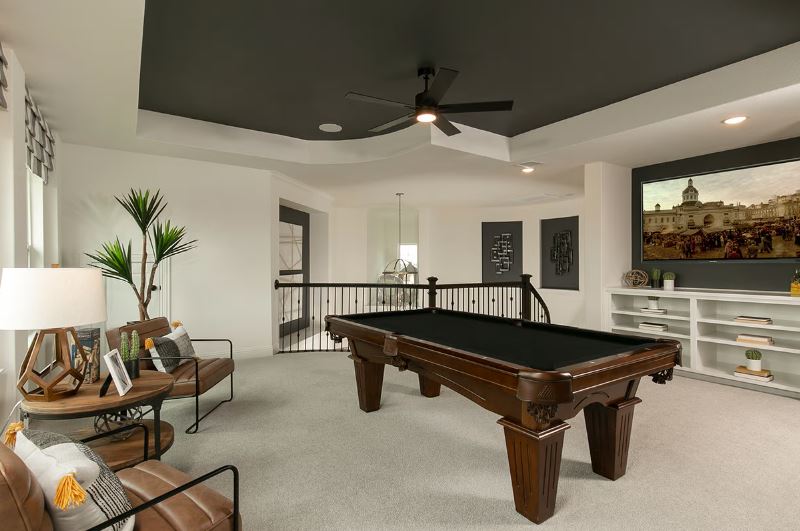
You’ll never feel cramped in Model 4 at #Havenwood! This is the largest home offered in this community, and there’s even a great room and loft upstairs for more great flexible entertainment space. 😍

Like all our #CresleighHomes, this one comes with an All-Ready connected home system, including a video doorbell and digital deadbolt.
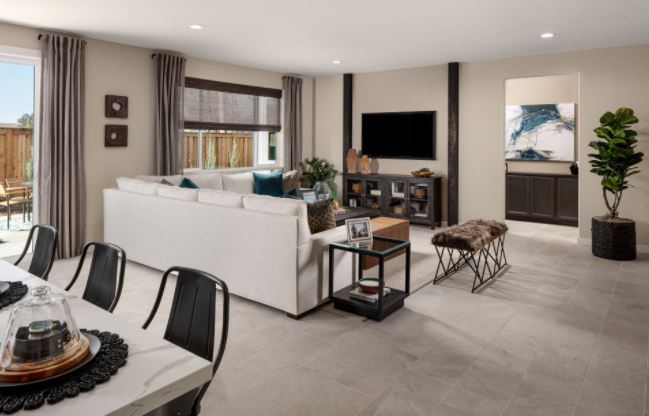
It’s the perfect time to make moves to the home of your dreams, and it’s not far away!

Home Site 67 is a Residence Four plan, the largest home offered in Cresleigh Havenwood. This two-story, 3,489 square foot home features four bedrooms, including one suite on the first floor, three and one half bathroom, and a true three-car garage.
The covered porch provided a warm entry and the dining room is located right off the entry way. The Kitchen is connected through the Butler’s Pantry providing ample storage. The great room and loft upstairs allow for various uses that will suit your family and lifestyle.
This home includes over $50,000 in options and upgrades
• Durable luxury vinyl plank flooring throughout the first floor
• Gray Shaker Cabinetry with Soft-Close Doors & Drawers
• Over Island Pendants and Under-Cabinet Lighting
• Gourmet Kitchen option with upgraded appliances
• Stainless Steel Farm Sink and Upgraded Faucet
• Flat Screen Prewire in Great Room
• Owned Solar
Best of all, each Cresleigh home comes fully equipped with an All Ready connected home! This smart home package comes included with your home and features great tools including: video door bell and digital deadbolt for the front door, connect home hub so you can set scenes and routines to make life just a little easier. Two smart switches and USB outlets are also included, plus we’ll gift you a Google Home Hub and Google Home Mini! https://cresleigh.com/havenwood/quick-move-homesite-67/




 Randolph Harris II International Institute