

One of my biggest concerns is not to make people bored. Nguyen Thi Bihn, a peasant in her fifties, grows rice on a small paddy sixty miles south of Hanoi in Vietnam. When she is growing rice in her paddy, we cannot. Tatiana Raseikina, a twenty-something, screws door handles onto Avto-VAZ cars as they whiz by on an assembly line in Togliatti, an industrial city south of Moscow. And, like that rice paddy in Vietnam, when Tatiana’s clattering assembly line is racing along, we cannot use it. The lives and cultures of these two women are very different. One symbolizes agrarian production; the other, industrial production. Yet both live in economies in which the central assets, resources and products are what economists call “rival”—meaning that their use by one party denies their simultaneous use by anyone else. Since most economies are still agrarian or industrial, it is no surprise that most economist have spent their careers collecting data and analyzing and theorizing about rival means of wealth creation. Suddenly, so to speak, a different wealth system has arrived that is driven not only by dramatic changes in our relationships with time and space but with a third deep fundamental: Knowledge. The response of rearguard economist has been to either deny its importance, continue working as though it made no difference, or probe it with inappropriate tools. One reason is that, unlike rice and car handles, knowledge is intangible and attempts to define it usually lead into a maze from which there is no graceful exit. Fortunately, for our purposes, we do not need a mind-numbing, comprehensive review of the endless competing definitions. Nor are extreme precision and specificity necessary. Unsatisfying as it may seem, for our own purposes we requires only a working definition that helps reveal the way in which our global knowledge base is being transformed—and how today’s changes will affect wealth in the future. One commonly used approach sets knowledge apart from data and information. Data are usually described as consisting of discrete items devoid of content—for example, “three hundred shares of pharmaceutical company X.” #RandolphHarris 1 of 19

Only when information is configured into broader, higher-level patterns and linked to other patters do we arrive at something we might call knowledge—for example, “We have three hundred shares of pharmaceutical company X up two points in a rising market, but volume is low and it is likely the Fed will raise interest rates.” We will use the terms this way, but to avoid the annoying repetition of the phrase “data, information and knowledge” we will, where specificity does not matter, use the words knowledge or information to mean any or all of the above. Together these distinctions provide, at best, only a gross defition of knowledge. However, it is adequate for us right now in describing what might be called the revolutionary wealth system’s “knowledge supply.” Billions of words about the knowledge economy have been written, uttered, digitized and disputed in just about every language on Earth. Yet few of those words make clear just how profoundly different knowledge is from any of the other resources or assets that go into the creation of wealth. Let us look at some of those ways. Knowledge is inherently non-rival. You and a million other people can use the same chunk of knowledge without diminishing it. In fact, the greater the number of people who use it, the greater the likelihood that someone will generate more knowledge with it. The fact that knowledge is non-rival has nothing to do with whether or not we pay of it using it. Patents, copyrights, anti-pirating technology may protect a particular piece of knowledge and exclude its use by those who do not pay for access to it. However, these are artifacts of law, not the inherent character of knowledge itself, which is essentially undepletable. Arithmetic does not get used up when we apply it. In advanced economies today, the vast majority of workers are busy creating or exchanging non-rival data, information and knowledge. Yet we know of no theory that systematically maps the interaction or rival and non-rival sectors in a whole economy, and what happens when the balance between them shifts. Knowledge is intangible. We cannot touch, fondle or slap it. However, we can—and do—manipulate it. #RandolphHarris 2 of 19

Knowledge is non-linear. Tiny insights can yield huge outputs. Stanford students Jerry Yang and David Filo started Yahoo! by simply categorizing their favorite Web sites. Fred Smith, also while still a student, flashed on the idea that in an accelerative economy people would pay extra for speed—and went on to found Federal Express, the World’s best-known package-delivery firm. Knowledge is relational. Any individual piece of knowledge attains meaning only when juxtaposed with other pieces that provide its context. Sometimes that context can be communicated with a wordless smile or scowl. Knowledge mates with other knowledge. The more there is, the more promiscuous and the more numerous and varied the possible useful combinations. Knowledge is more portable than any other product. Once converted to zeros and ones, it can be distributed instantaneously to one person next door or ten million people from Hong Kong to Hamburg—at the same near-zero price. Knowledge can be compressed into symbols or abstractions. Try compressing a “tangible” toaster. Knowledge can be stored in smaller and smaller spaces. Toshiba entered Guinness World Records in with a computer hard drive smaller than a postage stamp. A poppy seed from your morning bagel is about 1,000 times larger than a bacterial cell. That small cell is about 1,000 times larger than the chemical structures National Renewable Energy Laboratory (NREL) researchers are creating and studying to transform how we use energy. At such a small scale, the World gets weird. Some familiar forces—such as gravity-hardly apply, while other phenomena—like quantum waveforms—have major influence. Even something as basic as the ratio between a particle’s surface area and its volume changes dramatically, with equal dramatic effects. It is in this weird realm that many NEL researchers are discovering (or creating) key materials for tomorrow’s energy systems. When you go down to the nanoscale, you often endow materials with properties they would not otherwise have. These new properties are a major draw for materials scientists. There is a lot that one can do with nanomaterials, and nanomaterials are popping up everywhere because they are so versatile. #RandolphHarris 3 of 19

This versatility, or “turnability,” is key to NREL’s nanomaterials research. By changing size, shape or composition of nanoscale particles and structures, researchers can carefully control their properties. And by combining structures with just the right mix of properties, materials can be made to fit a desired function. They are almost like little Lego pieces you can stack together in really neat ways. What makes nanomaterials exciting is that they possess a background of similar properties as larger compound, but other new and exciting tunable features emerge at the nanoscale that expand the overall scope of applications. As one example, semiconductor quantum dots can be tuned to emit specific colors at a nearly 100 percent efficiency level. This means that TVs and displays using these quantum dots can offer enhanced color and accuracy without sacrificing brightness or using more energy. If you have seen a QLED or an OLED TV, you have seen nanomaterials in action. NREL researchers are hoping to exploit similar properties, or even new ones, in many different applications. It is no surprise that NREL researchers are studying multiple ways to capture the sun’s energy with nanomaterials. For the next generation of photovoltaic technologies, nanomaterials could allow solar cells to be rapidly manufactured out of more common, less expensive materials. For example, thin films of lead-sulfide or perovskite quantum dots can be easily printed into a solar cell. Such materials can also be “tuned” to absorb different wavelengths of light, making them promising candidates for lower-cost, higher-efficiency multi-layer solar cells. Due in part to their extremely high surface-area-to-volume ratio, nanomaterials can also act as powerful catalysts to drive many reactions. For example, layers of semiconductors that are only three atoms thick can capture sunlight to power the production of hydrogen gas or other solar fuels. Sunlight is not the only energy source nanomaterials can harness. #RandolphHarris 4 of 19

The United States of America’s Energy Information Agency calculates that more than 60 percent of energy used for electricity generation in the United States of America is lost as heat. Thermoelectric devices can convert wastes heat into electricity. While thermoelectrics are already found in nuclear batteries, such as those found on some spacecraft, nanoscale structures could make these devices more efficient and lower-cost, enabling them to draw heat from more terrestrial sources. NREL researchers are also studying electronic ratchets, devices that can harvest radio frequency signals or electrical noise to produce an ordered electrical current. New materials, such as carbon nanotubes, are helping to boost the efficiency of these devices, offering a fundamentally new method of distributed energy production. These devices are also computer transistors with a memory. NREL ‘s nanoscale research goes beyond energy and chemical production, also exploring ways to revolutionize our computers (and how much energy they consume). Neuromophic computing employs electronic devices that are modeled after the neurons in our brains, rather than the simple, on-off transistors of traditional computers. By combining a computer’s processing and memory storage functions into one component—a “memristor”—neuromorphic computer could eventually become more efficient and powerful than today’s computers, which are becoming limited by the size of transistors. NREL researchers are working to develop better materials for memristors, and nanomaterials are playing a leading role. Nanomaterials are also contributing to NREL’s work on quantum computing. Nanomaterials represent a great opportunity for the development of new functional materials Researcher have only just begun to harness these unique properties, and we will continue to see massive growth in this area. In the future, nano technology may also be used to form objects and destory objects by combining millions of these computer chips to accomplish a task. Knowledge can be explicit or implicit, expressed or not expressed, shared or tacit. There is no tacit table, truck or other tangible. #RandolphHarris 5 of 19

Knowledge is hard to bottle up. It spreads. Putting all these characteristics together, we wind up with something so unlike the tangibles with which economists have traditionally been concerned that many of them just shake their heads and, like most people, seek comfort in the World they know—the familiar World of rival tangibility. Even all these differences, however, do not complete the ways in which knowledge refuses to fit into existing economic categories. Knowledge assets have strange, paradoxical characteristics. Take the difference between buying a car and buying proprietary knowledge. Owners or originators of some very valuable knowledge are protected by trade-secret laws. Not long ago the Lockheed Martin Corporation sued Boeing, alleging that a Lockheed engineer had made off with thousands of pages of rocket-launch data and costs estimates and made them available to Boeing. The suit claimed the documents were then used by Boeing to win a multibillion-dollar contract. That takes us to what Professor Max Boisot of ESADE (La Escuela Superior de Administracion y Direccion de Empresad) in Barcelona has called a paradox. “The value of physical goods is established by comparing them with each other.” A car buyer kicks tires, looks under hoods, ask friends for advice, test-drives the Toyota, the Ford, the Volkswagen. That does not reduce the value of the car. By contrast, in the Lockheed-Boeing case, let us hypothetically say that another aerospace company, Northrop, had wanted to buy Lockheed’s secret document. To establish their value, Northrop has to know what is in them. However, the minute we know what is in them, they are no longer completely secret, and at least some of the value may well be gone. In Mr. Boisot’s words, “Information about information goods…cannot be so diffused without compromising their scarcity”—the very scarcity on which their value is partly based. That would be like looking under the car’s hood and making off with its fuel system. #RandolphHarris 6 of 19

In an economy based more and more on knowledge and innovation, this creates a challenging problem not just for economists but for economics. Thus, Mr. Boisot writes, “when information ceases to play merely a supporting role in economic transactions, when it becomes instead their central focus, the logic that regulates the production and exchange of physical goods ceases to apply.” The rise of knowledge insensitivity is not just a minor bump in the road. Economist, having hoped to turn economics into a science with the precision and predictability of Newton’s physics, once pictured economies as deterministic, equilibrial and machine-like. Even today much in economics, including the legacies of Adam Smith, David Ricardo and later Karl Marx, John Maynard Keynes and Milton Friedman is still based, at least partly, on Newtonian mechanics and Cartesian logic. Almost a century ago, however, quantum theory, relativity and the uncertainty principle produced a crisis in physics that led first physicists, and then non-physicists as well, to a clearer understanding of the limitations of the machine model. It turns out that not everything in the Universe behaves, at all times, with the regularity, predictability and lawfulness of a machine. In Mr. Boisot’s words: “The message…is a disconcerting one for those who believe that economics is or should be an exact science: it is that information goods are indeterminate with respect to value. And just as the discovery of indeterminacy in physical processes entailed a shift in paradigm from classical physics to quantum physics, so the indeterminacy of information goods calls for a distinct political economy of information.” Now combine the unanswered questions about knowledge with those posed by the simultaneous sweeping changes in our relations with time and space, and we begin to glimpse just how little we know about the revolutionary wealth system now transforming America and spreading around the World. When focusing on the “organized” economy, social plan, and moral atmosphere, in which an average American boy grows up, we realize that they do not constitute the whole environment; they do not constitute even a big fraction of it—or we should all have died of hunger, exposure, and boredom long ago. #RandolphHarris 7 of 19

Mostly people go about their business more directly, produce real goods and get real satisfactions and frustrations. However, the Organization does butt in everywhere, it does set the high style of how things are done. It dominates “big” enterprise, politics, popular culture; and its influence is molding enough to humans the future with a new generation of dependent and conformist young men without high aims and with little sense of a natural or moral community. In such an environment there operates an unfortunate natural selection. Since not only the rewards but also the means and opportunities of public activity belong to the organized system, a smart boy will try to get ahead in it. He will do well in school, keep out of trouble, and apply for the right jobs. It would follow from this that the organized system is sparked by a good proportion of the bright boys, and so it is. On the other hand, in sheer self-protection, smart boys who are sensitive, have strong animal spirits or great souls, cannot play that game. There are then two alternative possibilities: Either the advantage of the organized system cause them to inhibit their powers, and they turn into the cynical pushers or obsessional specialists or timid hard workers who make up the middle status of the system. Or their natural virtues and perhaps “wrong” training are too strong and they become Independents; but as such they are hard put, not so much hard put for money as for means to act; and so they are likely to become bitter, eccentric, etcetera, and so much the less effective in changing the system they disapprove. (“Wrong” training can be a very innocent thing. Consider a father who allows his child to read good books. That child may soon cease to watch television or go to the movies, nor will he eventually read Book-of-the-Month Club selections, because they are ludicrous or dull. As a young man, then, he will effectually be excluded from all of Madison Avenue and Hollywood and most of publishing, because what moves him or what he creates is quite irrelevant to what is going on: it is too fine. His father has brought him up as a dodo.) #RandolphHarris 8 of 19

These two great groups—the bright young men wasted in the Rat Race and the bright young men increasingly unused and thwarted as Independents—are the vast wasted resources of our country. However, they are not “problems”; they are just unhappy and unfulfilled. The interesting groups, the Problems, are those who can neither operate in the organized system nor essentially disregard it. Given, then, this illusion of a closed World that seems so critical to young folk, let us make a new beginning and collect our sentences about their various kinds of reaction. There is one prevailing system of ideas according to which our organized society behaves in all kinds of cases: whether the Governor of New York asks what to do with unruly boys, or universities embark on basic scientific research, or the press defends fundamental freedoms, or social scientists think about human nature. Lever House, a Ford factory, and the Air Force Academy are built in the same “functional” style, for there is apparently only one function, Public Relations. (If in fact we lived in the World of Public Relations and America were that World, there would be no bread to eat but only colorful cellophane wrappers with brand names, and there would be no water to drink but only Public Works Sponsored by Governor X, Mayor Y, and Chief Engineer Z.) So imagine as a model of our Organized Society: An apparently closed room in which there is a large rat race as the dominant center of attention. And let us consider the human relations possible in such a place. This will give us a fair survey of what disturbed youth is indeed doing: some running that race, some disqualified from running it and hanging around because there is nowhere else, some balking in the race, some attacking the machine, etcetera. Start with those running the race. Of these, most interesting are the middle-status Organization Men of various kinds, for they are aware that it is a rat race, their literature proclaims it. However, they are afraid to jump off. Since they think it is a closed room, they think there is nowhere to go. And if they jump off, in the room, they fear they will be among the disqualified, they will be Bums. However, besides, they are afraid of the disqualified, to mix with them, and this keeps them running. This important point is generally overlooked, so let us explore it. #RandolphHarris 9 of 19

Sociologist of class structure seem to think that the values of the middle class are not only hard to achieve and maintain, which they are, but also that they are esteemed as good by the middle class themselves. This is evidently no longer true in a status structure within a closed system; the literature is self-contemptuous. Many a junior executive would now sincerely, not romantically, praise and envy the disqualified poor: their uncompetitiveness, animality, shouting and fighting, not striving for empty rewards; but he is afraid of such things for himself because they are too disruptive of his own tightly scheduled structure. Further, the upper class and the middle class have ceased to produce any interesting culture, and the culture of the organization is phony. The underprivileged have produced at least African American jazz; and the strongest advance-guard artists move less and less in upper- or middle-status circles, and if they do they are corrupted. A persistent error of the sociologists has been to regard middle-class and working-class values as co-ordinate rival systems. Rather, they are related vertically: each is a defense against some threat of the other. Primary vales are human values. The middle-class “values” are reaction formations to the inhibit in themselves some human values still available to simpler people. Therefore, under stress of life or disillusion, such inhibitions may give way. They may give way to n ambivalent opposite, like becoming a bum; but they may also simply relax to ordinary nature and community, spontaneity, nonconformity, etcetera. Conversely, the working-class “values” are nothing but ignorance, resignation, and resentment of classless human values of enterprises and culture, at present available only to the middle class; and many a poor boy escapes his petty class attitudes and achieves something. In brief, it takes effort to make a middle-class obsessional, and it takes effort to make a poor boy stupid. It is inevitable that in a closed status structure middle-class values will become disesteemed, for such values are rewarded by upward “betterment.” And more philosophically, all value requires an open system allowing for surprise, novelty, and growth. #RandolphHarris 10 of 19

A closed system cannot make itself valuable, it must become routine, and devoted merely to self-perpetuation. (When a mandarin bureaucracy is valuable it is because of the vastness of the underlying population and the absence of communication: each mandarin individually embodies the emperor.) So the rat race is run desperately by bright fellows who do not believe in it because they are afraid to stop. Not running in the race are the Disqualified. First let us consider the average nondelinquent Corner Boys (the term is William F. Whyte’s, not to be confused with William H. Whyte, Jr.). The underprivileged Corner Boys have strong natural advantages over the College Boys, such as more community, a less repressive animal training, and in some ways more resourcefulness. These things happily help to disqualify them from the rat race, but the question is why they do not lead to a more honorable and productive life in some other setup. It is that the boys are in an apparently closed room; they are mesmerized by the symbols and culture of the rat race. They have seen their parents running it on the installment plan and in the usual trade-union demands, and their own schooling has urged them to nothing else. So they are reduced to hanging around, getting, with luck, enough easy-going satisfaction to keep them content. Ultimately they will take factory jobs and could not care less, and then find themselves trapped, like their parents, in the rat race. Indeed, the group in society that most believes in the rat race as a source of value is the other underprivileged: the ignorant and resentful boys who form the delinquent gangs. In our model, we can conceive of them as running a rat race of their own, but not on the official treads. Now what is the style of their race? The content of the delinquent subculture has classically been a direct counteraction to the middle-class culture from which these juveniles are excluded, and toward which they are spiteful. However, here again, in recent years, the likeness of the organized system and the delinquent culture has become more striking than their difference. #RandolphHarris 11 of 19

Morally, both groups are conformists, one-upping, and cynical, to protect their “masculinity,” conceal their worthlessness, and denigrate the earnest boys. Perhaps even more important, they learn these things from one another. Madison Avenue and Hollywood provide the heroes for the juveniles. (A member of the Connecticut Parole Board urges this as a dandy thing.) Yet these post-Hemingway heroes have in turn been drawn from tough adolescents with cajones or misunderstood adolescents with wavy hair. It is hard to tell whether the jackets and hair-do’s, profitable for the garment industry and the drugstores, were invented in Cherry Grove or Harlem; the flash and style is from Cherry Grove and percolates down through the good haberdashers to the to the popular stores; however, on the other hand, the ego ideals of the nontraditional designers are the young toughs who finally wear the fashions. Both groups aspire to the same publicity and glamour. There have now been numerous reported cases of criminal delinquent acts performed to get a picture in the paper, just as a young man on Madison Avenue may work hard for a year to get two five-second plugs on T.V. The delinquents, perforce, take short cuts to glamour. Do they teach the junior executives to take short cuts or is it the other way? Intermediate between the two groups, remember, is the integral whole of politics-and-rackets staffed from the families of both groups. (Much evidence of this is given in the uses of the Nation called “The Shame of New York.”) This is, then, a powerful defensive alliance of the organized system and the delinquents against the good boys who naively try to make something of themselves. However, in the alliance, the juvenile delinquents get the short end of the stick, for they esteem the rat race though they do not get its rewards. Naturally, their esteem has the effect of making them still more contemptuous of their own backgrounds, and all the less able to get real satisfactions that are attainable. #RandolphHarris 12 of 19

To put it another way: the $94.7 of teenage stuff in the market is not bought by these boys, but the entire pressure of the organized system is to teach everybody that only these things are worthwhile; therefore these boys do not emulate their hard-working fathers, and they do steal cars. I have not heard that those who ask for a Congressional investigation of comic books have asked for a Congressional investigation of Life and Esquire. (Unless we keep in mind this context, what is the sense of the concern about the narcotics? Poor people who have neither future prospects nor lively present satisfactions will always gravitate to this kind of euphoria: quick satisfaction because a slow climax is in fact cut short by external difficulties and internal anxiety. A Youth Worker tells me that the “heroin, although probably physically harmless (except in overdose), prevents the full realization of the kids’ powers—the people of China stagnated.” Seriously, is the general concern for the realization of any of these kids’ powers, or is it fear that the habit will spread to the middle class? I do not mean that the Youth Workers as such are not concerned for the kids, for they are.) In our model, there are some who used to run the rate race but have broken down and flunked out, and fallen into the dreaded and ambivalently wished-for status of Bums. (I know a young man who works on Madison Avenue who dreams of looking for his father in the municipal dormitory.) Take as typical the Winos who lead a quiet existence in their small fraternities. It is easy, on the more blighted streets of New York, to panhandle forty-eight cents for Thunderbird, and a man drinking sweet stuff does not get very hungry. Talking to Winos, one often get the first impression of a wise philosophical resignation plus an informed and radical critique of society (exempli gratia, Wobbly; it is startling to hear a twenty-five-year-old spout statistics of 1980). However, soon succeeds irrational and impotent resentment, and one realized that these men are living in a closed room. #RandolphHarris 13 of 19

The Hipster Generation, however, are more genuinely resigned. They have more or less rationally balked in the race, or have not had the heart to start it. They therefore have some perspective and available energy to get personal satisfactions and even worthwhile cultural goods. As we saw, they slip easily into the Disqualified and make something of poverty—more than the underprivileged do. Yet the apparently closed room and the central fascination of the rat race are pervasive in Hipster thinking too. They are not merely going their own way, they also feel “out,” and therefore they do not use for their own purposes many parts of standard academic culture that are available to them’ so their own products are doomed to be childish and parochial. And they betray their best selves by seeking for notoriety and by cynical job-attitudes. Politically, their onslaughts on the Air-Conditioned Nightmare, as Henry Miller—their John the Baptist—called it, sounds very like the griping of soldiers who do not intend to munity. Talcott Parsons has a theory that the middle-class boy, dominated by his mother and with a weak identification with his father, is driven to prove himself by delinquent hell raising. (This is the so-called “middle-class delinquency” that, of course, rarely gets to courts or social agencies and is therefore not counted in the statistics.) However, I rather think that it is these Hipsters who best illustrate Parsons’ thesis: they have resigned the effort to cope with father at all, and they are pacific, artistic, and rather easy-going with pleasures of the flesh. Some in the closed room direct more vigorous attacks against the machine itself and try to stop it. They are more reminiscent of old-fashioned radical youth who, however, were not fascinated by the model of the rat race but had other definite social ideals. If the energy and values that are available are restricted to those in the closed room, the machine is very tough. This seems to me to be the behavior and plight of the English Angry Young Men. #RandolphHarris 14 of 19

Angry are not resigned, but disappointed. For instance, they complain that their elders have failed to provide them with good leadership. They are disappointed that England has degenerated into a phony Welfare State that provides no welfare and has ceased to provide a patriotic ideal. Compare Colin MacInnes: In this moment, I must tell you, I’d fallen right out of love with England. And even with London, which I’d loved like my mother, in a way. As far as I was concerned, the whole dam group of islands could sink under the sea, and all I wanted was to shake my feet off them, and take off somewhere and get naturalized, and settle…They all looked so dam pleased to be in England at the end of their long journey, that I was heartbroken at the disappointments that were in store of them. And I ran up to them through the water, and shouted out above the engines, “Welcome to London! Greetings from England! Meet your first teenager!” Young Americans are old hands at modern life and too sophisticated to be disappointed in their fathers or their country. However, the English, of course, are seeing from the perspective of the Battle of Britain, which must have held out enormous promise. Certainly their tone is not “angry”—attacking an obstacle to destroy it or make it see sense—but waspish and bitter; and a favorite method of cad. Yet perhaps these young English can be affective, they have strong advantages. The system they are attacking is, unlike ours, very unsettled—the Empire lost, the class system relatively weakening. They are better educated than our young men, and therefore not so ready nor able to resign their culture and history. They seem to remember what it is to act like human beings, and therefore they are surprised and indignant when people fall short. (This is the point of the exemplary caddishness.) Not least, in their oddly undemonstrative way, they seem, to have more security in their own skin. #RandolphHarris 15 of 19

French “existentialist” youth, on the other hand, have inherited a long recent tradition of public treachery. The spirit of the Resistance is no loner much apparent, and one is astonished at the cynical motives that seem to be take for granted in quite standard theater like Anouilh. The tactics of youthful protest are to fraternize with the North Africans; but these are not an outcast group like our radical marginalized groups, but haughty and conceited enemies engaged in war. Yet the tone of protest is not “social justice,” as among the young in England, but disdain and self-distain. They stand aside in the closed room and comment cuttingly on the closed room they are in. So our model seems to fit them like a glove: Huis-Clos, No Exit, as their writer put it. However, no one must judge at a distance. Self-disdain is already a very lofty stance; and maybe their existentialist theory of a closed crisis is a maneuver to produce a crisis. (One must not teach the inventors of modern revolution how to be revolutionary.) Genet, their philosopher of delinquency, is probably the best writer in Europe—and nothing comes from nothing. Finally, everywhere in the closed room is the spirit of the hipster, jumping, playing every role. The closed room is a very busy yet very limited World; there is no surprising possibility in it; if anything really happened, it would be a catastrophic explosion. The hipster wards off surprise by being ahead of every game. The hipster contents himself with a magical omnipotence never disproved because never tested. This is a fairly psychotic state of mind, and the coolness of the hipster is a necessity in order not to “flip.” (We shall see that it is the aim of the Beats precisely to flip.) The hipster desperately stabs for some real experience; but in any organism there is the craving for some better experience beyond. If one controls the exciting experience, this disappointment is inevitable, but of course the hipster cannot afford to let go since he has no faith or support, for nothing exists, he thinks, but the rate race. Love, too, is a rate face. So alternatively cool and jumping, raising the ante, he swings with the rat race. #RandolphHarris 16 of 19
Naturally this fantasy of “proving” pervades every other group in the closed room, the organization men, the juvenile delinquents, the existentialists, but also the Beats, for whom it is a crippling error. On the other hand, by all providing a hipster subculture for one another, they do increase the boundaries of their closed World. Our historical situation is ironical to the point of sarcasm. There is every reason why young people growing up should be baffled and confused; and the subjective response to it is that every teenager in a pool room is hip and knows the score like they know their smart phones or a social scientists. The model of the apparently closed room of the rat race is far from the old model of Progress. However, it is also essentially different from the model of the Class Struggle. Like the rat race, the class struggle had a dominant and underprivileged group, but the class struggle was conceived as taking place in an open field of history, in which new values were continually emerging and the locus of “human value” changing: gradually “human value” would reside in the next rising class and make it powerful against the old dominant class. In the closed room, however, there is only one system of values, that of the rat race itself. This is shared by everybody in the room and held in contempt by everybody in the room. This does not give much motivation for a fundamental change, since there are no unambiguous motives to fight for and no uncontaminated means. It is remarkable in our society how rarely one hears, even delivered unctuously, the mention of some lofty purpose; one has to go to the Ethical Culture Society or the Reformed rabbis. Correspondingly, the most important practical objectives astoundingly go by default, for instance disarmament. “Everybody” is for disbarment, but nobody believes anybody. Suppose our State Department sent to Europe a thousand earnest missionaries to ask in every hamlet and on every street corner if the Americans will have unanimous and enthusiastic support if we unilaterally disarm at once, as soon as they survey is over #RandolphHarris 17 of 19

If the popular demand is irresistible, we then do disarm—on the assumption that no enemy can withstand the untied sentiment of the World. If such a proposal is made, the immediate response is: “Do not be naïve. The Russians will at once attack and the Americans will give in.” The existence of the closed room of over pervasive system of cynical values is expressed by the prevalent proposition: “There is no use of a fundamental change, for the next regime will be like this one.” Then it is hard to grow up. In 1972, tiny, seventeen-year-old Rahme, a devout Palestinian girl, was married to fifteen-year-old Mahmoud and went to live in his refuge camp in the West Bank. The babies began to arrive. Rahme was pregnant with the fourth when Mahmoud fell head over heels in love with Fatin, a ravishingly lovely teenager. “I adore Fatin,” he informed Rahme, “and she has accepted my proposal of marriage. You may have a divorce.” Rahme would not have minded leaving her hot-tempered and abusive husband, but Islamic law would have required her to leave the children as well, to be raised by their father’s new wife. “I do not want to divorce you,” Rahme said. “I want to keep my family.” Mahmoud warned her that is she stayed, he would blame her for any friction with Fatin, and he had no intention of ever again sleeping with Rahme. If she remained in her crowded marriage, the apt name Princess Diana used to describe her own unhappy affair, Rahme would be doomed to celibacy at the age of twenty-three. However, she accepted because she could not bear to leave her four children. Rahme made good her promise and cooperated with Fatin in every possible way. Eleven children later—Fatin’s—Rahme swept and scoured and cooked and prayed, all without complaint. She and her eldest son, who liked Fatin but also hated her “for being the cause of my mother’s suffering, not for who she is herself,” endured the situation because they planned to escape sometime in the future, when he could support Rahme and his little sisters. Rahme is one of millions of women whom crowed marriages, or harems, have made celibate. Their levels of endurance vary from woman to woman. For their sakes, she shares an impossibly overpopulated household with the wife who is her husband’s lover and the eleven children who have resulted from the love Rahme probably overhears as she lies alone, a reborn virgin under her husband’s rowdy roof. #RandolphHarris 18 of 19

Now we can all be thankful that we live in a country with so much freedom, but we all can do better to form a moral, legal and ethical society. The extreme delicacy of this Easter morning spoke to me as a prayer and as a warning. It was light on the brink, spring light after rain that gentled my dark night I walked through landscapes I had never seen where the fresh grass had just begun to green, and its roots, watered deep sprung to my tread. Hope, aspiration and life’s intrinsic worth—all this I find only when I am will You, Lord. I am bound up inextricably with the soul of all of You, and I love You with infinite love; I cannot feel otherwise. When you are near, the maples wear a cloud of feathery red, but flowing tress still show their clear design against the pale blue brightness chilled like premium cranberry juice. And I was praying the entire time as I walked by your side, while starlings flew by. With Your grace, Lord, the dead trees woke; each bush held its bird. I prayed for the delicate love and difficult, that all be gentle now and know no fault, that all be patient—as a wild rabbit fled sudden before me. Dear Lord, I would have said (and to each angel who flew up from the wood), if I could, I would be more faithful, gentler still. All life’s loves, small and great, are treasured in my love of You, in my love of all of you. Each one of you, each individual soul is a glowing twinkle of that torch eternal, kindling the light for all to see. For on this Easter morning it would seem the softest football danger is, extreme. And so I pray to be less than the grass and yet to feel the Presence that might pass. I made a prayer, I heard the answer, “Wait, when al is so in peril, and so delicate!” Tender soever, but is Jove’s own care, Long have I sought for rest, and, unaware, behold I find it! So exalted too! So after my own heart! I knew, I knew there was a place untenanted in it: In that same void white Chastity shall sit, and monitor me nightly to lone slumber. With sanest lips I vow me to the number of Dian’s sisterhood; and, kind lady, with thy good help, this very night shall see my future day to her fane consecrate. God, You give meaning to life, to labor, to learning, to prayer, song and hope; through the channel of your being, life pulsates in me; on the wings of your love I rise to the love of God. Everything becomes crystal-clear to me, unequivocal, like a flame in my heart purifying my thoughts. #RandolphHarris 19 of 19

Cresleigh Homes

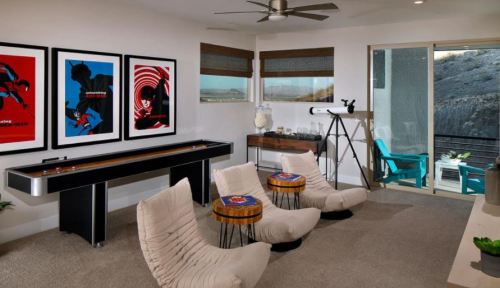
Let that sunshine pour in! It’s a stunning Thursday and we’re so excited to be hosting guests in our #Havenwood home today!

There’s enough space for a crowd, but the thoughtfully designed floorplan works just as well for a small gathering. Best of all the worlds! https://cresleigh.com/havenwood/residence-two/

Come join Cresleigh Homes, where sophistication meets convenience in ethereal living spaces for serene entertainment.
#CresleighHomes





 Randolph Harris II International Institute