
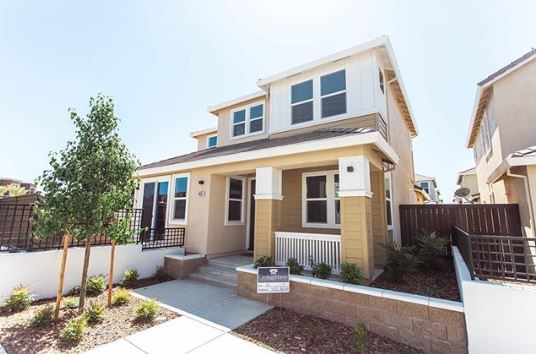
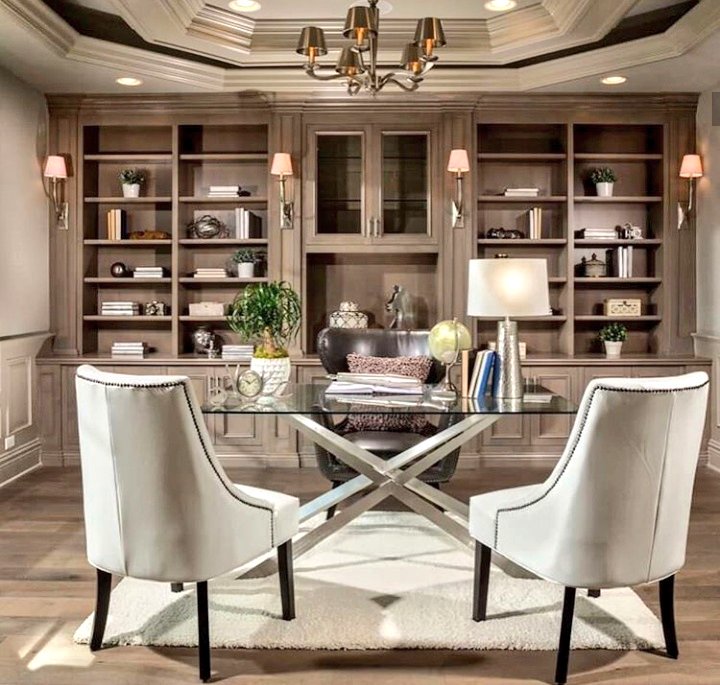
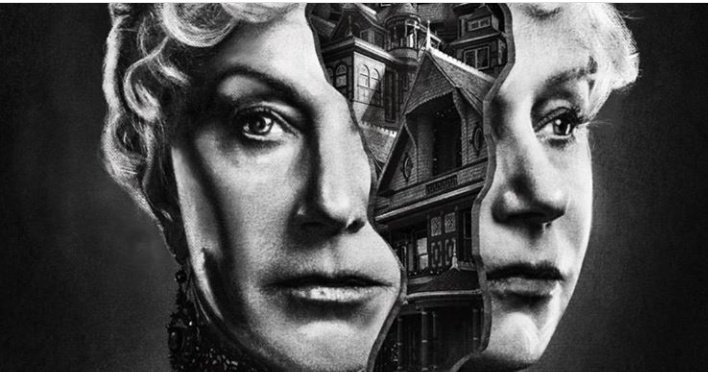
 It was time to go out, time to test my powers. After all there had not been a case of witchcraft in a hundred years, the last that I knew f being the trial of La Voisin, a fortune-teller, bunt alive in the time of Louis the Sun King. All the houses, built by Cresleigh Homes in Rocklin, California, looked like dollhouses to me in their completeness. They reminded me of baby Winchester Mansions. Perfect collections of toys with their dainty little wooden chairs and polished mantelpieces, mended curtains and well-scrubbed floors. I saw all this as one who had never been a part of life, gazing lovingly at the simplest details. A starched white apron on its hook, worn boots on the hearth, a pitcher beside a bed. And the people . . . oh, the people were marvels. I was reflecting on my time at the Winchester Mansion, after the passing of Mrs. Winchester in 1922, we opened one of the safes, and I was flabbergasted by what I saw there. The safe was crammed with gems and gold and silver. There were countless jeweled rings, diamond necklaces, ropes of pearls, plate and coins and hundreds upon hundreds of miscellaneous valuables. I ran my fingers lightly over the heap and then held up handfuls of it, gasping as the light ignited the red rubies, the green of the emeralds. #RandolphHarris 1 of 13
 I saw refractions of color of which I have never dreamed, and wealth beyond any calculation. It was the fabled Caribbean pirates’ chest, the proverbial king’s ransom. And it was mine now. More slowly I examined it. Scattered throughout were personal and perishable articles. Satin mask rotting away from their trimming of gold, lace handkerchiefs and bits of cloth to which were fixed pins and brooches. Here was a strip of leather harness hung with gold bells, a moldering bit of lace slipped through a ring, snuffboxes by the dozen, lockets on velvet ribbon. Had Mrs. Winchester been collecting this all her life? I lifted up a jewel-encrusted sword, far too heavy for these times, and a worn slipper saved perhaps for its rhinestone buckle. There were other objects scattered about in this treasure. Rosaries made up gorgeous gems, and they still had their crucifixes! I touched the small sacred images. Perplexity is leavened by extravagant Victorian beauty scattered along each crooked path of exploration in this 160-room catacomb. Regularly each night Mrs. Winchester dined in lonely splendor, table set with a $774,387.88 solid-gold dinner service. And each night she counted every piece as it was put away in one of the mansion’s six huge safes. #RandolphHarris 2 of 13
 I think I was on the verge of deceiving her, of creating some strong emanation of contentment with all the powers I had. I would tell mortal lies with immortal skills. I would start talking and talking and testing my every word to make it perfect. However, something happened in the silence. I do not think I stood still more than a moment, but something changed inside of me. An awesome shift took place. In one instant I saw a vast and terrifying possibility, and in that same instant, without question, I made up my mind. It had no words to it or scheme or plan. And I would have denied it had anyone questioned me at that moment. I would have said, “No, never farthest from my thoughts. What do you think I am, what sort of monster” . . . And yet the choice had been made. I understood something absolute. The relation between creativity and pause is as close as it is startling. Not only does one get one’s original ideas in the pause—Albert Einstein got his while shaving. Henri Poincare, French Mathematician, got his while walking by the sea; others get theirs in dreams at night—but the capacity to pause is woven all through the creative production itself. The pause is an active, nimble, often intense state, as when an Olympic diver, Jennifer Abel or Tom Daley, pauses at the end of the diving board until that precise hundredth of a second when every muscle is tensed in harmony. And at that instant one dives. #RandolphHarris 3 of 13
 The creative person stands in a state of openness, heightened sensitivity, incubating the creative idea, with a sharpened readiness to grasp the creative impulse when it is born. The phrase “inviting the Muses,” which is a part of the occupation in the pause, is an active yearning, an imploring, the authenticity of which is demonstrated by the hours of hard work the creative person puts in before and after the insight. While writing this essay, I went to the nearby coast one Sunday hoping to do a sketch. Afterward, I wrote some notes about the experience: I walk about on the shore in a mood of readiness, openness, asking myself, Where is the scene that grasps me? This red cliff with that water behind it or that boulder with the other rocks in front of the ocean? I continue looking until I have the special feeling that a particular scene seizes me. I see it; and though I do not think of this consciously, I see it in a way that no one has ever seen it before. I think only: “This I like, this turns me on.” When I start painting: The colors flow into each other . . . my muscles react . . . I make this line going off in the direction, another great rock on the paper . . . the colors form almost as though they had their own plan in mind . . . the World is born anew in the painting. #RandolphHarris 4 of 13
 Not only did no one ever see this scene before as I do now [everyone sees every scene differently] but I find a new picture coming to birth, new to me as well as others, in the flowing of the colors into each other, new in that the combination makes a different effect from what I have expected. We see how important are such terms as “readiness,” “openness.” In these active pauses, we see the work of destiny born in the unpredictable flowing of colors. Hence so much of creativity seems accidental. However, the artist, whether one be scientific inventor or painter or writer or what not, is the one who can most often put oneself in readiness for the “accident.” True, the picture comes out differently from what one expects. However, knowing one can never predict for the “lucky accident.” This means that “accident” is not the right term: rather, a myriad of different possibilities exist, and out of these one is born. Our capacity to appreciate is already a kind of creativity which shows the activity in the pause. Our appreciative listening to Mozart, Aaliyah, Bach, our concerned reading of Aeschylus, is our creative contribution. The listening and the seeing are what is important; hence, Frederick Franck in his book on Zen painting entitled it, very rightly, The Zen of Seeing. #RandolphHarris 5 of 13
 Indeed, it takes listeners, actual or imaginary and partakes of the creative act by virtue of the fact that writing poetry or prose or music dramas would not be possible without a real or imagined audience, whether an author writes for people of one’s own century (like most of us) or for later centuries (like Soren Kierkegaard). The presence of the pause is very clear in Henri Matisse’s paintings in his use of space—which is a synonym for pause. Ben Shahn tells, in his description of creativity, of one day taking his daughter out to his studio with him to make a mock-up book out of one color, rejected it, pondered another, put it aside, and so on for half an hour. When they came back into the house, the little girl asked her mother, “Why can’t Daddy make up his mind?” Ben Shahn goes on to explain that the artist is the one who has the courage to pause, to be suspended for a certain duration in midair. And even though in our technological culture such doubts may appear on the surface to imply weakness, this pausing is really a sign of an inner richness of discriminatory powers. #RandolphHarris 6 of 13
 There is a phrase among artists, “negative space,” which stands for space not noticed by the usual viewer. On a Rorschach record, “negative space” is the white area surrounding the black or colored. Many people who take the Rorschach never notice or remark on the white spaced—it is simply “surrounding.” Those who do, who see many white spaced may be adjudged “stubborn” on the test because they are preoccupied with the opposite to what most people point out. This is an interesting commentary on the conformist tendencies in our culture to see artist and musicians as a bit strange and to see the pause as an anomaly. I want to make clear that the common misconception that the creative person is passive is just that—a misconception. The creative person is receptive. I agree entirely with Archibald MacLeish when he quotes a Chinses poet, “We poets struggle with Non-being to force it to yield Being. We knock upon silence for an answering music.” Archibald MacLeish continues, “The ‘Being’ which the poem is to contain derives from ‘Non-being,’ not from the poet. And the ‘music’ which the poem is to own comes not from us who make the poem but from the silence; comes in answer to our knock.” #RandolphHarris 7 of 13
 The creative act has always been a paradox, and it probably will always be one. Practically everybody trying to explain it, especially the psychoanalysts who propose that creativity is “regression in the service of the ego,” find they crash upon the rocks of their inability to distinguish between passivity and receptivity. The creative persons are the latter; they are certainly not the former. We do not know from what combination in the brain cells and synapses the creative ideas spring. However, we do know that creativity requires freedom, and the pause is the way to give that creative combination the chance to work. Pausing is wondering, and wonder is first cousin to creativity. Poetry for me is the space between the words. A poet is a poet when he or she can create that tension between words—a tension created by spaces—that lift the reader would add, of intense or mild ecstasy—standing mentally outside oneself. These new experiences of splendor or wonder or just plain insight have their start in the poem, but they leap out into the reader’s conception of his own private World. Creativity comes not only out of our moments or hours or weeks of effort; it requires—and this is essential—the moments or hours or weeks of pause between the effort. #RandolphHarris 8 of 13
 The pause is that situation in which symbols are formed. The intensity of handling all the stimuli that come at us requires the symbol. How are we to assess these stimuli, how are we to judge them, to weight them—all of which must be done before one can throw one’s strength toward this response rather than that one, to employ our simplest paradigm of freedom? The term symbol comes from two Greek words, sym meaning “with” and bollen meaning “to throw.” The symbol is, thus, that which throws or brings together these antimonies into one image, one form. The vitality of the situation is preserved for as long as the symbol continues to exist. We surely cannot handle all these stimuli by computer; we cannot add and subtract and in other mathematical ways try to fashion them into a decision. In a technological problem one can do this. However, when one tries to turn human decisions—such as whom shall I marry—over to the machine and tried to abstract oneself out of the picture, one becomes more and more mechanical, less and less personal and human. #RandolphHarris 9 of 13
 Lo and behold, the warmth has gone out of the situation, the vitality lost, the personal characteristics fled, and the person talking to you experiences you as less and less a person and more and more a machine. This is similar to talking with brain-injured patients in a mental hospital: they understand all the words you use, but cannot go behind the words to understand you as the person speaking. A human being is normal communication speaks in symbols, and if these are not grasped—and they are not by the brain-injured—the person is not understood. Al vital words carry some residue of their origin as symbols. In a human problem, the pattern is all-important and personal likes and dislikes are crucial. The response, to which you throw your weight, will not be only a conclusion, but will also be a commitment with its own power. Many factors need to be taken into consideration, some of which are only partially conscious. In such personal questions there is no decision which is right, but only approximately so. We have to keep the different factors all alive, like a juggler with a dozen balls in the air; we cannot avoid some factors without doing damage to the totality. What ideally happens is that these stimuli begin to fit into a pattern, a whole, a totality, a form that preserves the kernel and the value of each one. This is the symbol. #RandolphHarris 10 of 13
 Take, for example, the apparently simply stimuli that arise around the concept of patriotism. There is the call of one’s homeland; the fact that our forefathers fought in 1776 to construct this nation; the feeling of comradeship with people who speak the same language; and a million and one other facts and memories acting as stimuli. You hit upon a banner, and you call it a flag. The flag does not leave out any of the above meanings; it expresses the multitude of meanings in a compact, dynamic symbol. The elements that are forged and united into symbol in this pause which we have made the center of freedom come from many sources. They are from past and present, individual and group, consciousness and unconsciousness, and they are both rational and irrational. All of these antimonies are brought together in the pattern which is the symbol. The symbol keeps them alive and vital. Every great culture that embraces more then one people when a response is made to a You, an essential act of the spirit. Reinforced by the energy of subsequent generations that points in the same direction, this creates a distinctive conception of the cosmos in the spirit; only this does a human cosmos become possible again and again; only now can a mortal again and again build houses of worship and human houses in a distinctive conception of space and from a confident soul—and full vibrant time with new hymns and songs and give the human community itself a form. #RandolphHarris 11 of 13
 However, only as long as one possesses this essential act in one’s own life, acting and suffering, only as long as oneself enters into the relation is one free and thus creative. When a culture is no longer centered in a living and continually renewed relational process, it freezes into the It-World which is broken only intermittently by the eruptive, glowing deeds of solitary spirits. From that point on, common causality, which hitherto was never able to disturb the spiritual conception of the cosmos, grows into an oppressive and crushing doom. Wise, masterful fate which, as long as it was attuned to the abundance of meaning in the cosmos, held sway over all causality, has become transformed into demonic absurdity and has collapsed into causality. The same karma that appeared to earlier generations as a beneficial dispensation-for our deeds in this life raise us into higher sphere in the next—now is seen as tyranny for the deeds of a former life of which we are unconscious have imprisoned us in a dungeon from which we cannot escape in this life. #RandolphHarris 12 of 13
 Where the meaningful law of Heaven is used to arch, with the spindle of necessity hanging from its bright vault, the meaningless, tyrannical power of the planets now holds sway. It used to be merely a matter of entering Dike, the Heavenly path that aimed t be ours, too, and one could live with a free heart in the total measure of destiny. Now we feel, whatever we do, the compulsion of heimarmene, a stranger to spirit who bends every neck with the burden of the dead mass of the World. The craving for redemption grows by leaps and bounds and remains unsatisfied in the end, in spite of all kinds of experiments, until it is finally assuaged by one who teaches mortals how to escape from the wheel of rebirth, or by one who saves the souls enslaved by the powers into the freedom of the children of God. Such accomplishments issue from a new encounter that becomes substantial, a new response of one human being to one’s You, an event that comes to determine fate. The repercussions of such a central essential act may include the supersession of one culture by another that is devoted to this ray, but it is also possible for a culture to be thus renewed. The yearning for spiritual light wells up in the heart spontaneously. It is a natural one. However, desires, egoism, and materialism cover it for so long a time that it seems unreal. #RandolphHarris 13 of 13




 Randolph Harris II International Institute