
 Sorry to disappoint you, but since you do go and comes as you will, it seems I must get used to you. Almost all of us who are involved in families desire to create a family environment in which each member will grow in the ability to experience and express love. We want our children to learn how to love. We want them to develop a minimum of the fear of love that would cripple them in their ability to establish increasingly deep and meaningful relationships as they grow to maturity. We want them in adulthood to be able to look back at their homes as places where they felt secure and loved and at the same time felt encouraged to plunge into the mainstream of life. We are not particularly confused about what we want in our family life. We are, however, very likely confused about how to accomplish what we want. One of the reasons for our confusion is that we parents often tend to think in terms of techniques, a tendency that is encouraged by many writings on the rearing of children. We feel if we can just find the right way of handling situations as they arise in the family and avoid the wrong ways, we will be successful. One purpose of art, and the beauty which is its inspiration, is to counteract this experience of insignificance. People have to have a sense of transcendence of their boring, day-to-day existence, and to live with some adventure, joy, zest, and a sense of meaning and purpose in their existence. #RandolphHarris 1 of 15
 Family life is much more complex (and in some ways perhaps more deceptively simple) than that. If it were totally a matter of right and wrong techniques, these skills would long ago have been scientifically fretted out, written down, and we could all be successful Betty Crocker cookbook parents, measuring out just the right amounts of the appropriate reactions to our children. However, the quality of our family relationships counts much more than the techniques we use. And while it is certainly true that many worthwhile things can be, and have been, said about particular ways of handling family problems, it is also true that parents who are full of fears often subtly adapt the best techniques in the direction of unhealthy results. Family councils not infrequently provide an example of this. The council is formed for the expressed purpose of allowing the total family to have a voice in decisions that effect all the members. Very often the democratic nature of such councils is more apparent than real. The parents may in reality be afraid to turn any genuine decision-making power over to the children and yet at the same time they are uncomfortable with making arbitrary decisions. So they kid themselves into thinking they are being democratic by seeming to give the children a voice in family affairs while they subtly manipulate the family into doing what they wanted all along. #RandolphHarris 2 of 15
 If the children are fooled at all by this sham of democracy, so much the worse. If parents simply announced their decisions and dealt directly with any protests that arose, it would certainly be more honest and much less confusing to the children; yet a genuinely democratic family council might be a great thing. Another technique that may be good in theory but which is often abused is the idea that parents ought to be permissive in allowing the child a great deal of freedom and a wide range of activities unhindered by adult interruption. It is not unusual for parents who are afraid of deep emotional involvement to use this approach as a subtle excuse to withdraw from their children. Probably without being fully aware of what they are doing, they develop a relationship that to the children must appear to be of disinterest. When Jillian takes two-year-old son, Leo Pete, to visit Aunt Tori and Leo Pete starts cheering at the top of his lungs because he is so excited, Jillian may be a little embarrassed that he is not using his inside voice but may say nothing for fear of wounding the little tyke’s delicate feelings. #RandolphHarris 3 of 15
 Sometimes mothers want the father to give orders, which are stern because the male figure is usually known for being a little more direct, so the child’s feelings are less likely to be hurt. However, Jillian will also deprive, her son, Leo Pete of a genuine response. Even if it is given forcibly on the seat of his pants, it is that honest reaction that will be most helpful to Leo Pete’s ego. So the quality of our parenthood depends not so much on our skills but rather on our maturity and our emotional openness and freedom to be real people to our children. And this, of course, depends upon the total fabric of our life and experience. And improvement as parents will come not so much through acquiring new skills as in gaining a deeper understanding and acceptance of ourselves. Art is an antidote for aggression. It gives the ecstasy, the self-transcendence that could otherwise take the form of drug addiction, extremism, self-harm, or warfare. We have seen that both aggression and art—and the beauty which is the center of art—yield the experience of ecstasy and self-transcendence. However, art and aggression are directly opposite in their effects. We find, strangely enough, that the pursuit of art and beauty are what we have long sought, namely, the antidote to violence. #RandolphHarris 4 of 15
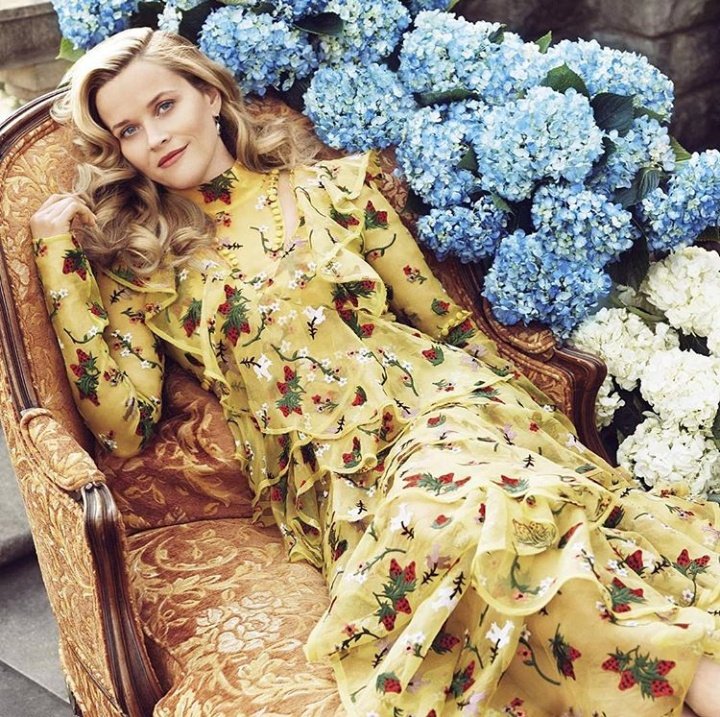 I propose that this is the function of beauty and art in human experience. I do not overlook the pressing need to correct the faults of our society—our gross nationalism, our making human beings subordinate to technology, our failure to value human rights above property rights, our racial and gender injustice. However, I wish to go below these considerations, to a universal level where the sense of significance will be recognized as every person’s right because he or she is part of a Universe of beauty. First, art has the capacity to prevent violence in such a way that venom is taken out of the violence. This mysterious power is shown in its capacity to portray violence in forms that are a catharsis. Take, for example, Casper David Friedrich’s Woman in Morning Light (1818), the woman looking out at the rising Sun is literally larger than the mountains in the distance, and she blocks out our view of the Sun, overlapping it. However, we do not think of her as a giant. We simply recognize that she is closer than the mountain to the surface of the painting, which is called the picture place. Her position is, in fact, similar to our own as viewers, and together, we look out on the new day with all its possibility and promise. It presents humanity and beauty of the World to mortals more vividly than the reams of printed paper can do, and it presents the simply beauty which allows humans to reflect that even alone, we can enjoy this Universe of beauty. #RandolphHarris 5 of 15
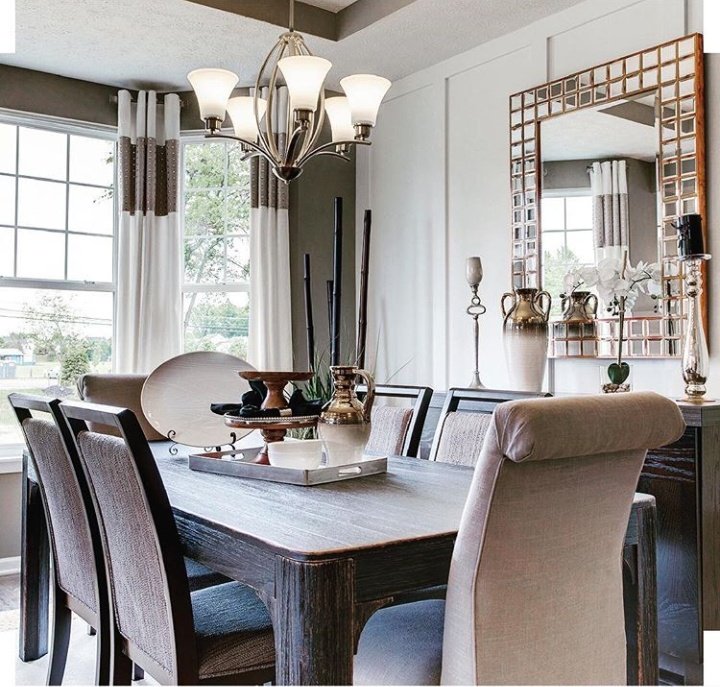 Art is catharsis. So Aristotle argued centuries ago. And so it is in our day and as long as human beings remain human. Whether we survive as human or we start over on our primordial trek; whether it is on our planet or one of the other billions in the Heavens, the regeneration goes on. It may be that the legend of Genesis will have to be re-enacted. However, faith is that renewal, which goes on eternally. This is precisely the thing which gives us consciousness in the first place. For art—and beauty the contemplation of which leads to art—is an inseparable part of our precious capacity to be conscious, to think. Art was invented out of the necessity of those original men and women to regenerate, to propagate, to renew the race of humankind. Our dimensions of hope we now need to extend to include the other solar bodies; the hope that springs eternal in the human heart can include other planets and Worlds. In the eleventh and twelfth centuries there had been the beginning of a Renaissance which would have been the real one if it had been able to bear fruit; it began to germinate notably in Languedoc. Some of the Troubadour poems on spring led one to think that perhaps Christian inspiration and the beauty of the World would not have been separated had it developed. #RandolphHarris 6 of 15
 Moreover the spirit of Languedoc left its mark on Italy and was perhaps not unrelated to the Franciscan inspiration. However, whether it be coincidence or more probably the connection of cause and effect, these germs did not survive the war of the Albigenses and only traces of the movement were found after that. Today one might think that the developed World has almost lost all feeling for the beauty of the World, and that they have taken upon them the task of making it disappear from all the continents where they have penetrated with their armies, their trade, and their religion. As Christ said to the Pharisees: “Woe to you, for ye have taken away the key of knowledge; ye entered not in yourselves and them that were entering in ye hindered.” And yet at the present time, in the developed nations, the beauty of the World is almost the only way by which we can allow God to penetrate us, for we still farther removed from the other two. Real love and respect for religious practices are rare even among those who are most assiduous in observing them, and are practically never to be found in others. Most people do not even conceive them to be possible. As regards the supernatural purpose of affliction, compassion and gratitude are not only rare but have become almost unintelligible for almost everyone today. They very idea of them has almost disappeared; the very meaning of the words has been debased. #RandolphHarris 7 of 15
 On the other hand a sense of beauty, although it is sometimes mutilated, distorted, and soiled, remains rooted in the heart of mortals as a powerful incentive. It is present in all the preoccupations of secular life. If it were made true and pure, it would sweep all secular life in a body to the feet of God; it would make the total incarnation of the faith possible. Moreover, speaking generally, the beauty of the World is the commonest, easiest, and most natural way of approach. Just as God hastens into every soul, and immediately it opens, even a little, in order through it to love and serve the afflicted, so he descends in all haste to love and admire the tangible beauty of his own creation through the soul that opens to him. However, the contrary is still more true. The soul’s natural inclination to love beauty is the trap God most frequently uses in order to win it and open it to the breath from on high. This was the trap which enticed Cora. All the Heavens above were smiling at the scent of the narcissus; so was the entire Earth and all the swelling ocean. Hardly had the poor girl stretched out her hand before she was caught in the trap. She fell into the hands of the living God. When she escaped she had eaten the seed of the pomegranate which bound her forever. She was no longer a virgin; she was the spouse of God. #RandolphHarris 8 of 15
 The beauty of the World is the manifestation of a labyrinth. The unwary individual who on entering takes a few steps is soon unable to find the opening. Worn out, with nothing to eat or drink, in the dark, separated from his dear ones, and from everything he loves and is accustomed to, he walks on without knowing anything or hoping anything, incapable even of discovering whether he is really going forward or merely turning round on the same spot. However, this affliction is as nothing compared with the danger threatening him. For if he does not lose courage, if he goes on walking, it is absolutely certain that he will finally arrive at the center of the labyrinth. And there God is waiting to eat him. Later he will go out again, but he will be changed, he will have become different, after being eaten and digested by God. Afterward he will stay near the entrance so that he can gently push all those who come near into the opening. The beauty of the World is not an attribute of matter in itself. It is a relationship of the World to our sensibility, the sensibility that depends upon the structure of our body and our soul. The Micromegas of Voltaire, a thinking infusorian organism, could have had no access to the beauty on which we live in the Universe. #RandolphHarris 9 of 15
 We must have faith that, supposing such creatures were to exit, the World would be beautiful for them too; but it would be beautiful in another way. Anyhow we must have faith that the Universe is beautiful on all levels, and more generally that is has a fullness of beauty in relation to the bodily and psychic structure of each of the thinking beings that actually do exist and of all those that are possible It is this very agreement of an infinity of perfect beauties that gives a transcendent character to the beauty of the World. Nevertheless the part of this beauty we experience is designed and destined for our human sensibility. In our Declaration of Independence, there is a joyful enthusiasm for the self evident and inalienable right of individual freedom, which most of us lapped up with our mother’s milk. However, we find even there a pronounced lack of awareness of the social problems of responsibility and community—that is, a lack of realization of what I call destiny. True, there is the reference to the Creator and the phrase in this declaration “we acquiesce in the necessity” after the long list of the oppressions of the British king. True, also, that in our Constitution the Supreme Court is charged with providing the necessary limits. However, dictation is not enough. The British historian Macaulay wrote to President Madison half a century after the Declaration was adopted that he was worried about the American Constitution because it was “all sail and no rudder.” #RandolphHarris 10 of 15
 Thus, we have, marking the birth of our nation, the cheering for full speed ahead but with a lack of guiding limits. In the condition of all sail and no rudder freedom is in continual crisis; the boat may easily capsize. Freedom has lost its solid foundation because we have seen it without its necessary opposite, which gives it viability—namely, destiny. People in America imagine that their whole destiny is in their own hands. The woof of time is every instant broken and the track of generations effaced. Those who went before are soon forgotten; of those who will come after, no one has any idea: the interest of mortal is confined to those in close propinquity to one’s self. I know no country in which there is so little independence of mind and real freedom of discussion as in America. In European nations like France, where the monarchy stood against the legislature, one could exercise freedom of mind since if one power sides against the individual, the other sides with one. However, in a nation where democratic institutions exist, organized like those in the United States, there is but one authority, one element of strength and success, with nothing beyond it. There is tyranny of the majority in America, which I call conformism of mind and spirit. We have recently seen this exhibited in the last election in California in the power of what is called the moral majority. There the body is left free and the soul enslaved. #RandolphHarris 11 of 15
 The master no longer says, “You shall think as I do, or you shall die”; but he says, “You are free to think differently from me, and to retain your life, your property, and all that you possess; but you are henceforth a stranger among your people. You will retain your civil right, but they will be useless to you.” Other people “will affect to scorn you.” The person who thinks freely is ostracized, and the mass of people cannot stand such alienation. Have we not too easily and readily seized upon freedom as our birthright and forgotten that each of us must rediscover if for ourselves? Have we forgotten Goethe’s words: “He only earns his freedom and existence/Who daily conquers them anew”? Yet destiny will return to haunt us as long as it is not acknowledged. We cannot afford to ignore those who went before, and those who will come after. If we are ever to understand what Milton meant when he cried “Ah, Sweet Liberty,” or what the Pilgrims sought in landing at Plymouth rock in search of religious freedom, or any one of the other million and one evidences of freedom, we must confront this paradox directly. The paradox is that freedom owes its vitality to destiny, and destiny owes its significance to freedom. Our talents, our gifts, are on loan, to be called in at any moment by death, by illness, or by any one of the countless other happenings over which we have no direct control. Freedom is that essential to our lives, but it is also that precarious. #RandolphHarris 12 of 15
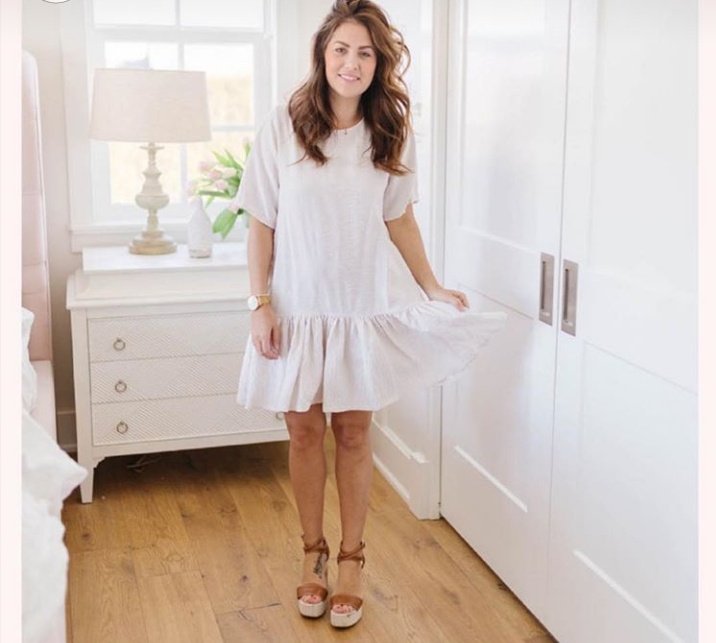 It may help, for example, if we can become aware of and accept the fact that as parents we are frightened. One reason we are afraid is that we live in rapidly changing times. We may feel the changes are for the better or for the worse, or, more likely, we will feel that some of the change represents improvement while some represents backward steps. However, in any case we are frightened, because changes from old patterns of life in which we felt relatively secure and comfortable are always frightening. This is not new, of course. Every generation has its tensions with the preceding and succeeding generations. However, the rapidity of technological change in these days probably increases the problem. We who grew up without the television, for example, are frightened about the effect of this instrument on the lives of our children. We may feel that there are ways in which it is potentially harmful, and we may feel guilty that we are not doing more about it, and yet we do not know just what to do. We are confused and frightened. Another reason we are likely to be frightened as parents is that we are afraid our children are like us and have the same feelings and desires within themselves that we find unacceptable in ourselves. So if we have not learned to accept anger within ourselves, our fear may lead us to squelch our children’s expression of anger even when it may be natural and appropriate. #RandolphHarris 13 of 15
 In all probability we are also frightened that our children will not accept us as we are. Many words are written about children’s feelings of rejection by their parents. Little is said about our feelings that we may not be accepted by our children. And yet this fear is probably a strong force operating in parent-child relationships. As parents we often wear masks that prevent our children from seeing us as we really are. Often it becomes increasingly difficult as the children grow older for us to be open and genuine with them. For example, many young adults report that their most basic fear is probably their fear of love and the vulnerability that love involves. We have discovered through many experiences that it is risky to love deeply and openly, and we find ways of withdrawing from our children. One mother in her twenties whose children are still under school ages says, “I find myself holding back some of my feelings of love for my children. I do not want them to become too important to me. All around me I see children growing up and leaving their parents alone with nobody to care about them. I do not want that to happen to me.” So her conscious resolution to this problem of eventual separation s to cheat herself out of eighteen to twenty years of the emotional enjoyment of love so that the shock of parting will be cushioned by her studied indifference! #RandolphHarris 14 of 15
 Although most of us are not so aware of needing to withdraw, we probably find many ways to just avoid simply relaxing and enjoying our kids just as they are here now. We pick and nag about relatively unimportant bits of behavior, or we become so preoccupied with their future and their scholastic achievement that we continually hound them. It is likely that it all stems from our fear of letting ourselves and them know how much we really care for them and how vulnerable our love makes us. This tormenting feeling of the lack of a spiritual state in one’s own experience, will drive one to continual search for it. However, one’s whole life must constitute the search and one’s whole being must engage in it. If you take the widest possible view, all the different sections of one’s action and thought are inseparable from the amount of spirituality is in a mortal. The truth must pass from one’s lips to one’s life. And this passage will only become possible when life itself without the quest will become meaningless. It is only the beginner who needs to think of the quest as separate from the common life, something special, aloof, apart. The more proficient knows that it must become the very channel for that life. The Quest is not anything apart from Life itself. We cannot dispense with common sense and balance in relation to it. No single element in life can be take too solemnly, as if it constituted the whole of life itself, without upsetting balance. #RandolphHarris 15 of 15




 Randolph Harris II International Institute