
 “Oh beautiful Sun, you have squandered your Golden light upon an empty house.” He stared at her, narrowing his eyes. I could not figure whether he wanted a blurred focus or a fine one. It was though he saw her loveliness afresh. People and students who love God should never say: “For my part I like mathematics”; “I like French”; “I like Greek.” They should learn to like all these subjects, because all of them develop that faculty of attention which, directed toward God, is the very substance of prayer. If we have no aptitude or natural taste for geometry, this does not mean that our faculty for attention will not be developed by wrestling with a problem or studying a theorem. On the contrary it is almost an advantage. It does not matter much whether we success in finding the solution or understanding the proof, although it is important to try really hard to do so. Never in any case whatever is a genuine effort of the attention wasted. It always has its effect on the spiritual plane and in consequence on the lower one of the intelligence, for all spiritual light lightens the mind. If we concentrate our attention on trying to solve a problem of geometry, and if at the end of an hour we are no nearer to doing so than at the beginning, we have nevertheless been making progress each minute of that hour in another more mysterious dimension. #RandolphHarris 1 of 15
 Without our knowing or feeling it, this apparently barren effort has brought more light into the soul. The result will one day be discovered in prayer. Moreover, it may very likely be felt in some department of the intelligence in no way connected with mathematics. Perhaps one who made the unsuccessful effort will one day be able to grasp the beauty of a line of Racine more vividly on account of it. However, it is certain that this effort will bear its fruit in prayer. There is no doubt whatever about that. Certainties of this kind are experimental. However, if we do not believe in them before experiencing them, if at least we do not behave as though we believed in them, we shall never have the experience that leads to such certainties. There is a kind of contradiction here. Above a given level this is the case with all useful knowledge concerning spiritual progress. If we do not regulate our conduct by it before having proved it, if we do not hold on to it for a long time by faith alone, a faith at first stormy and without light, we shall never transform it into certainty. Faith is the indispensable condition. The best support for faith is the guarantee that is we ask our Father for bread, he does not give us a stone. Quite apart from explicit religious belief, every time that a human being succeeds in making an effort of attention with the sole idea of increasing one’s grasp of truth, one acquires a greater aptitude for grasping it, even if it produces no visible fruit. #RandolphHarris 2 of 15
 As a legend explains: In the eternal darkness, the Angel, unable to find any food, longed for light, and the Earth was illumined. If there is a real desire, if the thing desired is really light, the desire for light produces it. When there is an effort of attention, there is a real desire. If all other incentives are absent, it is really light that is desire. Even if our efforts of attention seem for years to be producing no result, one day a light that is in exact proportion to them will flood the soul. Every effort adds a little gold to a treasure no power on Earth can take away. The useless efforts made by the Cure d’Ars, for long and painful years, in his attempt to learn Latin bore fruit in the marvelous discernment that enabled him to see the very soul of his penitents behind their words and even their silences. Students must therefore work without any wish to gain good marks, to pass examinations, to win school successes; without any reference to their natural abilities and tastes; applying themselves equally to all their tasks, with the idea that each one will help to form in them the habit of that attention which is the substance of prayer. When we set out to do a piece of work, it is necessary to wish to do it correctly, because such a wish is indispensable in any true effort. #RandolphHarris 3 of 15
 Underlying this immediate objective, however, our deep purpose should aim solely at increasing power of attention with a view to prayer; as, when we write, we draw the shape of the letter on paper, not with a view to the shape, but with a view to the idea we want to express. If we are to put them to the right use, to make this the sole and exclusive purpose of our studies is the first condition to be observed. The second condition is to take great pains to examine squarely and to contemplate attentively and slowly each school task in which we have failed, seeing how unpleasing and second rate it is, without seeking any excuse or overlooking any mistake or any of our tutor’s corrections, trying to get down to the origin of each fault. If it is bad and to hide it forthwith, there is a great temptation to do the opposite, to give a sideways glance at the corrected exercise. Most of us do this nearly always. We have to withstand this temptation. Incidentally, moreover, nothing is more necessary for academic success, because despite all our efforts, we work without making much progress when we refuse to give our attention to the faults we have made and our tutor’s corrections. Above all it is thus that we can acquire the virtue of humility, and that is far more precious treasure than all academic progress. From this point of view it is perhaps even more useful to contemplate our stupidity than our sin. #RandolphHarris 4 of 15
 Consciousness of sin gives us the feeling that we are evil, and a kind of pride sometimes finds a place in it. When we force ourselves to fix the gaze, not only of our eyes but of our souls, upon a school exercise in which we have failed through sheer stupidity, a sense of our mediocrity is borne in upon us with irresistible evidence. No knowledge is more to be desire. If we can arrive at knowing this truth with all our souls we shall be well established on the right foundation. If these two conditions are perfectly carried out there is no doubt that school studies are quite as good a road to sanctity as any other. To carry out the second, it is enough to wish to do so. This is not the case with the first. In order really to pay attention, it is necessary to know how to set about it. Most often attention is confused with a kind of muscular effort. If one says to one’s pupils: “Now you must pay attention,” one sees them contracting their brows, holding their breath, stiffening their muscle. If after two minutes they are asked what they have been paying attention to, they cannot reply. They have been concentrating on nothing. They have not been paying attention. They have been contracting their muscles. We often expend this kind of muscular effort on studies. As it ends by making us tired, we have the impression that we have been working. That is an illusion. Tiredness has nothing to do with work. #RandolphHarris 5 of 15
 Work itself is the useful effort, whether it is tiring or not. This kind of muscular effort in work is entirely barren, even if it is made with the best of intentions. Good intentions in such cases are among those the pave the way to hell. Studies conducted in such a way can sometimes succeed academically from the point of view of gaining marks and passing examinations, but that is in spite of the effort and thanks to natural gifts; moreover such studies are never of any use. Will power, the kind that, if need be, makes us set our teeth and endure suffering, is the principal weapon of the apprentice engaged in manual work. However, contrary to the usual belief, it has practically no place in study. The intelligence can only be led by desire. For there to be desire, there must be pleasure and joy in the work. The intelligence only grows and bears fruit in joy. The joy of learning is as indispensable is as indispensable in study as breathing and running. Where it is lacking there are no real students, but only poor caricatures of apprentices who, at the end of their apprenticeship, will not even have a trade. It is the part played by joy in our studies that makes of them a preparation for spiritual life, for desire directed toward God is the only power capable of raising the soul. Or rather, it is God alone who comes down. God only comes to those who ask him to come; and he cannot refuse to come to those who implore him long, often, and ardently. #RandolphHarris 6 of 15
 Attention is an effort, the greatest of all efforts perhaps, but it is a negative effort. Of itself, it does not involved tiredness. When we become tired, attention is scarcely possible any more, unless we have already had a good deal of practice. It is better to stop working altogether, to seek some relaxation, and then a little later to return to the task; we have to press on and loosen up alternately, just as we breathe in and out. Twenty minutes of concentrated, untired attention is infinitely better than three hours of the kind of frowning application that leads us to say with a sense of duty done: “I have worked well!” However, in spite of all appearances, it is also far more difficult. Something in our soul has a far more violent repugnance for true attention than the flesh has for bodily fatigue. This something is much more closely connected with evil than is the flesh. That is every time that we really concentrate our attention, we destroy the evil in ourselves. If we concentrate with this intention, a quarter of an hour of attention is better than a great many good works. When people are on the verge of returning to Heaven they think, strangely enough, about beauty. Many of these thoughts are about how beautiful is this Earth that they are about to leave. A friend in his forties was passing away from cancer. He spent his last days on the Sun-porch in a deck chair thinking, as he expressed it, “How beautiful each day is!” #RandolphHarris 7 of 15
 The psychologist Dr. Abraham Maslow, who lived on the Charles River west of Cambridge, had had a severe heart attack and feared another. During this period he was describing his change in attitude in a letter in which he said, “My river has never seemed so beautiful.” The crisis situations are the aspect of beauty that transcends death. Beauty calls up in us the qualities that go beyond death, such as eternity, serenity, the use of the imagination to project us beyond time and space. Death is the mother of beauty; hence from her alone shall come fulfillment to our dreams and our desires. Nature, for example, shows how obviously true this is. The incredibly wonderful colors of autumn leaves, say in Vermont, are a species of death. The leaves are most beautiful as they die, and because they die. We also know that the immortal gods on Mount Olympus who has no death were thoroughly bored with life and so was Lestat de Lioncourt. The life on Olympus consisted mostly of pranks and tricks to liven up their lethargic existence; there was no creation of any significance that went on among the gods as such. However, when Zeus or some other god got interested in a mortal woman, then something creative dud happen. Only when death was introduced into the boring drowsiness of Olympus did the home of the gods get stirred up and alive. It is a very puzzling thought that without death, there would be no beauty. #RandolphHarris 8 of 15
 Only this waiting, this attention, can move God to treat his children with such amazing tenderness. God wants us to learn lessons, enjoy life, be happy and be good people. Death is the mother of beauty also in the sense that it is a setting of unlimited limits. We all know we are finite, and we already receive a forewarning of these limits in infirmary and great fatigue. We are all under sentence of death but with a sort of indefinite reprieve. The artist and architects know this most clearly, and hence are the ones who create things which last beyond their mortal years. They partake of eternity in that they, even are they are long gone, are offering something to future generations. Many people seek to overcome the boundaries of life, to gain a kind of eternity in their creative work amid the ephemeral days we humans pass together. The artist leaves a gift for us and for the future. No one can look at Winchester Mansion, Hearts Castle, or Sistine chapel without realizing that the irascible Sarah Winchester, William Randolph Hearst, and Michelangelo have left their spirit, in a series of forms, that give a sense of beauty and eternity to those of us who live four centuries, one century, or half a century later, and I think this effect will last as long as humankind inhabits this planet. To be sure in the realm of action we have to do all that is demanded of us, no matter what effort, weariness, and suffering it may cost, for one who disobeys does not love; but after that we are only unprofitable servants. #RandolphHarris 9 of 15

Such service is a condition of love, but it is not enough. Beauty is eternity born into human existence. A chord of music, such as the one that opens Beethoven’s Hammerklavier Sonata, or a lyric from Aaliyah’s Its Whatever, sets loose within us a quality of eternity, a sense that this moment is ultimate. One thinks, “I could live or die tomorrow but now I have this moment.” It is a quality of life, not a place nor a new life, that gives our present life this experience of eternity. We must all live under the light of eternity. Eternity is existence itself, for the existence of a thing cannot be explained by duration or time, but only by this quality of eternity. When the setting Sun sends amber rays through the mystic blues of the high clerestory windows in the Winchester Mansion, I find myself breathing a kind of silent prayer, “May this moment last forever!” Let these beautiful moments linger, they are so fair! Foreknowledge comes, and fills us with such bliss, we take our joy, our highest moments this. We undertake on our own initiative. It is only watching, waiting, attention. Happy then are those who pass their adolescence and youth in developing this power of attention. No doubt they are no nearer to goodness than their brothers and sisters and cousins working in fields and factories. They are near in a different way. The less affluent and working class possess a nearness to God of incomparable savor which is found in the depths of scarcity, in the absence of social consideration and in the endurance of long drawn-out sufferings. #RandolphHarris 10 of 15
 If, however, we consider the occupations in themselves, studies are thought to be near to God because of the attention which is their soul. Whoever goes through years of study without developing this attention within oneself has lost great treasure. Perhaps that is why some parents spend million to get their kids into college, not only to they want to develop their minds, but they want to enhance their souls. Not only does the love of God have attention for its substance; the love of our neighbor, which we know to be the same love, is made of this same substance. Those who are unhappy have no need for anything in this World but people capable of giving them their attention. The capacity to give one’s attention to a sufferer is a very rare and difficult thing; it is almost a miracle; it is a miracle. Nearly all those who think they have this capacity do not posses it. Warmth of heart, impulsiveness, pity are not enough. In the first legend of the Grail, it is said that the Grail (the miraculous vessel that satisfies all hunger by virtue of the consecrated Host) belongs to the first comer who asks the guardian of the vessel, a king three-quarters paralyzed by the most painful wound, “What are you going through?” #RandolphHarris 11 of 15
 To love of our neighbor in all its fullness simply means being able to say to him or her: “What are you going through?” It is a recognition that the sufferer exists, not only as a unit in a collection, or a specimen from the social category labeled unfortunate, but as a person, exactly like us, who was one day stamped with a special mark by affliction. For this reason it is enough, but it is indispensable, to know how to look at him in a certain way. This way of looking is first of all attentive. The soul empties itself of all its own contents in order to receive into itself the being it is looking at, just as one is, in all one’s truth. Only one who is capable of attention can do this. So it comes about that, paradoxical as it may seem, a Latin prose or a geometry problem, even though they are done incorrectly, may be of great service one day, provided we devote the right kind of effort to them. Should the occasion arise, they can one day make us better able to give someone in affliction exactly the help required to save one, at the supreme moment of one’s need. For a youth, capable of grasping this truth and generous enough to desire this fruit above all others, studies could have their fullest spiritual effect, quite apart from any particular religious belief. Academic work is one of those fields containing a pearl so precious that it is worth while to sell all our possession, keeping nothing for ourselves, in order to be able to acquire it. #RandolphHarris 12 of 15
 The fact is that the clock does go on, our duration does plague us, and death comes closer every moment. However, we have to remember to live under the light of eternity, which is the light of beauty. For this is what beauty does for us, in the grace that beauty brings us, in death as the mother of beauty. All of these are but ripples of life on the sea of eternity. This heart, all evil will shed away. A pulse in the eternal mind, no less gives somewhere back the thoughts. Our sights and sounds; dreams are to be happy as our day; and laughter, learnt of friends, and gentleness in hearts at peace, under Heaven are an important motive. I have a rendezvous with death at some disputed barricade when Spring comes round with rustling shade and apple blossoms fill the air. Countless people are inspired in this confrontation with death to turn to the experience into beauty. What is there in the threat of death in muddy trenches and in the grime and the fatigue of war, waiting for possible death in battle tomorrow, that should lead these men (and women) to turn their thoughts to the beauty of poetry? As they go through the routine of life in the trenches these young people put words together to make poetry to console first of all their own hearts, and then to communicate with a wider, unknown World that will follow them. #RandolphHarris 13 of 15
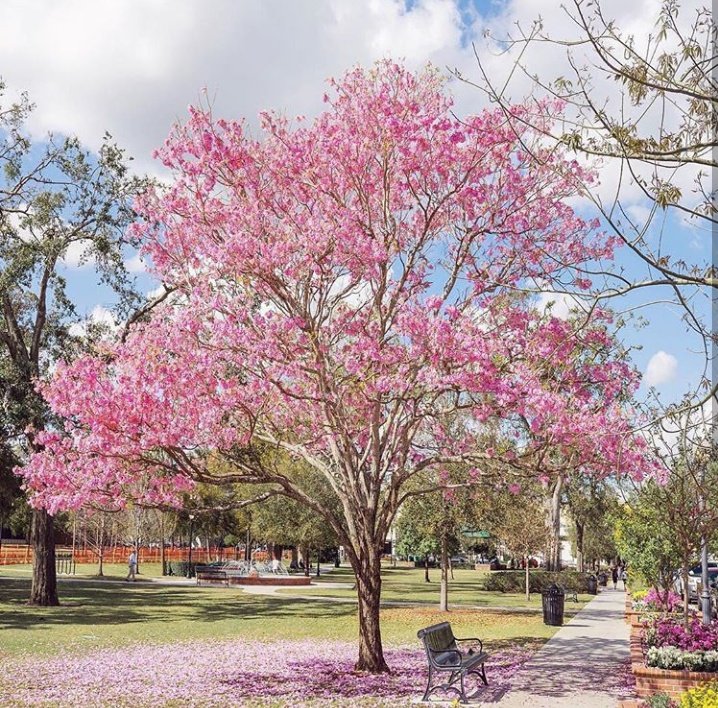 Poetry sublimate the ugliness of the trenches and blot out the stench of their present life by remembering the odor of apple blossoms filling the air. Their deep loneliness is covered over by the memories of times when they loved and were loved. The poetry that people at war achieve and pass on to us possess a serenity despite, or even because of, the conflict of which they are a part. It is not surprising, as one thinks about it, that in the ugliness of the trenches they yearn for the timelessness of beauty, and they long for the sense of repose that comes in beauty. The experience of inner harmony they pass on to us, seeking inner peace where there is no outer peace, as a guide to those who live after them. Nor is it surprising that they ponder whatever harmony of the spheres they can create in their imaginations, and cherish it to their heart. We transcend our fate, as these soldiers do, by the beauty of poetry. These soldiers are thus able to confront the fear and anxiety that is endemic in wartime. In this respect the beauty of poetry enables them to achieve the aim of all good therapy, namely to help the person to raise repressed conflicts into consciousness, and to confront the fact that their danger only condenses into a short time what all of us have to face over the longer period of life itself. Their works bring into consciousness their underlying fears and anxieties, and do it in the highest form of consciousness, namely beauty. #RandolphHarris 14 of 15
 These young poets, like other sensitive people, long to make of their senseless deaths a genuine tragedy which, on a deeper level than the futility of warfare, it actually is. As in the tragedy of O’ Neill’s The Iceman Cometh, there is a deeper sense of nobility which is present by the very vividness of its absence on the stage. In this sense the useless death of any youth is a tragedy, and this tragedy makes perhaps our clearest picture of beauty. In this question we may find some explanation of why humankind does to war century after century. Though we always rationalize our participation in the wars of our country, we know as we look backward over human history that the need to fight wars is an expression of the great and fundamental tragedies of our human fate. My hunches about the intimate relation between beauty and death have, over the course of my life, led to the understanding that just as psychological break down and pathology can become important sources of artistic creativity, so the impulse to wage wars in which our youngest and best lost their lives seems somehow linked to that same irresistible attraction of lovely and soothing death. “And I would not that yet think that I know of myself—not of the temporal but of the spiritual, not of the carnal mind but of God,” Alma 36.4. #RandolphHarris 15 of 15




 Randolph Harris II International Institute