
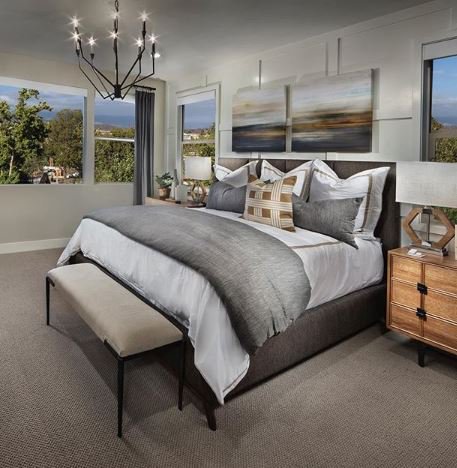
 Hello, you have the most amazing digs. I simply love your paintings. We also express our fear of freedom by seeing much of our lives in terms of demands and obligations. Few of us can claim we lack talent, for whatever shortage of abilities we may have, most of us have a real knack for playing this game! Getting along in the World as it is, adequate degree of social conformity, capacity to adapt to a wide range of conditions, ability to fit in—this kind of adjustment is not an unmixed blessing; the unadjusted complex person, who does not fit in very well in the World as it is, sometimes perceives the World more accurately than does one’s better adjusted fellow. Deceitfulness is identified with duplicity, lack of frankness, guile, subterfuge. Again, one recalls the adjective self-descriptions of the complex people: gloomy, pessimistic, bitter, dissatisfied, demanding, pleasure-seeking, spendthrift. There is certainly some suggestion here of early deprivation, of pessimism concerning the source of supply, which is seen as untrustworthy and which must be coerced, or perhaps tricked, into yielding. It is as though the person had reason to believe that one would not get what was coming to one unless one made sure that one did, by whatever device might be available. #RandolphHarris 1 of 21
 It is this lack of infantile trust that leads to adult duplicity and craftiness. One aspect of complexity then (and perhaps a penalty sometimes attaching to it) is, to render it in the common phrase, a sort of “two-facedness,” an inability to be wholly oneself at all times. The more simple, natural, and likeable person finds it easier to be always oneself. As compensation, the complex person may possess the capacity to be ironic or sardonic, which can be valuable attitudes. The preference for complexity is clearly associated with originality, artistic expression, and excellence of esthetic judgment. Originality was one of the three criterion variables around which the assessment research program was organized, and every subject was rated by the faculty members of one’s department on the degree or originality one had displayed in one’s work. It is Saturday afternoon and the wife says, “Matthias, how about watching the kids for the rest of the afternoon while I go shopping?” Now, Matthias may not feel at all enthusiastic about this plan for his afternoon. However, there is a good chance that he will feel some obligation (“After all, she does work pretty hard, too!”) and will agree (by a grunt) with the proposal. However, he may also feel that she has made an unreasonable demand. So he makes a few grumbling “bitches” about it, and the wife goes off feeling hurt, angry, or guilty, with some of the fun taken out of her expedition. #RandolphHarris 2 of 21
 By playing the demand-obligation game Matthias has blinded himself to the alternatives that he had. What are some of the things he might have said? “Honey, I was just going to call a couple of the guy and get together with them. How about calling a baby-sitter?” Or, “Gee, I was looking forward to spending the afternoon with you and the kids. Is there any other time you could do it?” Or, “I was planning to do somethings around the house that I can’t do if I have to watch the kids. Please call in a sitter.” Of course, there is always the chance, and perhaps not so remote either, that if Matthias were aware of his alternatives and felt free to exercise them, he might genuinely enjoy playing with the children for the afternoon, but with the help of the demand-obligation game he manages to keep himself miserable and unfree. If you think you do not play this game, look at your gift-giving habits. See how often you tell yourself that a gift is expected or that you owe it to a person, thereby blunting your enjoyment in giving as an expression of your love. One of the tricky aspects of the demand-obligation game is that, when we rebel against what others expect of us and against our own feelings of obligation, we are no more free than when we accede to them. #RandolphHarris 3 of 21
 If Matthias flatly refuses to stay home with the children because it is expected of him, he has not really acted freely on the basic question of whether he would enjoy that time with his youngsters. Probably many hipster types are so busy rebelling against society’s expectations that they are not free to ask themselves whether they are living the life most satisfying to themselves. Whenever we perceive life primarily in terms of others’ expectations, we are less than fully free. Not being ourselves with others is another way we often express our fear of freedom. None of us is completely ourselves all of the time in our encounter with others, and no doubt some lack of candor is often necessary, even desirable, in our complicated society. However, we overwork if, for we constantly tell ourselves in all kinds of situations that we cannot really be ourselves. We say that we cannot be genuine with another because: “He’s not really capable of understanding how I feel.” Or: “He wouldn’t love me any more.” Or: “She is too mature [or too young] to understand what I’m talking about.:” Or: “He hasn’t read as much about these psychological things as I have, and it would be completely over his head if I told him how I feel.” Or “He has so many troubles at the office I don’t want to burden him with my feelings about what goes on here at home.” Or: “She reacts emotionally whenever I say how I feel, so I’ve just learned to keep my mouth shut.” #RandolphHarris 4 of 21
 Many other things some of us do could be interpreted as expressions of our fear of freedom. Some people live vicariously, substituting imaginary lives for the adventure of living: “I guess I read an average of six of seven mystery novels a week.” Psychosomatic illnesses probably perform this, among other, services: “I’m sorry, but I have another one of my sick headaches tonight and just can’t go out. Intellectualism provides a way of substituting rumination for spontaneous living: “Doctor, I’ve read just about every psychology book I can get my hands on. I can’t understand why I keep on having troubles.” Perhaps a person must have more commerce with oneself and one’s feeling states and less with the environment during childhood if one is later to have sufficient communication with one’s own depths to produce original thought. In this view, originality evidenced in maturity is to some extent dependent upon the degree to which the person in early childhood is faced with a complicated relationship to the maternal source of supply, combined with one’s capacity to persist at and eventually to achieve some mastery of this earliest problem situation. The argument would be that this primitive experience of phenomenal complexity sets a pattern of response which results in slower maturation, more tentativeness about the final form of organization, a resistance to early crystallization of the personality, and finally, greater complexity in one’s view both of the outer and of the inner Worlds. #RandolphHarris 5 of 21
 Perhaps such speculation is unwarranted, however, and in any case it is clear that a great many other factors are involved in determining originality. What can be said is that originality and artistic creativeness and discrimination are related to the preference for complexity. The complex person’s greater flexibility in thought process is shown by a correlation with rated rigidity, defined as inflexibility of thought and manner; stubborn, pedantic, unbending, firm. That repressive overcontrol may sometimes be associated with the preference for simplicity has already been indicated by the correlation of complexity with constriction, and by another correlation with impulsiveness. It is shown also in the relation of the complexity measure to psychiatric variables that are scaled with hysteria, which also correlates with Schizophrenia and psychopathic deviate. Thus complexity goes along both with lack of control impulse and with the failure of repression which characterizes the schizophrenic process. This is by no means to suggest that because a person is complex, unresponsive, and lazy that they show schizophrenic tendencies of a pathological degree, but it is reasonable to supper that it correlates the sort of free-floating symbolic activity and frank confrontation and expression of the unconscious that is often so startling present in schizophrenic patients. #RandolphHarris 6 of 21
 Healthy people are usually able to repress aggressive and erotic impulses, or to render them innocuous by rationalization, reinterpretation, or gratification in a substitutive manner which will not cause conflict. At the risk of being over-simple, we might say that preference for the complex in the psychic life makes for a wider consciousness of impulse, while this sort of simplicity, when it is preferred, is maintained by a narrowing of that consciousness. The perceptual decision in favor of admitting complexity may make also for greater subjectively experienced anxiety. To tolerate complexity, one must very often be able to tolerate anxiety as well, this finding would seem to day. The person who prefers complexity is socially nonconformist. With all the ways people have of expressing their fear of freedom it may be fair to say that the most unlimited ability that the human being has is that of building cage around itself. And once we build our cage, we work hard to keep them in constant report. What is so frightening about freedom? We cherish it. We fight for it. Yet we run from it and go to great lengths to avoid an awareness of it. Why? One reason we are afraid of freedom is that we do not trust ourselves. If we were not restricted in some way, we are afraid of what we would do. #RandolphHarris 7 of 21
 One woman described a lifelong fear of high places. When she began to explore her feelings further, she became aware that she had always been afraid that if the opportunity presented itself, she might jump to her death. By being afraid of and avoiding such places she was able to bypass the risk that her mistrust of herself told her was involved. Another young wife and mother suffers considerable inconvenience because she has never learned to drive. As she talked about it, it became clear that the freedom to come and go as she pleases is too frightening. “I’m afraid of what I might do,” she said. “I might start running around be begin neglecting my home and family.” And so she keeps herself immobile and as dependent on her husband as possible. All of us, no doubt, have some kind of fear like this. We are afraid that is we ever let ourselves go we would be likely to run wild or become savages, or lazy, no-good transients, or neglecting parents. It follows, of course, that our distrust of ourselves is rooted in our self-hate. It is as though we were constantly warning ourselves to be on guard against ourselves: “Look out, now, this guy is no damn good. Let him our of your sight and he’s liable to do most anything. Keep him hobbled. And do not let down your guard for a moment.” #RandolphHarris 8 of 21
 In reality, however, it is not the genuinely free person who runs wild, becomes a savage, or lack the motivation to be productive. On the contrary, behavior that is destructive to the self or to others is an indication that the person is enslaved to repressed feelings that drive one and that one cannot face openly. Such behavior is the by-product of self-hate. If we have lived our lives denying freedom to ourselves, perhaps there is some justification for our mistrust or freedom. Just as a bid who has spent all its life in a cage might bewildered if released and not to know how to handle life in the wild, so we, too, may not be very well prepared to handle freedom. Many people need professional help as they seek to grant themselves greater personal freedom. A second reason we are afraid of freedom is that freedom, like love, means vulnerability. When we are free and spontaneous in our relationships with others, our guard is down. We are open to the possibility of being hurt. Consequently, we often keep ourselves bound emotionally. Coupes often have the mystifying and frustrating experience of discovering shortly after marriage that they no longer have such a strong, delicious desire for each other as they had before. Sometimes they immediately conclude that they no longer love each other. #RandolphHarris 9 of 21
 This is probably incorrect, for love is not so unstable a quality as all that. What has happened is that the couple has become frightened, since marriage is so intense a relationship with so much potential for being hurt. They react to their fear by unconsciously cutting off their freedom to experience and express their love. And, of course, they discover all kinds of misleading and irrelevant reasons for their change of feelings. Sometimes we pick safe moments to be free. One wife complained that the only time her husband was affectionate was invariably when he was about to leave for work. At that moment he would become the loving, cuddly teddy bear of a husband whom she had dreamed of all her life. At practically all other times he would be cool and aloof. It appears evident that he felt free to be loving at that moment when he just had to leave within quick five minutes. For then it was relatively safe for his love to come out of hiding. It could not possibly lead to anything further, which might mean more vulnerability. He could hug her and run! And she was left thinking to herself, “Fell well my lonely one, nothing else here can be done. So hit the freeway. I don’t ever want to see you again. You didn’t do me right, so a long good-bye tonight. Maybe in some other life, I will see you again. I will bet the Dow Jones if you didn’t come back, I’ll be just fine. Imagine how crushed she was for you to say I was not the one. My friends say I was in denial defending you as a perfect friend, but no one was held prisoner. It’s you again! Maybe someday in your dreams, my love, maybe you can say ‘Damn, it’s you again!’” (Hit the Freeway by Toni Braxton). #RandolphHarris 10 of 21
 So our fear of freedom does make some kind of sense, emotionally. We feel we cannot be trusted with freedom and to be free is to risk being hurt. However, understanding why we fear freedom does not make it any less desirable as a goal in life. For in actuality our enslavement to fear is more hurtful to us than freedom. Avoidance of freedom exacts a heavy toll in our lives. Some readers may have been thinking, during our discussion of the los of the center of values in our society, that what is necessary is simply to work out a new set of values. And others may have the thought, “There is nothing wrong with the values of the past—such as love, equality and human fellowship. We need simply to bring these values back again. Both of these pints miss the central problem—namely, that modern mortals have to a great extent lost the power to affirm and believe in any value. No matter how important the content of the values may be, or how suitable this or that value may be on paper, what the individual needs is a prior capacity, namely, the power to do the valuing. The triumph of barbarism in such movements as Hitlerian fascism did not occur because people forgot the ethical traditions of our society as one might misplace a code. The humanistic values of liberty and the greatest good for the greatest number, the Hebrew Christian values of community and love for the stranger, were still in the textbooks, were still taught in Saturday and Sunday school, and no archeological expedition was needed to unearth them. #RandolphHarris 11 of 21
 People rather have lost the value of individual competition, the pursuit of competitive enterprise, and individual effort and initiative, and the inner capacity to affirm, to experience values and goals as real and powerful for themselves. There is, furthermore, something artificial about setting out to find a center of value, as though one were shopping for a new coat. The endeavors to discover values outside oneself generally slide the individual directly into the question of what the group expects of one—what the style these days, in values as in coats? And this, as we have seen, has been part-and-parcel of the trends toward emptiness in our society. There is even something wrong in the phrase discussion of values. One never receives one’s convictions about values through intellectual debates. The things in a person’s life which one actually does value-one’s children and one’s love for them and theirs for one, the pleasure one has in drama or listening to music or playing gold, the pride one has in one’s work—all these one accepts as realities. One would regard any theoretical discussion of the value of one’s loving one’s children, or one’s pleasure in music, for example, as irrelevant if not impertinent. If you pushed one, one would say, “I value the love of my children because I actually experience it,” and if you pressed far enough to irritate one, one might well say, “If you have not experienced it yourself, I cannot explain it to you.” #RandolphHarris 12 of 21
 In actual life the real value is something we experience as connected with the reality of our activity, and any verbal discussion is on a quite secondary level. We do not mean to psychologize values, or to imply that anything toward which one is inclined at the moment is good and true. Nor are we implying any depreciation of the role of the sciences of mortal, as well as philosophy and religion, in clarifying values. Indeed, I believe that the combined contributions of all these disciplines are requires for the solution of our crucial problem of what values modern mortals can live by. However, we do mean to emphasize that unless the individual oneself can affirm the value; unless one’s own inner motives, one’s own ethical awareness, are made the starting place, no discussions of values will make much real difference. Ethical judgment and decision must be rooted in the individual’s own power to evaluate. Only as one oneself affirms, on all levels of oneself, a way of acting as part of the way one sees reality and chooses to relate to it—only thus will the value have effectiveness and cogency for one’s own living. For this obviously is the only way one can or will take responsibility for one’s action. And it is the only way that one will learn from one’s action how better to act next tie, for when we act by rote or rule we close our eyes to the nuances, the new possibilities, the unique ways in which every situation is different from every other. #RandolphHarris 13 of 21
 Furthermore, it is only as the person chooses the action, affirms the goal in one’s own awareness, that one’s action will have conviction and power, for only then will one really believe in what one is doing. For one thing, our fear of freedom results in inner tension. We have a virtually irrepressible desire to be more spontaneous and free. Since this desire is frightening, a conflict situation is present. We have to expend great amounts of energy keeping our cages in constant repair. Energy thus expanded in maintaining rigid control of ourselves puts a strain on us physically and emotionally. No doubt many physical and emotional problems are associated with this strain. Our fear of freedom also frequently leads to numbness of oneself. When we do not feel free to be ourselves, one way out is gradually to cut ourselves off from awareness of our feelings. Extreme instances of this occur in certain schizophrenic patients who seem totally incapable of experiencing a genuine emotion of any kind. Life and the freedom to feel have become so frightening that they have retreated into a World where there is no feeling. However, deadness to the self is not limited to such individuals. All of us in some degree have retreated from complete awareness. And to this extent we have deprived ourselves of the opportunity of living life at its fullest. Often this numbness affects our relations with others, and we find it difficult to sense how we really feel toward others. #RandolphHarris 14 of 21
 Apparently, even the most basic sense can become somewhat dulled, giving all of life a kind of gray bleakness. And it is not unusual for a person who has been making progress in psychotherapy to report a new sense of awareness. The grass may seem greener. Natural beauty, unnoticed before, is seen with new eyes; and there is a fresh feeling of aliveness in one’s body. Fear from freedom also often cuts us off from the experience of love. When we are not free to be ourselves, we are staying at a distance from others. Since we do not let others see us as we are and since we withhold our true feelings from them, we make it almost impossible for them and ourselves to feel emotionally close. And if the other person, in spite of our masks, appears to care for us, we always have an out. We can say, “He doe not love me for what I am. I have seduced him into caring for me, and he likes me only because of what I let him see of me. If we really knew me, he would no longer care for me.” Thus we persuade ourselves that we dare not give up our slavery to our masks. And at the same time we also protect ourselves from making the frightening discovery that those who love us, love us in spite of—not because of—the masks we wear. In this way we perpetuate our fear of spontaneity. #RandolphHarris 15 of 21
 Our fear of freedom is especially evident in two particular areas that deserve individual examination. We are afraid of the freedom to be angry and of the freedom to be aware of and enjoy of pleasures of the flesh feelings. Pleasure, joy, and happiness all involve a sense of well-being, a sense of being up, and having good feelings toward yourself and/or others. “And the Lord God doth work by means to bring about his great and eternal purposes; and by very small means the Lord doth confound the wise and bringeth about the salvation of many souls,” reports Alma 37.7. The price we pay for avoiding the pain of being fully alive is that we are excluded from the pleasure as well. Preference for simplicity is associated with social conformity, respect for custom and ceremony, friendliness toward tradition, somewhat categorical moral judgment, an undeviating patriotism, and suppression of such troublesome new forces as inventions that would temporarily cause unemployment. It seems evident that, at its best, preference for simplicity is associated with personal stability and balance, while at its worst it makes for categorical rejection of all that threatens disorder and disequilibrium. In its pathological aspect it produces stereotyped thinking, rigid and compulsive mortality, and hatred of instinctual aggressive and erotic forces which might upset the precariously maintained balance. #RandolphHarris 16 of 21
 There is a passage in Hugo’s Les Miserables which is remarkably coincident with these observations. It occurs at that point in the narrative when Javert, the single-minded and merciless representative of the law, has turned his own World upside-down by allowing Jean Valjean, the outlaw whom he has so relentlessly pursued, and whom he finally had in his grasp, to escape. He says to himself, in this surprising moment, “There is something more than a duty.” At this, “he was startled; his balances were disturbed; one of the scales fell into the abyss, the other flew into the sky.” To be obliged to acknowledge this: infallibility is not infallible, there may be an error in the doctrine, all is not said when a code has spoken, society is not perfect, authority is complicate with vacillation, a cracking is possible in the immutable, judges are mortal, the law may be deceived, the tribunals may be mistaken…to see a flaw in the immense blue crystal of the firmament! Certainly it was strange, that the fireman of order, the engineer of authority, mounted upon the blind iron-horse of the rigid path, could be thrown off by a ray of light! that the incommutable, the direct, the correct, the geometrical, the passive, the perfect, could bend! Until now all that he had above him has been in his sight a smooth, simple, limpid surface; nothing there unknown, noting obscure; nothing which was not definite, coordinated, concatenated, precise, exact, circumscribed, limited, shut in, all foreseen; authority was a plane; no fall in it, no dizziness before it. #RandolphHarris 17 of 21
 Javert had never seen the unknown except below. The irregular, the unexpected, the disorderly opening of chaos, the possible slipping into an abyss; that belonged to inferior regions, to the rebellious, the wicked, the miserable. This passage brings together many observations made intuitively by Hugo and arrived at in more pedestrian manner in this research. A precise simplicity is seen to be related to authority, stick doctrines, tradition, morality, constriction, and repression. The opposite of all these things is typified by the flaw in the crystal, by the irregular, by disorderly chaos, by such qualities as are to be found in the inferior regions, where reside the rebellious, the wicked, and the miserable. The emphasis here is pathological, and the dichotomy absolute, but if we extend the range into normal behavior and admit the many shortcomings of the typology, there is considerable agreement between Hugo’s intuition and this set of correlations. We would suggest that the types of perceptual preference we have observed are related basically to a choice of what to attend to in the complex of phenomena that makes up the World we experience; for the World is both stable and unstable, predictable and unpredictable, ordered and chaotic. To see it predominantly as one or the other is a sort of perceptual decision. #RandolphHarris 18 of 21
 One may attend to its ordered aspect, to regular sequences of events, to a stable center of the Universe (the Sun, the church, the state, the home, the parent, God, eternity, etc.), or one may instead attend primarily to the eccentric, the relative, and the arbitrary aspect of the World (the briefness of the individual life, the blind uncaringness of matter, the sometime hypocrisy of authority, accidents of circumstance, the presence of evil, tragic fate, the impossibility of freedom for the organism capable of conceiving freedom, and so on). Either of these perceptual decisions may be associated with a high degree of personal effectiveness. It is as though there is an effective and an ineffective aspect of each alterative. Our thinking about these various aspects is as yet based only upon clinical impressions of our subjects, but it is perhaps worth recording while we go on with the business of gathering more objective evidence. At its best, the decision in favor of order makes for personal stability and balance, a sort of easy-going optimism combined with religious respect for authority without subservience to it. This sort of decision will be made by persons who from an early age had good reason to trust the stability and equilibrium of the World and who derived inner sense of comfort and balance from their perception of an outer certainty. #Randolphharris 19 of 21
 At its worst, the decision in favor of order makes for categorical rejection of all that threatens disorder, a fear of anything might being disequilibrium. Optimism becomes a matter of policy, religion a prescription and a ritual. Such a decision is associated with stereotyped thinking, rigid and compulsive morality, and hatred of instinctual aggressive and erotic forces which might upset the precariously maintained balance. Equilibrium depends essentially upon exclusion, a kind of perceptual distortion which consists in refusing to see parts of reality that cannot be assimilated to some preconceived system. The decision in favor of complexity, at its best, makes for originality and creativeness, a greater tolerance for unusual ideas and formulations. The sometimes disordered and unstable World has its counterpart in the person’s inner discord, but the crucial ameliorative factor is a constant effort to integrate the inner and outer complexity in a high-order synthesis. The goal is to achieve the psychological analogue of mathematical elegance: to allow into the perceptual system the greatest possible richness of experience, while yet finding in this complexity some over all patter. #RandolphHarris 20 of 21
 Such a person is not immobilized by anxiety in the face of great uncertainty, but is at once perturbed and challenged. For such an individual, optimism is impossible, but pessimism is lifted from the personal to the tragic level, resulting not in apathy but in participation in the business of life. At its worst, such a perceptual attitude leads to grossly disorganized behavior, to surrender to chaos. It results in nihilism, despair, and disintegration. The personal life itself becomes simply an acting out of the meaninglessness of the Universe, a bitter joke directed against its own maker. The individual is overwhelmed by the apparent insolubility of the problem, and find the disorder of life disgusting and hateful. One’s essential World-view is thus depreciative and hostile. The Universe is a spiritual system and we are part of it; God is right where we are and is discovered at the center of our own being. Turning from everything that denies this and quietly contemplating the Perfection of the Inner Mortal, who is an incarnation of God, we meet the Great Reality in the only place we shall ever discover it, within our own hearts and souls and minds. The immediate availability of good conscious is the practical application of spiritual thought as a force to the solution of human problems; the inevitable necessity that good shall come to every soul; this leads to the belief in immortality and the continuity of the individual stream of consciousness, and eternal expansion of the individual life. #RandolphHarris 21 of 21




 Randolph Harris II International Institute