
 Within my heart I feed a human flame that it may never completely go out, and it is the heat of this flame which distracts me now and renders me so powerless in your presence. The Lord uses symbols to teach eternal truths in the temple. God’s ways are ancient and rich with symbolism. We can learn much by pondering the reality for which each symbol stands. A gospel symbol can be an object, event, action, or teaching that represents a spiritual truth. The bread and water of the sacrament, for example, represent the body and blood od Jesus Christ. Symbolism as a mode of teaching is as ancient as Adam. “Behold, all things have their likeness, and all things are created and made to bear record of me, both things which are temporal, and things which are spiritual; things which are in the Heavens above, and things which are on the Earth,” Moses 6.63. Symbols are the universal tongue. Symbols bring color and strength to language, while deepening and enriching our understanding. Symbols enable us to give conceptual forms to ideas and emotions that may otherwise defy the power of words. They take us beyond words and grant us eloquence in the expression of feelings. Symbolic language conceals certain doctrinal truths from the wicked and thereby protects sacred things from possible ridicule. At the same time, symbols reveal truth to the spiritual alert. Symbols are the language in which all gospel covenants and all ordinances of salvation have been revealed. #RandolphHarris 1 of 19
 The symbols of faith do not appear in isolation. They appear in united stories of the gods, which is the meaning of the Greek word mythos—myth. The gods are individualized figures, analogous to human personalities, sexually differentiated, descending from each other, related to each other in love and struggle, producing World and mortal, acting in time and space. They participate in human greatness and misery, in creative and destructive works. They give mortals cultural and religious traditions, and defend these sacred rites. They help and threaten the human race, especially some families, tribes, or nations. They appear in epiphanies and incarnations, establish sacred places, rites and persons, and this create a cult. However, they themselves are under the command and threat of a fate which is beyond everything that is. This is mythology as developed most impressively in ancient Greece. However, many of these characteristics can be found in every mythology. Usually the mythological gods are not equals. There is a hierarchy, at the top of which is a ruling god, as in Greece; or a trinity of them, as in India; or a duality of them, as in Persia. There are savior-gods who mediate between the highest gods and mortals, sometimes sharing the suffering and death of mortals in spite of their essential immortality. This is the World of the myth, great and strange, ultimate concern symbolized in divine figures and actions. Myths are symbols of faith combined in stores about divine-human encounters. #RandolphHarris 2 of 19
 Myths are always present in every act of faith, because the language of faith is the symbol. They are also attacked, criticized and transcended in each of the great religions of humankind. The reason for this criticism is the very nature of the myth. It uses material from our ordinary experience. It puts the stories of the gods into the framework of time and space although it belongs to the nature of the ultimate to be beyond time and space. Above all, it divides the divine into several figures, removing ultimacy from each of them without removing their claim to ultimacy. This inescapably leads to conflicts of ultimate claims, able to destroy life, society, and consciousness. The criticisms of the myth first rejects the division of the divine and goes beyond it to one God, although in different ways according to the different types of religion. Even one God is an object of mythological language, and if spoken about is drawn into the framework of time and space. Even one loses one’s ultimacy if made to be the content of concrete concern. Consequently, the criticism of the myth does not end with the rejection of the polytheistic mythology. Monotheism also falls under the criticism of the myth. It needs, as one says today, “demythologization.” #RandolphHarris 3 of 19
 The word demythologization has been used in connection with the elaboration of the mythical elements in stories and symbols of the Bible, both of the Old and the New Testaments—stories like those of the Paradise, of the fall of Adam, of the great Flood, of the Exodus from Egypt, of the virgin birth of the Messiah, of one’s expected return as the judge of the Universe. In short, all the stores in which divine-human interactions are told are considered as mythological in character, and objects of demythologization. What does this negative and artificial term mean? It must be accepted and supported if it points to the necessity of recognizing a symbol as a symbol and a myth as a myth. It must be attacked and rejected if it means the removal of symbols and myths altogether. Such an attempt is another step in the criticism of the myth. It is an attempt which never can be successful, because symbol and myths are forms of the human consciousness which are always present. One can replace one myth by another, but one cannot remove the myth from mortal’s spiritual life. For the myth is the combination of symbols of our ultimate concern. #RandolphHarris 4 of 19
 A myth which is understood as a myth, but not removed or replaced, can be called a broken myth. Christianity denies by its nature any unbroken myth, because its presupposition is the first commandment: the affirmation of the ultimate as supreme and the rejection of any kind of idolatry. All mythological elements in the Bible, and doctrine and liturgy should be recognized as mythological, but they should be maintained in their symbolic form and not be replaced by scientific substitutes. For there is no substitute for the use of symbols and myths: they are the language of faith. The radical criticism of the myth is due to the fact that the primitive mythological consciousness resists the attempt to interpret the myth of myth. It is afraid of every act of demythologization. It believes that the broken myth is deprived of its truth and of its convincing power. Those who live in an unbroken mythological World feel safe and certain. They resist, often fanatically, any attempt to introduce an element of uncertainty by breaking the myth, namely, by making conscious its symbolic character. Such resistance is supported by authoritarian systems, religious or political, in order to give security to the people under their control and unchallenged power to those who exercise control. The resistance against demythologization expresses itself in literalism. #RandolphHarris 5 of 19
 The symbols and myths are understood in their immediate meaning. The material, taken from nature and history, is used in its proper sense. The character of the symbol to point beyond itself to something else is disregarded. Creation is taken as a magic act which happened once upon a time. The fall of Adam is localized on a special geographical point and attribute to a human individual. The virgin birth of the Messiah is understood in biological terms, resurrection and ascension as physical events, the second coming of the Christ as a telluric, or cosmic, catastrophe. The presupposition of such literalism is that God is a being, acting in time and space, dwelling in a special place, affecting the course of events and being affected by them like any other being in the Universe. Literalism deprives God of his ultimacy and, religiously speaking, of his majesty. It draws him down to the level of that which is not ultimate, the finite and conditional. In the last analysis it is not rational criticism of the myth which is decisive but the inner religious criticism. Faith, if it takes its symbols literally, becomes idolatrous! It calls something ultimate which is less than ultimate. Faith, conscious of the symbolic character of its symbols, gives God the honor which is due him. #RandolphHarris 6 of 19
 One should distinguish two stages of literalism, the natural and the reactive. The natural stage of literalism is that in which the mythical and the literal are indistinguishable. The primitive period of individuals and groups consists in the inability to separate the creations of symbolic imagination from the facts which can be verified through observation and experiment. This stage has a full right of its own and should not be disturbed, either in individuals or in groups, up to the moment when mortal’s questioning mind breaks the natural acceptance of the mythological visions as literal. If, however, this moment as come, two ways are possible. The one is to replace the unbroken by the broken myth. It is the objectively demanded way, although it is impossible for many people who prefer the repression of their questions to the uncertainty which appears with the breaking of the myth. They are forced into the second stage of literalism, the conscious one, which is aware of the questions but represses them, half consciously, half unconsciously. The tool of repressions is usually an acknowledge authority with sacred qualities like the Church or the Bible, to which one owes unconditional surrender. This stage is still justifiable, if the questioning power is weak and can easily be answered. It is unjustifiable if a mature mind is broken in its personal center by political or psychological methods, split in one’s unity, and hurt in one’s integrity. #RandolphHarris 7 of 19
 The enemy of a critical theology is not natural literalism but conscious literalism with repression of and aggression toward autonomous thought. Symbols of faith cannot be replaced by other symbols, such as artistic ones, and they cannot be removed by scientific criticism. They have a genuine standing in the human mind, just as science and art have. Their symbolic character is their truth and their power. Nothing less than symbols and myths can express our ultimate concern. One more question arises, namely, whether myths are able to express every kind of ultimate concern. For example, Christian theologians argue that the word myth should be reserved for natural myths in which repetitive natural processes, such as the seasons, are understood in their ultimate meaning. They believe that if the World is seen as a historical process with beginning, end and center as in Christianity and Judaism, the term myth should not be used. This would radically reduce the realm in which the term would be applicable. Myth could not be understood as the language of our ultimate concern, but only as a discarded idiom of this language. Yet history proves that there are not only natural myths but also historical myths. If the Earth is seen as the battleground of two divine powers, as in ancient Persia, this is an historical myth. If the God of creation selects and guides a nation through history toward an end which transcends all history, this is an historical myth. #RandolphHarris 8 of 19
 If the Christ—a transcendent, divine being—appears in the fullness of time, lives, dies and is resurrected, this is an historical myth. However, Christianity speaks the mythological language like every other religion. It is a broken myth, but it is a myth; otherwise Christianity would not be an expression of ultimate concern. God made from out of chaos and we have made chaos out of form, and it is a rare human being who is not, in some secret place in his or her heart, scared to death that we shall not be able to turn chaos into form again before it is too late. However, our anxiety can be easily enough hushed up by all the excitement and glamor of standing on the brink of a new age, a Garden of Eden in which there never will be any snakes. We are bombarded with advertising which tells us that a new World is possessed at the end of every plane ticket and every endowment policy. We are promised every hour on the hour (in the commercial spot) our daily blessing, told of the tremendous power available in the harnessing of our computers, in the techniques of mass communication, in the new electronic age which will re-form our brain waves and make us see and hear in new ways, and in cybernetics, in the guaranteed income, in art for everyone, in new and ever-more amazing forms of automatic education. #RandolphHarris 9 of 19
 There are now chemical techniques which remake personality and expand the mind and releases the tremendous potential that was once hoped for from psychoanalysis but now—thanks to an accidental discovery—can be achieved much more effortlessly and quickly in medication. We have developed plastic organs which replace worn-out hearts and kidneys, and now know how to prevent nerve fatigue so that one can live on almost indefinitely, and so on ad infinitum. And it is not surprising that the listener is confused at times as to whether he or she is the anointed one, the recipient of all the blessings from these genii—or just a dumb fall-guy or fall-girl? And of course he or she is both. In almost all of these promises of great power and freedom, a passive role is expected of the citizen who is to be recipient. Not only in the medium of advertising, but in matter of education, health, and medication, things are done to and for us by the new inventions; our role, however subtly put, is to submit, accept the blessing, and be thankful. This is obvious in the area of atomic power and in the vast space explorations which may unite new planets to ours: you and I as individual persons have nothing whatever to do with the achievements except pay our taxes through anonymous, labyrinthine channels and watch the space fights on TV. #RandolphHarris 10 of 19
 However, democracy cannot work in an alienated society, and the way our democracy is organized contributes to the general process of alienation, which is why President Trump has shut the government down. If democracy means that the individual expresses his or her conviction and asserts one’s will, the premise is that one has a conviction, and that one has a will. The facts, however, are that the modern, alienated individual has opinions and prejudices but no convictions, has likes and dislikes, but no will. One’s opinions and prejudices, likes and dislikes, are manipulated in the same way as one’s taste is, by powerful propaganda machines—which might not be effective were one not already conditioned to such influences by advertising and by one’s whole alienated way of life. The average voter is poorly informed too. While many read their newspaper and watch the over air TV news, the whole World is so alienated from one that noting makes real sense or carries real meaning. People read and hear that billions of dollars being spent, of millions of people being exterminated; figures, abstractions, which are in no way interpreted in a concrete, meaningful picture of the World. The science fiction one reads is little different from the science news. Everything is unreal, unlimited, impersonal. #RandolphHarris 11 of 19
 Facts are elements on which one’s life and that of one’s children depends. It is indeed a sign of resilience and basic sanity of the average human being, that in spire of these conditions, political choices today are not entirely irrational, but that to some extent sober judgement finds expression in the process of voting. In addition to all this, one must not forget that the very idea of majority vote lends itself to the process of abstractification and alienation. Originally, majority rule was an alternative to minority rule, the rule by the kind or feudal lords. It did not mean that the majority was right; it meant that it is better for the majority to be wrong than for a minority to impose its will on the majority. However, in our age of conformity the democratic method has more and more assumed the meaning that a majority decision is necessarily right, and morally superior to that of the minority, and hence has the moral right to impose its will on the minority. Just as a nationally advertised product claims, “Ten million Americans cannot be wrong,” so the majority decision is taken as an argument for its rightness. This is obviously an error; in fact, historically speaking, all right ideas in politics as well as in philosophy, religion or science, were originally the idea of minorities. If one had decided the value of an idea on the basis of numbers, we would still be dwelling in caves. #RandolphHarris 12 of 19
 The voter simply expresses preferences between two candidates competing for one’s vote. One is confronted with various political machines, with a political bureaucracy which is torn between good will for the best for the country, and the professional interest of keeping in office, or getting back into it. This political bureaucracy, needing votes is, of course, forced to pay attention to the will of the voter to some extent. Any signs of great dissatisfaction force the political parties to change their course of action will induce them to continue it. In this respect even the non-democratic authoritarian regime is to some extent dependent on the popular will, except that by its coercive methods it can afford for a much longer time to pursue an unpopular course. However, aside from the restricting or furthering influence which the electorate has on the decisions of the political bureaucracy, and which is more an indirect than a direct influence, there is little the individual citizen can do to participate in the decision making. Once one has cast one’s vote, one has abdicated one’s political will to one’s representative, whom exercises it according to the mixture of responsibility and professional interest which is characteristic of one, and the individual citizen can do little except vote at the next election, which gives one a chance to continue one’s representative in office or to throw the rascals out. #RandolphHarris 13 of 19
 The voting process in the great democracies has more and more the character of a plebiscite, in which the voter cannot do much more than register agreement or disagreement with powerful political machines, to one of which one surrenders one’s political will. The progress of the democratic process is one of the enlargement of franchise, which has by now led to the general acceptance of unrestricted universal suffrage. However, even the fullest franchise is not enough. The further progress of the democratic system must take a new step. In the first place, it must be recognized that true decision cannot be made in an atmosphere of mass voting, but only in the relatively small groups corresponding perhaps to the old Town Meeting, and comprising not more than let us say five hundred people. In such small groups the issues at stake can be discussed thoroughly, each member can express one’s ideas, can listen to, and discuss reasonably other arguments. People have personal contact with each other, which makes it more difficult for demagogic and irrational influences to work on their minds. Secondly, the individual citizen must be in the possession of vital facts which enable one to make a reasonable decision. Thirdly, whatever one, as a member of such a small and face-to-face group decides, must have a direct influence on the decision making exercised by a centrally elected parliamentary executive. If this were not so, the citizen would remain as politically unaware as some are today. #RandolphHarris 14 of 19
 The question arises whether such a system of combining a centralized form of democracy, as it exists today, with a high degree of decentralization is possible; whether we can reintroduce the principle of the Town Meeting into modern industrialized society. I do not see any insoluble difficulty in this. One possibility is to organize the whole population into small groups of say five hundred people, according to local residence, or place of work, and as far as possible these groups should have a certain diversification in their social composition. These groups would meet regularly, let us say once a month, and choose their officials and committees, which would have to change every year. Their program would be the discussion of the main political issues, both of local and of national concern. According to the principle mentioned above, any such discussion, if it is to be reasonable, will require a certain amount of factual information. How can this be given? It seems perfectly feasible that a cultural agency, which is politically independent, can exercise the function of preparing and publishing factual data to be used as material in these discussions. This is only what we do in our school system, where our children are given information which is relatively objective and free from the influence of fluctuating government. #RandolphHarris 15 of 19
 One could imagine arrangements, for instance, by which personalities from the fields of art, sciences, religion, business, politics, whose outstanding achievements and moral integrity are beyond doubt, could be chosen to form a non-political cultural agency. They would differ in their political views, but it can be assumed that they could agree reasonably on what is to be considered objective information about facts. In the case of disagreement, different sets of facts could be presented to the citizens, explaining the basis for the difference. After the small face-to-face groups have received information and have discussed matters, they will vote; with the help of the technical devices we have today, it would be very easy to register the over-all result of these votes in a short time, and the problem would be how decisions arrived at in this way could be channeled into the level of the central government and made effective in the field of decision making. There is no reason why forms for this process could not be found. In the parliamentary tradition we have usually two parliamentary houses, both participating in the decision making, but elected according to different principles. The decision of the face-to-face groups would constitute the true House of Commons, which would share power with the house of universally elected representatives and a universally elected executive. #RandolphHarris 16 of 19
 In this way, decision making would constantly flow, not only from above to below, but from below to above, and it would be based on an active and responsible thinking of the individual citizen. Through the discussion and voting in small face-to-face groups, a good deal of the irrational and abstract character of decision making would disappear, and political problems would become in reality a concern for the citizen. The process of alienation in which the individual citizen surrenders one’s political will by the ritual of voting to powers beyond one would be reversed, and each individual would take back into oneself one’s role as a participant in the life of the community. We need to channel the Victorianism that “I am the captain of my soul,” that nothing can occur unless I forced it to happen with my own efforts and muscles—a voluntaristic affirmation which, indeed, shrink because of our experience in modern times, which suffocates our feelings. We have to allow ourselves to be turned on to the greater reality, that means to open up to the spontaneity of letting ourselves be stimulated, be grasped, be receptive. However, it is no accident that it is also the phrase we use when we “turn on” our electricity, our motor cars, our TVs. #RandolphHarris 17 of 19
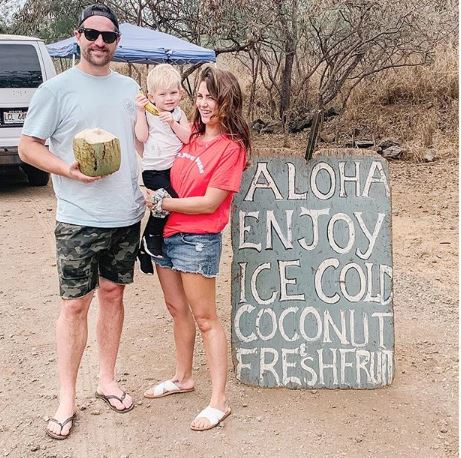 The contradiction in modern society is clear: we moved from the Victorian will power and rigid self-control that produced the prosperous industrial civilization and rules and regulations against which the many of the millennials and politicians are now revolting against in the age of information, to a freedom that may not be a new expansion of consciousness at all but a making ourselves over into the image of the machines in a more powerful and subtle forms. Are you making your decisions based solely on what you hear, on popular opinion, out of fear? Have you even taken the time to figure out what you want in terms of life and politics? For example, Leo, with his golden hair and beautiful gray eyes, is the age of two. He has been watching the toddler’s soap opera Paw Patrol for months and since seeing the show, he started marching around the house demanding, “I want a coconut, I want a coconut, I want a coconut.” So, his parents fly their beautiful baby to Hawaii so he could have his first coconut. When Leo got to Hawaii, he actually picked a petite banana over the coconut. Leo thought he wanted a coconut because the character on the show made it seem so appealing. Being able to think things through is the remedy for a stifling nonpersonal civilization of machines, news, and TV shows. #RandolphHarris 18 of 19
 It is just amazing that our curious predicament is that the same processes which makes modern mortals so powerful—the magnificent development of new sources of energy and other kinds of technical energy—are the very processes which render us powerless. Even though this is the age of social media, where we can choose what information we want to receive, many people are still be indoctrinated by the television, and this can render our wills to be undermined. We are told by many people the will is an illusion anyway, but that is not true. There are other mediums to get programming, but one of the all time favorite, and most powerful is that television. The dilemma is sharpened, furthermore, by the fact that just when we feel most powerless in the face of the juggernaut of impersonal power of society that surrounds of and molds us, we turn on the TV to get power. We want to find out What Would Dolly Do? or how AJ Cook saved a life on Criminal Minds or what is Paw Patrol enticing its audience to desire this week or what accent pieces did Todd Talbot and Jillian Harris on Love it or List it Vancouver select to go with the renovated Victorian and did they keep the wall or add more windows to give the house that ethereal feeling? We are called on to take responsibility for much vaster and more portentous choices. And considering the matter of increased leisure, choices will be necessary for the growing masses of people who will be working only four or six hours of the day. We have the gift of freedom, yes; but the dilemma placed on the individual is tremendous indeed. #RandolphHarris 19 of 19




 Randolph Harris II International Institute