

Real love can only arise where there is either a void in the heart, occasioned by the falsehood or indifference of a once favorite object, or where love before has never been admitted. The crime of loving is, when that love leads us to the injury of others. God is essentially rational. To be a good Christian is to share in God’s rationality, as distinct from blindly obeying an omnipotent will. God, being rational, will ordain what is good, but what he ordains is good in its own nature, not because he ordains it. To go against Reason is to go against God; it is the self-same thing, to do that which the Reason of the case doth require; and that which God Himself doth appoint: Reason is the Divine Governor of Human’s Life; it is the very Voice of God. Reason hath too much given to it. It is not the least evil attendant upon the frequent exhibition of this last dread punishment, of Death, that it hardens the minds of those who deal it out, and makes them, though they be amiable people in other respects, indifferent to, or unconscious of, their great responsibility.

The relationship between God and morality is a doctrine as a binding creed. Some cry out against sin even as the mother cries out against her child in her lap, when she calleth it slut and naught girl, and then falls to hugging and kissing it. Whispering and change of thoughts proves that sin is in the World. How can we argue about God’s power in the other stars from the laws which he has given for our rule in this one? As poisonous adders luck beneath the cover of the most delightful shrubberies, so falsity and deceit are concealed under alluring language. Some are drawn by love, others are driven by terrors, to their Divine refuge. There is no genuine and proper effect of religion where the mind of the human is not composed, sedate, and calm. The distrust of enthusiasm can scarcely be more succinctly formulated. Platonists stand for the idea of a single church to which everybody can belong to who was neither an atheist nor a papist; this church is conceived as a broad Christian society within which humans can seek salvation in their own way rather than as a sect with an inflexible creed.

Christianity, in the eyes of the Platonists, is a way of life; rituals and creeds can be assistance to godliness but nothing more. The nickname latitudinarian which their enemies fastened upon them is an admirable description of their religious attitude. Some believe that there is a distinction between reason and faith; and that religion is a matter of faith, not of reason. What has not reason in it, or for it is human’s superstition: it is not religion of God’s making. Nevertheless, both reason and faith are intertwined for they are both made morality dependent upon the will, even if in one case it was the will of the sovereign and in the other the will of God. And furthermore, experience and knowledge also are involved with both faith and reason. By carrying mechanical explanation too far—into the realm of the living as distinct from the inanimate—some threaten they spiritual interpretation of the Universe. The belief in witchcraft, which has been revived and strengthened in the twenty first century, leads several to believe that to deny witches and apparitions will lead straight to atheism.

At times, many people display a degree of credulity which is somewhat startling even by seventeenth-century standards. Careful reasoning, exact argumentation, and liberality of spirit are joined with uncritical speculation, unscholarly interpretation, and fanciful legends to a degree which bewilders and confuses the modern reader. These characteristics are interesting and important though many of their ideas are, difficult and often very tedious. To ignore these ideas, however, is to run the risk of misunderstanding and grossly oversimplifying the history of British speculative ideas and moral attitudes, which are too often take to be wholly dominated by empiricist and utilitarian concepts. Undoubtedly, too, for all the vagaries, the general effect is to increase human’s confidence in rationality and their willingness to tolerate beliefs with which they disagreed. Stop listening to the tyranny of your individual natural life and win freedom into the spiritual life. The Savior has set us free from sin, but this is the freedom that comes from being set free from myself by the Son. We tend to rely on our own energy instead of being energized by the power that comes from identification with Christ.

In movies and television shows, the specificity of the language that is used in rehearsal extents to the actors’ offstage speech. Their talk is riddled with the expressions from films and that sometimes if you are confusing your emotional experiences with your judgments, your work becomes vague. If you ask an actor, “How did that feel?” they will immediately say: “It felt good” or “That felt bad.” Both of those are judgements. So, we never say, “How did that feel?” at the end of a scene, because it invites them to go to the judgment part of their brain. Instead, when Ryan Phillippe directs a production he asks, “Did you notice any specific feelings that came up for you doing that scene?” That way they learn to name emotional experiences: “I felt angry when he said that.” “I felt scared when he looked at me and my heart started to hurt.” Becoming embodied helps actors realize that they have many different emotions. The more they notice, the more curious they get. They have to learn to speak so that can be heard. Their final performance means facing the community. Actors step out into the World, and experience another level of vulnerability, danger, or safety, and they find out how much they can trust themselves. #RyanPhillippe 5 of 6

Gradually the eagerness to succeed, to show that they can do it, takes over. There comes a point when an actor sense their intrinsic value of the experience of their jobs and as members in the community. Therapy and acting are intuition at work. They are different forms of research, where one strives to step outside of one’s own personal experience, even outside of their own bodies to test the objective validity of assumptions. What makes therapy effective is deep, subjective resonance and that deep sense of truth and veracity that lives in the body. Actors are able to combine the rigor of scientific methods, religion, and research with the power of embodied intuition to make their performances seem more real than your daily lives. We are on the verge of becoming a trauma-conscious society. Almost every day one of my colleagues published another report on how trauma disrupts the workings of mind, brain, and body. When it comes to healing ourselves, it is beneficial to be cautious. We become aware of all the guilt-mongers in our life and their deleterious influences. The true test of a saint’s life is not successfulness but faithfulness on the human level of life. We tend to set up success in Christian work as our purpose, but our purpose should be to display the glory of God.

The Winchester Mystery House
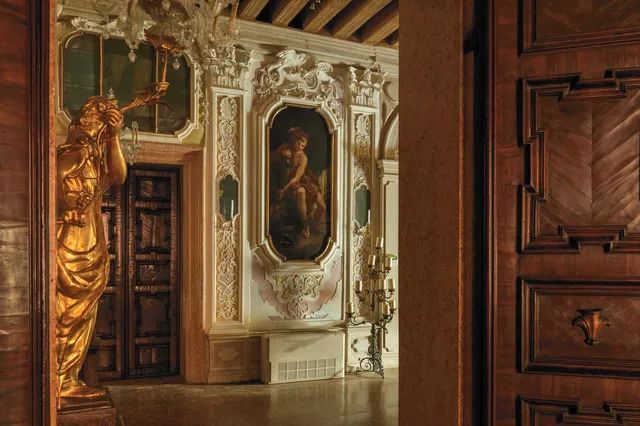
Some houses do not want to be sold, and these types of homes have plans for their “guests.” https://winchestermysteryhouse.com/




 Randolph Harris II International Institute