
 My own thoughts are the worst company you could leave me in at the present. We know not to what inconveniences a small departure from principle will lead. Therefore, it is important distinguish between unverified information heard or received from another and error, the former must be eradicated, but latter tolerated for humanity’s sake. We know the World only through our own ideas, and these do not give us its real nature. On the contrary, our ideas transform the nature of things into qualities which a purely subjective. Similarly, our values are our own; and such relative judgments as those involving categories of cause and effect, or whole and part, are arrived at through the constitution of our minds, not discovered embedded in rerum natura (in the nature of things in the World of nature as distinguished from the World of human beings). The things themselves, though remaining unknowable, nevertheless cause ideas to arise in our minds. The human mind projects relations into the external World and no confidence can be placed in an idea contradicted by sensation. There are two kinds of ideas, those of sensation and those of reflection. #RandolphHarris 1 of 6
 Thoughts cannot always be controlled by will. Truth, the most powerful of all things, is the strongest friend of innocence. There are also two kinds of truth—metaphysical and logical. Metaphysical truth is found in the conformity between our ideas and those in the mind of God; logical truth, in the conformity between our ideas and the things of which they are ideas. We cannot apprehend the former kind of truth; but since the latter involves knowing the unknowable, logical truth is reduced to consistency. Many do not accept the doctrine of innate ideas, that the mind is born with ideas and knowledge, and therefore the mind is not a blank slate at birth because we would be able to discover truth through introspection alone. There is a coherent system of ideas, duplicating the system of things, even though no individual possesses it. This system exemplifies God’s ideas, not all knowledge is gained from experience and the senses. However, at least certain ideas, such as those of God, infinity, and substance, must be innate because no satisfactory empirical origin of them could be conceived. The new born child has an explicit awareness of such ideas. #RandolphHarris 2 of 6
 Just as the Universe is held together by tonos (tension, intensity), pneuma (breath, spirit) and logos (reason), so the physical and metaphysical metabolism and the vital functions of each individual thing in the Universe are also regulated by tonos, penuma, and logos. All these are thus related to the cosmic pneuma and to each other, and account for the harmony in the Universe. This is breathed into things by God himself, but is not to be identified with God. If nothing else, this treatise is valuable as an example of the philosophy of nature which was accepted and learned by humans in the 17th century. Some people like to find a foundation for morals in something other than appeals to the divine will because nature and revelation are complementary. Self-love and the partisan of an instinct for benevolence are vigorous and impressive ways to analyze human nature. Do not be misled about human nature, either by judging only from one’s own natures or by giving too much weight to exceptions from the general run of others. Humans are neither exceptionally self-regarding to the exclusion of benevolence nor exceptionally benevolent to the exclusion of self-interest. #RandolphHarris 3 of 6
 What is more, is that these affections of self-interest and benevolence are not necessarily incompatible and may even reinforce one another. The satisfaction of performing a benevolent action will certainly encourage acts of benevolence in some who desires the advantage of society. Nevertheless, self-love and benevolence are but two affections among many; that neither has any priority over the rest; and that neither is such that all other affections can be reduced to it. Self-love is a complex affection, in that its object is not simply the self, but rather the gain of all things pleasing to the self. There are no affections directly contradictory to self-love or benevolence, namely self-hatred and ill will towards others. Rather, when self-love or benevolence is opposed, it is by passions for particular things; and it is in the pursuit of these objects we may harm ourselves or injure others. It must be remembered that this is a description of the generality of humankind, and not exceptions. Human are something more than a bundle of affections. Human possess a faculty superior to affections, which judges both them and the actions which flow from them. #RandolphHarris 4 of 6
 Humans have a faculty of reflection, or conscience. In one’s strongest characterization of this superior principle, determinately, some actions will be in themselves just, right, good; others will be in themselves evil, wrong, unjust. Conscience without being consulted, without being advised with, magisterially exerts itself, and approves or condemns one the doer of them accordingly. It is conscience (the capacity to reflect on one’s affections) which distinguishes humans from the beasts, by rescuing people from subjection to whatever passions is uppermost at the moment. It is conscience which makes a human a moral agent, by enabling one to be a law unto oneself—a law which one is obliged to obey, because it is the law of your own nature. Conscience approves of whatever contributes to the good of the whole humankind and condemns whatever disproportionately favors some part of the whole. However, how does conscience learn to assess these matters? No question about how conscience does its job need be asked, since it has been designed by God for its appointed end. Conscience, if not forcibly stopped, naturally and always of course goes on to anticipate a higher and more effectual sentence, which shall hereafter second and affirm its own. #RandolphHarris 5 of 6
 When faced with the danger or the threat of danger, human beings can derive an enormous sense of comfort from their fellow humans. Whether the danger is artificially contrived in a laboratory or part of the infinite variety of real life stresses, human beings instinctively seek out each other’s company in adverse circumstances. The child frightened by the darkness of night reflectively cries out to its parents for reassurance and comfort. Indeed, all of us seek human and spiritual reassurances. The idea of being alone, all alone, in the face of danger terrifies children and adults alike. I believe that humans are naturally fitted for life in society, and of course, I approve of social virtues; but virtues are never reckoned to be inherently valuable, unless there is an agent that makes being virtuous more advantageous. Christ urges us to keep our minds filled with the concept of God’s control over everything, which means that a disciple must maintain an attitude of perfect trust and an eagerness to ask and seek. Fill your mind with the thought that God is there. God is my Father. He loves me, and I will never think of anything that He will forget, so why should I worry? How much more will your Father who is in Heaven give good things to those who ask of Him! #RandolphHarris 6 of 6
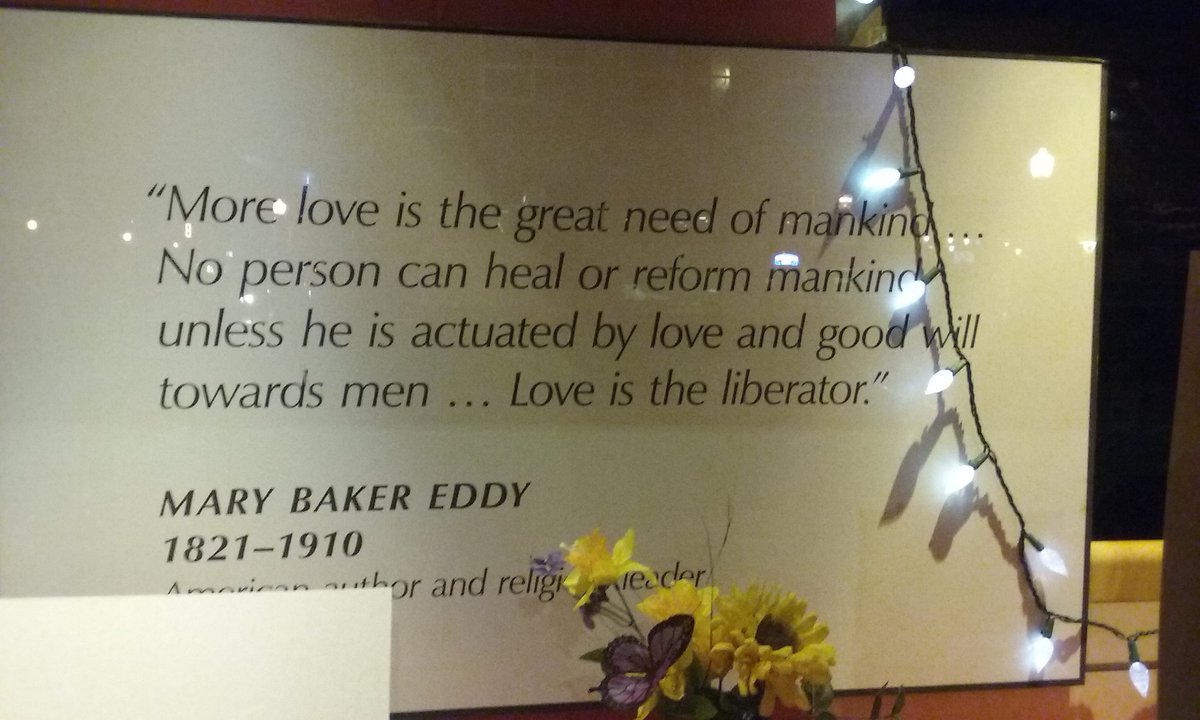 On the sixth year of the 2011 Japan Earthquake, we would like to send our hearts and good thoughts to those in Japan. God bless. (11 March 2011).




 Randolph Harris II International Institute