

With the second arrow, I would have pierced you, had I struck my dear child—and truly, I should not have failed to reach you. People no longer believe the truth when you tell them, nor do they pay attention to signs. A bench in Central Park had the sign, “Wet Paint. Do Not Touch,” however, so many people touched it than it had to be repainted. In another case, $100,000.00 went missing, and I went to my lawyer’s office and the sign of the door said, “I have moved to Mexico, and will not be back.” Whoever has had the opportunity of studying the concealed feelings of persons by means of psychoanalysis can also tell something new concerning the quality of unconscious motives, which express themselves in superstition. Nervous person afflicted with compulsive thinking and compulsive states, who are often very intelligent, show very plainly that superstition originates from repressed hostile and cruel impulses. Instinct is a keener expert than reason at interpreting covert under-meanings. #RandolphHarris 1 of 12

Our actions obey an unknown law, implicit in ourselves, but which does not conform to our logic. The greater part of superstition signifies fear of impending evil, and one who has frequently wished evil to others, but because of a good brining-up, has repressed the same into the unconscious, will be particularly apt to expect punishment for such unconscious evil in the form of a misfortune threatening one from without. Some people sense omens, have prophetic dreams, telepathic experiences, manifestations of supernatural forces and the like, or the family physician may awaken a memory of antiquated times. We may even hope that some of these observations will be explained by our present knowledge of the unconscious psychic process without necessitating radical changes in our present aspect. Once in a while, or more often if we are fortunate, we hear ideas that inspires awe, transfixes us, even stops us in our tracks. It is an energy field created by all living things. #RandolphHarris 2 of 12

In some cases, madness is catching. The term neurosis is fading from use because it tends to lump together too many separate problems. Behavior once considered neurotic is now classified as anxiety, somatoform, or dissociative disorder (or in some cases as mild mood disorder). Even so, you may sometimes hear the term neurosis used to generally refer to problems involving excessive anxiety. No other mental condition really causes insanity. Insanity is a legal term that refers to an inability to manage one’s affairs or foresee the consequences of one’s actions. Insane people usually display a deranged state of the mind usually occurring as a specific disorder (as schizophrenia). They have such an unsoundness of mind or lack of understanding that prevents one from having the mental capacity required by law to enter into a particular relationship, status, or transaction or as removes one from criminal or civil responsibility. Insane display extreme folly or unreasonableness, and are something utterly foolish or unreasonable. #RandolphHarris 3 of 12

There is perhaps no great social question so imperfectly understood among us as that which refers to the line which divides sanity from in sanity. An illuminating analysis of such concepts will not assume that legal terms stand for anything. Rather, it will specify the conditions under which statements that employ these terms are true, and it will specify the manner or purpose of their use. Human madness is oftentimes a cunning and most feline thing. When you think it fled, it may have but become transfigured into still subtler form. I do not believe anything because I cannot prove it, until there is someone to confirm things for me, I do not see them as facts. People lie all the time, and they make careers out of lying, they even lie to the criminal justice system to have people prosecuted because they do not like them. It is highly disturbing when groups of people are allowed to come together and physically attack a person and slander them and there is nothing the individual can do to protect oneself. If we distinguish conscious from unconscious motivation does not extend over all our motor resolutions. #RandolphHarris 4 of 12

Minima non curat praetor. What is thus left free from the one side receives its motive from the other side, from the unconscious, and the determinism in the psychic realm is thus carried out uninterruptedly. These conceptions of strict determinism in seemingly arbitrary actions have already borne rich fruit for psychology—perhaps also for the administration of justice. People are conducting association experiments, wherein the test person answers to a given word with one occurring to them, (stimulus-word reaction), while the time clasping between the stimulus-word and answer is measured (reaction-time). It is a striking and generally recognized feature in the behavior of paranoiacs, that they attach the greatest significance to trivial details in the behavior of others. Details which are usually overlooked by others they interpret and utilize as the basis of far-reaching conclusions. For example, the last paranoiac seen by me concluded that there was a general understanding among people of one’s environment, because at one’s departure from the railway station, they made a certain motion with one hand. Another noticed how people walked on the street, how they brandished their walking-sticks, and the like. #RandolphHarris 5 of 12

Proceeding from other points of view, this interpretation of trivial and accidental acts by the patient has been designated as delusions of reference. The category of the accidental, requiring no motivation, which the normal person lets pass as a part of one’s own psychic functions and faulty actions, is thus rejected by the paranoiac in one’s application to the psychic manifestations of others. All that one observes in others is of full meaning; all is explainable. However, how does one come to look at it in this manner? Probably here, as in so many other cases, one projects into the mental life of others what exists in one’s own unconscious activity. Many things obtrude themselves on consciousness in paranoia, which in normal and neurotic persons can only be demonstrated through psychoanalysis as existing in their unconscious. For example, the phantasies of the hysterical regarding sexual and cruel abuse which are made conscious by analysis often correspond in every detail with the complaints of persecuted paranoiacs. It is remarkable, but not altogether unexpected that we also meet the identical content as reality in the contrivances of perverts for the gratification of their desire. #RandolphHarris 6 of 12
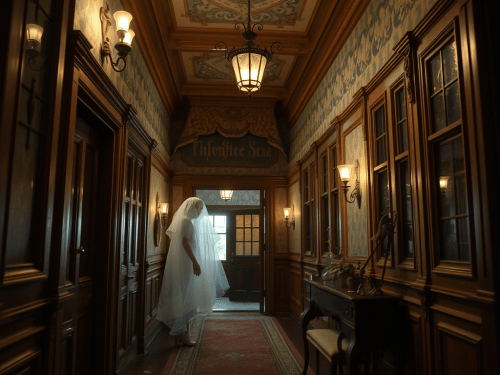
The sea had jeeringly kept his finite body up, but drowned the infinite of his soul…human insanity is Heaven’s sense; and wandering from all mortal reason, humans come at last to that celestial thought, which, to reason, is absurd and frantic; and weal or woe, feels then uncompromised, indifferent as their God. In a certain sense, the paranoiac behavior is justified; he perceives something that escapes the normal person; he sees clearer than one of normal intellectual capacity, but his knowledge becomes worthless when he imputes to others the state of affairs he thus recognizes. I hope that I shall not be expected to justify every paranoiac interpretation. However, the point which we grant to paranoia in this conception of chance actions will facilitate for us the psychologic understanding of the conviction which the paranoiac attaches to all these interpretations. There is certainly some truth to it; even our errors of judgment, which are not designated as morbid, acquire their feeling of conviction in the same way. This feeling is justified for a certain part of the erroneous train of thought or for the source of its origin, and we shall later extend to it the remaining relationships. #RandolphHarris 7 of 12

Having returned from my vacation, my thoughts immediately turned to the patients with whom I was to occupy myself in the beginning of my year’s work. My first visit was to a very antiquated woman from whom I had twice daily performed the same professional services for many years. Owing to this monotony, unconscious thoughts have often found expression on the way to the patient and during my occupation with her. She was over ninety years old; it was therefore pertinent to ask oneself at the beginning of each year how much longer she was likely to live. One the day of which I speak, I was in a hurry and took a carriage to her house. Every coachman at the cabstand near my house knew the antiquated woman’s address, as each of them had often driven me there. This day, it happened that the driver did not stop in front of her house, but before one of the same number in a nearby and really similar-looking parallel street. I noticed the mistake and reproached the coachman, who apologized for it. #RandolphHarris 8 of 12

Is it of any significance when I am taken to a house where the antiquated woman is not to be found? Certainly not to me; but were I superstitious, I should see an omen in this incident, a hint of fate that this would be the last year for the antiquated woman. A great many omens which have been preserved by history have been founded on no better symbolism. Of course, I explain the incident as an accident without further meaning. The cause would have been entirely different had I come on foot and, absorbed in thought, or through distraction, I had gone to the house in the parallel street instead of the correct one. I would not explain that as an accident, but as an action with unconscious intent requiring interpretation. My explanation of this lapse in walking would probably be that I expected that the time would soon come when I should no longer meet the antiquated woman. I therefore differ from a superstitious person in the following manner: I do not believe that an occurrence in which my mental life takes no part can teach me anything hidden concerning the future shaping of reality; but I do believe that an unintentional manifestation of my own mental activity surely contains something concealed which belongs only to my mental life—that is, I believe in outer (real) chance, but not in inner (psychic) accidents. #RandolphHarris 9 of 12

With the superstitious person, the cause is reversed: he knows nothing of the motive of his chance and faulty actions; he believes in the existence of psychic contingencies; he is therefore inclined to attribute meaning to external chance, which manifests itself in actual occurrence, and to see in the accident a means of expression for something hidden outside of him. There are two differences between me and the superstitious person: first, he projects the motive to the outside, while I look for it in myself; second, he explains the accident by an event which I trace to a thought. What he considers hidden corresponds to the unconscious with me, and the compulsion not to let chance pass as chance, but to explain it as common to both of us. Thus, I admit that this conscious ignorance and unconscious knowledge of the motivation of psychic accidentalness is one of the psychic roots of superstition. Because the superstitious person knows nothing of the motivation of his own accidental actions, and because the fact of this motivation of his own accidental actions, and because the fact of this motivation strives for a place in his recognition, he is compelled to dispose of them by displacing them in the outer World. #RandolphHarris 10 of 12

As a matter of fact, I believe that a large portion of the mythological conception of the World which reaches far into the most modern religions, is nothing but psychology projected to the outer World. The dim perception (the endo-psychic perceptions, as it were) of psychic factors and relations (which naturally has nothing of the character of perception) of the unconscious was taken as a model in the construction of a transcendental reality, which is destined to be changed again by science into psychology of the unconscious. It is difficult to express it in other terms; the analogy to paranoia must here come to our assistance. We venture to explain in this way the myths of paradise and the fall of man, God, of good and evil, of immortality and the like—that is, to transform metaphysics into meta-psychology. The gap between the paranoiac’s displacement and that of the superstition is narrower than appears at first sight. When human beings began to think, they were obviously compelled to explain the outer World in an anthropomorphic sense by a multitude of personalities in their own image; therefore, some may have evolved from animals, while others may be children of God or the Devil. #RandolphHarris 11 of 12

The accidents which they explained superstitiously about their origin were thus actions and expressions of person. In that regard, they behaved just like paranoiacs, who draw conclusions from insignificant signs which others give them, and like all normal persons, who justly take the unintentional actions of their fellow-beings as a basis for the estimation of their characters. Only in our modern, philosophical, but by no means finished views of life does superstition seem so much out of place: in the view of life of prescientific times and nations, it was justified and consistent. The Roman who gave up an important undertaking because he sighted an ill-omened flock of birds was relatively right; his actions was consistent with his principles. However, if he withdrew from an undertaking because he had stumbled on his threshold (un Romain retournerait), he was absolutely superior even to us unbelievers. He was a better psychologist than we are striving to become. For his stumbling could demonstrate to him the existence of a doubt, an internal counter-current, the force of which could weaken the power of his intention at the moment of its execution. For only concentrating all psychic forces on the desired aim can one be assured of perfect success. #RandolphHarris 12 of 12





 Randolph Harris II International Institute