
 Surely there is something divine in instinct. There is nothing in the World easier than calling a person mad, it is what we do to dogs when we want to hang them. Intuiting is a process of guessing, allowing and following hunches, experiencing vibrations of possible, whether they are probable or not. Intuition refers to a whole set of experiences that cannot really be described, because they are very personal and they are almost impossible to convey scientifically. If you know something (intuitively), you just know it. Such knowing has nothing to do with cognitive knowledge and is much more like possessing wisdom, vision, a keener expert than reason at interpreting covert under-meanings. Let us first of all consider the relation of children to their brothers and sisters. I do not know why we presuppose that it must be a loving one, since examples of enmity among adult brothers and sisters are frequent in everyone’s experience, and since we are so often able to verify the fact that this estrangement originated during childhood, or has always existed. Moreover, many adults who to-day are devoted to their brothers and sisters, support them in adversity, lived with them almost continuous enmity during their childhood. Our senses are not dupes. The gift of instinct: an inferior gradation of reason. A sort of mysterious combination of thought and matter. #RandolphHarris 1 of 7
 The elder child ill-treated the younger, slandered him, and robbed him of his toys; the younger was consumed with helpless fury against the elder, envied and feared him, or his earliest impulse toward liberty and his first revolt against injustice were directed against his oppressor. The parents say that the children do not agree, and cannot find the reason for it. It is not difficult to see that the character even of a well-behaved child is not the character we should wish to find in an adult. A child is absolutely egoistical; he feels his wants acutely, and strives remorselessly to satisfy them, especially against his competitors, other children, and first of all against his brothers and sisters. And yet we do not on that account call a child “wicked”—we can call him “naughty”; he is not responsible for his misdeeds, either in our own judgment or in the eyes of the law. And this is as it should be; for we may expect that within the very period of life which we reckon as childhood, altruistic impulses and morality will awake in the little egoist, and that, a secondary ego will overlay and inhibit the primary ego. Do we not all agree to call rapid thought and noble impulse by the name of inspiration? #RandolphHarris 2 of 7
 Morality, of course, does not develop simultaneously in all its departments, and furthermore, the duration of the amoral period of childhood differs in different individuals. Where this morality fails to develop we are prone to speak of degeneration; but here the case is obviously one of arrested development. Where the primary character is already overlaid by the later development it may be at least partially uncovered again by an attack of hysteria. The correspondence between the so-called hysterical character and that of a naughty child is absolutely striking. The obsessional neurosis, on the other hand, corresponds to a super-morality, which develops as a strong reinforcement against the primary character that is threatening to revive. Many persons, then, who now love their brothers and sisters, and who would feel bereaved by their death, harbour in their unconscious hostile wishes, survival for an earlier period, wishes which are able to realize themselves in dreams. It is, however, quite especially interesting observe the behaviour of little children up to their third and fourth year towards their younger brothers or sisters. Favorable circumstances–good air, good company, two or three good rules rigidly adhered to–keep the World out of Bedlam. However, let the World fly into a passion, and is not Bedlam its safest abode? #RandolphHarris 3 of 7
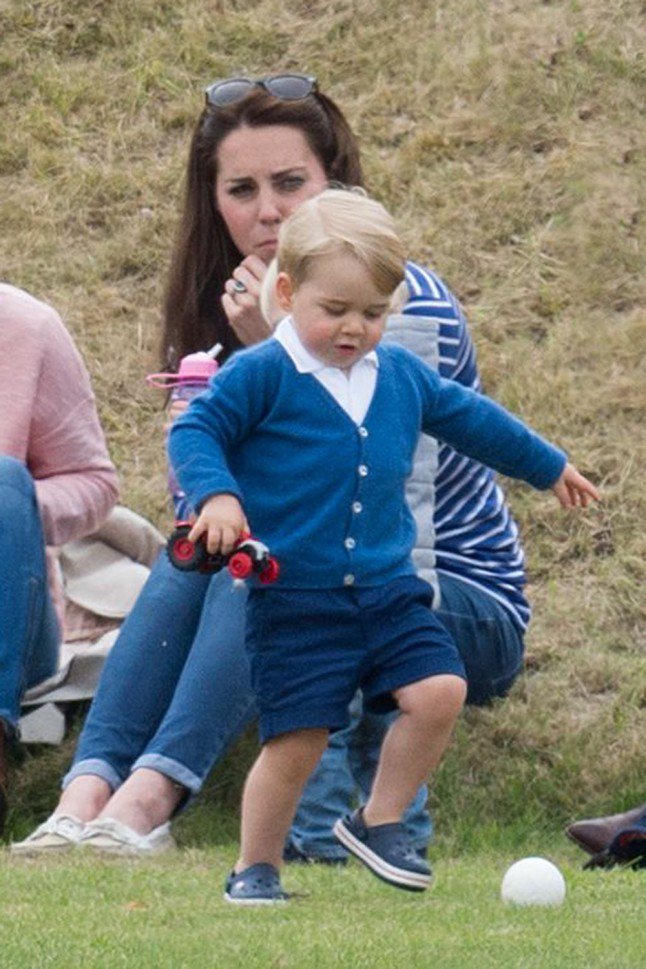 So far the child has been the only one; now he is informed that the stroke has brought a new baby. The child inspects the new arrival, and expresses his opinion with decision: “The stork had better take it back again!” Hans, whose phobia was the subject of the analysis in the above-mentioned publication, cried out at the age of three and a half, while feverish, shortly after the birth of a sister: “But I do not want to have a little sister.” In his neurosis, eighteen months later, he frankly confessed the wish that his mother should drop the child into the bath while bathing it, in order that it might float away to Heaven in the arms of angels so he could be the only child again. With all this, Hans was a good-natured, affectionate child, who soon became fond of his sister, after his father pulled out a switch and applied it to his rear end several times, and Hans then took his sister under his special protection. Intuition is an act by which one is transported into the interior of an object in order to coincide with what there is unique and consequently inexpressible about it. The case of the self, intuition is an immersion in the indivisible flow of consciousness, a grasping of pure becoming and real duration. The result is knowledge which is contact and even coincidence. Threats are seldom of avail to bring a man back to reason. One does not become angry with a mad man. #RandolphHarris 4 of 7
 I seriously declare it my opinion that a child is able to estimate the disadvantages which he has to expect on account of a new-comer. A connection of mine, who now gets on very well with a sister, who is four years her junior, responded to the news of this sister’s arrival with the reservation: “But I shall not give her my red cap, anyhow.” If the child should come to realize only at a later stage that its happiness may be prejudiced by a younger brother or sister its enmity will be aroused at this period. I know a case where a girl, not three years of age, tried to strangle an infant in its cradle, because she suspected that its continued presence boded her no good. Children at this time of life are capable of a jealousy that is perfectly evident and extremely intense. Again, perhaps the little brother or sister really soon disappears, and the child once more draws to himself the whole affection of the household; then a new child is sent by the stork; is it not natural that the favourite should conceive the wish that the new rival may meet the same fate as the earlier one, in order that he may be as happy as he was before the birth of the first child towards the interval after his death? The seership of a poet’s heart, the insight that is given by faith, hope and curiosity are no sooner satisfied, than they begin a new search. #RandolphHarris 5 of 7
 Such cases of death in the experience of children may soon be forgotten in the family, but psychoanalytical investigation shows that they are very significant for the later neurosis. Of course, this attitude of the child towards the younger brother or sister is, under normal circumstances, a mere function of the difference of age. After a certain interval, the maternal instincts of the older girl will be awakened towards the helpless new-born infant. Feelings of hostility towards brothers and sisters must occur far more frequently in children than observed by their obtuse elders. Here is a peculiarly sincere ad ingenuous description of this typical childish attitude as experienced in a young man’s earliest childhood: “Moreover, there was now a second Adolf. A little creature whom they declared was my brother, but I could not understand what he could be for, or what they should pretend he was a being like myself. I was sufficient unto myself: what did I want with a brother? And he was not only useless, he was also even troublesome. When I plagued my grandmother, he too wanted to plague her; when I was wheeled about in the baby-carriage he sat opposite me, and took up half the room, so that we could not help kicking one another.” The mysterious process by which our Earthly life instructs us for another state of being gives insight, and insight often gives foreboding. #RandolphHarris 6 of 7
 Unlike the intellect, which remains outside what it knows, requires symbols, and produces knowledge that is always relative to some viewpoint, intuition enters into what it knows, dispenses with symbols, and produces knowledge that is absolute. The cognitive character of intuition instead of its immediacy, is a mode of thinking. As such, it is not a spontaneous flash of insight but an act the is engendered by mental effort. To achieve an intuition, we must turn our attention away from its natural concern with action. This act demands concentration of thought. Even when we are successful, the results are impermanent. Yet the intellect can effect a partial communication of the results by using concrete ideas, supplemented by images. Comparisons and metaphors will here suggest what cannot be expressed. Consequently, the knowledge attained by intuition is not altogether ineffable. Nor is it, in the strict sense, absolute, for intuition is a progressive activity that can widen and deepen its scope indefinitely. Its limits cannot be fixed a priori. It is not so much outer temptations that prevail over mortals; but inward instincts. Our actions obey an unknown law, implicit in ourselves, but which does not conform to our logic. Both wit and understanding are trifles, without integrity. #RandolphHarris 7 of 7




 Randolph Harris II International Institute