
 There is something humans cannot build, the one who builds it is superior to humans; the World is such a structure; and so God, who is superior to man, exists. However, some attack this argument by pointing out that the superior force need not be God; it can be nature, or the forces of nature, and that these things could have been formed without a personal God being involved at all. These attackers also made some interesting points about the notions of God. For instance, he is infinite, but infinite, having no place to move, is limited, restricted, unable to move. So, an infinite God is limited. He is supposed to be virtuous and perfect, but virtue involves overcoming pains and dangers, and only for a being who can suffer or be destroyed are there pains and danger. Neither suffering nor destructibility is consistent with perfection, so they believed that God cannot be both virtuous and perfect. #RandolphHarris 1 of 9
 When God wants to take you to the throne, He wants to take you to a higher level. The Universe is formed by logos (through which all things are made, as divine) and there is regularity in the World, but this involves fog and diseases, deadly animals, and death for all. What sort of providence is this? And if each individual animal is fated to have all things turn out for its own good, is it for its own good that the pig is killed? As for man, how can God’s providence permit him to allow so many humans to use their reason faultily, in a way injurious to themselves, and to others? Moreover, if he allows weaknesses and misery in the Universe—whether intentionally or unintentionally—he is at fault, since intentional neglect and unintentional neglect are both faults. And these evils cannot be dismissed as minor; they are of great importance to the creatures who suffer from them. #RandolphHarris 2 of 9
 Nonetheless, virtue, conformity to nature, is the sole good; vice, deviation from nature, the sole evil; and the rest of human actions adiaphora (things outside of moral law—that is, actions that morality neither mandates nor forbid; things which cannot be logically differentiated), morally indifferent. However, philosophers, scholars, and wise men and women, and stoics (impassive) wants certain things in nature other than virtue, and therefore these things are not indifferent; they are in fact good, along with virtue. A good reputation is good too. What you focus on, you magnify. If you stay focused on your problem or what you do not have and how it will never work out, all you are doing is making it bigger than it really is. When you magnify something, you do not change the size of the object; you only change your perception of it. #RandolphHarris 3 of 9
 The art of effectively pursuing what we want is designated the “art of living.” This art uses common sense and probability, to pithanon (give cognitive impressions), to attain the fullest satisfaction of one’s orge (desire), or natural impulse, and eschews all arrogant, doctrinaire claims to the Truth. Many people grapple with one of the basic problems of morality, the freedom of humans to do good and evil. Human freedom is the will that is caused, but it is caused by itself and moves by virtue of its own nature (like Epicurean atoms, with their clinamen or unpredictable nature). There are successions of events, human actions preceded by certain events and conditions, but a succession is not the same as an efficacious, causal relationship. Events precede a human’s actions, but do not force one to act; a human’s will always has the last move. Even if there were a rigid causal chain predetermined from all eternity, we could not predict with certainty particular effects, given the many fortuitous causes that are always entering the picture; so for all practical human purposes there is no such chain, only successions of events. #RandolphHarris 4 of 9
 Do not be intimidated in anyway by your enemies. You are strong, successful, and powerful. You are the child of the Most High. During the late 8th century, many students were only taught logic, Biblical exegesis, the trivium of grammar, rhetoric, and the quadrivium of arithmetic, geometry, astronomy, and music. The assimilation of ancient learning was stressed, and little original work was done; the chief forms of academic literature were commentaries and handbooks. This was to prevent the decay and intellectual stagnation which we are currently seeing in the 21st century, and foster the renaissance of the eleventh and twelfth century. Literary sensibility and intellectual curious was growing rapidly and some charming poem, art, architecture, and substantial doctrinal treatises remain to testify to the intellectual versatility of our ancestors. #RandolphHarris 5 of 9
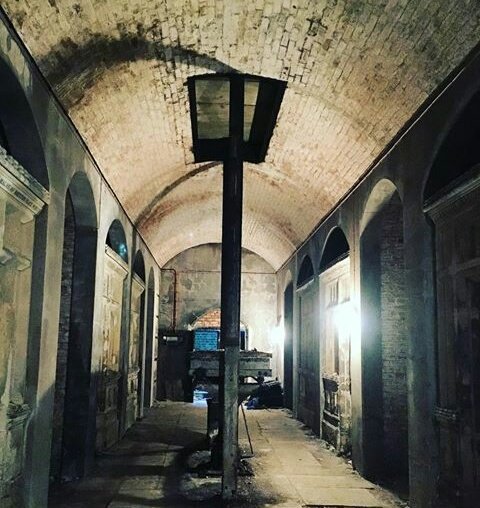
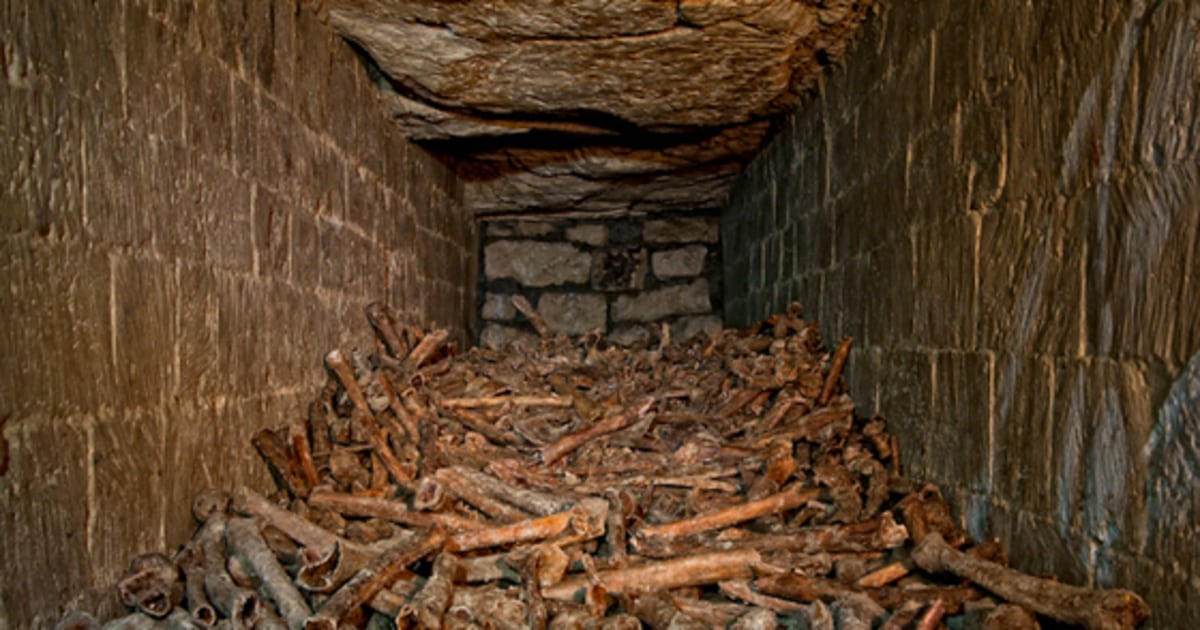
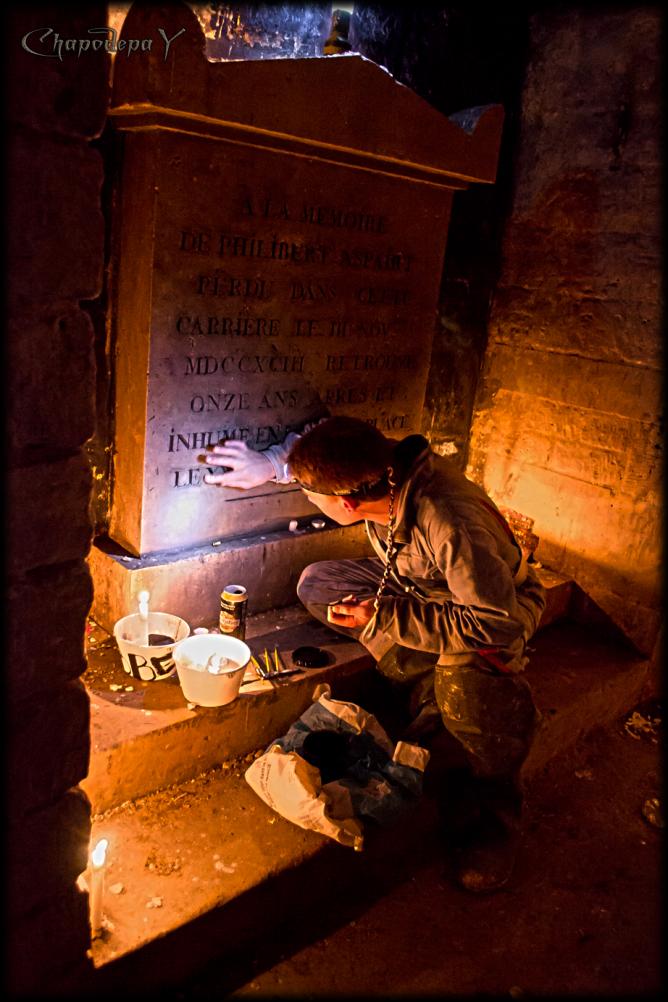 The principle of the poof in God is the idea of the scale of perfection. Moving from that which simply exists through that which exists and lives and that which exists, lives, and possesses intelligence, the scale would be incomplete without the omnipotent intelligence which is God. God created everything, including human souls and bodies. There are also so many things in this World that people still do not know about. For instance, there are more than 400 miles of twisting catacombs that lie beneath the streets of Paris, Frances and are the eternal home to countless souls. Some of the caves are lined to the ceiling with skulls and bones because as Paris grew into its role as a major European destination, it ran into a major problem: the 17th century, enough people had lived and died in Paris that its cemeteries were overflowing, overstuffed with graves to the point corpses would at times become unearthed. #RandolphHarris 6 of 9
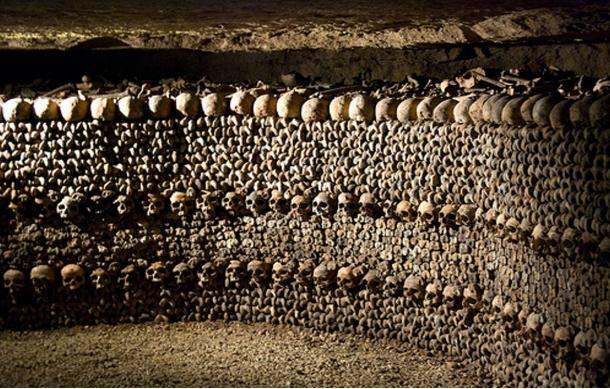 There were reports that the cemetery exuded a strong smell of decomposing flesh, and during prolonged period of Spring rain in 1780 caused the wall around Les Innocents to collapse, spilling rotting corpses into the streets, and the city needed a place to put its dead. There were centuries-old tunnels that existed beneath the streets of Paris since the 13th century, remnants of a time when limestone quarries were minded to build Paris, France into a World Class city. So, the solution was to place the more than 6 million corpses in this underground city’s catacombs. Some of the oldest corpuses dated back the 9th century, and it took the city twelve years to move all the bones and bodies–numbering between 6 and 7 million—into the catacombs. And during the French Revolution, the dead were buried directly in the catacomb’s ossuaries, including Jean-Paul Marat, and Maximillen de Robespierre. Many of the bones are stacked along the corridors, arranged in patterns, creating crosses and other patterns, and sculptures which were created by Louis XV. #RandolphHarris 7 of 9
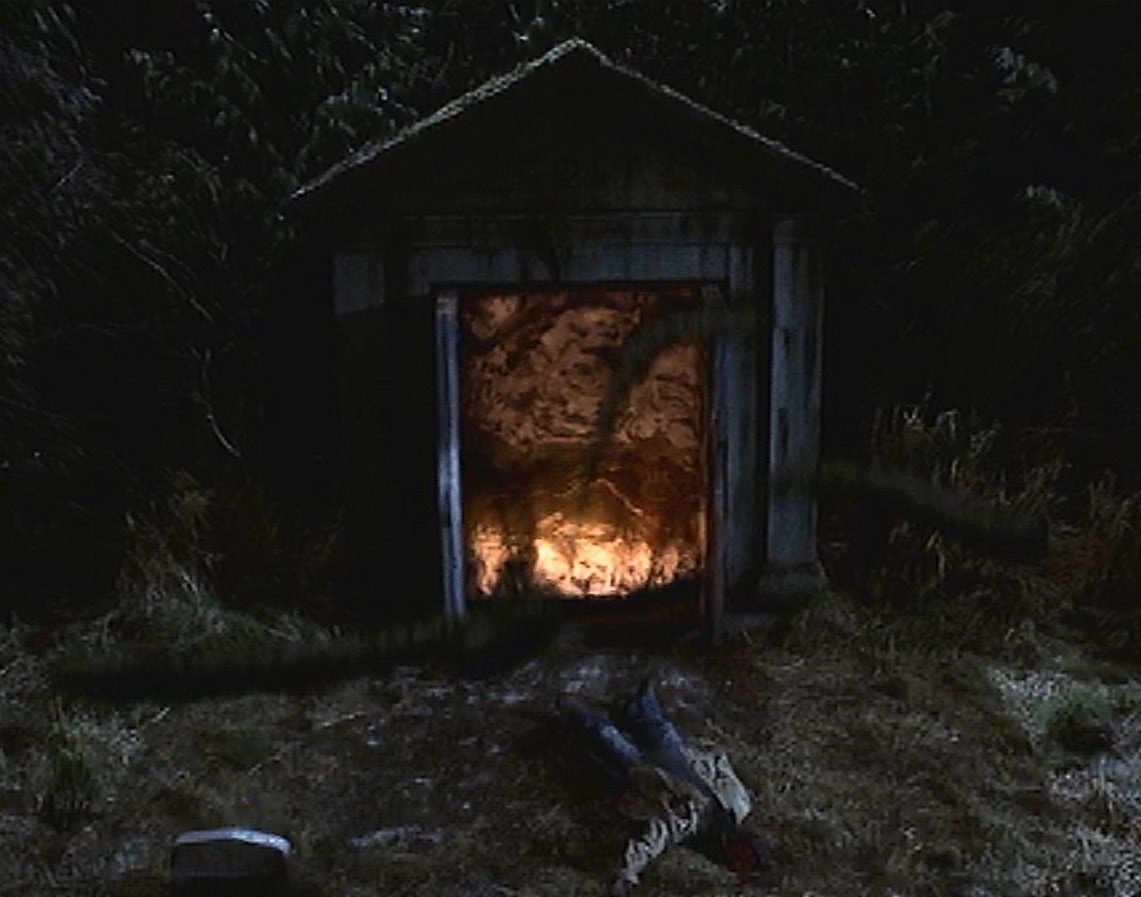 Legend has it that the Gates of Hell are found in the ghoulish maze. Some people actually sneak into the catacombs and explore the parts of the catacombs that are closed off to the public. It is very scary because there are 400 hundred miles in the catacombs and many of the passages lead to deeper levels. There are caves and water in the catacombs and if the battery dies in your light, you can get lost and many never find your way out. The catacombs also reach hundreds of feet beneath the city of Paris, France. And there are inaccessible trapdoors back to the road above, others are sealed. Some people have secret underground parities in the catacombs and some guests have become spooked and said to have seen ghost and demons in the city of the dead. Several scholars are known to have touched on the question of Universal ideas, but the issue does not seem to have been widely debated. #RandolphHarris 8 of 9
 The German monk Gottschalk (died circa 868) was accused of teaching that from eternity, God has predestined some men to have salvation and others to damnation; that God therefore does not in any sense will the salvation of all humans; and that each person’s will is irresistibly determined either to good or to evil. People have freedom and moral responsibility and after a series of conflicting synodical decisions one invokes the subtle metaphysical elaboration of that doctrine in the theology. The catacombs is like a versions of Through the Looking-Glass, and What Alice Found There because it is like stepping through to an alternative World where people journey through the a chess board, playing a game that could cost them their lives, in a World in which time, space, and causality are liable to operate in reverse. Many think living entities have no place in the grave World. The city stopped moving bones into the ossuaries in the 1860s, and today, only a mile of the tunnels is opened to the public for tours. #RandolphHarris 9 of 9




 Randolph Harris II International Institute