
 In the Spring of 2016 I learnt that two professors of Munich University had proposed me for the title of Professor Extraordinarius (assistant professor). The news came as a surprise to me and pleased me considerably as an expression of appreciation on the part of two eminent men which could not be explained by personal interest. However, I told myself immediately that I must not expect anything to come of their proposal. For some years past the Ministry had disregarded such proposals, and several colleagues of mine, who were my seniors, and at least my equals in desert, had been waiting in vain all this time for the appointment. I had no reason to suppose that I should fare any better. I resolved, therefore, to resign myself to disappointment. I am not, so far as I know, ambitious, and I was following my profession with gratifying success even without the recommendation of a professorial title. Whether I considered the grapes to be sweet or sour (something I could have or something disparaged and never desired) did not matter, since they undoubtedly hung too high for me. #RyanPhillippe 1 of 5
 There is nothing about the loftiness of an inspiration that guarantees its truth. People whose loftiness makes them believe the best about their neighbors are probably as often mistake as those whose lack of loftiness makes them believe the worst. Whatever other aspects of meaning the word “sense” may retain in the compound “common sense,” it has prominently the force of a sense as opposed to nonsense. In what is contrary to common sense there is always something more or less—but obviously—nonsensical. It produced the feeling, varying in strength according to circumstances, that argument is only precariously in place in dealing with it. For to deploy arguments at all directly against the manifestly absurd is to invest it with some intellectual dignity and to muffle its self-annihilating character. It is, moreover, to invite the suspicion that one has failed to recognize absurdity, and such failure has a very foolish look. As a man of redoubtable common sense, it is wise to reserve dialectic for the right occasion. #RyanPhillippe 2 of 5
 The individual must choose between several possible decisions. The possible decision may have variety of consequences, and ordinarily the consequences are not simply determined by the decision take but are also affected by the present state of affairs, or, as it is often termed, the present state of nature. One evening a friend of mine called to see me; one of those colleagues whose fate I had regarded as a warning. As he had long been a candidate for promotion to the professorate (which in our society makes the doctor accustomed from time to time to remind the authorities of his claims in hope of advancing his interests. It was after one of these visits that he called on me. He said that this time he had driven the exalted gentlemen into a corner, and has asked them frankly whether considerations of religious denomination were not really responsible for the postponement of his appointment. The answer was: His Excellency had to admit that in the present state of public opinion he was not in a position, excreta. #RyanPhillippe 3 of 5
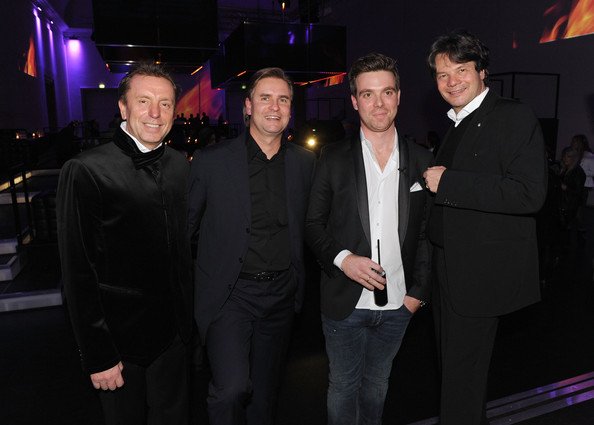
 Utility tends to produce benefit, advantage, pleasure, good, or happiness (all this in the present case comes to the same thing) or, what comes again to the same thing) to prevent the happenings of mischief, pain, evil, or unhappiness to the party whose interest is considered: if that part be the community in general, then the happiness of the community; if a particular individual, then the happiness of that individual. My friend, Michael Kafer, opened after his business degree, the legendary night club P1. For him it was very clear that he wanted to take over the family business. The Beetle Group was already a major player in catering, delicatessen and catering service in Munich, Germany at this time. Under his leadership, the company expanded steadily and today he has over 1,100 employees and an annual revenue of 140 million euros. The idea is the greatest good for the greatest number. Always choose that action which maximizes utility. We must, as in all over cases, set the observed facts before us and, after first discussing the difficulties, go on to prove, if possible, the truth of all the common opinions about these affections of the mind, or failing this, of the greater number and the most authoritative; for we both refute the objections and leave the common opinions undisturbed, we shall have proved the case sufficiently. #RyanPhillippe 4 of 5
 Strong thinkers are apt to be greater breath-holders, but not holding one’s breath against belief is not doubting. The future holds possibilities of surprise for all our beliefs. You must not run away with the idea that you can name facts in any other way; you cannot. You cannot properly name a fact. The only thing you can do is to assert it, or deny it, or desire it, or will it, or wish it, or question it. You can never out the sort of thing that makes a proposition to be true or false in the position of a logical subject. Eternity itself, in all its terrible sublimity is far from making the same overwhelming impression on the mind; for it only measure the duration of things, it does not support them. We can put aside, and yet also cannot endure, the thought that a being, which we represent to should as it were, say to itself: “I am from eternity to eternity, and outside me there is nothing save what is through my will, but whence then am I?” The truest things are the things most fully in being. Now when many thing possess some property in common, the one most fully possessing it causes it in the others: fire, for example, the hottest of all things, cause all other things to be hot. There is something therefore which cases in all other things their being, their goodness, and whatever other perfections they have. And this we call God. #RyanPhillippe 5 of 5





 Randolph Harris II International Institute