
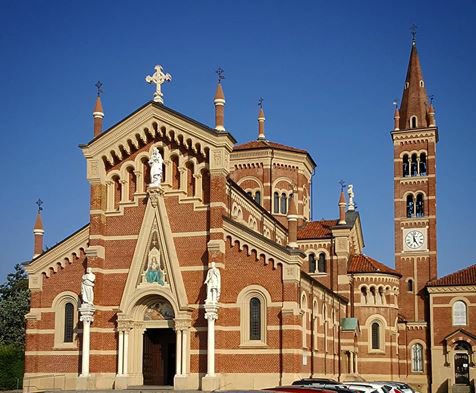
 Time has frequently struck me as mysterious because it embodies humanity’s most hidden fears and desires, and it can seem simultaneously pleasing and intolerable. When have gone from a World ruled by angels and devils at battle, to one ruled by order and disorder, chaos and anarchy, which creates a hostile and random Universe. Some have even felt that time is incapable of rational discursive treatment and that it was able to be grasped only by intuition. This defeatist attitude probably arises from the fact that time always seems to be mysteriously slipping away from us; no sooner do we grasp a bit of it in our consciousness than it has slipped away into the past. I remember when I was five years old and my mother took me to church and she was wearing a beautiful tan color dress, with ruffles, and the dress had a lady bug pattern, and her hair was curly, and the church when went to looked like a castle and had beautiful stained glass windows. And now I am a young man sitting at my typewriting recording my memories and missing the good times we have in the past as the future is not certain. We shall see, however, that this notion of time as something which continually slips past us is based on a confusion. #RyanPhillippe 1 of 10
 What is time? Time seems to be a spatial and progressive measurement of history, present, and the future. Part of the process has passed away, part is to be measured, and another part is yet to be. The present is real, although the past and future are not (the past has ceased to exist, and the future has not yet come to be; consequently, the measurement of space need not be (where the whole spatial object can be present now). This thought—that the present is real in a way in which the past and future are not real—is part of the confusion of the flow or passage of time. While human cultures and sciences have advanced many theories on the nature of time over the centuries, the immortals have believed for eons in a simple timestream: if time flows past us or if we advance through time, this would be a motion with respect to hypertime. For motion in space is motion with respect to time, and motion of time or in time could hardly be motion in tie with respect to time. Ascription of a metric to time is not necessary for the argument, but supposing that time can be measured in seconds, the difficulty comes out very clearly. #RyanPhillippe 2 of 10
 Coming to understand this unique World and society is uncanny. If motion is space is feet per seconds, at what speed is the flow of time? Seconds per what? Moreover, if passage is of the essence of time, it is presumably the essence of hypertime, too, which would lead us to postulate a hyper-hypertime and so on ad infinitum. Time is not just strings in your mind, it is alive. The symbiont through technology and the life force of nature has risen. When you are young, time moves slowly like an infant, but as we age it speeds up because of the materials added to life make it grow, evolve and mature. The idea of time as passing is connected with the idea of events changing from future to past. We think of events as approaching us from the future, whereupon they are momentarily caught in the spotlight of the present and then recede into the past. Yet, in normal context it does not make sense to talk of events changing or staying the same. Roughly speaking, events are happenings to continuants—that is, to things that change or stay the same. Thus, we can speak of a table, a star, or a political constitution as changing or as staying the same. However, can we intelligibly talk of a change itself as changing or not changing? #RyanPhillippe 3 of 10
 The concept of time can seem so unbelievable that it borders on fantasy and the divine. It is not like the Egyptian god Horus is alive and has inconceivable powers such as the uncanny dark gift centering around time manipulation, and a third-eye that can see through space and time. It is true that in differential calculus we talk of rates of change changing, but a rate of change is not the same thing as a change. Again, we talk of continuants as coming into existence or ceasing to exist, but we cannot similarly talk of a “coming-into-existence” itself as coming into existence or ceasing to exist. It is nevertheless true that there is a special class of predicates, such as “being past,” “being present,” “being future,” together with some epistemoloical (the investigation of what distinguishes justified belief from opinion) predicates like “being probable,” or “being foreseen,” with respect to which we can talk of events as changing. Significantly enough, these very predicates do not apply to continuants. We do not, for example, naturally talk of a table or a star as “becoming past” but of its “ceasing to exist.” There is something odd about the putative properties of pastness, presentness, futurity, and the like, whereby events are supposed to change. #RyanPhillippe 4 of 10
 There is probably a deeper source of the illusion of time flow. This is that our stock memories us constantly increasing, and memories are of earlier, not of later events. It is difficult to state this matter properly, since we forget things as well as acquire new memories. With a very antiquated man there may well be a net diminishing of his stock memories, and yet he does not feel as if time were running the other way. This suggestion is therefore a tentative and incompletely worked out one. The subordinate question of why our memories are of the past, not of the future, is an extremely interesting one in its own right, and we shall see that it can be answered. Duration is feeling extension. Physical time is something spatialized and intellectualized, whereas the real thing, with which we are acquainted in intuition (inner experience), is duration. In memory, the past survives in the present. So when talking about the memory of going to church when I was five, I am simply talking about the temporal distance between its beginning and its end. Time is actually a World line tracking along which a material body moves or a light signal is propagated. #RyanPhillippe 5 of 10
 In an almost fairy-tale landscape, with a field that the body or light signal lies (tenselessly) along the World line, we are contemplating the celestial canopy. To talk of anything’s moving through space-time is to bring time into the story twice over an in an illegitimate manner. When we are talking about motion in terms of the space-time picture, we must do so in terms of the relative orientations of World lines. Thus, to say that two particles move with a uniform nonzero relative velocity is expressed by saying that they lie (tenselessly) along straight World lines which are at an angel to one another. Similarly, the recent conception of the positron as an electron moving backward in time is misleading, since nothing can move, forward or backward, in time. What is meant is that the World lines of a positron and electron, which are produced together or which annihilate one another, can be regarded as a single bent World line, and this may indeed be a very fruitful way of looking at the matter. It popular exposition of relativity, we also understand such things as our consciousness crawling up the World line of our body. If we draw a line extending to the past, this will simply be a representation of a particle which has existed a very long time. #RyanPhillippe 6 of 10
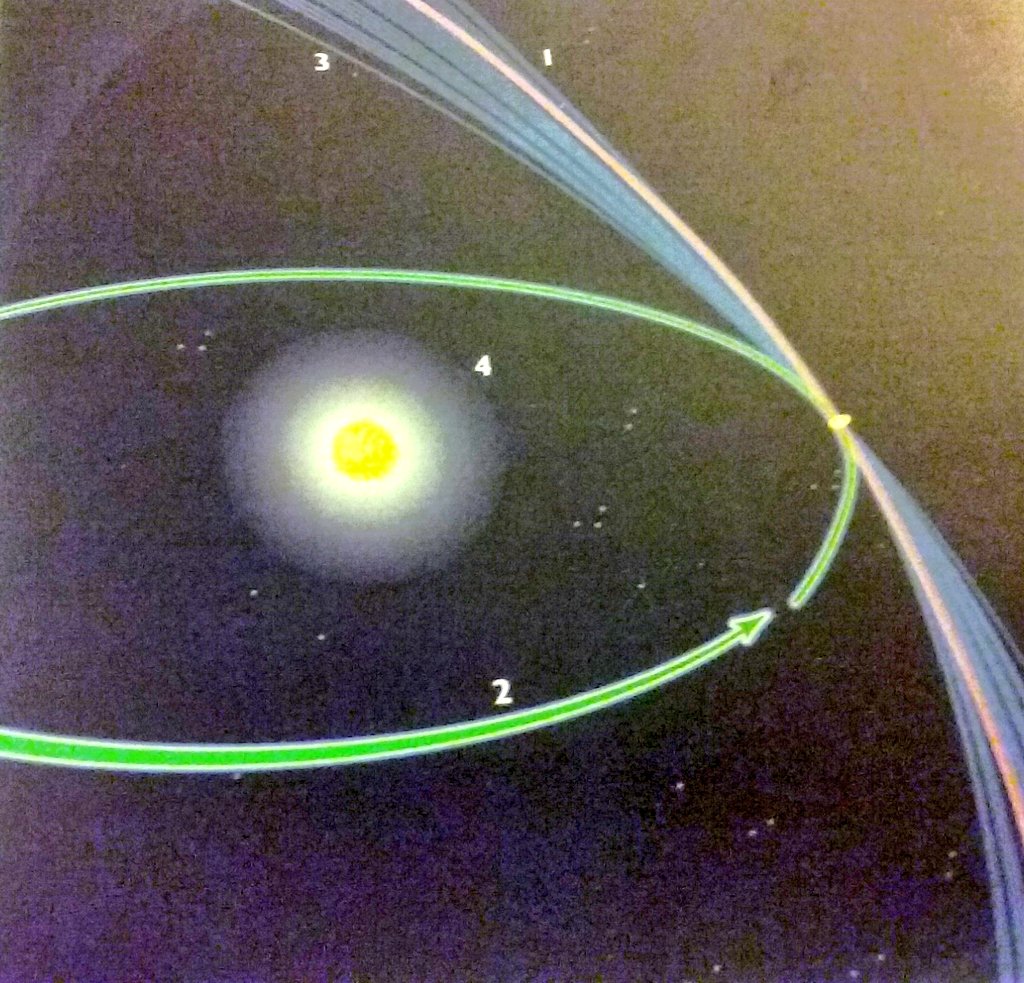
 It is not surprising that we cannot represent a time machines, since the notion of such a machine is an incoherent one. How fast would such a machine flash over a given ten-second stretch? In ten seconds or minus ten seconds? Or what? No sensible answers can be given, for the question is itself absurd. The notion also involves the contradiction, that is I get into a time machine at 12 today, then at 3pm, I shall be both at 3pm today and at, say, minus a million years Before Christ. For this to happen, the Earth must pass through part of the stream that lies on the outside of the time machine’s orbit and behind the time machine’s position, thus encountering dust that is blown away by solar-radiation pressure. Absolutely, true and mathematical time, of itself and from its own nature, flows equably without relation to anything external. Taking one second to be equivalent to 186,300 miles, which is the distance light travels in that time, any physical object, such as a man or a star, would be rather like a four-dimensional worm—its length in a timelike direction would be very much greater than its spacelike cross section. #RyanPhillippe 7 of 10
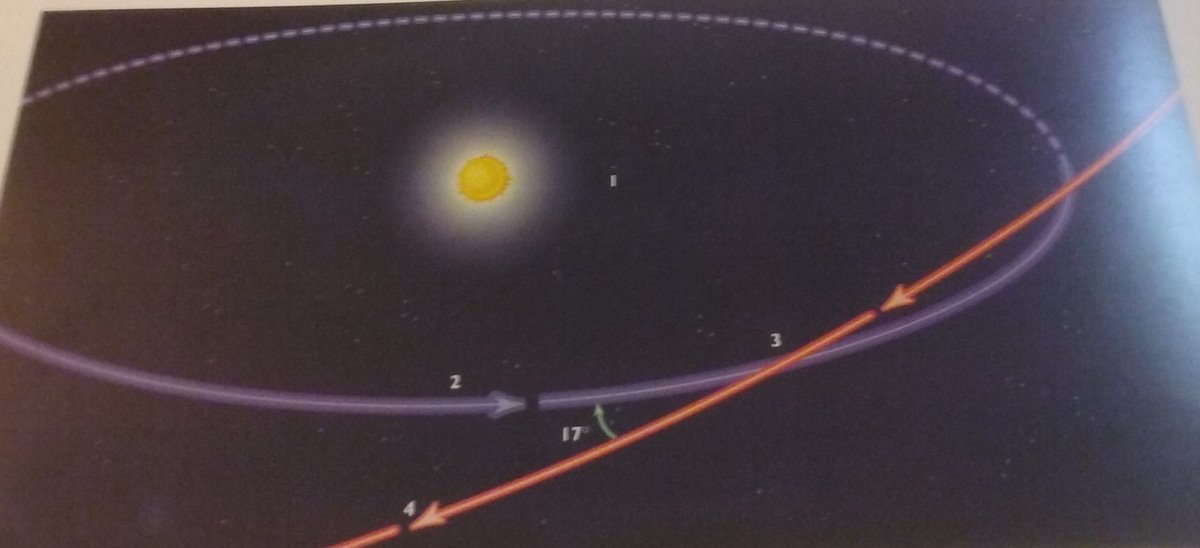 Thinking in terms of space-time, then, two stars which are in uniform velocity with respect to each other and also with respect to our frame of reference will appear to each other and also with respect to our frame of reference will appear as two straight worms, each at a small angle to the other. An observer on either star will regard himself as at rest, so he will take his own World line—the line in space-time along which his star lies—as the time axis. He will take his space axes as (in a certain sense) perpendicular to the time axis. It follows that observers on stars which move relative to one another will slice space-time into spacelike cross sections at different angles. This makes the relativity of simultaneity look very plausible and no longer paradoxical. Time travel could also be understood as simply a rotation of axes it in space-time. Henceforth, space by itself, and time by itself, are doomed to fade away into mere shadows, and only a kind of union of the two will preserve an independent reality. We must not forget that space-time is a space in the mathematical sense of the word space, not in the sense in which space is a continuant. #RyanPhillippe 8 of 10
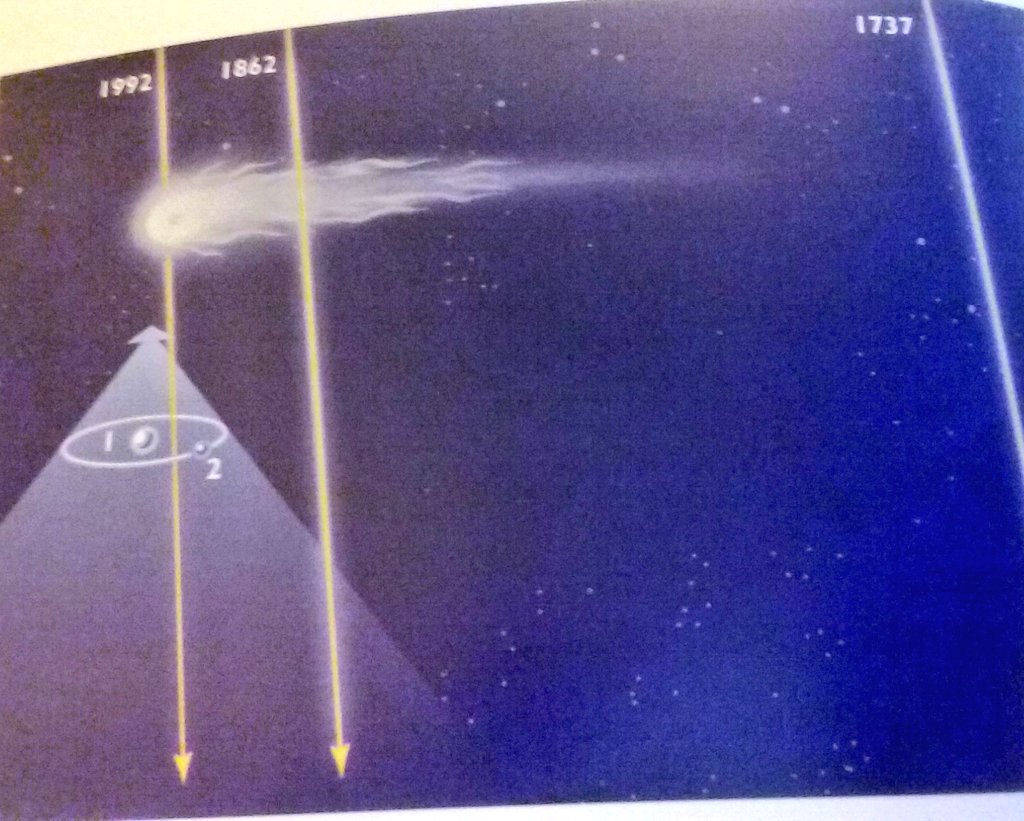 Thus, certain objectionable locutions are often used in popular expositions. For example, we sometimes hear it said that a light signal is propagated from one part of space-time to another. The correct way to put the matter is to say that the light signals lies (tenselessly) along a line between these two parts of space-time. Space-time is not a continuant and is not susceptible of change or of staying the same. The infinity of a series consists in the fact that it can never be completed. Hence, it is impossible for an infinite series of events to have passed away. The World cannot have had a beginning in time, there must have been an infinity of past events. If the World had begun at a certain time, all previous time would have been blank and there would be no reason that the World should have begun at the time it did rather than at some other time. There are always traces of the past, never the future, because it is part of the meaning of the word trace that traces are of earlier, not of later, events. The Universe will eventually return to its given state. The Universe will get more and more shuffled until we get the so-called heat death, in which everything is a featureless uniformity and will then become less and less disordered. #RyanPhillippe 9 of 10
 In the era in which, as we should put it, the Universe was getting less and less disordered, time would seem to run to us. (Thus, denizens of this era would still say that the Universe was getting more and more disordered.) Indeed, there would be an infinite sequence of cosmic eras, much as is supposed in cosmologies, except that time would seem to run in opposite ways in alternate eras. In a sufficiently large view there would be temporal symmetry in this Universe, though not on the scale of any single cosmic era. These celestial concepts and object are mysterious even now as, for the most part, they stride on stage in a completely unforeseeable way at absolutely random intervals. Observing these visitors, with orbits so long that we will never see them again in our lifetime, is a great privilege which connects us to the atavistic sensations of humanity’s first astronomers. #RyanPhillippe 10 of 10





 Randolph Harris II International Institute