

Time heightened their blessings, and their declining years were like a setting Sun, which gathers fresh splendor, as it gradually vanishes from our sight. Now it is necessarily true that is anything is to be seen or otherwise perceived—and not just “seen” or “perceived” (in discrediting quotation marks)—that thing must be presently available. (We ignore for present purposes the peripheral problems presented by very distant stars.) It is inconceivable that anyone should be able to see things which do not yet exist. Nevertheless, the correct conclusions to draw is not, as some have been inclined to think, that precognition is logically impossible. The correct conclusion is, rather, that is the phenomenon specified was to occur, it could not be conceived of as any sort of perception. The soul’s life has seasons of its own; periods not found in any calendar, times that years and months will not scan. The discussion reduces to absurdity not the notion of precognition as such but the assumption that such precognition can be assimilated to perception. Suppose one beings by thinking of precognition not as foreseeing but as foreknowing. Suppose then that one happens to be one of those who conceives of cognition on the model of perception. That is, of course, a misconception, but on with most ancient and distinguished pedigree. One relevant reason for insisting that this model is inapplicable is that whereas it is logically possible for me to know now that certain things happened in the past and that other things will happen in the future, it is not logically possible for me now to perceive anything, but what is not available to be perceived.

Thus, anyone who thinks precognition as a form of knowing and of knowing as a sort of perceiving will arrive by a rather longer route at exactly the same conclusions—that the future is present—as the person who beings by thinking of precognition as a type of perception. In either case the treatment indicated is essentially the same. Now, if that ambiguity is characteristic of the presentations of the individual soul, so also does it characterize the presentations of the soul World; what is real is also image, and the real and the imaginal are inseparable. The fact is most people who has tried to theorize about non-inferential precognition have made needless difficulties for themselves by making two mistakes. In the first place, they have tried to assimilate it to sense-perception, when they ought to have assimilated it to memory. And, secondly, they have tacitly assumed an extremely naïve prehensive analysis…[which] is simply nonsensical when applied to ostensible remembering or ostensible foreseeing. By prehensive analysis we mean believing, mistakenly, that for an occurrence to be remembered it must somehow be present. If you know Time as well as I do, you would not talk about wasting it. It is him. Time touches all things with destroying hand. We went down there. It was the most godforsaken slum I had ever seen. The very slabs of the sidewalks had floated away in the mud, buildings had collapsed into heaps of lumber, and the weeds were like fields of wheat. And there stood this classic raised cottage with its fresh white paint and panted garden. It has a high picket fence and gate, and a bell at the gate and we rand, and up on the porch, a tall woman opened the door and stood there in her stilettos with the light of the hall behind her. It was Aaliyah Haughton.
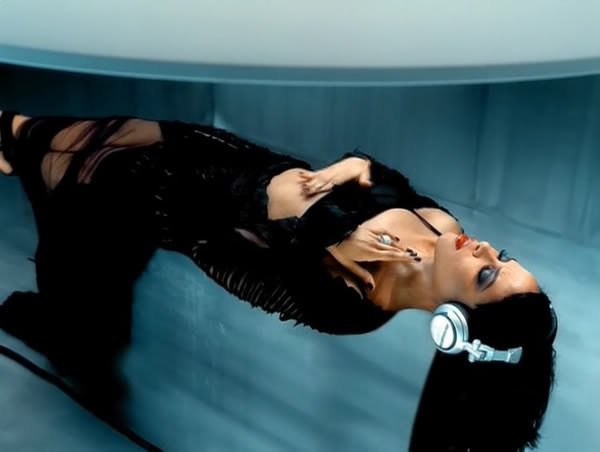
She knew who we were. It was astonishing. She complimented me on the Randolph Harris Phillippe Research and Development. She thanked Matthew for coming to Queen Akasha’s wake years and years ago. She was very pleasant to us, she had a sweet and loyal side and was helpful, generous, and compassionate, but she did not ask us in. She was quite fine, she said. She had not really disappeared at all, just become a solitary. I remember using every grain of second sight that I might possess when I looked at her, and a deep spell overtook me. It was the timbre of her voice, and the way that she walked, which set her apart. The center of gravity was not in her hips as it should have been in a human female. And her voice, it has a rich musical dimension to it. She had a soothing and appealing voice that conveyed the depths of her emotions and experiences. She used to thrill me at all times, the way she could phrase a note with a certain something in her voice no other entertainer could get. She has music in her soul and felt everything she did. As for the rest of her, she was a shadow up there. The suggestion is that precognition would be an exact analogue and complement of memory, but where memory operates backward, precognition would be remembering forward. Sometimes you may be a sense that someone is in danger and they may also get that sense, but it is so overwhelming that they may get of sitting in isolation hiding from fate, warning them may not do any good because they are tired of fate haunting them and may just want the natural course to take its place. Now, if someone remembers that he himself killed San Francisco, and provided that he really does remember and that he is not merely claiming, mistakenly or even dishonestly, to remember that he committed this crime, then it follows necessarily that he did kill San Francisco.

However, if he has done it to, then he has done it, and it must now be too late for anyone to intervene to save the victim. It is, notoriously, a tautology that what is done is done and cannot be undone. The past is unalterable. The temptation is to argue that the same must, in exactly the same sense, apply to the future. If I can truly preconize that I will kill San Francisco—provided that it really is a precognition and that I am not merely claiming mistakenly, or even dishonestly, to be preconizing—then it follows necessarily that I will kill San Francisco. The false step is to go onto urge that by parity of reasoning, since he will do it, then he will do it, and therefore it must now be too late for anyone to save San Francisco. For the conclusion does not follow. For he will kill San Francisco, we are entitled to infer that he will kill San Francisco and hence that no one will in fact save the bird. However, what we are not entitled to infer is that it must be too late to take any steps to save San Francisco, that no one could possibly do anything to help. It is one thing to know that some catastrophe will in fact occur; it is quite another to know that there is now nothing that anyone could do to prevent it, even if he wished. To know what he will in fact do it, it is sufficient to know that in fact will: tautology. It is not necessary also to know, what may very well not be the case, either that he would not have been able to do otherwise had he been going to want to or that no one else would have been able to stop him had they been so inclined.

This point is, of course, involved in much wider question of whether foreknowledge in the general sense must carry any such fatalist implications. The wider question is beyond the scope of this article, but the debate offered here is as applicable to the wider context a to this narrower one. The problem remains why it should be thought, as obviously it often is, that to establish the reality of noninferential precognition, even as an extremely weak and rare faculty, ought to raise fatalist anxieties in much more acute form than does, for instance, the present possibility of inferring the outcome of some not too distantly future election—on the basis of a knowledge of the present preferences, psychological traits, beliefs, and expressed voting intentions of the electors concerned. What is wrong with that? I will tell you what is wrong. One cannot physically defend oneself without being threatened with being locked away indefinitely. However, these critics, and there are many can choke, burn, beat and poison, kidnap, and torture, stalk and harass one particular individual—that is all right: “Have patience”… “The customs are entrenched” … “Things are getting better.” Well, I believe it is a crime for anyone who is being brutalized to continue to accept that brutality without doing something to defend himself. If that is how “Christian” philosophy is interpreted, if that is what Gandhian philosophy teaches, well, then, I will call them criminal philosophies. Moreover, these critics have elevated this tragic experience into a noble crusade. Indeed, even today, they have not permitted themselves to reject nor to feel remorse for this shameful episode. To show that human wishes, plans, and decisions do not affect what happens would indeed be to demonstrate a fatalist conclusion; for this is precisely what “fatalism” means. However, to show that someone can know without reference to that other person’s wishes and plans, what another person is going to do is, surely, not sufficient to show that those wishes and plans will not determine his course of actions.

The special anxiety felt in this case of precognition is just one more consequence of thinking in terms of a perceptual model. If in having a precognitive experience you were, as it were, seeing the future, then indeed it would be absurd to insist, once that experience has taken place, that there are any steps which anyone could take that could prevent the fulfillment of the precognition. This means that you cannot make an exception here, or an exception there. It means continuously, and with everyone and everything. The one or two things you hide being probably represent a stack. That is why you are hanging on to them. It is not just this annoying person you hate; they represent a whole stack of that energy to you. Eventually, everything is surrender that stands in the way of the Presence. The Presence is so obvious, so startling, so overwhelming, that there is no question about it. It is profound, total, all-encompassing, absolutely overwhelming, totally transforming, and completely unmistakable. When everything is surrendered that stands in the way, it is there, shinning brilliantly forth. Instead of viewing this as something in the future, own it now. It would be absurd so to insist because on this assumption of literal foreseeing, the event preconized would by now have been seen happening. However, once an event has happened there cannot be anything that anyone could possibly do to prevent it from happening. So do not fear, for I am with you; do not be dismayed, for I am your God. I will strengthen you and help you; I will uphold you with my righteous right hand.





 Randolph Harris II International Institute