

God created man with no sin in him in a World devoid of evil. What appears to be evil, when seen in isolation or in a too limited context, is a necessary element in a Universe which, viewed as a totality, is wholly good. From the viewpoint of God, who sees timelessly and as a whole the entire moving panorama of created history, the Universe is good: To thee there is no such thing as evil, and even in thy whole creation, taken as a whole, there is not. A Universe in which all the varied potentialities of being are realized and which contains as many different kinds of entity as are possible (lower as well as higher, lesser as well as greater), is a better Universe—one which more adequately expresses the infinite creativity of God—than would a Universe which contains only the highest type of created beings. There is thus an immense hierarchy of forms of created existence, and each creature, in its own proper place in the scheme of nature, is good and glorifies its Maker. Those that are lower in the scale of being are not on that account of evil; they are just different goods, contributing in their different ways to the perfection of the Universe.

Again, things that are transitory by nature, appearing then perishing within the ever-changing pattern of nature’s beauty, contribute, even by the passing, to the perfection of the created order. As a very minor sub-theme within this aesthetic conception, the notion of evil provides a contrast by which good shines the more brightly. The more we love, the more we can love. Love has a powerful anabolic effect. Love increases endorphins, which are life-enhancing hormones. You can live ten years longer with a source in your life that catalyzes the energy of love, and that energy of love heals and prolongs life. For instance, in the film Straight A’s, with Ryan Phillippe, Anna Paquin, an Luke Wilson, Ryan Phillippe plays a man named Scott, who is an outcast from the family and seeking redemption, and he returns home and throws everyone’s lives into disarray. However, he also helps to heal the family and himself by paying attention to each member in the family and bring out their core essence. The energy of love has the capacity to heal our bodies and others when conditions are appropriate.

The Universe must contain mutable and corruptible creatures, compounded of being and nonbeing. It is better that the Universe should include free beings who may, ad do, fall than it should omit them. If Scott had not had the free will to reenter the lives of his family and the ability to be himself, they may have all suffered an existence without try love, without passion. He gave them all a second chance at life. Thus, Scott brings even moral evil within the scope of his aesthetic conception of life. In doing so, he employs the further principle that as long as sin is exactly balanced by just punishment, it does not upset the moral harmony of the Universe. For instance, the little boy Charles, who is probably eight years old did not have a father in his life and lacked the confidence to give his speech in class. And the bell rang, and his drunk Uncle Scott showed up to school to have lunch with his nephew Charles. And Scott talks to young Charles’s friends and gives them all juice and money and says it is from his nephew Charles, which turns Charles from a reject to the coolest kid in school.
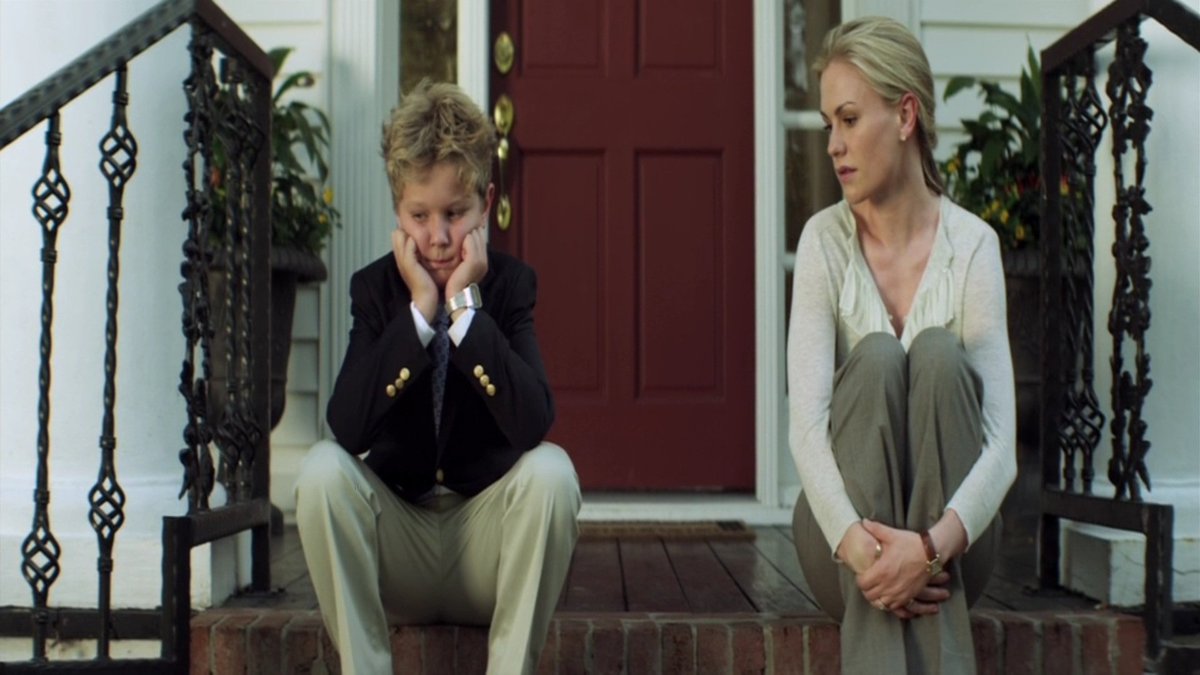
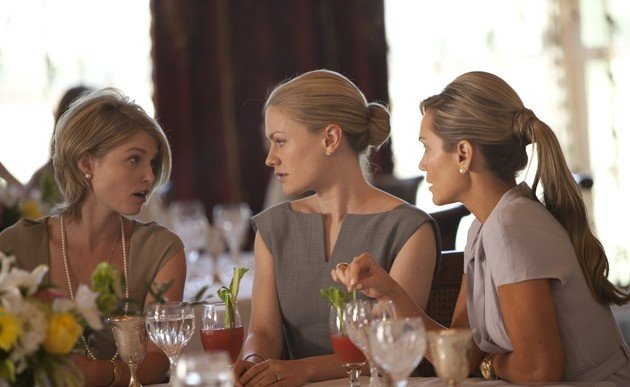
And Grace, Charles’s niece, her own father was not around, so Uncle Scott pours himself a drink and allows her to cut his hair and put ribbons in it. She cuts his scalp a little and it hurts him, he asks Grace if she sees and blood? Grace, says no, then, apologizes and tells his niece to keep styling his hair. Then he lets her shave his facial hair. Also, it is a very uptight community, and while Katherine (Anna Paquin) the matriarch of the family is at brunch, the women are gossiping and assume she is having an affair with William’s (Luke Wilson) brother Scott, which she is not, because Scott is never home. Scott and Katherine kind of play mother and father roles for this kids, while their father is away and it creates a platonic sense of balance in the house for Katherine, as she gets to enjoy having a man around the house and the masculine energy him brings makes her feel like she has a loving husband around and he also keeps the kids happy by playing father to them. Since there is happiness for those who do not sin, like William’s wife Katherine, the Universe is perfect. So, whatever a soul may choose, every beautiful and well-ordered in all its parts is the Universe whose Maker and Governor is God.
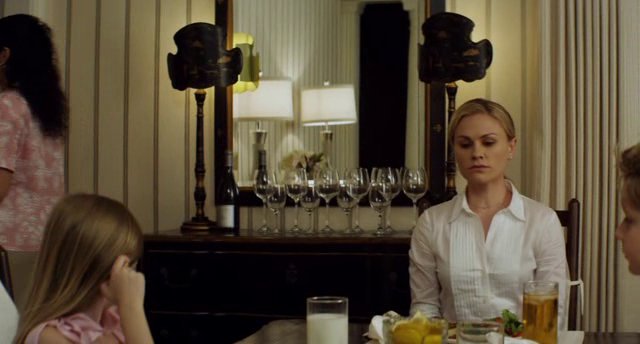
The film Straight A’s is a good film the shows how the Universe works because it is the best of all possible Worlds. It is the best, not because it contains no evil, but because Uncle Scott’s seemingly deviant nature is actually benevolent and gives everyone exactly what they need, and he may be a little reckless, but loves his family and only wishes the best for them. He does not show up to harm them nor take advantage, but to be around people he loves and admires and helps them balance their lives and gets the sense of family and the bonds that Scott has been longing for. Also, any other possible World would contain more evil. Had Scott not showed up when he did, perhaps Katherine would have gotten a divorce, Charles would have turned into a delinquent, and maybe Grace, with the lack of a male role model, would have later in life sought attention from men by being promiscuous. And perhaps without the family being there for Scott, some prostitute(s) would have hustled him out of his pension and left him for dead. The eternal possibilities of existence are individually present to the Divine Mind which, like an infallible calculating machine, surveys all possible combinations and selects the best, to which it then gives existence.
Man willfully misused his God-given freedom and fell into sin. Some men and women, will be redeemed by God’s grace, and others will be condemned to eternal punishment. In all this, God’s goodness and justice alike are manifested. However, this traditional theodicy has been criticized for its accounts of the origin and of the final disposition of moral evil. The origin of moral evil—it is urged that the notion of finitely perfect beings willfully falling into sin is self-contradictory and unintelligible. A truly perfect being, though free to sin, would in fact never do so. To attribute the origin of evil to the willful crime of a perfect being is this to asset the sheer contradiction that evil has created itself ex nihilo (Latin phrase meaning out of nothing). In the Film Straight A’s, Scott represents God, Katherine represents Eve, and William represents Adam. It is logically impossible for God to have created men such that they would always freely make right moral choices has been under attack under the name of “the free will defense.”

Defining a free action as one which flows from the nature of the agent, without eternal compulsion, recent writers have claimed that, without logical contradiction, God might initially have given men a nature which would always freely express itself in right actions. If God’s primary purpose for men is to evoke in them free and uncompelled love and trust in relation to himself, would this purpose be frustrated by his creating men so that they cannot do other than make this response? If God desires to save all his human creatures, but is unable to do so, he is limited in power. If, on the other hand, he does not desire the salvation of all, but has created some for damnation, he is limited in goodness. Before his fall, Adam was in a state of original righteousness, and that his first sin was the inexplicable turning of a wholly good being toward evil. The pre-Fall Adam was more like a child than a mature, responsible adult. Adam stood at the beginning of a long process of development. He had been created as a personal being in the “image” of God, but has yet to be brought into the finite “likeness” of God.

The fall of Adam is seen, not as disastrously transforming and totally ruining man’s situation, but rather as delaying and complicating his advance from the “image” of God, but had yet to be brought into the finite “likeness” of God. His fall is seen as disastrously transforming and totally ruining man’s situation, but rather as delaying and complicating his advance from the “image” to the “likeness” of his Maker. Thus, man is viewed as neither having fallen from so great a height of original righteousness, nor to so profound a depth of total depravity; rather, he fell in the early stages of his spiritual development and now, needs greater help than he would have otherwise required. So in the film, Straight A’s, Scott comes to this family to provide William the help he needs in keeping his family together and in return is provided with a place to stay and teaches and receives unconditional love. Therefore, the doctrine of eternal damnation must be real and by loving each other as God intended, this family was saved from unnecessary hardship and end up stronger because they acted out of love and not selfish greed, nor malicious intent.

The Winchester Mystery House
Come tour The Winchester Mystery House. The mansion’s common rooms are particularly gorgeous: notice the bay windows in leaded stained glass, the beautiful moldings, and the handsome chandeliers. https://winchestermysteryhouse.com/




 Randolph Harris II International Institute