
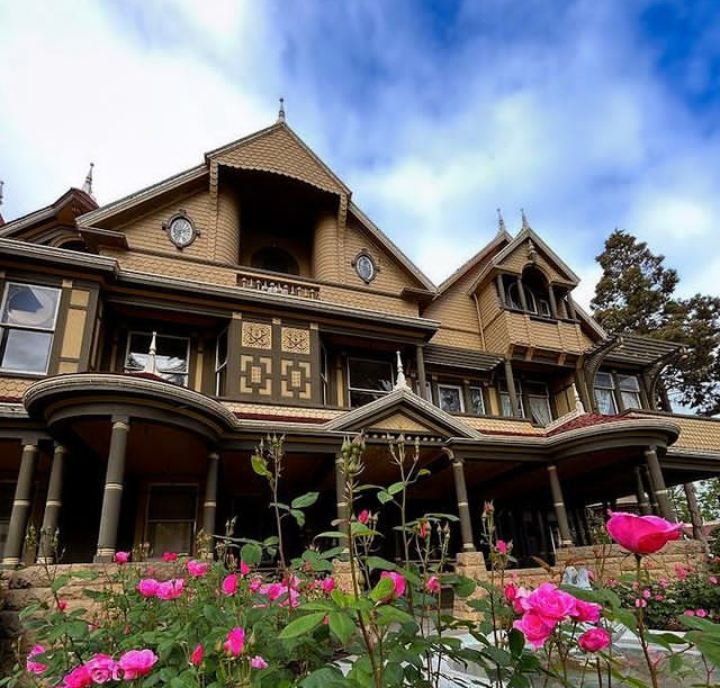
The Moon, it was full, but veiled behind the pink panoply of clouds, and so we were in a thin rosy and penetrable darkness, all around us the garden was alive and balmy and seeing to feed upon us with countless tiny mouths. The Fall of man is regarded as a virtually inevitable incident in man’s development as a child of God. If man is to enter into a genuinely personal relationship with his Maker, he must first experience some degree of freedom and autonomy. For only a relatively independent being can into a relationship of love and trust with his Creator, and man’s fall is seen as a fall into this independence. It is thus analogous to the phase of disobedience which signals a young child’s assertion of his own individuality. Man has never actually existed in a state of pre-Fall perfection. The Fall story is an analysis of man’s present condition of estrangement from God, but not an account of how he came to be in this condition. Using our knowledge of the early state of mankind, we may say that man, as he emerged from the lower forms of life, was endowed with only dim and rudimentary conceptions of his Maker. He existed at an epistemic distance from God, which allowed him to respond to modes of divine revelation that do not coerce the human mind but which preserves man’s relative autonomy.

Man’s existence at this epistemic distance from God constitutes his fallen estate, and from this flows the moral and spiritual cleavage and estrangement which is traditionally called the “original sin.” In this type of theodicy, God bears the ultimate responsibility for (in other words, is the necessary and knowing cause of) man’s existence as a fallen creature, although, on this own level, man remains individually responsible for his person choices and actions. Further, though the significance of this cannot be pursed here, the God who has thus created man as imperfect but perfectible has also entered into human life, in Christ, to bring about man’s redemption. The more I know of the World the more clearly I perceive that its top and bottom sin is cowardice, physically and morally alike. Some instances of suffering for example, those caused by 11 September 2001, and other war, injustice, and the many forms of man’s inhumanity to man—are traceable to human wrongdoing, and thus fall within the problem of moral evil. Cowards kick and abuse the person who is known to be a degree more timorous than themselves, as much as they tremble at the frown of anyone who has more courage.

It would seem to be strange that any human being should find more to wonder at in any one of the phenomena of Earth than in the Earth itself; or, should specially stand astonished at the might of Him who created the World, when each night brings into view a firmament studded with other Worlds (stars, planets, and Moon in the sky) each equally the work of His hands! However, other sources of pain, besides those generated by humans, such as aliments, Earthquake, flood, drought, and storm, are built into the structure of the World itself. Surely, it is urged, they make it incredible that the World who should have been designed by a Creator who is both perfectly good and infinitely powerful. God’s purpose for making the World must have been to produce a paradise for man to inhabit. He will naturally male it as safe and agreeable as he can and any remaining sources of danger or discomfort are evidence of either his want of care or want of means. However, nature was created free from defect, and it present perils and hardships are punishments which man has brought upon himself.

Great arching branches of the rain tree poured over us from the left. And the eagles sang loudly from the many crowing trees. There were no traffic sounds from the World beyond. The very air itself was blessed. It was so lovely. The purpose of the World is to be a place of soul-making, an environment in which the higher potentialities of human personality may develop. Many thinkers feel that human beings are content to operate at the level of lower animals—to simply have their physiological needs men, breathe, eat, have the sex, find shelter, avoid pain and seek pleasure. It is as if most humans are suspended halfway between animals and Heaven, a kind of wingless animal. Humans must also have the possibility of developing their intellectual and artistic powers to whatever extent accords with their personal characteristics and abilities. Nature is operating by its own laws and men must learn to obey it. If God had created the Word in which natural law were continuously adjusted for the avoidance of all pain, the more heroic human virtues would never be evoked. Indeed, a great part of our present moral language would be meaningless. In the old times when we did not believe in anything, when we believed in the only laws were aesthetic law, expecting further miracles. It was so accidentally beautiful.

If the Fall of man had not happened, there would be no such thing as “doing harm,” for on one would be able to suffer any kind of injury; there would be no such thing as “doing good,” for there would be no needs, deficiencies or occasions for improvement. There would also be no such thing as a crime or a benefaction, an act of generosity or of meanness, of kindness or unkindness and there would be no situations to which such qualities as courage, fortitude, loyalty, honesty, and the caring and protective aspects of love would be appropriate responses. There would thus be no occasions for moral choice. Such a World would be ill-designed to evoke many of the human traits which we value most highly. Indeed, it would seem that the rough edges of the World—its challenges, dangers, tasks, difficulties, and possibilities of real failure and loss—constitute a necessary element in an environment which is to call forth man’s finer qualities. My dad used to always tell me: “God already knows what you are capable of and why type of person you are, he just wants you to see for yourself.” It is all the same, so lovely, more lovely even than I remember before the Fall of man. Nothing has changed.





 Randolph Harris II International Institute