
The basic dictum to comprehend is that the body obeys the mind; therefore, the body tends to manifest what the mind believes. God sees the deepest dissembled thoughts, nay sees the thoughts before they be thought. The belief may be held consciously or unconsciously. The law of consciousness states: We are only subject to what we hold in mind. The only power that anything has over us is the power of belie that we give it. By power, in this context, that is the energy and the will to believe. Governments are not, and cannot be expected to become, repositories of truth: any such claims are impostures. A government that actually governs, rather than imposing some dream or other upon its subjects, will be guided, not by vision of truth, nor by the attempt to impose one project upon its subjects, but by the evolution of the society it rules. Social life constantly generates new situations: some activities decline, and new ones arise, a process which requires an adaptation of the rules of governing the society. However, the changes in the rules of government should always grow out of, rather than be imposed upon, the life which they regulate.
Further changes, by the government, on society should be made economically or else they may lose their effectiveness. Rules (i.e., the laws and procedures of institutions, the habits of personal behavior) are most useful when they are most familiar. Frequent changes are deplorable in that they give rise to feverish hopes and disappointments which encourage further dreams of taking over the resources of government. For instance, several big names could be removed from San Francisco, California USA schools, including President George Washington, Francis Scott Key (the man who wrote “The Star-Spangled Banner” which is a national song of pride for all Americans), Jefferson Elementary is on the list because these are names of people who owned enslaved Africans. “Our school names communicate something to our kids about who we want them to be what we value, so it is important,” school board president Matt Haney says. However, I think it is a mistake to ignore the accomplishments these people made, and that it would also cost a lot of time and money to further erode American history, and where will it stop, are they going to chip away at Mount Rushmore? The push to change the names on the schools seems to be an inflated claim made for no reason. That is the type of evil that takes false nobility, by garbing itself in the royal magnificence of good.
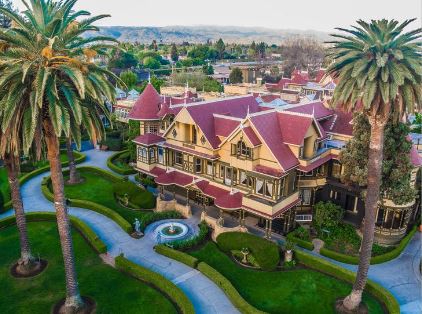
Furthermore, the attempt to rationalize these radical activities is not only incomplete, but also brings with it the threat of decline in the tradition; for once these rationalized principles have elicited, they constitute an ideology that is likely to turn into a set of inflexible dogmas. Back in the 1960s, a similar backlash swept the United States of America, and people started knocking down Victorian houses and buildings because they were a representation of Europe, and this created a lot of resentment in some. However, some could not afford to knock down their Victorian houses or buildings, so they would remove the turrets (witches caps), apply stucco to the exterior to hide hand crafted fish scale shingles and ornate flower moldings, broke off spires, took sledge hammers to the antique ceramic and porcelain urns that would decorate the porch and roof tops, bashed in the faces of the gargoyles and monarch, and threw rocks through the Tiffany’s art glass and leaded glass windows in an orgy of violent destruction of America’s European heritage. And now, in the 2000s, many people see pictures of the elegant Victorians, with the steeply pitched roofs with ridge cresting, the towers, beveled glass, pediments, lap siding, gables, cornice, turrets, corbels, finials, witches’ caps, cartouches, and ceramic faces of monarchs that would adorn the buildings and they mourn the loss of these historical hand crafted houses. #RyanPhillippe 3 of 6
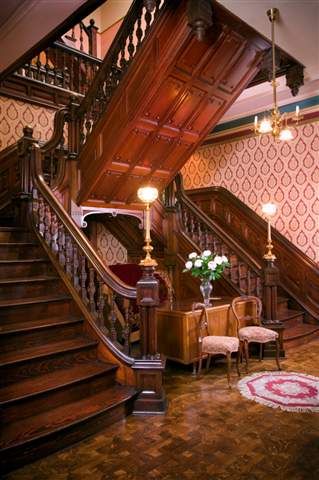
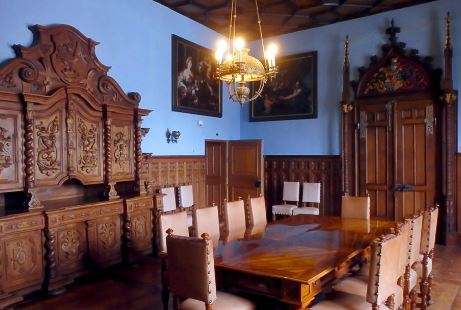
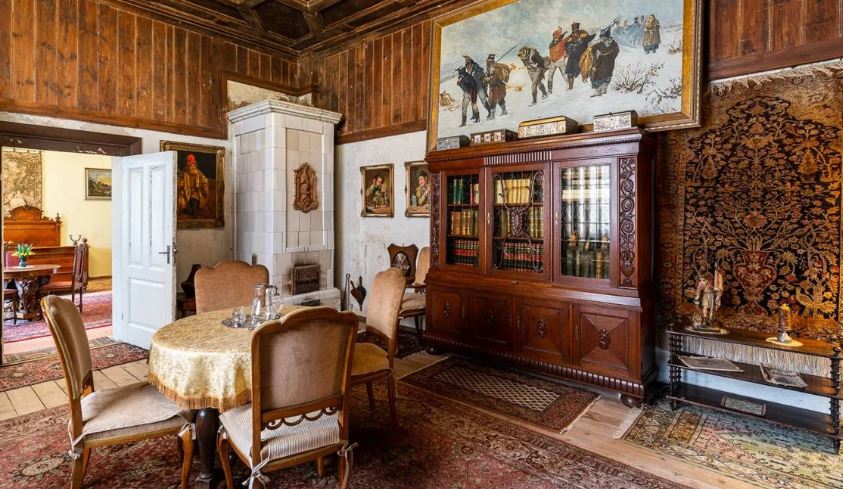
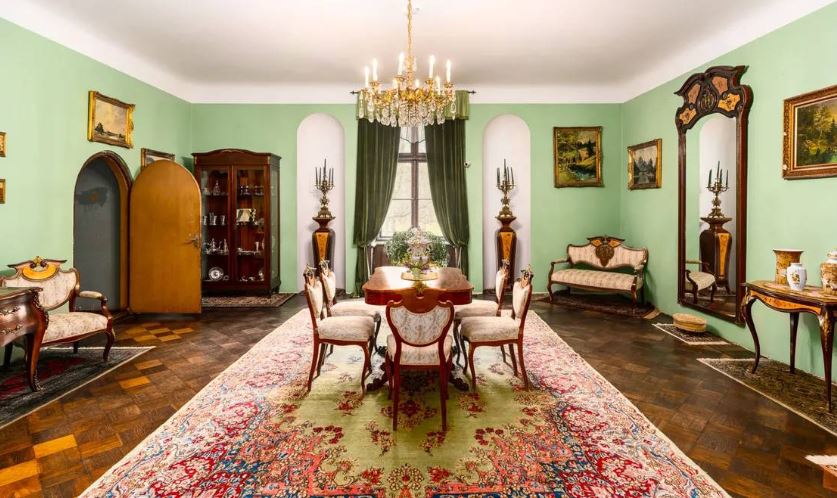
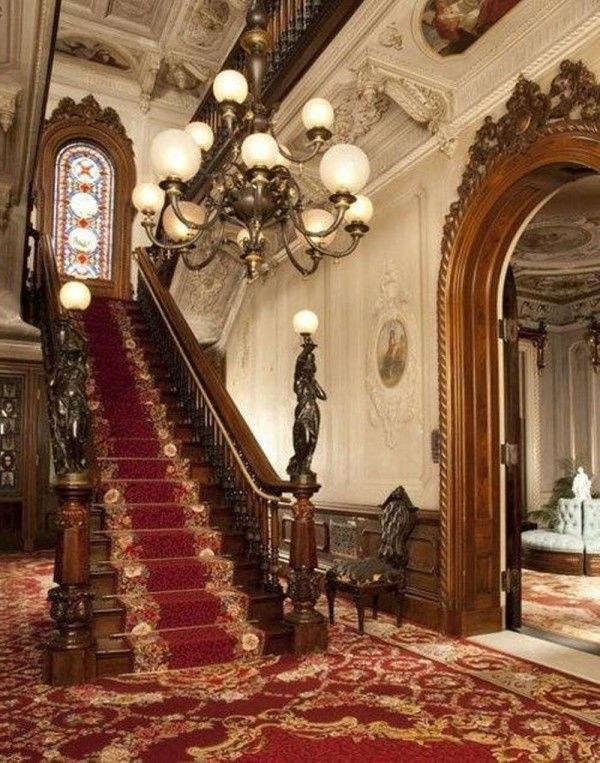
Not only that, but on the interior of these Victorian houses are features many architects cannot afford to replicate in modern construction. Victorian craftsmanship is marvelous, baffling, and eerily eccentric to say the least. Many people these houses, many of which are over 100-year-old have soul and take you back in time once you cross the threshold. Some of them have windows that cost more than many Americans make in a year. They have usual features like mahogany that can take you to three different sections and different levels of the house because they are built in a “Y” shape. There are porcelain sinks and crystal chandeliers import from Europe. There are also many rooms, some of them are small, to make the house intimate and private and the kitchen was enclosed to keep the smell of food from seeping into the drawing room, or in the bedroom and stinking up your clothes. And there are walls made of the finest oak and mahogany, doors that are solid wood and heavy, which have detailed door hinges, and crystal doorknobs, there are building cabinets for fine China, dumb waiters which can transport food to different levels in the house, pie coolers built in the walls, and the expensive wall coverings, some which were rumored to have crushed diamonds in them.
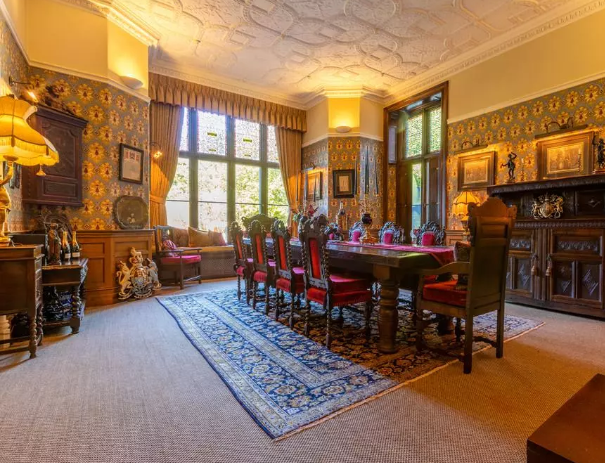
It always breaks my heart when I see someone has gone into a Victorian and knocked down masonry walls, or replaces walls that were made from old wooden ships with plaster with sheetrock. Or removed the chandeliers and replaced them with pod lights and 1970s retro modern light fixtures made out of paper and plastic. Also, the claw foot oversized bath rubs were great and the showers with the exposed pipes, along with the wall mounted toilets that you had to pull a chain to flush. One woman, who always hated Victorians houses and thought they were reprehensible toured one with me that was authentic and fell in love with it and the fine details and said to me, “Now I see why you like Victorians so much!” When in the past she had tried to blame some of the hardships I was facing in life on Victorian architecture and swore up and down that the houses were evil. My point is, we should preserve our history and stripping it away and eroding things only hurts people and causes more harm, instead we should educate them about why certain actions are wrong and also talk about the benefits that came from some of these people who may not have known what they were doing at the time.
Not only that, but where does eroding our history stop? There are also several streets and buildings and schools named after Civil Rights leader Martin Luther King, and he was arrested 30 times, and some of the arrested were allegedly unrelated to civil rights movements. Many historical monuments are also dedicated to Caesar Chavez, but his parents on both sizes of his family were undocumented citizens, which means that they were in the United States unlawfully, and his father Librado Chavez piddled away the family business and did not pay his taxes, which caused the house to be foreclosed on and the family moved to California. Librado Chavez was said to be “Lazy and the family scrapped by as farm hands.” And even Caesar Chavez studied Adolph Hilter, Machiavelli, and Gandhi. Therefore, it is important for us to not only look at the negative aspects of people, but to also learn from them, and not just demonize them. Conservatives regard tradition as the heritage of skill and attainment on which our present achievements must be founded. Many traditional was of acting are no doubt habitual and unthinking and thereby we economize our efforts. What is more important, however, is that traditions are fertile and adaptable. All human achievements and traditions have been made (and sustained) in the face of great difficulties: authorities exist to guard such achievements and traditions against the continual threat of human folly, laziness, blindness, and stupidity, and grandiose political projects promising the ultimate arrival of Heaven on Earth. #RyanPhillippe 6 of 6




 Randolph Harris II International Institute