

They are starting to wonder why it has been so long since he has gone home. Alone—cut off from all the World and all things—I stand there. I want to lie on the floor face down in the manner of a priest at his ordination. I want to be a priest. I want to consecrate the host! I want this so badly I ache for it. Although people in the World may seem stingy and hostile to other people, there is no reason why we should buy into this paradigm. When we buy into it, we make that a reality in our own life. As we experience the letting go of desires, we begin to see that what we have chosen will come into our life almost magically. What we hold in our minds tends to manifest. As was reported before, during times of supposed high unemployment, some people are not only employed, but have two or three jobs. This was a shockingly new way of looking at the World when it was first encountered. There was the hope that it was true, but also a skepticism that said, “This just is not possible on a pragmatic level.” We never can win freedom and justice and equality until we are doing something for ourselves.

The Pope is still smiling. “If You were not a saint, I would laugh at you. Exactly when are you expecting these Technology-saint, by the way?” he says. I am happy. He looks like the old Wojytla—the Pope who still went skiing until he was seventy-three. My visit has been worth it. And after all, we cannot all be Padre Pio or Mother Teresa. I am Saint Phillippe. “I will say hello for you to Padre Pio,” I whisper. However, the Pope is dozing. He has chuckled and drifted off. So much for my mystical import. I have put him to sleep. However, what did I expect, especially of the Pope? He works so hard. He suffers. He thinks. He has already traveled to Asia and Eastern Europe this year, and he will soon be going to Toronto and Guatemala and Mexico. I do not know how he can do these things. I place my hand on his forehead. Then I leave. The impossible becomes possible as soon as we are totally surrendered. This is because wanting blocks receiving it and results in a fear of not getting it. The energy of desire is, in essence, a denial that what we want is ours for the asking.
A little country cemetery on the edge of a cypress swamp, some of the tombs still had votive oil lamps places on their marble ledges; others contained the ceramic funeral vases that held balsamic fragrances. Whatever happened here had happened very quickly. It reminded Mr. Spinola of Pompeii, except that instead of raining ash on the tombs had been buried in dirt. Or, ore, precisely, mud. Judging from the grade of the Vatican hill at this precise spot, mud slides must have been common in ancient times. From what Mr. Spinola could tell, sometime in the second century a huge mud slide had enveloped this whole sector, covering up tombs and making them impossible to unearth. Abandoning a burial place would have constituted a rare and dramatic event, because funerary rights of relatives of the dead were enshrined in Roman law. However, clearly this lower stratum of tombs had been untouched since the slide. With a dozen or more old marble graves, most names long ago effaces, and one of these raised rectangular tombs black with soot from a recent fire, and the whole surrounded by a small iron fence and four immense oak trees, the kind that weighted down their dipping branches, and the sky the perfect color of lilacs, and the heat of the Summer sweet and caressing.
Then a marble inscription had been found in the landfill near the airport, and Italy’s Nucleo Tutela Partimoni Artistico—the archaeology police—suspected it had come from the Vatican’s excavation site. The Italian police must have altered the Vatican police, and at that point the problem began to spin out of control. It was bad enough that the Vatican Museums director had to get involved, and now it was in the papers. There were classic columbaria, covered huts with a series of wall niches, each with an urn that still held the cremated remains of the deceased. Mr. Spinola watched as his assistants carefully brushed dirt from a small stucco sculpture in one of the niches and revealed, incredibly, a three-headed dog and two male figures. It was a mythological scene that would have been known to every Roman of the time: the Trojan hero Aeneas stealing past Cerberus, the hound of Hades, watchdog of the underworld. The team then uncovered a mosaic pavement with the drunken Dionysius leaning on a satyr, a perfectly preserved miniature bust of a Roman matron and her high coiffure, numerous frescoes, biographical inscriptions and, in some cases, entire skeletons accompanied only by the trinkets and jewelry of the funeral ceremony.
I paced, having just risen from my secret hiding place, and I mourned bitterly for another Blood Driver who had perished in this very cemetery, on the aforementioned blackened grave, in an immense fire, and of her own will, leaving us, without the slightest warning. And then Mr. Spinola’s crew made a find that can only be described as serendipitous. The area involved, Tomb VIII, was the largest family burial chamber that had been unearthed, and it had already yielded six marble sarcophagi. The tombs emerged slowly as the dirt was scaled down centimeter by centimeter, revealing spectacular sculpted designs. One bore a fine relief of the Calydonian boar hunt, peopled with Greek heroes. Another, the sarcophagus of a noblewoman, was decorated with an unfinished portrait framed by winged victories; below her, two cupids rowed a boat between Tellus, goddess of the Earth, and Okeanos, god of the sea. However, the groups attention was now focused on the last tomb that had come to light, an oval sarcophagus whose lid was decorated with leaping dolphins.
The inscription told them that the sarcophagus held the remains of a young Roman knight who had died at the age of seventeen. As the team sifted through the dirt, and uncovered the rest of the sarcophagus with small trowels and brushes, two figures emerged on the other end. One was a bearded philosopher, not unusual of Roman tombs. The other was a woman who held her hands up in a pose of prayer. An evil spirit that had been haunting Tomb VIII since it was unearthed. For centuries church leaders have argued about the importance of what comes out of the ground in Rome and how much should be preserved, enshrined or ignored. The ghost had only grown stronger and meaner, and had actually caused the death of a mortal dearest to Mr. Quinn—his great Aunt Queen, age of eight-five, by causing the beautiful lady to fall. I had needed Merrick Mayfair to exorcise this evil spirit forever. Just before Christmas the tomb of the Price of the Apostles had been found. The actual relics of Saint Peter, and despite the discovery of human bones, it is impossible to prove with certainty that they belong to the apostle.
Goblin was the name of the ghost haunting Tomb VIII, and as Merrick Mayfair had been both a scholar and sorceress before she sought out the Dark Blood, I figured she would have the strength required to get rid of him. Well, she came, and she solved the riddle of Goblin, and, building a high altar of coal and wood which she set ablaze, she not only burnt the evil one but went into the flames with it. The spirit was gone, and so was Merrick Mayfair. Of course I tried to snatch her back from the fire, but her soul had taken flight, and no amount of my blood poured on her burnt remains could conceivably revive her. It did seem to me as I walked back, back, back and forth, kicking at the graveyard dust, that immortals who think they want the Dark Blood perish infinitely more easily than those of us who never asked for it. Perhaps the anger of the rape carries us through for centuries. Overseeing it all was Monsignor Ludwig Kaas, a German who was serving as the administrator of Saint Peter’s Basilica. Several feet beneath the modern basilica lay the floor of the original level as a staging area. Keep your soul steadfastly related to God. There must be the agonizing grip of God’s hand on you.
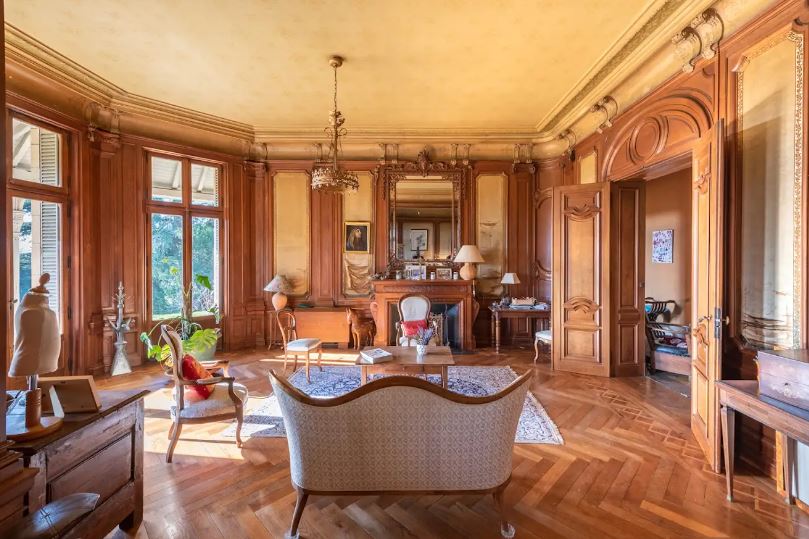
The Winchester Mystery House
There are many true ghost stories, hauntings, unexplained mysteries, and paranormal phenomenon that have taken place throughout the history of The Winchester Mystery House. https://winchestermysteryhouse.com/




 Randolph Harris II International Institute