
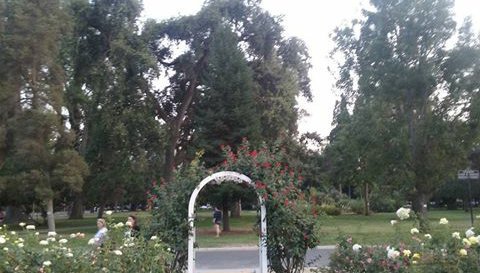
 Not long ago, on a beautiful late Summer day, early autumn kind of day, I was strolling through the garden in a state of wonder and confusion about love. The weather has just turned, past events were dreams in my memory. The water drops on the green leaves turned into tears of my missing for you. When I think of you, I remember the many beautiful dreams we wove together. I cannot hide my dear missing for you. You are far away from me, but your voice sounds near my ears, I miss you in my heart, every day, and every night of departure. I had taken my favourite path, and went across L and 16th street, as I passed the flowers vendors and bakery stands, tears of departure comfort the pains in my heart. In my heart there is a secret. It is contained in only four words—I miss you sorely. #RyanPhillippe 1 of 14
 I cherish your true love in my heart, and I do not care if we are together, as long as we love each other. Love is forgiving, nurturing, and supportive. It does not proceed from the mind; rather, it emanates from the heart. Love focuses on the essence of a situation, not the details. It deals with the comprehensive view, not the particulars. As perception is replaced with vision, love takes no position and see the intrinsic value and lovability of all that exists. May we love each other forever. Each star is bright and each flower is fragrant, and whenever I remember you, I remember your love for me. This aspect of love differentiates in each individual. There is the ability to see things in the abstract, to conceptualize, to be objective, and to make rapid and correct decisions. Love and reason have enormous utility in problem solving. Science, philosophy, medicine, and logic are expression of this level of love. #RyanPhillippe 2 of 14
 What is the basic feeling that I have been ignoring? Outside, the new moon shines bright all around, but the lonely lamp on my desk is dim. How I wish this small piece of paper would take to you my restless yearning. How tranquil! How quiet! What silvery moonlight! Where are you, my dear? When can we sit together by the window, enjoying this quiet tranquil evening? To my surprise, the basic feeling that had came up was grief. The heartache was associated with not wanting to be separated from someone I dearly love. Faraway mountains cannot cover the afterglow just as I cannot hide my dear missing for you. Trickling rain during the Summer express my endless longing. Oh, the raindrops of my yearning, will they fall on your beautiful golden hair and moisten your heart? The fear of loss of our relationship has weakened me due to your absence. #RyanPhillippe 3 of 14
 Your voice still lingers in my heart like the murmur of the seawater wafting in the silence of an audience of a pine forest. Individual human interaction produces cardiovascular changes that can be rather easily monitored. Such changes range from minimally significant heart reactions in healthy people to major heart reactions that can even be deadly. These clinical observations offer an important and different perspective on the relationship between companionship and health. In the macroscopic, statistical overview, the lack of human contact seemed to be the crucial force leading to premature death. However, both the presence and the absence of human contact can be critical forces leading to disease and premature death. An understanding of the relationship between health and companionship must include a recognition of the potentially devastating impact of terribly unpleasant human interactions. The mere presence of another human being is obviously not an unmitigated blessing for one’s health, for unpleasant human interactions may even be physically destructive. #RyanPhillippe 4 of 14
 In this regard, the heart of human companionship clearly involves something that goes far beyond the mere presence of other human beings. I always say in the mornings, to myself, that the hard weather will be over in the end and the way of melancholy will not be too long. A long night brings back the past happenings that seem to have happened yesterday, which makes my heart no longer as tender. Who will gloss over my loneliness and I will say no more after the delta breeze passes by. The idea of being alone, all alone, in the face of danger terrifies children and adults alike. We all seek human reassurance. The child frightened by the darkness of night reflexively caries out to its parents for reassurance and comfort. There is a quality about human companionship in life-threatening situations that helps accentuate its biological and psychological power. #RyanPhillippe 5 of 14
 Throughout the first nightmarish 1941 Winter of the siege of Leningrad, Russia SFSR, Soviet Union, in World War II, when the last road to the city was severed, the city’s radio station remained on the air to reassure the people that they were not alone. When the radio announcers were too weak or cold to play music or recite the news, they would then on a metronome which monotonously clicked back and forth, echoing through loudspeakers on the streets to reassure the people they were not alone. When the seeds of love is sown into our hearts, you have to water it with loyalty and I have to cultivate it with sincerity, and then the fruit it bears is sure to be happiness. The clash of souls touches off the flashes over the Winter bougainvillea and we walk hand and hand into the World youth. #RyanPhillippe 6 of 14
 Apart from physical torture and death, solitary confinement has long been recognized as one of the most dreaded of human experiences. And those who endure unusually harsh prison environments frequently credit their survival to the strength they were able to derive from their fellow humans. In interviews with survivors of concentration camps, during World War II, many of the survivors listed the strength they were able to derive from their fellow prisoners as the most significant factor in their will to live. One the other hand, many victims who were suddenly torn away from their loved ones succumbed to a syndrome that was labeled “musselmann” by their fellow inmates. Unable to relate to others in the camps, they often gave way to profound despair, lost hope, and perished. #RyanPhillippe 7 of 14
 However, while almost everyone would agree that human relationships are critical to survival, it is not at all clear just what it is about the presence of another loving human being that is so important, especially in life-threatening environments. It is this lack of clarity about a phenomenon universally recognized as important that has lead us to reexamine two environments in which sudden death is an ever present danger: coronary care units and a hospital shock-trauma unit. We studied the effects of human contact in an especially intimate way by monitoring the hearts of patients whose lives were in mortal peril. Unlike other life-threatening environments, these units held patients who were totally helpless; they could not seek out other human beings, but were instead forced by their physical weakness to wait until someone came to their bedside, and it is clear that human interactions can alter heart rhythm. Since cardiac arrhythmias (improper beating of the heart, whether irregular, too fast, or too slow) in the wake of a heart attack are the primary cause of sudden death, understanding the effects of human contact in these environments is vitally important. #RyanPhillippe 8 of 14
 Coronary care units are specialized hospital areas that have gradually evolved over the past century. These units were developed when it was recognized that many cardiac patients, who might have been saved with appropriate medical care, were needlessly drying after suffering heart attacks. Of special concern was that many of these patients were already in hospitals and had appeared well on the road to recovery. Not infrequently it was noted that nurses would check on these patients, report that they looked quite healthy, and then return a few minutes later to find them dead. He looked healthy and strong and was talking, so I turned my back for a moment. He was recovering. Next thing I knew he was grasping for air and died. And every night, I lay in my bed alone fearing I could be next and like there is no one I can trust nor depend on. #RyanPhillippe 9 of 14
 These sudden, unobserved hospital deaths led to the realization that these patients ought to be placed in special units and watched constantly for a few days after a heart attack. If recurrent cardiac complications did occur during this period, then the medical personnel could at least take immediate measure to aid the patient. One of the major sources of complications stemmed from the fact that there is a marked rise in the incidence of abnormal heartbeats in the first 24 to 72 hours after a heart attack. These abnormal beats have the potential for seriously disrupting the normal rhythm of the heart and can lead to ventricular fibrillation (a life-threatening heart rhythm that results in a rapid, inadequate heartbeat) and sudden death. It is the occurrence of these abnormal beat which makes it imperative that a person is taken to a hospital as soon as possible after a heart attack. During this crucial period, even if a patient feels better, his life can be in mortal peril. #RyanPhillippe 10 of 14
 The medical effectiveness of the coronary care personnel to recognize cardiac problems before they developed into major difficulties. These coronary care units were convincingly established when it was shown that the incidence of sudden death dropped by 45 to 50 percent in hospitals that were equipped with these facilities and had specially trained staff, who have medications developed so that the medical staff could quickly give medications needed to help suppress the incidence of cardiac arrhythmias as well as promptly inject any other necessary medications. Special equipment for delivering emergency treatment should the patient’s heart suddenly “arrest” (this is, stop beating) was also developed. However, the single most important development was the introduction of specialized training courses—given not only to cardiologist but to all the medical staff, including resident physicians and nurses—enabling all coronary care personnel to recognize cardiac problems and save lives. #RyanPhillippe 11 of 14
 Because handling emotional crises is very a difficult problem for most people, some details were required. There are several techniques to help move through emotional disaster much more quickly, and with a better resolution, than allowing it to run out on its own. It is alright to consciously disassemble and let go of emotions in bits and pieces. The emotion can be reduced in intensity by sharing the feeling with close friends or mentors. By merely expressing the feeling, some of the energy behind it is reduced. It is also alright in this circumstance consciously to utilize escape mechanisms, such as watching a play in the theatre, going to the park for a walk, or taking a nap, playing with your pet to get some distance from the upsetting situation. When the feeling has been reduced in its sheer quantity and intensity, it is best to start letting go of small aspects of the situation rather than the overall situation and the accompanying emotion itself. #RyanPhillippe 12 of 14
 To state this in a differ way, a man loses his job after many years with a company, and now is in an overwhelm of despair. By utilizing the mechanisms already described, some of the emotion can be reduced. What he can look at, then, are some of the small trivia about the job. For instance, could he let go of wanting to have lunch on Thursdays where he always had lunch (frequently paying the bill and leaving a large tip)? Could he let go of wanting to ride up the same elevator? Could he let go of the attachment to his desk? Could he let go of the attachment to the secretary and her friendliness toward him? Could he let go of the attachment to his computer? Could he let go of seeing the same boss every day? Could he let go of this feeling of familiarity with the background noises in the office? Long parting, but the time for interview had come; before the judgment-seat of God, the last and second time. #RyanPhillippe 13 of 14
 The process of surrendering these smaller aspects of losing a job, which may seem trivial, is that it gets the mind into the mode of releasing problems, and this take courage; the negative feelings have been acknowledged and worked through; consequently, they have lost their charge. The light of love shines on our daily life as the lightning turns the mediocre gullies and lush forests into legendary tree canopies. Your love-lit eyes are like sparkling stars, dispelling loneliness from my heart. These fleshless lover met, a Heaven in a gaze, a Heaven of Heavens, the privilege on one another’s eyes. No lifetime set on them, appareled as the new unborn, expect they had beheld, born everlasting now. A paradise, the host, a cherubim and seraphim the most familiar guest. This being comfort, then, that other kind was pain. Some think it service in the place where we, with late, celestial face, please God, shall ascertain! (www.thedeedle.com) #RyanPhillippe 14 of 14





 Randolph Harris II International Institute