
 Travel is fatal to prejudice, bigotry and narrow-mindedness. The path to embracing other cultures has to traverse the imagination. A high need for closure hurts creativity. I am addicted to enlightening moments when I get to see a new meaning in something. However, it may be true that every technique of wit shows the tendency to economize in expression, but the relationship is not reversible. Indeed, we have not yet given consideration to one of the largest groups into which the techniques of wit may be divided. In this we perhaps been influenced by the low estimate in which this form of wit is held It embraces those jokes which are commonly called “puns.” These are generally counted as the lowest form of wit, perhaps because they are “cheapest” and can be formed with the least effort. They really make the least demands on the executive functions of the brain and can be formed with the least effort. #RyanPhillippe 1 of 10
 Puns really make the least demand on the technique of expression just as the actual play on words makes the most. Where in the latter, bother meanings find expression in the identical word, and hence usually in a word used only once, in the pun it is enough if two words for both meanings resemble each other through some slight similarity in structure, in rhythmic consonance, in the community of several vowels, or in some other manner. The following examples illustrate these points: We are now fallen into that critical age where in censores liberorum are become censores librorum: Lectores, Lictores. Professor Cromwell says that Rome in exchanging her religion changed from Jupiter to Jew Peter. It is related that some students, wishingto play a trick on Agassiz, the great naturalist, constructed an insect made up of parts take from different bugs and sent it to him with the question, “What kind of a bug is this? His answer was “Humbug.” #RyanPhillippe 2 of 10
 I have given much attention to this form of wit and insist upon making a sharp distinction between it and the “play on words.” A pun is a bad play on words, for it does not play with the word as a word, but merely as a sound. The play on words, however, transfers itself from the sound of the word into the word itself. There are persons who have the ability, when they are in a high-spirited mood, to reply with a pun for a long time to every sentence addressed to them. At a gather, someone spoke disparagingly of a certain film called “Popstar,” and wound up by saying, “It was so poor that the first act had to be rewritten.” “And now it is rerotten,” added the punster of the gathering. What frustrated me was that the previous research in my field was not able to generalize to help with real complex problems. Think of features as common associations that include but go beyond an object’s functions—physical properties, like what occasion it is usually used for, the place it is usually used, whether it moves or not, and what energy is involved in its use. #RyanPhillippe 3 of 10
 It is a “bath” joke treating of the dread which some are said to have for bathing. We demand no patent of nobility for our examples, not do we make inquiries about their origin. The only qualifications we require are that they should make us laugh and serve our theoretical interest. It is to be remarked that both these demands are satisfied best by jokes. Two guys meet near a bathing establishment. “Have you taken a bath?” asked one. “How is that?” replies the other. “Is one missing?” When one laughs very heartily about a joke, he is not in the best mood to investigate its technique. It is for this reason that some difficulties are experienced in delving into their analyses. That is a comic misunderstanding is the thought that comes to us. Yes, but how about the technique of this joke? Obviously, the technique lies in the double meaning of the word take. In the first case, it is the verb in its full meaning. It is, therefore, a case where the same word is take now in the “full” and now in the empty sense. And if we replace the expression “take a bath” by the simpler equivalent “bathed” the wit disappears. The answer is no longer fitting. The joke, therefore, lies in the expression “take a bath.” #RyanPhillippe 4 of 10
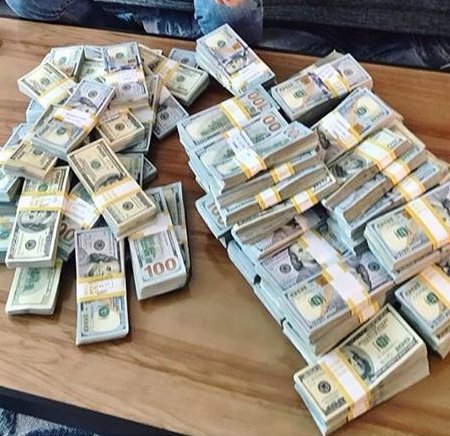 Once more, we shall resort to a joke in which, the essence is universally human, especially in this economy. In his distress, a needy man borrowed seven hundred and twenty-five dollars from a wealthy acquaintance. The same day, he was discovered by his creditor in restaurant eating a dish of salmon with mayonnaise. The creditor reproached him in these words: “You borrow money from me and then order salmon with mayonnaise. Is that what you needed the money for?” “I do not understand you,” responded the debtor, “when I have no money I cannot eat salmon with mayonnaise. When I have money, I must not eat it. Well then, when shall I ever eat salmon with mayonnaise?” Here, we no longer discover any double meaning. Even the repetition of the words “salmon with mayonnaise” cannot contain the technique of the witticism, as it is not the manifold application of the same material, but an actual, identical repetition required by context. #RyanPhillippe 5 of 10
 What else worthy of notice can be said about the answer of the poor man? It may be supposed that the striking thing about it is its logical character, but, as a matter of fact, the answer is illogical. The debtor endeavors to justify himself for spending the borrowed on luxuries and asks, with some semblance of right, when he is to be allowed to eat salmon. However, this is not the correct answer. The creditor does not blame him for eating salmon on the day that he borrowed the money, but reminds him that in his condition, he has no right to think of such luxuries at all. The poor bon vivant disregards this only possible meaning of the reproach, centers his answers on another point and acts as if he did not understand the reproach. It is possible that the technique of this joke lies in this deviation of the answer from the senses of reproach? It does not depend upon words, but upon the mental trend, and to abrogate it we are not helped by substitution so long as the sense of the answer is adhered to. #RyanPhillippe 6 of 10
 In adapting puzzle-solving insights to real-World challenges, most inventions are unlike toy insight problems in one key aspect. Inventors do not generally have in front of them all of the objections they need for a solution. With the whole World at their disposal, they have to sniff the right answer out of an overwhelming number of possibilities. The reduction is possible only when we change the mental trend and permit the gastronomist to answer directly to the reproach which he eluded in the conception of the joke. The reduced conception would then be: “What I like I cannot deny myself, and it is all the same to me where I get the money for it. Here you have my explanation as to why I happened to be eating salmon with mayonnaise today just after you loaned me some money.” However, that would not be witticism but a cynicism. Most poor people would only borrow money to maintain things they have and try to invest in things for their new business, like books and computer, with not many options left, possibly due to injury and bad reputation, they are trying something instead of just sitting there like a sloth. #RyanPhillippe 7 of 10
 Unlike the case of “salmon and mayonnaise”, the problem with borrowing money to start a business, is it may never take off. And due to competition, people may slander you and oppress you. Some people have worked a decade just to make themselves more marketable, but when your competitors are desperate and harassing and physically attacking you, it can make it nearly impossible to move forward, and while some need a break, they work through the pain and keep going, and to them, a luxury meal might be McDonalds, a pizza, a hamburger, or a cake because every dime they spend has to be accounted for, and may already not be able to afford the lifestyle they are living, but the load helps pay for materials and WiFi and so forth. Being good people, after the terms are up, and the loan repayments come due, with interest, they will in good faith make payments, which will mean that they have to cut back on necessities if their business does not become a success or they are not able to generate more revenue, so it can be a stressful and depressing situation for young people who are trying to make it the best way they can. #RyanPhillippe 8 of 10
 Some people get paid to clown around at work and make life harder on others, while the people they target often wonder where their next meal will come from. And each year the cost of living goes up. For example, the price of energy might double and the cost of food items might go up a few dollars per item. While these increases seem meager to people with high paying jobs and houses in the hills, for people with low incomes it can be crippling. It will be instructive to compare this joke with one which is closely allied to it in meaning. A man who was addicted to drink supported himself in a small city by private teaching. His vice gradually became known and he lost most of his pupils in consequence. A friend of his took it upon himself to admonish him. “Look here, you could have the best pupils in town if you would give up drinking. Why not do it?” “What are you talking about?” was the indignant reply. “I am teaching in order to be able to drink. Shall I give up drinking in order to get pupils?” #RyanPhillippe 9 of 10
 This joke, too, carries the stamp of logic which we have noted in the case of “salmon with mayonnaise,” but it is no longer displacement-wit. The answer is a direct one. The cynicism, which is veiled there, is openly admitted here, “For me drink is the most important thing.” The technique of this witticism is really very poor and cannot explain its effect. It lies merely in the change in order of the same material, or to be more exact, in the reversal of the means-and-end relationship between drink and teaching or getting pupils. As I gave no greater emphasis in the reduction to this factor of the expression, the witticism is somewhat blurred; it may be expressed as follows: “What a senseless demand to make. For me, drink is the most important thing and not the pupils. Private teaching is only a means to more drink.” The wit is really dependent upon the expression. For my experience, people who do not face consequences will never care about what they do wrong, they understand what they are doing wrong, but know you will not punish them, so no matter what, you cannot reason with them, unless you have the power to punish them for their sins. However, Ryan Phillippe is a hero and here to save the day! #RyanPhillippe 10 of 10





 Randolph Harris II International Institute