

If our dead fathers somewhere and somehow live, why not our unborn sons? For backward or forward, eternity is the same; already have we been the nothing we dread to be. The prophecy that the Duke of Suffolk will meet his death by water turns out to be an equivocation on the forename of his assassin, Walter Whitmore. When it presents real characters and events, usually changes their names in the interest of discretion. When Hamlet presents a dramatization of his father’s murder, he calls the victim Gonzago and implies that any resemblance to actual persons, living or dead, is purely coincidental. In comedy, which thrives upon confusion, to mistake a person is to get his name wrong. Mistaken identity can be tragic as well as comic. There is no grimmer scene in Julius Caesar than the one in which a certain Cinna—an innocent man, in fact a poet—is confused with Cinna the conspirator and found guilty by nominal association. This was the first and strongest factor. It included very heavy emphasis on the perspectives of failure, loneliness, punishment, and pain in that order. It also included heavy emphasis on death as unknown. The combinations of individual failure, interpersonal loss, and painful demise add up to the experience of dying and the fact of death as being tragic. “I am Cinna the poet,” he plaintively cries, but it makes no difference to the angry plebeians. “Tear him for his bad verses,” then they shout, and hustle him away to his death. What is in a name indeed! It can operate as a disguise, when a character is engaged in eluding identification, such as Cesario, Bellario, or Sebastian. It can thereby show a sense of decorum, as with Florizel, the flowery prince of The Winter’s Tale, who is addressed as Doricles in the pastoral episodes. Again it can show a sense of humor, as with Feste, the festive clown of Twelfth Night, whose mock-priest is addressed as Sir Topas, presumably after the mock-knight of Chaucer.

Death! Must I be not, and million be? Must I go, and the flowers still bloom? Names, then, are matters of personal taste to which reactions can vary. There was no thought of pleasing you. On that night in the orchard, at any rate, before the lovers are overtaken by the swift fatalities they have challenged—is a nominalist. This is to say, I believe in the immediacy of experience and the uniqueness of individuals rather than in the classes, categories. Death with Confidence—this was the second strongest factor. It included very heavy emphasis on frequency of church attendance and the perspective of an afterlife of reward. It also has included some emphasis upon the perspective of death as unknown, with a slight indication of women holding this combination more than men. The combination of institutional religious involvement and individual religious expectation suggests a confidence in the present that is anchored in eternity. Death as inevitable—this is the third factor produced a very heavy and virtually exclusive emphasis upon the variable of age. There was a slight negative correlation with the perspective of forsaking dependents. The more antiquated the person, the less death was likely to be seen as abandoning children. Death comes to most eventually. After Giacomo Migliavacca’s death, his son James, became a director of the Bank of Italy, later the Bank of America. Another son, Laurence, took over the family winery. With the death of the Angelina in 1921, last member of the immediate family, the once proud mansion sank into a genteel decline standing empty. The second and third floors were divided into small sleeping rooms to house Mare Island employees. Among them was Anna Wurz and her family who complained often to Jess Doud, now executive director of the Napa County Historical Society, that the house was haunted.
Night after night, the Wurz family, occupying the top floor—formerly the ballroom—was awakened by the sound of footsteps approaching them on their stairs. Opening the door, they were confronted by darkness. There were other sounds too: laughter and old-fashioned music. The Wurz family wanted nothing more than to leave, but housing was in short supply during the war. Death with courage is the final factor and showed a fairly strong emphasis upon the perspective of death with courage and the variable achievement. The perspective of death as a natural end also appeared with some emphasis in this factor. The courageous quality may be secular, humanistic, or religious, I am inclined to believe, but represents a focus on meeting the experience and the fact in contrast to the more confident focus on the beyond. When the World conflict ended, the house stood empty. There were other owners, but no one ever remained long. Many fine Victorians have endured similar cliffhangers in recent years only to quietly give up the ghost. However, the Mgiliavacca house is not just another Victorian. Not only is it an integral part of the Napa Valley’s living legend, but it possesses a spirit that stubbornly refuses to vacate the premises—despite the fact that the building itself has been moved twice. This reveals the complexity of death as a symbol. It has multifaceted meanings. Death sharpens the tension between there is still time and there is no more time, that is, the cutting off of possibilities, lost opportunities, unfulfilled experiences, the loss of power to participate in one’s own destiny. It discloses the personal and subjective element behind the objective reality and event.
Death is inevitable. Death can be tragic. Death can be met with confidence anchored in a serene beyond and a certain present. Death can be met with courage anchored in a substantial past and a heroic present. In 1833 Giacomo Migliavacca was born in Italy. Then they moved to the United States of America, when he was a boy, he settled in Napa, opening a small grocery store in 1867. Soon the store was known for its fine wine selection and before long Giacomo Migliavacca was creating his own varieties. What began as a bathtub venture grew and prospered, and in 1880 land was purchased and a winery constructed. Giacomo, his wife, Marie, and their children—eventually numbering thirteen—lived upstairs. In 1895, work began on their impressive Queen Anne mansion, a lighter, airier design which developed as an alternative to the starker, more Gothic lines of the classic English Victorian. Constructed of the finest materials available, the house reflected essential Queen Anne elements—rounded tower, steep gabled roof and varied textures—at their loveliest. The upper two stories were imported Italian slate shingles over redwood sheeting and the prominent corner turret had a slate roof and curved windows. Stained glass windows were another prominent feature. The first floor consisted of a front parlor, sitting room and reception hall complete with a coachman’s corner, where visitor’s coachmen awaited their employers. An oak staircase led to the second floor with its center hallway, five bedrooms and full Victorian bath. The third floor was designed as a grand ballroom. All trim was hand carved, with the exception of the hand carved oak reception area. The details and quality of materials make modern architectural duplication desirable, but virtually impossible.
The house became an easy mark because of its isolated riverside location. In 1970, the property was purchased by Napa County for a mere $20,400.00. Benicia did not want a potential fire trap—least of all one with a ghost. Vandals and looters working with Napa County used chain saws to remove the staircase and light fixtures. Many preservationists questioned whether a professional demolition job was not preferable to a low, torturous death. Jackals of the were literally tearing the house to pieces, and demolition was scheduled, but bureaucratic roadblocks shattered that evil plan. In 1975, Tom Connell purchased the house and relocated it to another lot close to its original location. Full of confidence, Tom Connell predicted that the mansion would be fully restored within six months. In reality, the project took three years. Often work ground to a total stop, the building standing forlornly, smothered by scaffolding, interior was gutted. However, Tom Connell’s perseverance paid off. Today the Magiliavacca Mansion is again a showplace and has been listed on the National Register of Historic Places. Once more, the building radiates Victorian splendor—through the top floor is no longer used as a ballroom, nor do coachmen wait in the front hallway. Divided into seven offices, the mansion now houses a myriad interests. Laughter is anything but eerie, cheerful voices echo through the halls, brisk footsteps are heard, but at night….well no one ever really lies to work too late….(The Migliavacca Mansion 1475 Fourth Street, Napa.) Despite the current notoriety of the topic, people still anxiously avoid facing death.
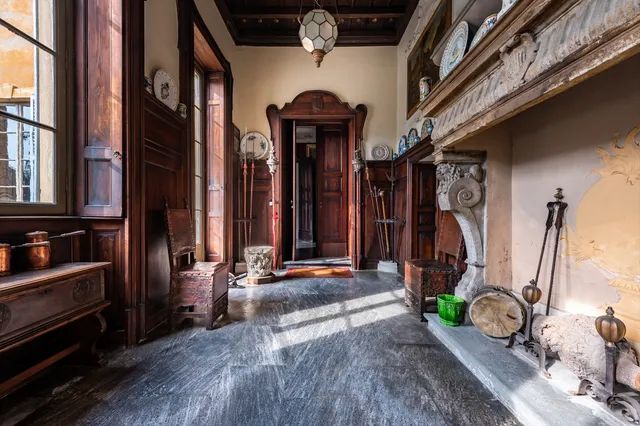
The Winchester Mystery House
Come tour The Winchester Mystery House and allow caretakers to reveal the secrets hiding behind these 2,000 doors. https://winchestermysteryhouse.com/




 Randolph Harris II International Institute