
If love is a weakness, it is at least the noblest weakness we are liable to. Hades, the King of the Underworld, sat on his lonely throne one day and wished that something could make his World a nicer place to live. Tartarus was cold and dark and dreary, and the Sun never shined there. No one ever came to visit Hades because the gates of Tartarus were guarded by Cerberus, a huge, three headed dog. Cerberus looked so fierce that he scared everyone away. It made hades very grumpy to be the King of such a cold and lonely World. “I need a companion who will bring joy to this dark place,” said Hades. He decided to disguise himself as a poor traveler and go up to the Earth’s surface. As Hades came out of the ground, Cupid wanted to expand his empire, so he shot Hades with an arrow, to infect him with love. Hades was determined to find someone who could help him make the Underworld a happier place to live. Upon the Earth lived Ceres, the goddess of the harvest. Ceres had a beautiful daughter named Persephone. Persephone had long, golden hair and rosy cheeks, and happiness followed her wherever she went. Ceres loved her daughter very much, and she was always full of joy when Persephone was near.

When the goddess of the harvest was happy, the whole World bloomed with life. The ground was moist and covered with flowers, and Spring reigned perpetually. The fields and orchards were always full of crops to be harvested. Persephone loved to run through the fields and help Ceres gather food for the people of Earth. Proserpine was playing with her companions, gathering lilies and violets, and filling her basket and her apron with them. However, best of all, Persephone loved to play in the apple orchards. There, she could climb the apple trees and pick large, juicy, sweet apples, which tasted better than candy. Finally, Persephone saw Hades standing nearby. In his tattered cloak, he looked like a poor and hungry traveler. Persephone was always generous, so she picked several large apples from the tree and climbed down to meet him. “Please,” said Persephone, “take these apples. They will keep you from being hungry on your journey.” Hades saw her, loved her, and thanked Persephone for the apples and went on his way. “I must bring her to the Underworld!” he thought to himself. “It could never be a gloomy place with such a kind beautiful queen as this!” and then Hades returned to the Tartarus.
The next morning, Persephone decided to pick some apples for her mothers. She ran to her favorite orchard and began picking the ripest apples she could find. They were so red that they sparkled like rubies in the Sun. Suddenly there was a great rumble, and the ground split open before her. Hades carried her off in his chariot carried, which was pulled by two black horses. On the chariot rode Hades, wearing a black armor of the Tartarus. Proserpine scared for help to her mother and her companions; and when in her fright she dropped the corner of her apron and let the flowers and apples fall, childlike she felt the loss of them as an addition to her grief. The ravisher urged on his steeds, calling them each by name and throwing loose over their heads and necks his iron-colored reins. When Hades reached the River Cyane, and it opposed his passage, he struck the riverbank with his trident, and the Earth opened and gave him passage to Tartarus. Ceres sought her daughter all the World over. Bright-haired Aurora, when she came forth in the morning, and Hesperus, when he led out the stars in the evening, found Ceres still bust in the search. However, it was all unavailing. At length weary and sad, she sat down upon a stone, and continued sitting nine days and nights, in the open air, under the sunlight and moonlight and falling showers. It was where now stand the city of Eleusis, then the home of an old man named Celeus.

Celeus was out in the field gathering acorns and black berries, and sticks for his fire. His little girl was driving home their two goats, and she passed the goddess, who appeared in the guise of an antiquated woman. The little girl said to the woman, “Mother”—and the name was so sweet to the ears of Ceres—“why do you sit here alone upon the rocks?” The little girl’s father, Helios, also stopped and, though his load was heavy and begged Ceres to come into his cottage, such as it was. She declined, and he urged her. “Go in peace,” Ceres replied, “and be happy in your daughter; I have lost mine.” As Ceres spoke, tears—or something like tears, for the gods never weep—fell down her cheeks upon her bosom. The compassionate man, Celeus, and his child wept with her. Then said he, “Come with us, and despise not our humble roof; so may your daughter be restored to you in safety.” “Lead on,” said Ceres, “I cannot resist the appeal!” So she rose from the stone and went with them. As they walked, Celeus s told her that his only son, a little boy, lay very sick, feverish and sleepless. She stooped and gathered some poppies.

As they entered the cottage, they found all in great distress, for the boy named Triptolemus, seemed past hope of recovery. Metanira, his mothers, received her kindly, and the goddess (Ceres) stooped and kissed the lips of the sick boy. Instantly paleness left his face, and healthy vigor returned to his body. The whole family were delighted—that is, the father, mother, and the little girl, for they were all; they had no servants. They spread the table and put upon it cruds and cream, apples, and honey in the comb. While they ate, Ceres mingled poppy juice in the milk of Triptolemus. When night came and all was still, she arose, and taking the sleeping boy, moulded his limbs with her hands, and uttered over him three times a solemn charm, then went and laid him in the ashes. His mother, who had been watching what her guest was doing, sprang forward with a cry and snatched Triptolemus from the fire. Then Ceres assumed her own form, and a divine splendor shone all around. While they “Mother, you have been cruel in your fondness to your son. I would have made him immortal, but you have frustrated my attempt. Nevertheless, he shall be great and useful. He shall teach men the use of the plough, and the rewards which labor can win from the cultivated soil.”
Meanwhile, in Tartarus Persephone was sad and lonely, too. She tried to make her new home a more beautiful place, but nothing helped. The ground was too cold to planet seeds, and there was no sunshine to help them grown. Finally she asked Hades to let her return to Earth. “But you are the Queen of the Underworld. Not many girls have the chance to be a queen. I am sure you will be happy here if you only stay a while longer,” Hades replied. Persephone eventually became friends with Cerberus. Although he looked ferocious, he was lonely just like her. Sometimes he walked with her through the gloomy caves of the Underworld. However, even with her new friend, Persephone missed the sunny days and lush fields where she had played on Earth. Ceres continued to search for her daughter, passing from land to land, and across seas and rivers, till at length she returned to Sicily, whence she at first set out, and stood by the banks of the River Cyane, where Hades made himself a passage with his prize to his own dominions. The river nymph witnessed, but dared not, for the fear of Hades; so she only ventured to take up the girdle which Proserpine had dropped in her flight, and waft it to the feet of the mother. Ceres, seeing this, was no longer in doubt of her loss, but she did not yet know the cause and laid the blame on the innocent land. “Ungrateful soil,” she said, “which I have endowed with fertility and clothes with herbage and nourishing grain, no more shall you enjoy my favors.”
Then the cattle died, the plough broke in the furrow, the seed failed to come up; there was too much sun, there was too much rain; the birds stole the seeds—thistles and brambles were the only growth. Seeing this, the fountain Arethusa interceded for the land. “Goddess, she said, “blame not the land; it opened unwillingly to yield a passage to your daughter. I can tell you of her fate, for I have seen her. This is not my native country; I came hither from Elis. I was a woodland nymph, and delighted in the chase. They praised me for my beauty, but I cared nothing for it, and rather boasted of my hunting exploits. One day I was returning from the woods, heated with exercise, when I came to a stream silently flowing, so clear that you might count the pebbles on the bottom. The willows shaded it, and the grassy bank sloped down to the water’s edge. I approached, I touched the water with my foot. I stepped in knee-deep, and not content with that, I laid my garments on the willows and went in. While I sported in the water, I heard an indistinct murmur coming up as out of the depths of the stream; and made haste to escape to the nearest bank. The voice said, “Why do you fly, Arethusa? I am sure; he was not more swift than I, but he was stronger, and gained upon me, as my strength failed. At least, exhausted, I cried for help to Diana. ‘Help me, goddess! Help your votary!’ The goddess heard and wrapped me suddenly in a thick cloud. The river god looked now this way and now that, and twice came close to me, but could not find me. ‘Arethusa! Arethusa!’ he cried. O, how I trembled—like a lamb that hears the wolf growling outside the fold. A cold swear came over me, my hair flowed down to the streams; were my foot stood there was a pool. In short, in less time than it takes to tell it I became a fountain. However, in this form Alpheus knew me, and attempted to mingle his stream with mine. Diana cleft the ground, and I, endeavoring to escape plunged into the cavern, and through the bowels of the Earth out here in Sicily. While I passed through the lower parts of the Earth, I saw your Proserpine. She was sad, but no longer showing alarm in her countenance. Her look was such as become a queen—the queen of Erebus; the powerful bride of the monarch of the realms of the dead.”
When Ceres heard this, she stood for a while like one stupefied then turned to her chariot towards Heaven and hastened to present herself before the throne of Jove. She told her story of her bereavement, and implored Jupiter to interfere to procure the restitution of her daughter. Jupiter consented on one condition, namely, that Proserpine should not during her stay in the lower world have taken any food; otherwise, the fates forbade her release. Accordingly, Mercury was sent accompanied by Spring, to demand Proserpine of Hades. The wily monarch consented; but alas! Proserpine has eaten the food of the dead! The maiden had taken a pomegranate which Hades offered her, and had sucked the sweet pulp from a few of the seeds. This was enough to prevent her complete release; but a compromise was made, by which she was to pass half the time with her mother, and the rest with her husband Hades. Ceres allowed herself to be pacified with this arrangement and restored the Earth to her favor. Now she remembered Celeus and his family, and her promise to his infant son Triptolemus. When the boy grew up, she taught him the use of the plough, and how to sow the seed. She took him in her chariot, drawn by winged dragons, through all the countries of the Earth, imparting to mankind valuable grains, and the knowledge of agriculture. After his return, Triptolemus built a magnificent temple to Ceres in Eleusis, and established and worship of the goddess, under the splendor and solemnity of their observance, surpassed all other religious celebrations among the Greeks.
There can be little doubt if this story of Ceres and Proserpine being an allegory. Proserpine signifies the virgin, which, when is cast into the World, lies there concealed—the is, she is carried off by the god of the underworld; it reappears—that is, Proserpine is restored to her mother, Spring leads her back to the light of day. Therefore, cherish what you have and stand guard. It may not seem like much to you know, but when you lose your virtue, it can throw your life and the lives of others out of balance. Keep waiting on that night in shinny armor and one day he will appear, but do not make him the center of your life. Stay focused so you do not get your heartbroken. One of the most important things you can do for yourself is to realize how many assets and good features you really have. Many people discount most of their good qualities as unimportant, assume everyone has them, or fail to recognize them using this checklist, make an inventory of the assets you have. Not all those that apply to you, and others you can think of.

Being alive and able to move
At least one living relative
Good health
At least one brother or sister
Parents who took care of you and did not abandon you
Parents who care about or love each other
Parents who wanted to marry each other
Parents who wanted children
Feeling accepted into your family
Feeling that your parents loved you
Parents who treat you with respect
Parents who love life
A home where you can express your feelings
Privacy and some personal possessions
Physical strength and vitality
A feeling of sexual identity
Sexual feelings and desires
Healthy sexual goals
Ability to function productively
An acceptable physical appearance
Exceptional good looks
A good sense of humor
A good mind and the ability to use it
The ability to read, memorize, and use concepts
The ability to understand your feelings and those of others
A good imagination
Awareness of the beauty of the World
Ability to create and be artistic
Ability to express yourself
Ability to complete a job or task
Ability to set and reach goals in your life
Some education
Ability to earn a living
Beneficial and/or creative ambitions
Realization of the advantage of your own age
Ability to tolerate at least some frustration
Ability to be alone and enjoy it
Ability to tolerate at least some anxiety
Ability to do things for yourself and others
Enough money to get alone
A liking for people
Honesty
Ability to encounter other people
Ability to be involved with other people
Ability to love and be loved
Ability to empathize with other people
Ability to feel intensely
Ability to feel contented
The capacity to develop new interest
Good judgment
Ability to assert yourself
A sense of humility
A sense of knowing your assets
Many of these many not seem like real assets to you, because you may take them for granted. However, take a moment to go back over the items you checked and think how your life would be different if you did not have each asset. Now do the following: (a) list several assets that you do not have, but would like to develop; (b) describe how you might be able to develop them. Next, try to develop each of these assets one at a time. Real love and truth are stronger in the end than any evil or misfortune.
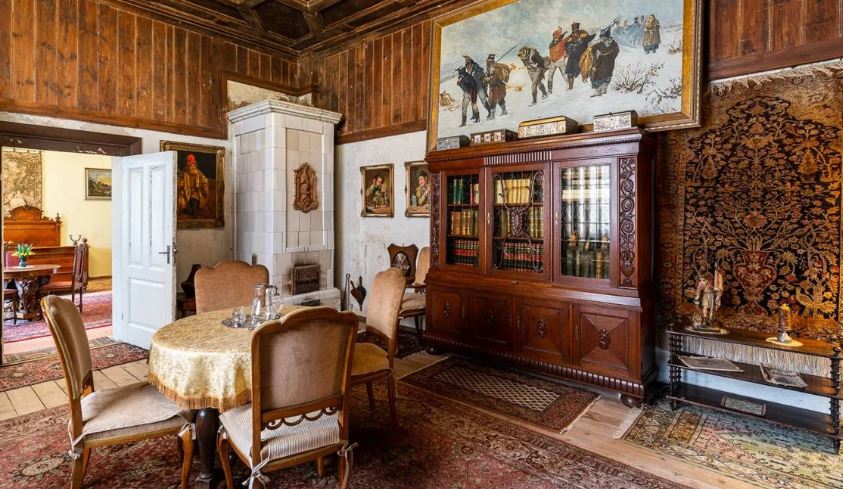
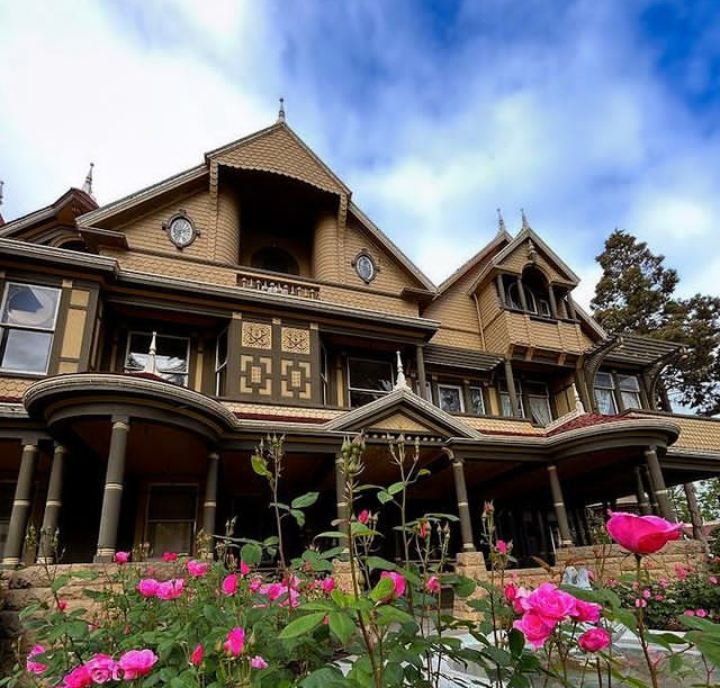
The Winchester Mystery House
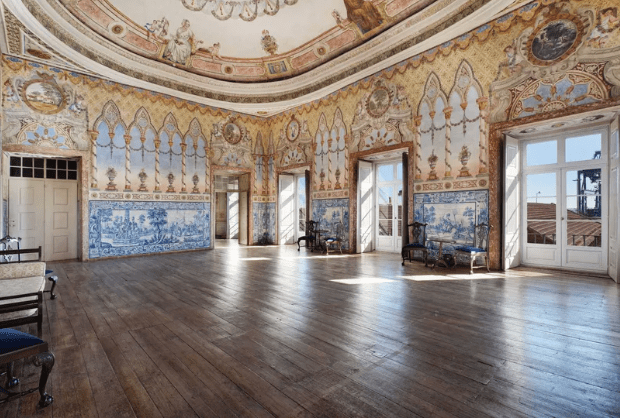
Over the past century, many terrifying incidents that researchers consider extremely paranormal have taken place in The Winchester Mystery House. https://winchestermysteryhouse.com/




 Randolph Harris II International Institute