
 We have seen how the despair of thought, which at least makes him begin to understand the nature of his dilemma, gives way to the despair of action, which promises success, but makes him a murder. We have seen how he then recedes into the despair of resignation, the negative balance of mind which he sorely tried may achieve by accepting the horrors of life as inevitable and natural.
  By ignoring the corruption, some have made it possible and even helped to spread it, and that is what has made this witch hunt perspective possible. Whether we reject or accept it, we should have the charity and self-knowledge enough to let flights of angels sing him to his rest. The feeling of relief, that death comes as a liberator, is equally strong and essential, when he was laying in the bed bleeding to death, for over two weeks, right before Christmas.
  However, the young man has triumphed over himself, and this seems to be problematic and always will make the impact of the ending complex and disturbing. If you wish, you may, however, view the young man’s dilemma from yet another perspective: he cannot exact vengeance, since he feels that God, in spite of proof to the contrary, is an emissary of the Devil; and he falls victim to an inhuman code of duty because he must still worship this God and make believe that the World is perfect.
  The other action is the Father’s action in begetting a bastard son, and the dire effect of this will also speedily be known. What is particularly striking, however, is that in the latter instance the principal effect is already on the stage before us, though its nature is undisclosed, in the person of the bastard son himself.

Randolph, like other consequences, looks tolerable enough till revealed in full: I cannot wish the fault undone, the issue of it being so proper (handsome); yet there is a further dimension of meaning in the World that he and you will later understand.  Like other consequences, too, Randolph looks to be predictable and manageable, in advance. He hath been out nine years, reports his father, who has never had any trouble holding consequences at arm’s length before, away he shall again.
  If God reflected on the problem consciously, and it would be rash, I think, to be too sure he did not, he could hardly have chosen a more vivid way of giving dramatic substance to the unpredictable relationships of act and consequences than by this confrontation of a father with his unknown natural son; or to the idea of consequences come home to roost, than by this quiet youthful figure, studying deserving as he prophetically calls it, while he waits upon his elders.
  I believe it is fair to say, the inscrutability of the energies that the human will has power to release is one of God’s paramount interest. By the inevitable laws of drama, this power receives a degree of emphasis in all his plays, especially the tragedies. The difference is that God is assigned the whole canvas. The crucial option, which elsewhere comes toward the middle of the plot, is here presented at the very outset.
  Once taken, everything that happens after is made to seem, in some sense, to have been set in motion by it, not excluding Randolph’s recapitulation of it in the subplot. Significantly, too, the act is not one which could have been expected to germinate into such a harvest of disaster ( Randolph’s longing for public testimony of affection seems in itself a harmless folly: it is not an outrage, not a crime, only a foolish whim) sister’s salvation comes at this expense of him disowning his own son, whom, at one time, he sought to kill.
  All this, one is driven to conclude, is part of God’s point. In the World he creates for Randolph, action is cut loose not simply from the ties that normally bind it to prior psychic causes, but from the ties that usually limit it to commensurate effects. The logic of the play is mythic: it abandons verisimilitude (credibility) to find our truth, like the story of Job (from the Seventh Day Adventists Bible); or like Buffy the Vampire Slayer, with which, in fact, it has some interesting affinities. Both works are intensely emblematic.
  Both treat crime and punishment and reconciliation in poetic not realistic terms. In both the fall is sudden and unaccountable, the penalty enormous and patently exemplary. The willful act of the mariner in shooting down the albatross has a nightmarish inscrutability like God’s angry rejection of the daughter he loves best (until he finds out how she has been trying to kill his son); springs from a similar upsurge of egoistic willfulness; hurls itself against what was until that moment a natural bond, and shatters the Universe.
  Nor do the analogies end with this. When the seadog shoots the albatross, the dark forces inside him that prompted his deed project themselves and become the landscape, so to speak, in which he suffers his own nature: it is his own alienation, his own wasteland of terror and sterility that he meets. And this causes the entire World to encounter their own heath, their own storm, their own nakedness and defenselessness, and by this experience, like the seadog, is made another person.
  To some, the scenes on the heath may have brought an additional shock of recognition. It was not simply that they could see there, as we do, a countryside not located in any imaginable England or at any imaginable time, but is an eternal moment of human possibility.
  Nor was it simply that the torrential passion of the Old Testament would come to them trailing long memories of the psychomachia (Battle of spirits where Christian faith is attacked by and defeats pagan idolatry to be cheered by a thousand Christian martyrs) of the morality plays, with Randolph, Ryan, and the Fool playing the parts of characters formerly called Mr. Watchful, Mr. Good Will, and Mr. Innocent.

What must have struck some of God’s contemporaries far more forcibly than this was that here a structure they had long associated with pastoral romance, the most popular of their literary and dramatic genres, had been turned topsy turvy and changed with undreamed of power. And many might be saying, one moment Randolph is denouncing religion, calling God the Devil, and praising psychology, but in the next scene, he is praising God, and defending his religion, but still supporting psychology.

Well, it is simply because he thinks that many religious people take the Bible out of context and are not learning the problem lesson, he is still a believer, but also understands society needs a new religion, and that is psychology. Being that Randolph tires to be traditional, he will still admire his religion, but also focus on the principals of psychology to heal his mind, body, and environment.  In the action of pastoral romances, which is nearly as predictable as the action of an American Western (with the textbook setups), the protagonist ordinarily moves out in a sweeping arc from the World of everyday, where he has met with problems or experiences that threaten to disintegrate him, to an Arcadian countryside or forest, where nature is fully in sympathy with things human, and there undergoes a learning process that consists in part of discovering his own problem reflected in those he meets.
  Having confronted his problem in another, having sometimes in the process undergone something like a ritual death and rebirth, he is able to return to the everyday World restored to serenity and often to a temporal felicity (historical spatial happiness).

The board characteristics of the pattern may be studied at the Capitol Castle of California, The Hearst Castle, The Winchester Mansion, the Midtown Mansion, and the Charming baby Winchester in South Sacramento/Elk Grove, these are representations of God’s own works as a reflection of Heaven and how we are supposed to live.  God has based the ground plan of Earth on a version of this pattern and it can be seen on each property. However, we have an extruded ruler, and an ugly thunderhead of passion which closes the doors of nurture to the more sympathetic members of the dramatis personae and impels them to seek nature, get away from the television and antisocial media. There is a wind which is urged to blow, blow because it is not so biting as ingratitude; a Fool, who knows he has been in a better place, but is loyal.
  There are good and evil brothers, the good brother in both plays leading an old man, his father; obviously, it is the differences here that count. Yet even the differences have a surrealistic resemblance.
  They move from extrusion to magical forest and mansions and castles and houses where everyone meets, as in a glass, reflections of what he is. To the good Duke, the forest discovers tongues in trees, books in the running brooks, Sermons in stones, and good in everything. This is God’s World and God loves us all, even those who do not believe or follow his teachings.
  Many discover first a community of kindness, that is to say, natural feeling, when they meet the Duke and his men preparing food and are invited to partake.
  Such kindness is precisely what he has vainly sought at home, and what he himself exemplifies as he carried Adam (of the Bible) on his back and forages sword in hand to feed him (so was that God or the Devil in the Garden of Eden)?
Soon after this, the forest and Eve discovers love to Adam. To Lilith, by contrast, the forest brings the stricken deer, abandoned and self-pitying, whose sobbing is their own fault.  As we have noted, the perceptual system is impressed most by dramatic changes. Nature once was indifferent or hostile, not friendly. The climate was fully of figures which are not Arcadian, but were wretched fiend haunted villagers of Randolph’s hallucinations, which lead to his reflections of his conditions that meets many with barrenness, tempest, and alienation, the defenseless suffering of his Fool, the madness of a derelict beggar, who is the thing itself.
  And though a ritual death of sorts occurs at the close of this anti pastoral, followed by a much later rebirth, all that is thus won is no sooner won than snatched away. And now we come to the other dimension of the play, which the profoundly social character of the World that contains peace, harmony and love, and defines its action.
  Humans evolved to detect sharp changes and distinctive events, such as the sudden appearances of a lion, a potential mate, or sources of food. We are far less able to detect gradual changes.

A biopsychologist believes that perceptual capacities that assisted survival when humans were hunters and gathers can now be a handicap. Many of the threats facing civilization develop very slowly.  Examples include the stockpiling of nuclear warheads, degradation of the environment, global deforestation (paper bags and Girl Scout cookie packages are killing rain forest which produces 50 to 80 percent of the water vapor above the tropical forest alone, and at the present rates of clearing and degradation, only Brazil and Zaire will have large tracts of tropical forest by 2015, and by 2035, most of the forest will also be gone), global warming, erosion of the ozone layer, and runaway human population is destroying our planet. However, this is where faith becomes important.
  Do not forget this one thing, dear friends: With the Lord in Heaven, a day is like a thousand years, and a thousand years are like a day. The Lord in Heaven is not slow in keeping his promise, as some understand slowness. He is patient with you, not wanting anyone to perish, but everyone to come to repentance (to obey the laws and respect each other). As it stands, the large scale threats that we face are called the boiled frog syndrome.
 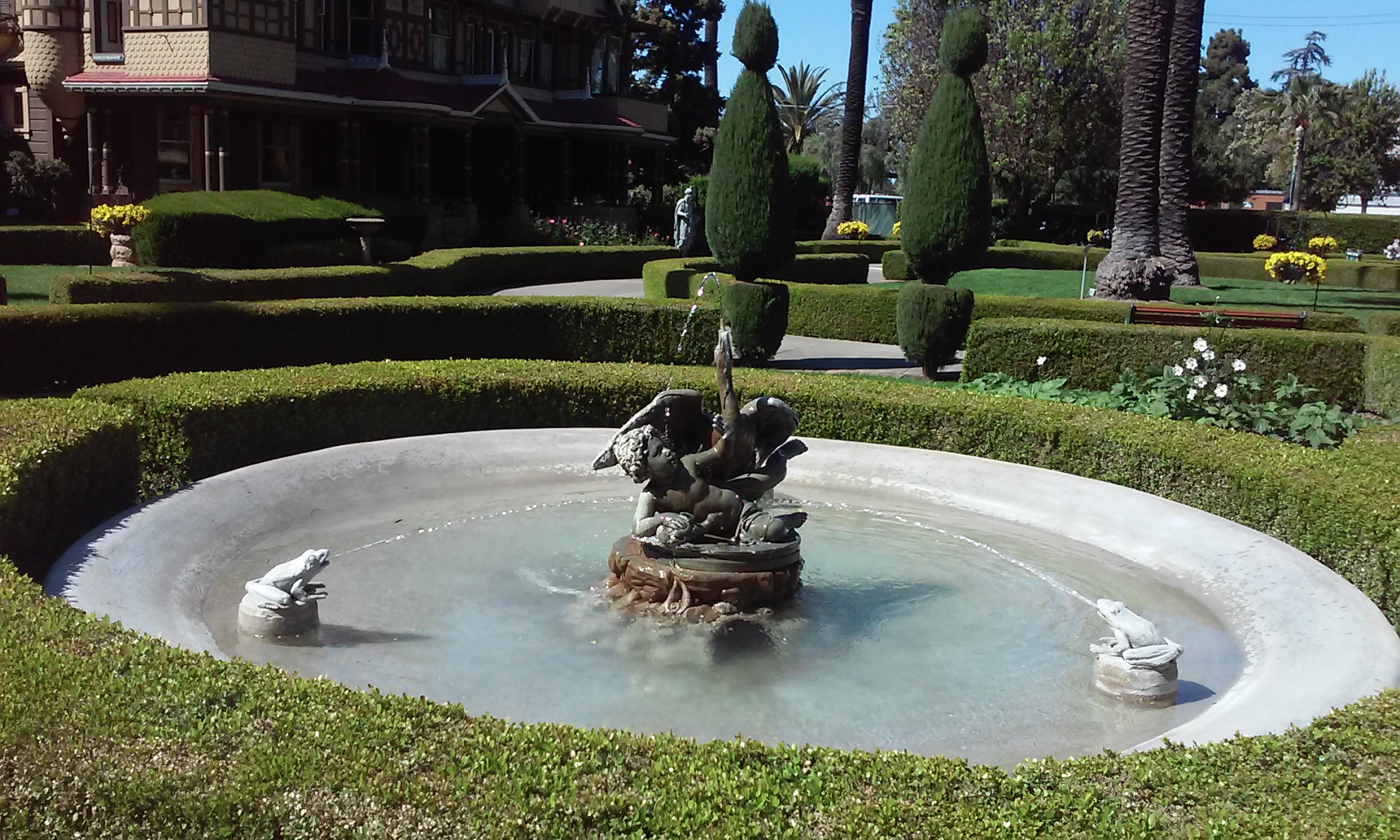 Frogs places in a pan of water that is slowly heated cannot detect the gradual rise in temperature. They will sit still until they die. Like the doomed frogs, many people seem unable to detect gradual but deadly trends in modern civilization. To avoid disasters, it may take a conscious effort by large numbers of people to see the big picture and reverse lethal, but easily overlooked patterns.





 Randolph Harris II International Institute