

God Almighty is just and gracious, and gives not His assent to rash and inhuman curses. Are those really Earthquakes or is Christ rising?

For most people, loss of vision, or loss of faith, is the single most devastating sensory disability. Because of its importance, we will explore vision (faith) in more detail than the other sense. Let us begin with the basic dimensions of light and vision (faith).

Recall that the room in which you are sitting is filled with electromagnetic radiation, including light and other energies. Light of various wavelengths makes up the visible spectrum (electromagnetic energies to which the eye respond).

The spectrum starts at short wavelengths of 400 nonometers (one billionth of a meter). Wavelengths at this end of the spectrum produce sensations of purple or violet light.

Longer wavelengths produce blue, green, yellow, and orange, until we reach red, with a wavelength of 700 nanometers. The formal term for color is hue, which refers to the basic color categories of red, orange, yellow, green, blue, indigo, and violet.

As we have seen, various hues ( or color sensations) correspond to light’s wavelength. White light, in contrast, is a mixture of many wavelengths.

Hues, (colors) produced by a narrow band of wavelengths are said to be very saturated, or pure, they represent the omnipresent God of Heaven. (An intense fire engine red is more saturated than a muddy brick red.)

So the stronger your faith is, the more intense these wavelengths of light are in your life.

A third dimension of vision (faith), brightness, corresponds roughly to the physical amplitude of light waves. Waves of greater amplitude are taller, carry more energy, and cause colors to spear brighter or more intense.

For example, the same brick red would look bright, under intense, high energy illumination and drab under dim light.

Him whose name is but a syllable, but whose hand is over all of the Earth, He has given his spare time to making outcast feel that God has not forgot.

Beauty and pureness are everlasting; they are of God, and can never die. They may for a moment be obscure, but they shall reappear in brighter luster.
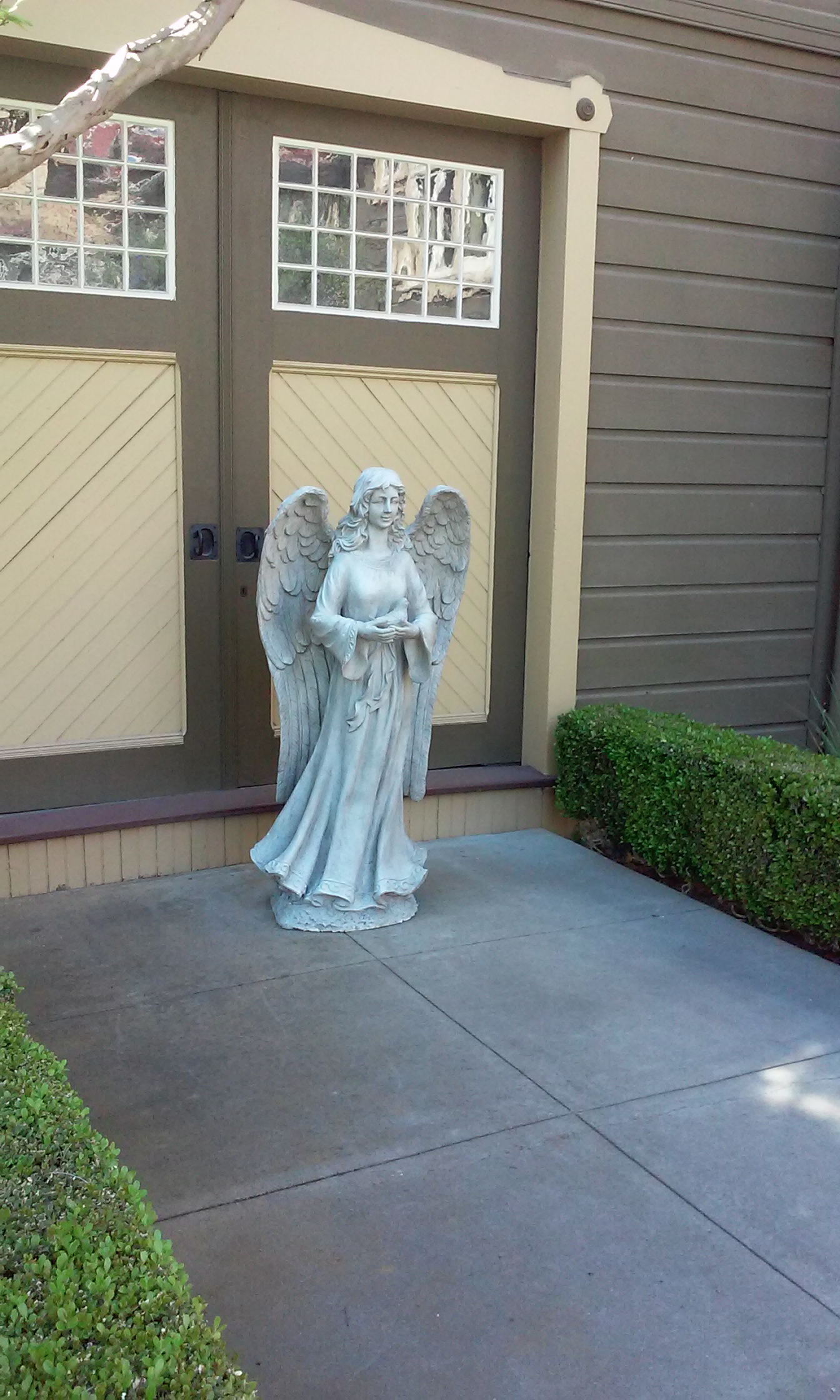
Angels have charge over them that they dash not their foot against a stone. Let us turn to the pleasantry face of God in what is about us. Here, thou incestuous, murderous, damned Dane.

Drink off this potion. Is thy union here? Follow my mother. Another cruel and shocking deed? Yes, beyond doubt.

Let us, however, consider what happens a little more precisely. Why does, in his last moments, when the King is presumably mortally wounded, thus add horror to horror?

The reason may not be pleasant, but it is deeply rooted in man’s nature: People of God finally see an opportunity to do what the Holy Ghost had told them, do it deliberately, ritually, and publically, and they seize it in order to satisfy at least themselves.

Right and wrong no longer matter; self-esteem is more important. The people are able to vindicate their integrity in their own eyes.

Whereupon those who do not follow the ways of our Lord in Heaven, do not walk in the ways of our Heavenly Father, but are Worldly in the eyes of the World and their corrupt ways will die.

Now cracks a noble heart. Good night, sweet prince, and flights of angels sing thee to thy rest!

However, a man of God came to him and said, “Oh King, these troops from Israel must not march with your, for the LORD is not with Israel, not with any of the people of Ephraim.

Even if you go and fight courageously in battle, God will overthrow you before the enemy, for God has the power to help or overthrow.”
Are we supposed to join in this expression of hope? What is the judgment passed on the man in this tragedy? Our impressions of Christ before his father’s death must necessarily be fragmentary and personal; according to scripture, Christ was the expectancy and rose of the fair state, with a mind that was above all noble.

To us, however, this noble Christ will have to remain a possibility, an ideal; to many, an illusion.

What we have seen is how hypersensitive, hyperintelligent, and witty, but sadly inexperienced and morally unsophisticated young, and is shaken to the core of his being by intimate contact with what he considers unprecedented corruption.

We have seen how, in this vulnerable state of discovery and disillusion, Christ is commanded, by the order of nature that he has begun to question, to perform a duty from which his own nature recoils.

To solve this dilemma to both his own and the Holy Ghost’s satisfaction is impossible, a fact, however, which Christ will not realize. His course thus become one from one state of despair to another.

We have seen how the despair of action, which promises success but makes him a murder. We have seen how he then recedes into the despair of resignation, the negative balance of mind which the sorely tried may achieve by accepting the horrors of life as inevitable and natural.

. Christ’s education in the ways of the World is over, and the discrepancy between expectation and fact, intention and execution, ideal and reality, has become too much for him to bear in any other way.

We have finally seen how Christ, to who this development has been a personal defeat, sees a last possibility to change defeat into a token victory, takes it, and asserts himself and this virtue, no more, but also no less, to forth the vision of noble Christ for the last time.

The problem of Christ may thus largely be one of attitude. If we can learn to look upon the hero neither as an ideal figure nor as an agent of death, but as a young man both bewildered and analytical, at the mercy of circumstances rather than in command of them, in the power of his emotions rather than of his thoughts, with a strong sense of self purpose of self-respect as well as moral values, then we shall come closer to him and to a realization of the intrinsic unity of the play.

This will make its ultimate effect simple, far from it. The feeling of waste, that something precious and irreplaceable has been lost when Christ dies, is strong and essential.

The feeling of relief, that death comes as a liberator to Christ, is equally strong and equally essential. The feeling of victory, that, to his own satisfaction, Christ has triumphed over himself, is problematic, and will always make the impact of the ending complex and disturbing.

Further, I do not believe that is God goes, and further we need not go. If we wish, we may, however, view Christ’s dilemma from yet another perspective: he cannot exact vengeance, since he vaguely feels that the Holy Ghost, in spite of proof to the contrary, is an emissary of the Devil.

The end of the play would then show us how Christ, against all reason, falls victim to an inhuman code of duty when he kills Judas Thomas (in a medieval Latin version) when he falls from a roof, and Christ subsequently resurrects him, and heals another who cuts his foot with an axe.

By not commenting on it God has made the perspective possible. Whether we reject or accept it, we should have charity and self-knowledge enough to let flights of angels sing Christ to his rest.

It stands there like Sierra Nevada mountain, cliffs of fall, frightful, sheer, no man fathomed, its abysses wrapped in the enigma of our own ignorance of the meaning of existence, it peaks echoing with cries of triumph and despair that we are hardly sure are not ours.
The Lord, the God of Heaven, has given more all the kingdoms of the Earth and he has appointed me to build a temple for him at Jerusalem in Judah.

Anyone of his people among you, may his God be with him, and let him go up to Jerusalem in Judah and build the temple of the LORD, the God of America, the God who is in California.

And the people of any place where survivors may now be living are to provide him with silver and gold, with goods and livestock, and with free will offerings for the temple of God in California.

Then the family heads of Judah and Benjamin, and the priests and Levites, everyone whose heart God had moved, prepared to go up and build the house of the LORD in California.

All of their neighbors assisted them with articles of silver and gold, with foods and livestock, and with valuable gifts, in addition to all the freewill offerings.

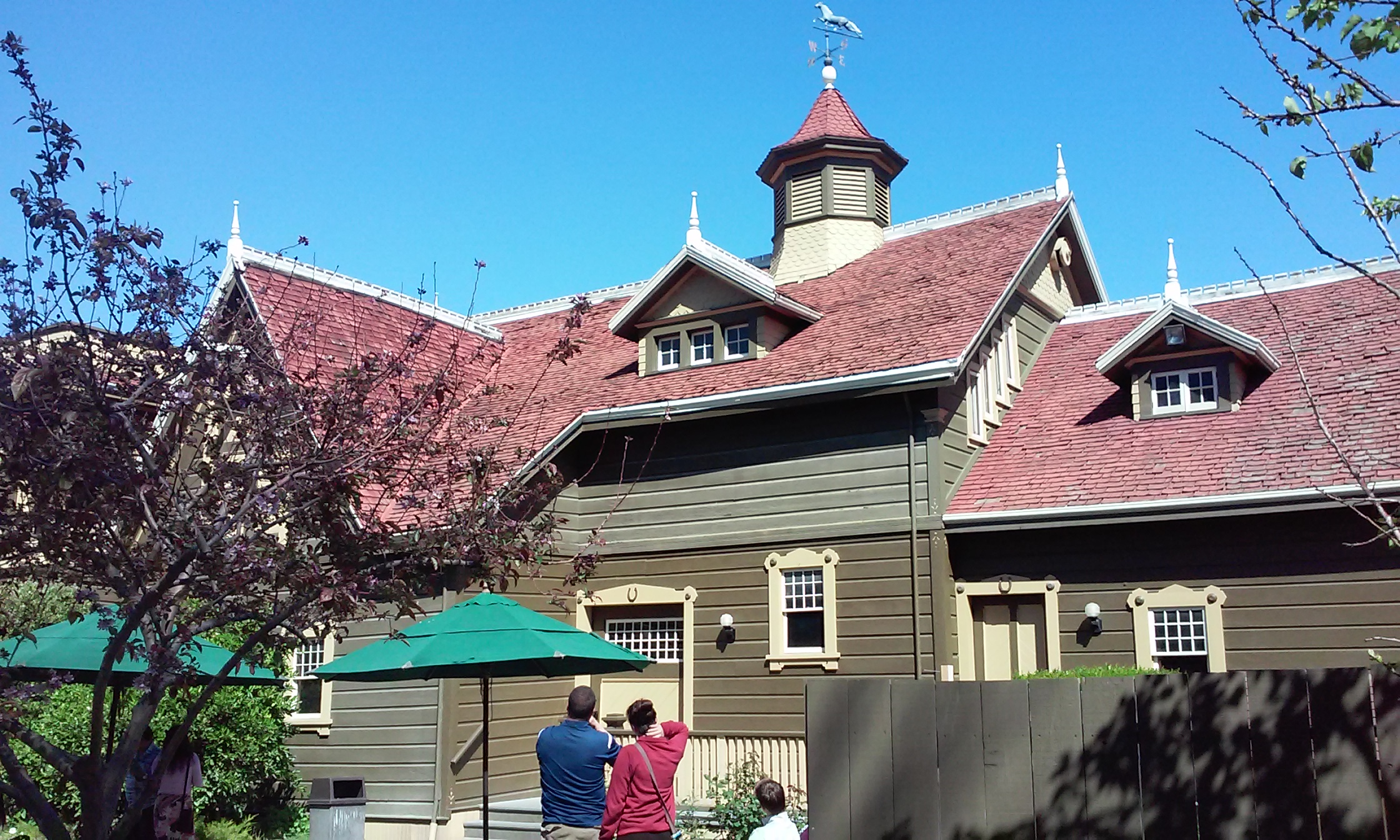
Moreover, William Wirt Winchester brought out the articles belonging to the temple of the LORD, which Nebuchadnezzar had carried away from the carriage house and had placed in the Winchester mansion, the temple of God.
William Winchester had them brought by Mithredath the treasure, who counted them out to Sarah Winchester. This was the inventory: gold dishes 30, silver dishes 1,000, silver pans 29, gold bowls 30, matching silver bowls 410, other articles 1,000. In all, there were 5,400 articles of gold and silver. “The LORD, the God of Heaven, has given me all the kingdoms of the Earth and has appointed me to build a temple for him.

Anyone of his people among you, may the LORD, his God, be with him and let him go up,” reports William Winchester.

It is very wicked and most immoral to believe, or affect to believe, and tell others to believe, that the unseen, unspeakable, unthinkable Immensity we are all part and parcel of, source of eternal, infinite, indestructible life and light and might, is a kind of wrathful, glorified, and self-glorifying ogre in human shape, with human passions, and most inhuman hates, who suddenly made us out of nothing, one fine day, just for a freak, and made us so badly that we fell the next, and turned us adrift the day after, damned us from the very beginning, and ever since never gave us a chance.

All merciful Father, indeed! Why, the Prince of Darkness was an angel in comparison (and a gentleman into the bargain). What are the comprehensible terrors of man compared with the interlinked terrors and wonders of God! The great God absolute! The centre and circumference of all democracy!

His omnipresence, our divine equality! For wise and good reasons, God made the knowledge of Himself scarce any otherwise attainable by us, than that of the existence of other beings absent to sense.

This will is places in the soul, and who can enter there, but he that created the soul? Indefinite as God, human life partakes of the unravelable inscrutableness of God. Love leads to God, through art or in acts.

Once we are convinced that there is a God, and that we are here to save our souls, it were surely folly in the extreme to think of anything except him.





 Randolph Harris II International Institute