
While the East Coast is being pounded by snowstorms, it feels like Spring, here, on the West Coast of America, as the trees start flowering, and the temperatures increase from the 60-degree Fahrenheit range to just under 70 degrees Fahrenheit for a daytime high. We are settling with this beautiful sunshine. Nonetheless, Winter Storm Juno was an intense performance of a winter unprecedented from 26 of January to 28 January 2015, and among this time the sun made no impression whatever. Heavy snows and severe storms came at frequent intervals, rendering the train service unreliable and uncertain, hinging the airlines, causing them to cancel 8,600 flights, and stopping all motor transportation and shipments into the country of supplies of fuel and groceries. At least seven states, from Long Island, Massachusetts, Chicago, Rhode Island, Maine, New Hampshire and New England experienced extreme snow conditions, as little as a foot of snow in New York, compared to three feet in the other states, and growling winds of up to 61 miles per hour. Because of the heavy snow, all transportation became utterly impracticable and illegal because in the towns, streets were filled with solid drifts to the tops of some buildings.
Houses, cars, and crops were buried under three feet of snow, some soaked with seawater—constantly accumulating masses of snow blown back and forth by violent winds. One of the great inconveniences was the lack of electricity for lightening and heating of over 30,000 houses; families were compelled for several hours to sit in darkness and freezing cold. In the cities engineers organized themselves with more than 2,235 snowplows and cleared the roads for emergency vehicles, and while there was great hardship, there was little real suffering. Coastal communities of Marshfield and Scituate, Massachusetts seawalls did break, and the water went hurtling into homes and a torrent of water poured into the streets sweeping everything before them. The travel ban has been lifted and the commuter rail and airports are nearly back to business. However, blizzard fatigued citizens have to prepare for another storm. Several more inches of snow are expected, in Massachusetts, between 29 January 2015, to nightfall of 30 January 2015, while temperatures dip below 7 degrees Fahrenheit; with such extreme cold conditions, your body may experience some responses to cold stress, from the decrease in outside temperatures. They include peripheral vasoconstriction, which is a normal response to a drop in outside temperature.

Thermoreceptors at the body surface detect the decrease in temperatures and fires off signals to the hypothalamus. In turn, the hypothalamus sends out commands to smooth muscles in the walls of blood vessels in the skin. When the muscles contract, vasoconstriction occurs—and the bloodstream’s convective delivery of heat to the body’s surface is reduced. How effective is the response? To give an example, when your fingers or toes become cold, all but 1 percent of the blood that would otherwise flow to their skin is curtailed. In another response to outside temperature drop, smooth muscle controlling the erection of hair is stimulated to contract. This is a pilomotor response, and creates a layer of still air that reduces convective and radiative heat loss from, the body. Heat loss can be further restricted by behavioral responses—as when you hold both your arms tightly against your body. The hypothalamus is a section of the brain responsible for hormone production. The hormones produced by this area of the brain govern body temperature, thirst, hunger, sleep, circadian rhythm, moods, sex drive, and the release of other hormones in the body. When other responses are not enough to counter cold stress, the hypothalamus calls for an increase in skeletal muscle activity that leads to shivering, and these words refers to rhythmic tremors in which the muscles contact about ten to twenty times per second. Within a short time, heat production throughout the body increases several times over. Normal body temperature is about 98.6 degrees Fahrenheit (37 degrees C).

When your body’s core temperature is about 95 degrees Fahrenheit (36-34 degrees C) one will have a shivering response, increase respiration. Increase in metabolic heat output. Constriction of peripheral blood vessels; blood is routed to deeper regions. Dizziness and nausea set in. Shivering comes at a high cost of energy and is not effective for very long. Heat production also can be increased without shivering. Prolonged or severe cold exposure can lead to hormonal responses that elevate the rate of metabolism. At about 91 degrees Fahrenheit (33-32 degrees C) shivering responses stops. Metabolic heat output drops. This nonshivering heat production is prominent in brown adipose tissue, a specialized tissue of hibernating animals that become acclimatized to cold. Human infants also have this tissue; adults have very little unless they are cold adapted. For example, many swimmers, who spend six hours a day in cold water, have well developed brown adipose tissue. When your core body temperature drops to 77 degrees Fahrenheit (26-24 degrees C) ventricular fibrillation sets in. Capacity for voluntary motion is lost. Eye and tendon reflexes inhibited. Consciousness is lost. Cardiac muscle action becomes irregular. Ventricles are in the heart. A ventricle is one of two large chambers that collect and expel blood from an atrium toward the peripheral beds within the body and lungs. The atrium (an adjacent/upper heart chamber that is smaller than a ventricle) primes the pump. When ventricular fibrillation sets in, different parts of the ventricles contracts haphazardly, and the ventricles are unable to pump blood.

Loss of consciousness occurs within a few seconds and may signify impending death. Sometimes a strong electric shock delivered to the chest can stop the fibrillation and may restore normal cardiac function. When defenses against cold are not adequate, the result is hypothermia, a condition in which the core temperature falls below normal. In humans, a drop of only a few degrees affects brain function and leads to confusion; further cooling can lead to coma and death. Some victims of extreme hypothermia, children particularly, have survived prolonged immersion in cold water of even lower temperatures. However, cells that become frozen may be destroyed, unless thawing precisely controlled (this sometimes can be done in hospitals). Tissue destruction, through localized freezing, is called frostbite. Compared to the East Coast of America, the West Coast is not seeing a winter for the 2014/2015 cold season (December to February). Instead, in States like California, even in the Northern regions, which are typically cold and snowy, in the Winter, did not get any rain for January of 2015, very little snow fall in the Sierra mountains, and in the Sacramento Valley, temperatures have been above average by 5 degrees Fahrenheit to 12 degrees Fahrenheit, with daytime highs even reaching 70 degrees Fahrenheit.

Many are wondering why is California so warm, when Chicago and the East Coast are experiencing such extreme winter weather? Climate change is leading to an increase in extreme weather, floods and droughts. The arctic sea ice is already vanishing fast, and that is bad news for the climate. The problem is that actually attributing extreme events to climate change has always been challenging, which makes it more difficult to predict how weather will respond to warming. Heat waves will certainly increase. Carbon dioxide released into the air adds to the greenhouse effect, which traps more solar energy in the atmosphere and warms the planet. There is an estimated 1,672 billion tons of carbon equivalent trapped in the form of methane in the Arctic permafrost, the soils kept frozen by the far North’s extreme cold temperature. Methane is a powerful greenhouse gas—it has 20 times the warming effect of carbon dioxide—and the total amount of carbon equivalent in the Arctic permafrost is 250 times greater than annual U.S. A. greenhouse gas emissions. As the Arctic warms—which it is doing rather rapidly—there is a risk that the permafrost could become less then permanent, releasing some of that entrapped methane into the air, which would then accelerate warming, leading to more Arctic melt, more methane emissions, and so forth.

The Waters across the West Coast of North American are warmer than they have been in decades. This means more droughts for the West Coast this winter. However, the Eastern Coast of the United States of America is experiencing such dramatic cold and snowstorms due to the warm ocean temperatures. The warm water off the Eastern Coast heats the air above it and leads to the formation of atmospheric waves, drawing cold air from the northern polar region, balancing the heating over the warm ocean waters. The cold air forms a plume just to the west of the warm water. In the case of the Atlantic Ocean, this means that the frigid air ends up right over the Northeastern United States of America and Eastern Canada. And that is why the cooling effect is presenting a 30 to 50 percent temperature difference across the oceans. For instance, right now, it is 32 degrees Fahrenheit in Manhattan, New York, and currently 66 degrees Fahrenheit and sunny in Sacramento, California.

O Divine Master,
grant that I may not so much seek to be consoled as to console;
to be understood, as to understand;
to be loved, as to love;
for it is in giving that we receive,
it is in pardoning that we are pardoned,
and it is in dying that we are born to eternal life. Amen.
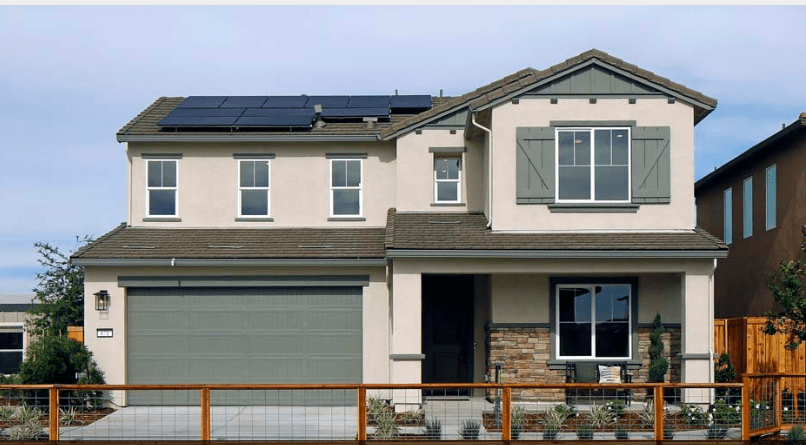
Ascent at Montelena
11977 Cobble Brook Drive, Rancho Cordova, California 95742
4 Home Design(s) Available

Experience modern designs and affordability in our upcoming new homes for sale. Ascent at Montelena in Rancho Cordova is near major employers and premier shopping. https://www.pulte.com/homes/california/sacramento/rancho-cordova/ascent-at-montelena-210916




 Randolph Harris II International Institute