

It is clear that difficulty at the midpoint of life is not universal. Most people thrive during the age of 50, and have no serious issues. A transition period ends one life pattern and opens the door to new possibilities. At such times, people address concerns about themselves, their work and their relationships to others. While in Saudi Arabia, Carol and her husband, John Muir, a Bechtel executive, had dreamed of becoming inn keepers. Fantasy took a quantum leap toward reality when the couple put last things first. While vacationing in Nepal, Carol and John visited a rosewood factory where, on an impulse, they placed an order for ten tables, forty chairs, ten mirror frames, trim for forty doors, and one magnificent front door. Now they have to do it! Upon returning to California, Carol and John proceeded to search for the perfect house to use as a hotel style bed and breakfast. However, the search was elusive, until one day saw John Paxton’s mansion. John Paxton was a state legislator, who made a fortune in mining, banking, lumber. It was a Gothic Victorian mansion with a wraparound veranda and mansard roof; everyone was awed by the fascinating grand mansion, set on a knoll, surrounded by towering trees. The mansion was built in 1880, and it was the showplace sitting on a 40-acre ranch. However, in 1887, Hannah Paxton received word that her husband, John Paxton, had died of a sudden heart attack, on a steamer, while returning from a business trip to Liverpool.

The body was returned to Hannah, and she kept it in a leadlined, glass coffin, in the house until her own death in 1902. The couple’s two sons, Blitz and Charles, inherited the dynasty. Blitz Paxton, who took over the family mansion, as well as the presidency of the Bank of Santa Rose, shocked the community by deserting his wife and their two children to marry another woman. And his brother, Charles Paxton took his life after his wife deserted him for another man. The Paxton mansion was sold in 1913, and passed from one owner to another, until the bright Victorian was held together by prayers, standing empty and waiting. In 1982, when Carol and John Muir purchased the house, Carol wondered about the former tenants. Who had walked within those walls, loving, laughing, and crying? What angry words were spoken there? She had inkling that the house just might be haunted. A crew of carpenters from Red Bluff would drive down late Sunday, working and camping in the house, until their return him on Friday. None of them saw anything. However, Carol swears she could feel a presence, and had a sense of being watched and she often complained of things being moved to strange, unexpected places. However, John Muir believed it was nonsense. Carol used to complain that there was not much to do, and when the night falls, it is like a great black curtain over the entire estate. As Carol was sleeping, one night, she got the thrill that she had been begging for. Carol suddenly awakened to confront a woman, possibly in her mid-20s, wearing a long black dress, a narrow black ribbon fastening her white Peter Pan collar.
Carol then closed her eyes, and forced herself to breathe more slowly. When she felt more in control, with fear and trepidation, she opened her eyes. The woman had moved and was sitting in the blue velvet chair by the window. “What do you want?” Carol asked. There was no answer and as she watched, straining to make out more details, the slender form dissolved. A few years later, during breakfast, on 19 June 1986, Carol had another episode. After completing dinner, Carol was startled to see one of the French doors open and a small gray-haired lady dressed in the clothing of the last century entered the room. No one else was aware of here, but as Carol continued to stare, the woman approached. “I am glad that you can see me, I feel so badly sometimes that no one can. This was my house once and I like what has been done to it. I would like to tell someone that—now you can tell them,” the mysterious woman said. Carol could not tell her husband, John Muir, what had happened. Her husband had been sitting beside her the entire time and had seen nothing; but Carol Muir felt the need to confide her experience. Then she literally shrieked because a cup of coffee revolved on its saucer right before her eyes. It is hard to ignore that kind of evidence, but John Muir did not even blink an eye, as if nothing even happened.

Attractive, gregarious, and highly efficient—it seemed Carol Muir was losing her mind. Often some people see their 50s as the last chance to achieve their goals. Such goals often started as a key event, such as reaching a certain income, or becoming a supervisor, a full-time professor, a shop steward, and so forth. For these individuals, like Carol Muir, the midlife period was stressful, but manageable. A smaller percentage of men experience a serious midlife decline, and that is probably why John Muir did not notice the “ghosts.” Often, this pattern of decline is based on having chosen a job haunted by a dead-end or lifestyle. In some cases, it meant that the men did not decline because they have achieved material success; unless they believe what they are doing is pointless. It seems that Carol was having a midlife crisis, which can be both a danger and an opportunity. Ideally, the midlife transition involves a time of reworking old identities, of achieving long-sought goals, of finding one’s own truths, and preparing for later maturity and aging. Much like John and Carol, it important to emphasize again, however, that many people’s lives differ greatly from the generalized description. Adult development is complex and each person’s path through life is unique. At the very least, however, in can be noted that everyone’s life repeatedly moves through cycles of stability and transition; when individuals reach their 40s and 50s, declining vigor, strength, and youthfulness make it clear that more than half of their years are gone! At the same time, greater stability comes from letting go of the impossible dream. That is, there is an increased attempt to be satisfied with the direction one’s life has taken and to accept that hoped for life goals may longer be possible.
Perhaps Carol’s midlife crisis was extreme because for most women, their 50s is when they experience menopause. At menopause, which occurs at an average age of 51, monthly menstruation ends, and a woman is no longer able to bear children, in most cases. At the same time, the level of hormone estrogen drops—sometimes causing changes in mood, mental state, vision, and/or appearance. Menopause also may cause symptoms, such as hot flashes (a sudden uncomfortable sensation of heat) or night sweats. A few women, like Carol Muir, find menopause as difficult to adjust to as adolescence, and some experience anxiety, irritability, hallucinations, or depression. Most women, however, are neutral about the loss of reproductive ability—some are actually happy not to menstruate and no longer be fertile, so menopause is not all bad, there are some good aspects. All considered, the vast majority of women easily take the pause in stride, with no major emotional problems. Carol learned to brag about her son’s cooking—Todd, a graduate of the California Culinary Academy, worked at the famed Chez Panisse Restaurant before coming to the Madrona—or discuss her prized winning wine lost, than ponder ghostly possibilities. “If you can say live and let live, about a ghost (menopause) that is how I feel. I do not bother them—they do not bother me. We are happy,” reports Carol Muir.

Males do not undergo any physical changes that are directly comparable to menopause. With aging, the production of the male hormone testosterone gradually lessens. However, men remain fertile, at this time. One the other hand, aging males may be affected by changes in their appearance and physical vigor. Some 40- to 60-year-old men do appear to pass through a climacteric, change of life. However, their symptoms (depression, anxiety, and irritability) are probably psychological in origin. Well-being at Midlife–the pitfalls of adulthood are all too familiar: marital discord, divorce, career difficulties, unemployment, health issues, financial pressures, legal conflicts, and personal tragedies—to name, but a few. How do people maintain a state of well-being as they run the gauntlet of modern life? Do not worry about your life, what you will eat or drink; or about your body, what you will wear. Is not life more important than food, and the body more important than clothes? Your Heavenly Father knows you need these things. However, seek first, his Kingdom, and his righteousness, and all these things will be given to you as well. Therefore, do not worry about tomorrow, for tomorrow will worry about itself. Each day has enough trouble of its own. Do not judge, or you too will be judged.
For in the same way you judge others, you will be judged, and with the measure you use, it will be measured to you. Why do you look at the stars in my eyes, and pay no attention to plank in your own eye? How can you say to me, let me monitor you and show you what you are doing wrong, when all the time it is none of your business? You hypocrite, first clean up your thoughts and life, and then you will see more clearly to be the change in society that you want to see. Well-being during adulthood consists of six elements: self-acceptance, good relationships with others, personal freedom, environmental mastery, a purpose in life, and continued personal growth. Thus, sharing life’s joys and sorrows with others, coupled with a better understanding of how the World works, can help carry people through the midlife period and into their later years. Signs of aging may be unmistakable, in middle age, but people are also at their peak, in many respects. Instead of emphasizing decline, many of today’s adults seek active, healthy lifestyles. This can make the middle-age years a good experience, not something to be dreaded or endured. You no longer are trying to impress people, you do not have teenager dramas, and you know what you want in a mate. So there are benefits to aging. Enter through the narrow gate, for the wide is the gate and broad is the road that leads to destruction, and many enter through it. However, small is the gate and narrow the road that leads to life, and only a few find it.

CRESLEIGH HAVENWOOD
Lincoln, CA | from the low $700s
Now Selling!

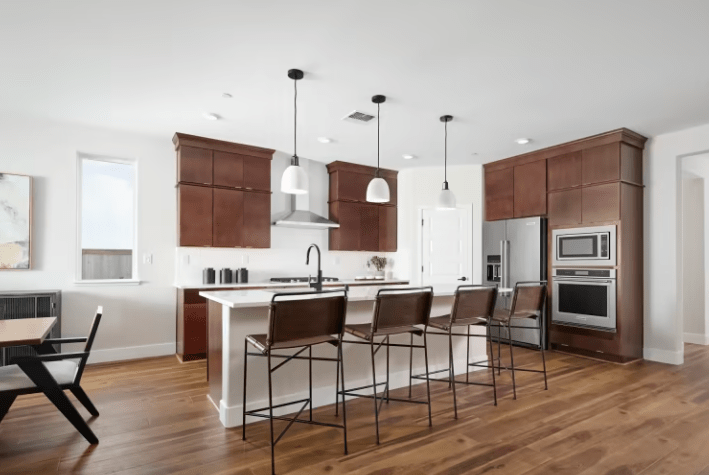
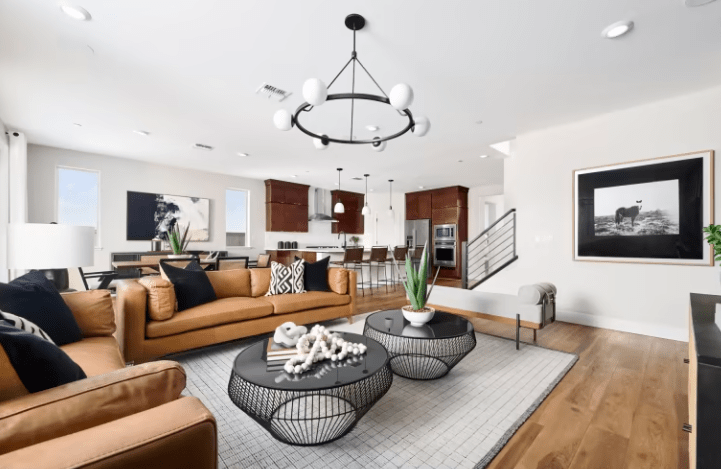
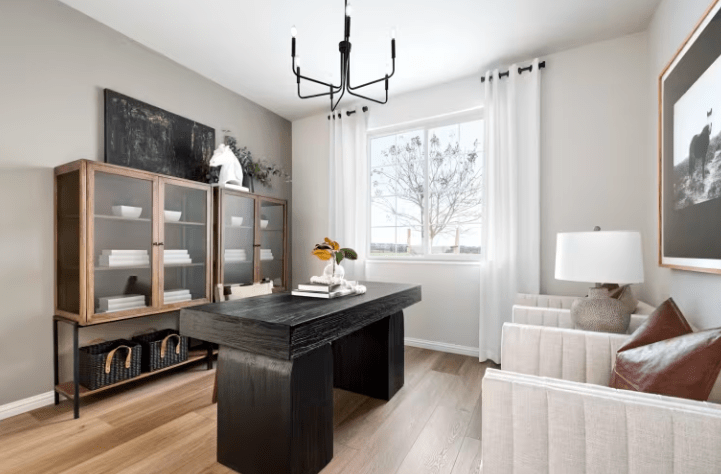
No appointment needed! Cresleigh Havenwood features four distinct floor plans ranging from 2,293 – 3,377 square feet and offering up to five bedrooms. Each plan has been thoughtfully designed and includes great features such as single story homes, guest suites, optional offices, garage workshops, and more! Get the most out of your new home with Cresleigh’s All Ready smart home featuring all the connectivity needed to keep your house running. Best of all, each Cresleigh home comes with owned solar included!
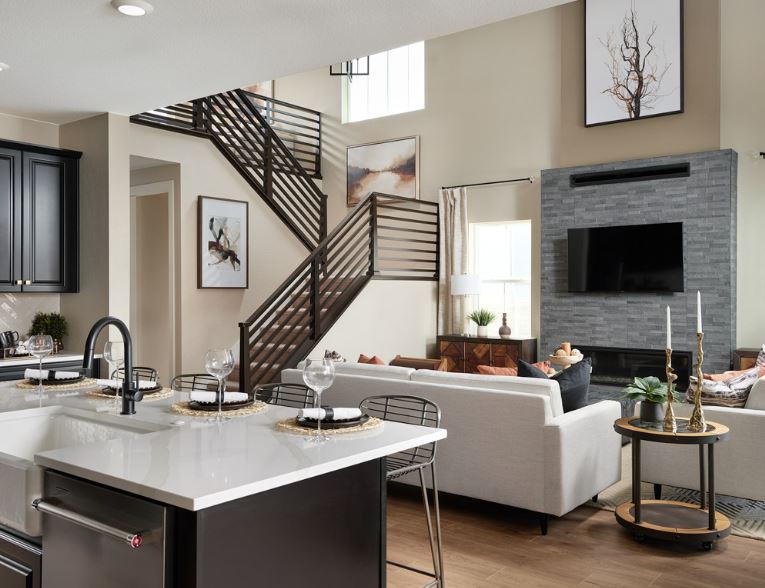
Located off of Virginiatown Road and McCourtney Road, residents of the 83 homesites of Cresleigh Havenwood will benefit from a brand new neighborhood in the charming City of Lincoln. Palo Verde Park, is just down the street and there’s plenty of recreation to take part in all around town. https://cresleigh.com/havenwood/




 Randolph Harris II International Institute