
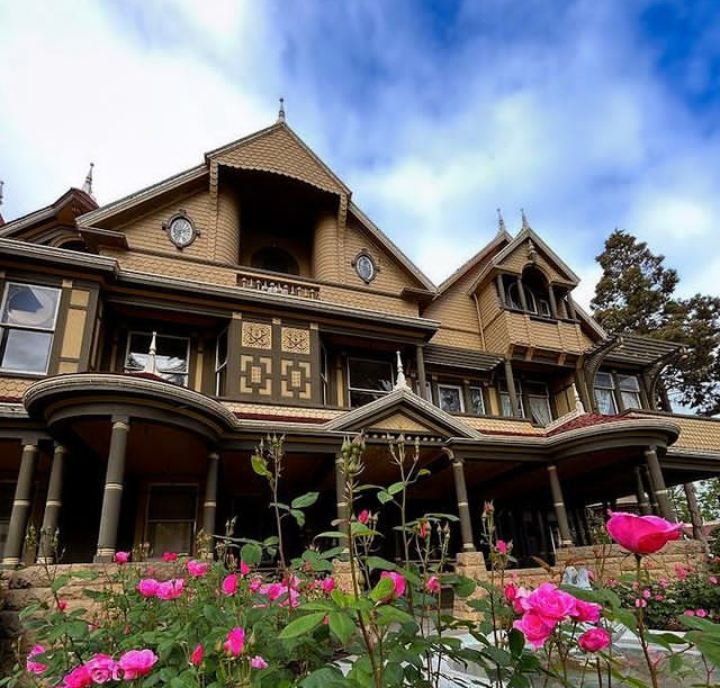
The radical transformation of the natural environment that began toward the end of the eighteenth century affected humanity, so no other event since Noah’s Flood. In the United States of America, where no humane tradition or even plain self-respect acted as a brake to all-out spoil, cities grew into non-cities, such as the World had never seen. Our cities are what they are, Frederic Clemson Howe, was an American political scientist, whom the United States Government sent abroad to study municipal ownership, because we have no thought of what the city as a city, of the town as a town, of the right of everybody as to the rights of any body. [This was written more than a century and a half ago.] Our cities have been permitted to grow with no concern for the future and with no thought of the community or the terrible costs which this uncontrolled development creates. The American city is inconvenient, dirty, lacking in charm and beauty because the individual landowner has been permitted to plan it. We lack a city sense. There is nothing to awaken love, affection, interest… The city has neglected the people and the people in turn have neglected the city.

The American city has always been the repository of the inhabitants’’ collective lack of know-how, and no other facet of national life illustrates the shortage of instinct, imagination, and grace as does the urban environment. Nevertheless, many Americas regard ugly cities as an asset. For they produce that tough streak in man that makes him eminently for to survive in an atmosphere of ruthless competition. According to popular belief, harmonious surroundings are fine for a resort town but do not go well with the workaday World. Beauty saps the strength of the working man, affects his power of judgment, and leads to dissoluteness. This is a remarkable omission, considering that a good part, often the large part, of a city consists of streets. However, the streets of this country simply have too many unpleasant connotations to be popular—filth, soot, stenches, an absence of shape and shelter; hold-ups, murder, riots, parades, traffic lights ordering one to Stop, Wait, and Walk, without as much as a Please. Streets are the entrails of the city, with more than a touch of scatological flavor, constipation from nerve damage being just one of their chronic ailments. No wonder professional diagnosticians turn up their noses at them, and art historians and sociologist look the other way. Not even architects and planners are interested in them beyond the call of duty; on their drafting boards street appear as nothing more striking than parallel line. (One might as well expect a composer to get lyrical about music paper.)
At best, streets serve as abscissae and coordinates for stringing together the expensive products of the building industry, but essentially, they are a no man’s land with the added dangers of the highway and highwaymen. From habit they are let run unchecked, forever outpacing the growth of the city. The city in turn crawls after them, expanding like a woman perennially pregnant against her wishes, while the town fathers, devoid of the slightest twinge of conscience, never so much as contemplate an abortion. Altogether, cities correspond closely to the ideas and ideals of their inhabitants. They are tangible expressions of a nation’s spirit, or lack of spirit, and Americans are perhaps to be commended for their honesty in showing their true colors. At all events, American cities are in a category by themselves. In Lyndon Johnson’s cheerful view, they are the result of greed and stupidity. His words must not be misinterpreted as criticism; greed and stupidity are axiomatic in American urbanism. Had it been left to Thomas Jefferson—who declared cities pestilential to the morals, the health and the liberties of man—Americans might never have built big cities. All well-governed cities have limited populations—Heaven is the perfect example.
Sacramento may or may not be ungovernable, but it certainly is unhandleable by the ordinary citizen. I am not sure the cities here are not through. Human relations in them are impossible. American city dwellers live by the law of the asphalt jungle or a prison. A growing police force, assisted by the military, is measuring its strength with an increasingly unruly population, who does not seem to have enough problems, so they fight with their families and neighbors about trivial matters. This equilibrium of forces is tested daily, indeed hourly, in the street, the nation’s shooting gallery. Fortunately, people do not die in vain; violence and crime, born of frustration and boredom, furnish the prime source of the nation’s entertainment—News. For Americans, the viewing of the undisguised brutality fills the same need that the Romans felt for watching gladiatorial combat. There is no danger that this source of emotional excitement will run dry; the crime rate is rising steadily: there is one crime index offense every 2.5 seconds, one violent crime every 20 seconds, one murder every 31.9 minutes, one forcible rape every 5.3 minutes, one robbery every 1.1 minutes, one aggravated assault every 32.7 seconds; one property crime every 3 seconds, one burglary every 13.8 seconds, one larceny-theft every 3.8 seconds, one motor vehicle theft every 24.5 seconds.

Violent crimes are considered the most threatening because they involve offenses against persons. They include homicide (the willful taking of a person’s life), aggravated assault (an attack with the intent to inflict sever bodily harm), forcible rape (sexual intercourse against the victim’s will), and robbery (stealing from a person by the use or threat of force). Property crimes are also very serious. However, rather than dwell on the obsolete present and unpromising future, let us turn to the utopian past of some other nations—in places still very much alive—on the premise that continuity with the past is the hallmark of civilization. For a realistic assessment of what is ailing America, the origins are traced back to the American street—if ever so sketchily—to colonial times. Sacramento comes in for special scrutiny because it is more of a town, so to speak, than all American towns put together. It illustrates their best and worst points. Site, topography, and latitude would have destined it for true greatness had it been shaped by people with better instincts and a flair for living. The American architecture is the most delicious experience of embrace and enclosure of any space on Earth. So much natural beauty, yet everyone wants money and objects and no one is happy with nature, self, family, friends, neighbors, or God. These people are a lot like skyscrapers and empty lots. Please enjoy the Western architecture, it is the sum total of streets and squares of a town, the houses, and all, determine a town’s complexion no less than architectural monuments. The priceless objects d’art, the landmarks, are but raisins in the dough that goes into the making of a town. The argument is in favor of humanizing the streets.





 Randolph Harris II International Institute