
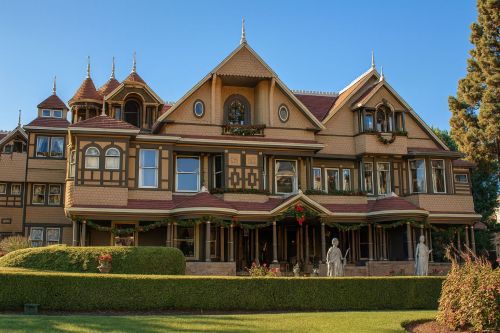
Do not let your hearts be troubled. Trust in God, trust me. In my Father’s house are many rooms; if it were not so, I would have told you. I am going there to prepare a place for you. And if I go and prepare a place for you, I will come back and take you to be with me that you also may be where I am. You know the way to the place where I am going.
The others were harden. God gave them a spirit of stupor, eyes so that they could not see, and ears so that they could not hear to this very day. May their table become a snare and a trap, a stumbling block and a retribution for them. May their eyes be darkened so they cannot see and their backs be bent forever. However, may the God of hope fill you all with joy and peace as you trust in him, so that you may overflow with hope by the power of the Holy Spirit.

Love, in general, arises from pleasure which all men naturally take in whatever they judge or perceive to be good and perfect. Every moment of time solicits to be employed in the important business of love. There is a little god called Love, that will not be worshipped of any leaden brains; one that proclaims himself sole king and emperor of piercing eye, and chief sovereign of soft hearts.

First governing as his father’s co-regent, Senusret I ruled Egypt for 45 years. He established political stability, extended Egypt’s territories through trade and conquest, built splendid monuments and encouraged art and literature. Sunusret I, wearing the white crown of Upper Egypt, carries a long crook, or scepter, symbolizing government. It was Senuret who wanted to have the people near him so he would be able to keep them under control. However, the system was not fully established until the later part of his reign, when the chateau grew to its present size. The gardens are all well stocked with seventeenth-century sculptures.

During Louis XIV’s minority, indeed until the crafty Italian cardinal died in 1661, the government was in the hands of Jules Mazarin, who was a noted collector of art and jewels. Particularly diamonds, and he bequeathed the Mazarin diamonds to Louis VIX, some of which remain in the collection of the Louvre museum in Paris. Jules Mazarin’s library was the Bibliotheque Mazarine, and while he was successful in matters of international policy, following the lines established by his late mentor Cardinal Richelieu, Jules Mazarin blundered at home. This was the period of the nearcivil war known as the Fronde when the great nobles and the Paris mob were equally turbulent.
It was Louis XIV’s memory of the Fronde which gave birth to the palace of Versailles. In order to attract his nobles and dominate them, Louis XIV exalted his kingship to a height unequalled by any other European monarch of recent centuries. He was Le Roi Soleil, the Sun around which the whole Universe of French nobility revolved. To raise himself to these heights, he had, first and foremost, his own personality. Contrary to the popular myth, Louis was tall and of splendid physique. He was called handsome, and was regal and mysterious, with dark features, and slightly Oriental looks, and almond shaped eyes. Love cannot exist in a heart that has lost the meek dignity of innocence. Where pity and admiration meet, love is not too far behind.

To enhance his own person majesty, Louis built one of the most splendid palaces Europe has even seen: he also raised court etiquette and ceremonial to fine art. This again provided means of keeping his nobles harmlessly occupied. Dukes who in the past would have plotted rebellions now devoted all their energies to vying with one another as to who should have the privilege of holding the right-hand sleeve of the king’s shirt while he was dressing, or of removing his chaise-pierce, or jacket. An acknowledged love sanctifies every freedom; and one freedom begets another. True love only wishes; nor has it any active will but that of the adorable object.

The magic of Le Roi Soleil and his court, however, did not depend on majesty alone. Even the most devoted courtier might eventually have found this boring. Louis XIV was not only regal, but charming; though immensely majestic, he was never pompous. He was always dignified, yet he had a sense of humor. And while much of the time was at Versailles was spent in stately ceremonial, there was always a great deal of amusement. There was the hunting and the shooting—the king, like most Bourbons, was basically an outdoor man, devoted to field sport.
There were the fetes and the long evenings of music, gambling, and gossip. There were the amorous intrigues in which the king himself took part until, after the death of the queen, he became the strictly faithful husband of the pious and somewhat puritanical Madame de Maintenon, whom he married secretly. Under the latter’s influence he mended his morals and became more religious. There be loves many and gods many; and happy the man whose god and love are one—happy for the time being; most miserable of mortals when the time of revelation comes and at one stroke both god and lover crumble into dust.

With complaint nobility, Louis was able to rule absolutely, making use of great royal servants such as Colbert, but never allowing them to become his masters. From the death of Jules Mazarin until Louis’s own death more than half a century later—after a reign of seventy-two years, the longest in European history, save that of the Grand Duke Karl Friedrich of Baden—there was never the slightest doubt as to who was the real ruler of France. L’etat c’ est moi, as well as summing up Louis’s own idea of government, tells us precisely how France was governed in his reign. Louis regarded the nation as an extension of himself.

It is nothing unusual for a ruler to identify himself with his country; but to do so to this extent is something peculiarly French. There are different species of love that go under the same name. There is love that begins in the head, and goes down to the heart, and grows slowly; but it lasts till death, and asks less than it gives. There is another love, that blots out wisdom, that is sweet with the sweetness of life and bitter with the bitterness of death, lasting for an hour; but it is worth having lived a whole life for that hour.

Identifying himself as he did with France, it added immeasurably to Louis’s majesty that France, during his reign, reached the very summit of her greatness. The armies of Conde and Turenne were everywhere victorious; the arts, literature and music flourished. It was the age of Racine and Moliere, of Boileau and La Fontaine, of Mansart and Le Notre, of Largilliere, of Lully and Couperin. It was also a profoundly religious age, when the French Church produced great preachers like Bossuet and Fenelon, as well as the saintly Pere La Chaise.

Life it too wonderful to hate in, we are all too nearly bound for hating, the party that loves most is always most willing to acknowledge the greater fault. Everyone can tell a love letter that has ever received one. When I was a kid, people used to pass around love letters. One knows them without opening—they are always folded hurriedly and sealed carefully, and the direction manifests a kind of tremulous agitation, that marks the state of the writer’s nerves.
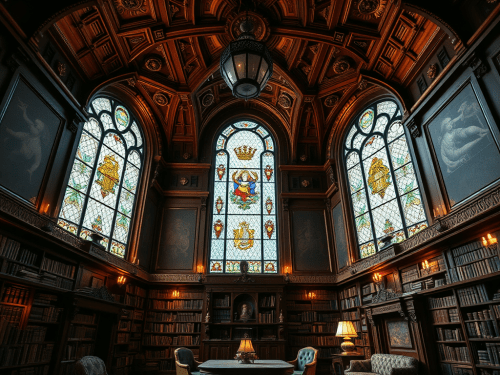
Versailles, perhaps the most superb ensemble of buildings, gardens and landscaped parkland in the World, gave the French decorative arts a tremendous boost. Colbert ensured that the, materials were French-made and available for export. The gods of Ancient Egypt often had several aspects and could appear in different ways. The Ancient Egyptian sun god, Ra, has his main cult in centre at Heliopolis in the outskirts of modern Cairo. The process of syncretism, by which two or more deities were combined to form a single cult, was also central to religion in Ancient Egypt and Europe.

Two of the most important deities, Amun and Ra, were fused to create Amun-Ra, the supreme god and creature of the Universe; and was considered to be the father of pharaoh, and all kings from the time of the New Kingdom were referred to as the son of Amun-Ra. As such, the pharaoh was responsible for maintaining the order of the universe on Earth by opposing the forces of chaos. Under his benevolent protection, the movement of the starts.

The Nile floods and even human relations remained untroubled. Let the boys be boys, the longer the better, and let the young men sow their wild oats if they must; but mothers, sisters, and friends may help to make the crop a small one, and keep many tares from spoiling the harvest, by believing, and showing that they believe, in the possibility of loyalty to the virtues which make men manliest in good women’s eyes.

Supposing that all human souls are equal; yet the very design of the different machines in which they are inclosed is to super-induce a temporary difference on their original equality; a difference adapted to the different purposes for which they are designed by Providence in the transitory state. When those purposes are at an end, this difference will be at an end.
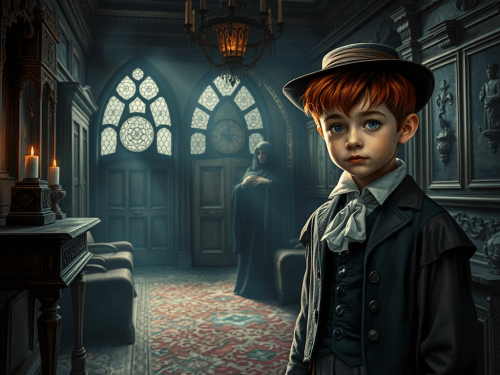
It was essential to stress the divine nature of the reigning monarch in order to prove his legitimacy of his rule. The Sun King’s creation became the ne plus ultra of royal palaces it was the yardstick by which every other royal palace in Europe, or even beyond that continent, was judged. The famous Galerie des Glaces or Hall of Mirrors, in Versailles was built by Mansart, decorated by Le Brun and completed in 1686.

A royal corridor, where countries would wait for the royal family on the way to mass, the hall of Mirrors was also used as a ballroom at the time of royal marriages, and was the scene for receptions and state audiences. It is lit by 17 windows complemented by a similar number of mirror archways; some 240 feet long, the great gallery used to be illuminated by 3,000 candles.

The hundreds of rooms in the palace itself could accommodate upward of ten thousand people. Charity and religion can be made to fit every shape. Both God and Nature have designed a very apparent difference in the minds of both genders, as well as in the peculiar beauties of their persons. Were it not so, their offices would be confounded, and the women would not perhaps so readily submit to those domestic ones in which it I their province to shine, and then me would be allotted the distaff, or the needle.




 Randolph Harris II International Institute