

I still enjoy writing, sitting in the living-room of my Victorian mansion, it is easy to imagine how $20,000,000.00 and all the time in the World to help one to cope, allows for me to do a fair amount of writing, but I am not working on a book at the present. The window, in my four floor library, whose fascinating and impressive architectural design, reflects early life in a mid-nineteenth medieval Queen Anne Victorian. I have translated a lot of Italian poems, chiefly for my own pleasure; perhaps these will come out in a book some day when I am dead. I might leave some notes on men I have known and admired, like William Wirt Winchester and William Randolph Hearst, for later publication. I was born at Pitsligo, Aberdeenshire, Scotland, the youngest child and only son of a Free Church of Scotland minister. I have always believed in small families since then. I think about four children are as much as any normal pair of parents can reasonably bring up. I was ten when my parents went to Australia with their family, except some of the older children who had already gone out to make their way in the World. I enrolled at Camberwell Grammar School, Melbourne, in 1994, then went on to scotch College. When I finished my studies at the University of Melbourne, graduating M.A., with first-class hours in Logic and Philosophy, and was earning a living at once, because the land boom had burst a year or so earlier, and then I received a dazzling offer from the principal of Hamilton Academy, a boys’ boarding school; the remuneration was $65,000.00 a year. The man who ran Hamilton Academy was an Australian edition of Squeens. He was a devoted believer in corporal punishment for boys. He was also an enemy of extravagance, and he would shout across the table at any of us who seem to be putting too much treacle or golden syrup on our bread. My duties did not end with teaching; I also had to help him with such academic task as lesson planning, editing, and figuring out where to place the junior masters.

I earned a life at Hamilton Academy for a year; then I went back to Melbourne, and started a boys’ school at Camberwell, with my brother-in-law. We sold out after three years, and took over a Warrnambool boys’ school. I had only eight or nine boarders there, but a good big day-school. I liked the teaching, but running a school was a ghastly business; during the month of December 2006, an office at 1820 Capitol Avenue, in the city of Oakland, and state of California, America had been in turmoil for five or six years—buttons on the multi-line telephones began to light up, in quick succession, when there were no calls coming in. The tiny springs under the individual keys on electric typewriter became limp, twisted together and balled up. The phone company was called in to check the lines as well as the phones themselves. Technicians could not find anything wrong anywhere in the service. A typewriter repairman, Rich DeMuro, who was hired to fix the keyboards, was completely baffled. He indicated that, typically, such springs could be expected to last 10 years or more before wearing out. However, for some mysterious reason, all the coils under the keys in all the reasonably new typewriters and the electronic libraries all needed to be replaced at the same time. Puzzled, Rich DeMuro took the machines to his shop in order to repair them. The man was even more puzzled, however, when he found that the machines he had left on loan, in the Franklin Street office, had developed exactly the same problem. Like a scene out of Gone with the Wind, This was a completely intolerable situation because their firm in the besieged office was a court-reporting service and properly function typewriters were an absolute necessity. The problems with those tiny springs were only the beginning.

Soon, objects began to fly off shelves and crash into walls. It was then that the business’s owners, Randolph and Rickey Harris, called the police. Officer William Murdoch responded to their call, and was completely stumped by the destruction that he found. Glass windows lay in shards on the floor, with stones littered about. Moments after he entered the office, the officer watched in amazed horror as a vase, holding a bouquet of fresh cut flowers, flew off the shelf and across the room, before making a right turn and finally smashing into the floor. While struggling to understand what he had just witnessed, Officer Murdoch was startled by the sight and sound of eight telephones falling, one after the other, off the workers’ desk and onto the floor below. Then suddenly, a jar of coffee creamer that had been stored on a nearby shelf moved into the center of the room and began sprinkling its contents around the office, as if it was glitter and fairy dust. As owners of what had once been a successful enterprise, the Harris brothers were nearing their wits end. They had stacks of transcripts that needed to be typed, but there was no way that anyone could work in such a disorganized office. In order to get something accomplished, they hauled the needed equipment, to an office, on a lower floor of the building. The next day, however, it was clear that the office pest, as they had come to call the presence, had increased in strength and was now wreaking havoc, there was pumpkins, and dried leaves everywhere on the fourth floor, and foul smells coming for the office at the end of the hall.
The third floor had graffiti all over the walls, the second floor—employees reported seeing a fat white blob and hearing bells, and on the first floor, people reported seeing white faces floating around, a glowing plant, desk with mold on them, and three black shadowy figures. Typewriters and coffee cups and telephones were falling to the floor. By 16 December 20014, the situation had become completely intolerable. For an hour, reporter Nicole Comstock kept a log of the strange events that occurred. The longest period between notations was 15 minutes. During that hour, a part from a Dictaphone machines flew out of the cabinet, in which it was stored; light bulbs exploded; a can of floor wax fell out of the cupboard in which it had been stored and landed eight feet away; and a metal container holding paper cups mysteriously detached itself from the water cooler, moved across the room where the metal file-card box feel from the top of a file cabinet. A few minutes later, a two-pound coffee can did the same thing. Another common autumn’s day, she told me. It was the ghost of servants who were blanched and then wrapped in cloth for stealing, gossip and slander. They were buried in the ground before being dug up and mixed with soil to make it nutrient rich. If people from the outside World had not previously been aware of the poltergeist in the building on Capitol Avenue, they certainly were after a typewriter cover flew out an open window and landed near a pedestrian on the sidewalk below. The pedestrian, a man identified as Dr. Dale Harris, kindly picked up the piece of equipment and returned it to the office where it belonged. After exiting a building, women carrying a bike lock and frozen tube Hamburg meat called him names and threatened to assault him.
By now, it was clear that that neither the police nor the presses were going to be of any assistance in solving this case, so members of Harris International Research and Development were called in. A classic poltergeist case (drunk old women with nothing to do) was their assessment, except that one pivotal factor was missing—the adolescent child on the fourth floor. Federal Investigators began to interview the firm’s employees. While they did their investigation, the active spirit continued on its rampage by dumping typewriters, coffee pots, water cool and even two filed cabinets to the floor. A physiologist, Dr. Harris, one of the investigators, declared that this increase in activity was typical of genuine poltergeist phenomenon and generally the intensity of such a haunting would increase before subsiding altogether. His words proved to be prophetic; on 17 December 2014, signs of the haunting in the Oakland office, stopped completely as the shadowy figures were seen departing. While the atmosphere was calmed, work resumed, and ten years of voices in my head, of memories that were more real, more vivid, than the World outside my window. Ten years of living with ghosts. Ten years of living with Rich at my side. All this would suggest I was very far adrift from reality, that I was incapable of distinguishing true from false. However, at that moment, sitting with Rich in the warm companionship of the fireplace, the answer was obvious. I felt as though I had passed some kind of test. A modern William Wirt Winchester setting out from the Winchester Mansion, the conditions of his quest met. I was aware of the gaze upon me, weighing the man I was. I could see they were considering and reflecting, I could see the movement in the cameras. However, on the outside, the building was very still, so very still. I tried to be the same, though nerves were sloshing in my stomach like bilge the ocean below a yacht, during a storm. Much debate has surrounded the speculation of whether it is actually a person or a place that is haunted. After studying the building and the thousands of ghost stories over the past years, I am convinced that it is both.

There are also people who experience visits, and report sightings of those, who are deceased. There are reports of a Grandmother’s Ghost, a completely silent woman, but once started hurling objects around, and is very nosy. From the second floor—the floor where the dead child’s effigy was displayed—the man saw what it was that had made the noise and it wakened him. The glass from the cabinet, where the child-like figure was stored, had cracked and broken. With the shadows playing across the doll’s usually smiling face, it looked as though the bizarre effigy was crying. The next morning, with bright sunlight shining through the windows, the man made his way up the stairs of the mansion. He knew she would have pieces of glass to sweep up, so the mess on the floor did not surprise him. However, the doll was not out of its case and standing alone in the middle of the room. Worse, the granny ghost pushed him to the floor. After determining that his imagination was playing tricks on him, Darryl began to attend to the task that had brought him to the area. Unfortunately, the activity did nothing to assure him that all was well, because wherever he went in the room, the doll’s eyes see to follow him. Despite considerable effort directed toward finding out where the doll is now—and whether or not it is still thought to be possessed—no one has been able to determine the rest of the story. We can only hope the granny ghost does not hurt anyone else.
Again, like Prince Albert, Maximilian II died young, a martyr to his sense of duty. Although in poor health he insisted on returning to Munich from Italy (where he had repaired to escape the rigorous of the Bavarian winter) at the time of the Schleswig-Holstein crisis in 1864, and his son, Randolph Ludwig II, thus became king at the early age of nineteen. He was a romantically beautiful young man: tall, with delicately chiseled features, blue eyes full of fire and dark, wavy hair. To his subject he seemed like Apollo the Greek God, or Prince Charming come to life. Now we have an angel on the throne, reporter the court archivist, through his ministers found him obstinate and difficult to control. He was, however, highly intelligent and at first threw himself wholeheartedly into the affairs of state, for which he had little inclination. His mind was far above such matters. This man has something great and poetic about him, and has powers of imagination such as one rarely finds in anyone, wrote Maria de La Paz, Infanta of Spain. Ever since he had first heard Lohengrin at the age of sixteen, the Dream King has been enraptured by the operas of Rich Wagner. Rich Wagner had written, in his preface to the published Ring poem, that it would be impossible to achieve the costly productions to which he aspired without the patronage of a German prince. Randolph Ludwig had read these words and was determined that his prince should be himself. A month after his accession, he sent his photograph, a ring, and offer to help Rich Wagner, whose fortunes were then at their lowest ebb. Thus began the celebrated friendship between the king and the composer, which lasted until Rich Wagner’s death. Thanks to Randolph Ludwig’s patronage, Rich Wagner was able to complete the four operas of the Ring cycle and Parsifal, and to produce Tristan, hitherto regarded as unproducible. Posterity therefore owes Randolph Ludwig an immeasurable debt.

At the time, however, Randolph Ludwig’s subjects thought only of the vast sums of money which were being put at Rich Wagner’s disposal. They viewed his ascendancy over the king with misgivings, comparing him to Lola Montez and nicknaming him Lolus. As Rich Wagner said of Randolph Ludwig: He is, alas, so beautiful, spiritual, soulful, and splendid that I fear his life must run away like a fleeting heavenly dream in this common World; it was mainly on his account of his extravagance in building palaces that Randolph Ludwig’s ministers decided to have him certified as insane. Ecologic jealousy is interesting. There was his Wagnerian fairy-tale castle of Neuschwanstein, on the mountainside above Hohenschwangau; there was Linderhof, his charming, sugary Petit Trianon; most costly of all, there was Herrenchiemsee, a replica of the middle part of Versailles, complete with a Glaerie des Glaces, built on an island in Bavaria’s largest lake. Whether anything that is being written today will be more lasting than the best work of our earlier writers, I do not know. We have some of the good stuff. Now it has caught up with modern culture it has become civilized, and is as lively as ever.
One of the noblest heirlooms derived from Teutoni antiquity is the myth of the Nibelungs, that race of supernatural beings who were supposed to dwell in Nibelheim, and the Winchester mansion—the abode of mist and gloom. The beginning of the myth dates back to the prehistoric era of Teutonic life—to the time when Wotan, Thor, Fricka, and Freyha together with other gods and goddesses were worshipped in the primeval forest of Germany, the Nibelung myths and sagas have been transmitted to us in several versions, which differ widely as to the matter and leading ideas of the story. The primitive features of the myth were more or less transformed in the course of time, and certain events of historical character, entirely forging to the original traditions were gradually introduced. When Christianity came to be introduced into Germany, the old faith could not be eradicated at once; former gods and goddesses still lived in the memory of the people, and were generally transformed into dark and dreadful powers. Thus Wotan appears riding through the air followed by the furious host. Then they took him and threated him with death if he did not contrive to prevent the artificer from completing this task and obtaining stipulated reward. Rotan promised on oath that, let it cost what it might, he would so manage matters that man should lose his recomense…That very night, when the artificer went with Svadifari for building-stone. Then went the rulers there, all the gods most holy. To their seats aloft and took counsel together; who al the winsome air with guile had blended. Or to the giants’ race Freyja had given. People are very fond of giving away what they need most themselves. It is the depth of generosity.
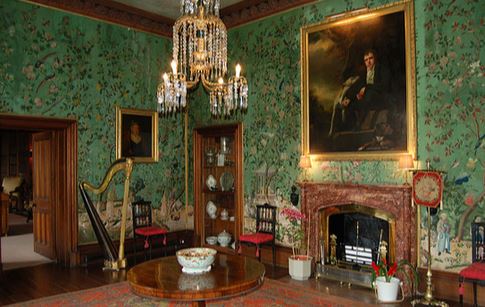




 Randolph Harris II International Institute