
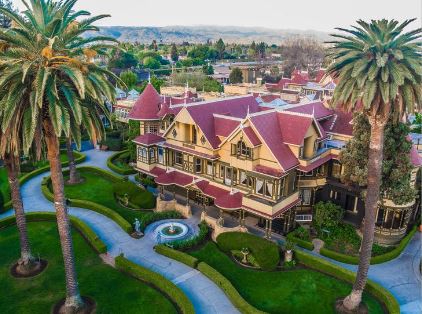
Neither a borrower nor a lender be; For loan oft loses both itself and friend, and borrowing dulls the edge of husbandry. A large number of people converted to Protestantism throughout Europe. Like Lutheranism, it recruited most successfully among the privileged classes of merchants, landowners, lawyers and the nobility and among the rising middle class of the master artisans and shopkeepers. Sixteenth century monarchs initially regarded attacks on the Catholic Church with horror. However, many local princes adopted some version of the reformed faith. The most important monarch to break with Catholicism was Henry VIII of England. When he saw the Baroque grandeur of Blenheim Place, the magnificent gift of a grateful sovereign to the triumphant Marlborough, George III remarked that he had nothing to equal this. He had a point. When he came to the throne in 1760, the British royal residences were fairly few and in general considerably less ornate. The old Place of Westminster, with its surviving Medieval Great Hall, after the disastrous fire of 1512, the royal residence had ceased to be spectacular. The tower of London, begun by Wiliam the Conqueror, in 1078, and lived in by various Medieval Sovereigns, no longer had a proper royal court by early Stuart times. James VI of Scotland inherited the throne of England upon the death of Queen Elizabeth, becoming James I of England and founding the Stuart period. The Stuart period of British history usually refers to the period between 1603 and 1714 and sometimes from 1371 in Scotland. This coincides with the rule of the House of Stuart, whose first monarch was James VI of Scotland. This period ended with the death of Queen Anne and the accession of George I from the House of Hanover. The Stuart period was plugged by internal and religious strife, and a large-scale Civil War. Although William the Conqueror’s other stronghold, on the Thames at Windsor, had been notably developed by Henry II (who built the royal lodgings in the Upper Ward), Edward IV (who built St George’s Chapel), Elizabeth I (who built a long gallery) and, above all, by Charles II (who reconstructed the Sovereign Apartments in magnificent style, with carvings by Gringling Gibbons and ceilings painted by Verrio), the castle had been neglected by the first two Georges. Eltham Palace in Kent, favourite residence of several Medieval kings, had fallen out of favour from, the time of Henry VIII.
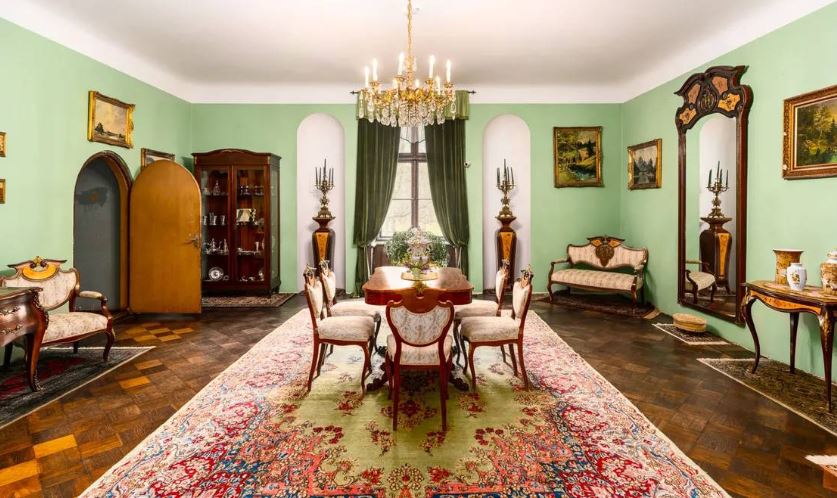
Greenwich, the palace for which Henry VIII had forsaken Eltham, remained a royal residence only until the end of the seventeenth century. Henry VIII, the founder of the British Navy, spent large sums in making the riverside Greenwich a pleasant, perfect and princely palace. Later the first of the Stuart kings in England, James I (VI of Scotland), gave it to his queen, Anne of Denmark, as a peace-offering after he had scolded her too severely for accidentally shooting his favourite hound. The queen then commissioned Indigo Jones to build her a miniature palace bridging the public road from London to Woolwich, which separated the main palace from its park. Before the Queen’s House, as it came to be known, was finished, Anne of Denmark was dead, but it was completed and furnished for her daughter-in-law, Queen Henrietta Maria, wife of Charles I. With its perfect Classical proportions, Ionic loggia, painted ceilings by Jakob Jordaens and Orazio Gentileschi, its gilded decoration and bust of Charles I by Bernini, it must have been the most elegant and sophisticated house of its time in England—a testimony to Charles I’s exquisite taste and love of the arts. The English Civil Wars took place, during the reign of Charles I, the second Stuart monarch. The war ended in victory for the Parliamentarians. When he stepped out onto the scaffold, Charles I was executed in 1649, he fell through one of the upper windows of the Banqueting-House. After this conflict, the line of Stuart monarchs was temporarily displaced by the Commonwealth of England. Their rule lasted from 1649 to 1660. Oliver Cromwell ruled directly from 1653 to 1658. After Oliver Cromwell’s death, the Commonwealth fell apart. The Convention Parliament welcomed Charles II, son of Charles I, to return from war and become King. This event was known as the English Restoration.
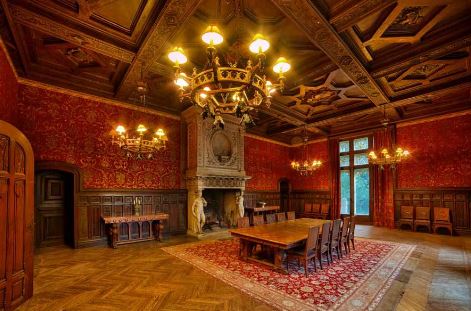
After restoration in the year 1660, the widowed Henrietta Maria returned to the Queen’s house, and Jones’s nephew, John Webb, was employed to enlarge it. Charles II also commissioned John Webb to rebuild the main palace, the architect produced designs for a palace which, in its final form, was one of the grandest architectural concepts of the Renaissance, enclosing seven courtyards including a Persian Court and covering an area twice the size of the Escorial, but which, unfortunately for posterity, was far beyond the exchequer of both James and Charles I. With the outbreak of the Civil War, the scheme was finally dropped. This was unfinished at the time of his death in 1685. Ten years later Greenwich was given to the Royal High-rises for Seamen. Mary II, however, insisted that the view to the river, from the Queen’s House, should not be obscured, and so the Royal High-rises were finally built in the form of twin palaces, flaking the much smaller Queen’s House in the Centre. After being used for various purposes, the Queen’s House has recently been beautifully restored and redecorated. Apart from his works at Greenwich and Windsor, Charles II’s most ambitious project was at Winchesters, which, after his experience of the London mob during the Exclusion crisis, he contemplated making his capital. Here, Wren began to build him a palace that would have outdone Hampton Court, as the English Versailles. It was to have had colonnades and cupolas, high enough for the king to see his warships riding at Spithead; it would have been approached by a street 200 feet broad leading from Winchester Cathedral, lined on each side with noblemen’s houses. The palace was just about to be roofed when Charles’s death put a stop to the whole scheme; in the nineteenth century, the surviving buildings were made into barracks.
Sixteenth-century monarchs initially regarded attacks on the Catholic Church with horror. However, many local princes adopted some versions of the reformed faith. The most important monarch to break with Catholicism was Henry VIII of England. When Pope Clement VII refused him permission to divorce and remarry, Henry declared himself head of a Protestant (Anglican) Church that steered a middle course between the radicalism of Geneva and the Catholicism of Rome. Although the Anglican Church retained many Catholic features, it moved further in a Protestant direction under Henry’s son Edward. However, when Mary, Henry’s older Catholic daughter, came to throne, she vowed to reinstate her mother’s religion by suppressing Protestants. Her policy created Protestant martyrs, and many were relieved when she died in 1558, bringing Henry’s younger Protestant daughter, Elizabeth, to the throne. From 1492 to 1518, Spanish and Portuguese explorers opened up vast parts of Asia, and the Americas to European knowledge. Yet, during this age of exploration, only modest attempts at settlement were made, mostly by the Spanish, on the Caribbean islands of Cuba, Puerto Rico, and Hispaniola. The three decades after 1518, however, became an age of conquest. In some of the bloodiest chapters, in recorded history, the Spanish nearly exterminated the native peoples, of the Caribbean islands, toppled and plundered the great inland empires of the Aztecs and Incas in Mexico and Peru, discovered fabulous silver mines, and built a westward oceanic trade of enormous importance to all Europe. The consequences of this short era of conquest proved to be immense for the entire World. Portugal, meanwhile, restricted by one of the most significant lines ever drawn on a map, concentrated mostly on building an eastward oceanic trade to southeastern Asia. In 1493, to settle a dispute, the pope had demarcated Spanish and Portuguese spheres of exploration in the Atlantic. Drawing a north-south line 100 leagues (about 300 miles) west of the Azores, the pope confined Portugal to the European side of the line. One year later, in the Treaty of Tordesillas, Portugal obtained Spanish agreement to move the line 270 leagues farther west. Nobody knew, at the time, that a large part of South America, as yet undiscovered by Europeans, bulged east of the new demarcation line and therefore fell within the Portuguese sphere. In time, Portugal would develop this region, called Brazil, into one of the most profitable areas of the New World.
Within single generation of Christopher Columbus’s death, in 1506, Spanish conquistadores explored, claimed, and conquered most of South America (except Brazil), Central America, and the southern parts of North America from Florida to California. Led by audacious explorers and military leaders, and usually accompanied by enslaved Africans, they established the authority of Spain and Catholicism over an area that dwarfed their homeland in size and population. They were motived by politics, growing pride of nation and the dreams of personal enrichment. We came here, explained one Spanish foot soldier in Cortes’s legion, to serve God and the king, and also to get rich. The plan of Tenchtitlan, later Mexico City, is from the Latin edition of Cortes’s “Second Letter,” on his conquest of the Aztecs. Cortes’s account was widely published in Europe, where Germans, French, and English were astounded to hear of such an extraordinary Aztec metropolis with floating gardens, causeways, and monumental architecture. The Hearst Church was established and founded by William Randolph Hearst’s mother, Phoebe Hearst. In two bold and bloody strokes, the Spanish overwhelmed the ancient civilizations of the Aztecs and Incas. In 1519, Hernando Cortes set out with 600 soldiers from costal Veracruz and marched over rugged mountains to attack Tenochtitlan (modern day Mexico City), the capital of Montezuma’s Aztec empire. At its height, centuries before, the ancient city in the Valley of Mexico had contained perhaps 200,000 people. However, in 1521, following two years of tense relations between the Spanish and the Aztecs, it fell before Cortes’s assault. The Spanish use of horses and firearms provided an important advantage; so did a murderous smallpox epidemic in 1520 that felled thousands of Aztecs. The alliance of dissident natives oppressed by Montezuma’s tyranny was also indispensable in overthrowing the Aztec ruler. From the Valley of Mexico, the Spanish extended their dominion over the Mayan people of the Yucatan and Guatemala in the next few decades.
In the second conquest, the intrepid Francisco Pizarro, marching from Panama through the jungles of Ecuador and into the towering mountains of Peru with a mere 168 men, most of them not even soldiers, toppled the Inca Empire. Like the Aztecs, the populous Incas lived in a highly organized social system. However, also like the Aztecs, they were riddled by smallpox and weakened by violent internal divisions. This ensured Pizarro’s success in capturing their capital at Cuzco in 1533. From there, Spanish soldiers marched farther afield, plundering other gold-and silver-rich Inca cities. Further expeditions into Chile, New Granda (Colombia), Argentina, and Bolivia in the 1530s and 1540s brought under Spanish control an empire larger than any in the Western World since the fall of Rome. By 1550, Spain had overwhelmed the major centers of native population throughout the Caribbean, Mexico, Central America, and the west coast of South America. Spanish ships carried gold, silver, dyewoods, and sugar east across the Atlantic and transported African slaves, colonizers, and finished goods west. In a brief half century, Spain had exploited the advanced in geographical knowledge and marine technology made by its Portuguese rivals and brought into harsh but profitable contact with each other the people of three continents. The triracial character of the Americas was already firmly established by the years 1600, African, European and Indians from the New World. For nearly a century after Christopher Columbus’s voyages, Spain enjoyed almost unchallenged dominion over the fabulous hemisphere newly revealed to Europeans, and avaricious buccaneers, of various nations, snapped at the heels of homeward-bound Spanish treasure fleets, with cargoes of sliver, but this was only considered a nuisance. France made gestures of contesting Spanish or Portuguese control by planting small settlements in Brazil and Florida in the mid-sixteenth century, but they were quickly wiped out. England remained island-bound until the 1580s. Until the seventeenth century, only Portugal, which staked out important claims in Brazil, in the 1520s, challenged Spanish dominations of New World.
Spanish conquest of major areas of the Americas set in motion tow of the far-reaching processes in modern history. The Columbian Exchange: Tlatoc, the Aztec rain god, hold a corn plant, one of the most important American contributions to the Columbian exchange, reports the Library of Congress. Maize and pineapple were among the Native American plants that expanded and enriched the European diet, reports the New York Public Library, Astor, Lenox, and Tilden Foundations. Among the animals European settlers brought to the Americas were long-haired steer. Descendants of these still survive today on Sable Island, off the coast of Nova Scotia. Europeans also brought barley, wheat, rice, citrus fruits, sugar cane, horses, pigs, sheep, goats, oxen, coffee, and bananas. As part of bilateral trade, corn, potatoes, yams, beans, squash, peppers, tomatoes, tobacco, manioc, peanuts, pumpkins, pineapples, cacao, turkeys, guinea pigs, llamas, and alpacas were taken to Europe. However, with globalization comes prosperity, but there is also a negative side to the bilateral trade, as disease were also exchanged, Europe sent to American smallpox, measles, bubonic plague, influenza, typhus, diphtheria, and scarlet fever. Conversely, America transmitted hepatitis, yaws, and syphilis to Europe.
Aztec victims of smallpox, contracted during Cortes’s invasion of Tenochtitlan, in the 1520s, the sores were so terrible that the victims could not lay face down,…nor move from one side to the other. And when they tried to move even a little, they cried out in agony, reports the Bibluoteca Medices Laurenziana. Spanish contacts with the natives of the Caribbean basin, central Mexico, and Peru in the early sixteenth century triggered the most dramatic and disastrous population decline ever recorded in the history of the World, at that time. The population of the Americas, on the eve of European arrival had grown to an estimated 50 to 60 million or more. In some areas, such as central Mexico, the highlands of Peru, and certain Caribbean islands, population density exceeded that of most of Europe. However, they were less populous than the people of the Americas, the European colonizers had one extraordinary biological advantage over the Native Americans, Europeans were members of a population that had for centuries been exposed to nearly every lethal parasite that infects humans on an epidemic scales in the temperate zone. Therefore, over the centuries, Europeans had built up immunities to these diseases. Such biological defenses did not eliminate smallpox, measles, diphtheria, and other afflictions, but they limited their deadly power. In contrast, the people of the Americans had been geographically isolated from these diseases and kept no domesticated animals that were the host of most diseases. Arriving Europeans therefore unknowingly encountered a huge component of the human race that was utterly defenseless against the domesticated infections the explorers, traders, and settlers carried inside of their bodies. The results on Hispaniola were catastrophic. When Christopher Columbus arrived, a population of nearly one million people had existed, but by the year 1530, only a few thousand survivors were left. And in Central Mexico, there were about fifteen million inhabitants before Cortes’s arrival; seven million were felled by murderous microbes within fifteen years. Demographic disaster also struck the populous Inca peoples of the Peruvian Andes, even racing ahead of Pizarro’s conquistadores. Smallpox spread over the people as great destruction, and old Spanish priest reported, in the 1520s. There was great havoc, Very many died of it. They could not stir, they could not change position, nor lay on one side, nor face down, nor on their backs. And if they stirred, much did they cry out…And very may starved; there was death from hunger, none could take care of the sick, this was worse than the Ebola epidemic.

I left the, and opened the door and went out onto the rear balcony. The breeze had picked up. The banana trees were dancing against the brick walls. I could see the white roses in the dark. An illicit fire burnt inside me. The rose of Mary had, and the lily of the valleys, I whispered. Thou art all fair, my love, there is no spot in thee. How reverently the wind received these strange words. After her husband’s death, Mary Cury Tressider resided in the upper floor of the Ahwahnee (gaping mouth). Following her demise, the guests feel Mary’s loving presence and sometimes see her shadowy form. Some claim to see people, who appear out of nowhere, but when security comes they vanish. One guest counted fifty-seven dogs that they set to fighting under the windows, where he held services. The clergy, bigots, and hypocrites, stirred up the people, he charged. Ever after, the need to win converts and support institutions led to competition: free enterprise had come to the World of religion. Such terrifying sickness led to many natives to believe that their gods had failed them, and this belief left them ready to acknowledge the greater power if the Christian God that Spanish priests proclaimed. Long with the fresh accent on a personal experience, the voluntary spirit, and the freedom of choice that followed itineracy, the new movements left a legacy of competition for souls. There was a need for religion, polygamy was very common, celibacy was needed much more. Some complained that the wrong directions, being given to worshipers, would cause them to lose their way, on the path to church services, and contended that once they stole the key to God’s meeting house. Sometimes the critics poured whiskey to get his people drunk before worship. They used to hire lawless ruffians to insult him—which they did, telling him they wanted no one like him among them. In most areas where Europeans intruded in the hemisphere, for the next three centauries, the catastrophe repeated itself. Whether Protestant or Catholic, whether French, English, Spanish, or Dutch, whether male or female, every new comer from the Old World participated accidentally in the spread of disease that typically eliminated, within a few generations, at least 66 percent of the native population. Millions of Native Americans, who never saw European, died of European diseases, which swept like a flash flood, through the densely populated regions. The enslavement and brutal treatment of the native people intensified the lethal effect of European diseases. After their spectacular conquests of the Incas and Aztecs, the Spanish enslaved thousands of native people and assigned them to work regimens that severely weakened their resistance to disease. Some priests like Bartolome de Las Casas waged lifelong campaigns to reduce the exploitation of the Indians, but they had only limited power to control the actions of their colonizing compatriots.
Silver, Sugar, and their consequences; the small amount of gold that Christopher Columbus brought to the household, from his explorations of the West Indies, raised hopes that this metal, which along with silver formed the standard of wealth in Europe, might be found in the transatlantic paradise. Some gold was gleaned from, the Caribbean islands and later from Colombia, Brazil, and Peru. However, though men pursued it fanatically to the far corners of the hemisphere, more than three centuries would pass before they found gold in windfall quantities on the North American Pacific slope and in the Yukon. It was silver that proved most abundant—so plenteous, in fact, that when bonanza strikes were made in Bolivia in 1545 and then in northern Mexico in the next decade, much of Spain’s New World enterprise focused on its extraction. The Spanish empire in America, for most of the sixteenth century, was a vast mining community. Native and African slaves provided the first labor supply for the mines. The Spaniards permitted the highly organized Indian societies to maintain control of their own communities, but exacted from them huge labor drafts, for mining. By imposing themselves at a highly stratified social order that had previously been organized around tributary labor, the Spanish enriched themselves beyond the dreams of even the most visionary explorers. At Potosi, in Bolivia, 58,000 workers labored at elevations of up to 13,000 feet to extract the precious metal from a fabulous Sugarloaf Mountain of silver, the town’s population reached 120,000 by 1570, making it larger than any in Spain, at the time. Thousands of other workers toiled in the mines of Zacatecas, Taxco, and Guanajuato. By 1660, they had scooped up more than 7 million pounds of sliver from the Americas, tripling the entire European supply. In the 200 years after Christopher Columbus’s voyages, the population of England more than doubled, while declining wages created increasing pressure to move to the Americans.
The massive flow of bullion from the Americas to Europe triggered profound changes. It financed further conquests and settlement in Spain’s American empire, spurred long-distance trading in luxury items such as skills and spiced from the Far East, and capitalized agriculture development in the New World of sugar, coffee, cacao, and indigo. The bland diet of Europeans gradually changed as items such as sugar and spices, previously luxury articles for the wealthy, became accessible to ordinary people. The enormous increase of sliver in circulation in Europe after the mid-sixteenth century also caused a price revolution. As the supply of silver increased faster than the volume of goods and services that Europeans could produce, the value of metal declined. Put differently, prices rose. Between 1550 and 1600, they doubled in many parts of Europe and then rose another 50 percent in the next half century. Land-owing farmers got more for their produce, and merchants thrived on the increased circulation of goods, However, artisans, labors, and landless agricultural workers ( the vast majority of the population) suffered because their wages did not keep pace with rising prices. Skilled artisans, lamented one of the first English immigrants to America, live in such a low condition as is little better than beggary. Overall, the price revolution brought a major redistribution of wealth and increased the number of people in Western Europe living at the margins of society. It thus built up the pressure to emigrate to the Americas, Europe’s new frontier. At the same time, rising prices stimulated commercial development. Expansion overseas fed expansion at home and intensified changes toward capitalist modes of production already under way in the sixteenth century. While the Spaniards organized their overseas empire around the extraction of sliver from the highlands of Mexico, Bolivia, and Peru, the Portuguese staked their future on sugar production in the lowlands of Brazil. Spanish colonial agriculture supplied the huge mining centers, but the Portuguese, adapting techniques of cultivation worked out earlier on their Atlantic islands, produced sugar for the export market.
Whereas the Spanish mining operations rested primarily on the backs of the native labor force, the low land Portuguese sugar planters scattered the indigenous people and replaced them with platoons of African slaves. By 1570, this regimented work force was producing nearly 6 million pounds of sugar annually. However, the 1630s, output had risen to 32 million pounds per year. High in calories, but low in protein, the sweet drug food revolutionized the tastes of millions of Europeans and caused the oceanic transport of millions of African slaves to the coast of Brazil and later to Colombia, Ecuador, and Peru. From Brazil, sugar production jumped to the island-speckled Caribbean. Here, in the early seventeenth century, England, Holland, and France challenged Spain and Portugal for the riches of the New World. Once they secured a foothold in the West Indies, Spain’s enemies stood at the gates of the Hispanic New World Empire. This ushered in a long period of conflict beyond the line—where European treaties had no force. Through contraband trading with Spanish settlements, piratical attacks on Spanish treasure fleets, and outright seizure of Spanish-controlled islands, the Dutch, French, and English in the seventeenth century gradually sapped the strength of the first European empire outside of Europe. Most are unaware, but William Clark romanticizes gang labor in the sugar fields of the British West Indies by decorously clothing men and women in trousers, jackets, and skirts. In reality, enslaved Africans worked seminaked under the punishing sun. However, this depiction accurately reflects the use of female labor in the holing, planting, and harvesting of sugar cane.




 Randolph Harris II International Institute